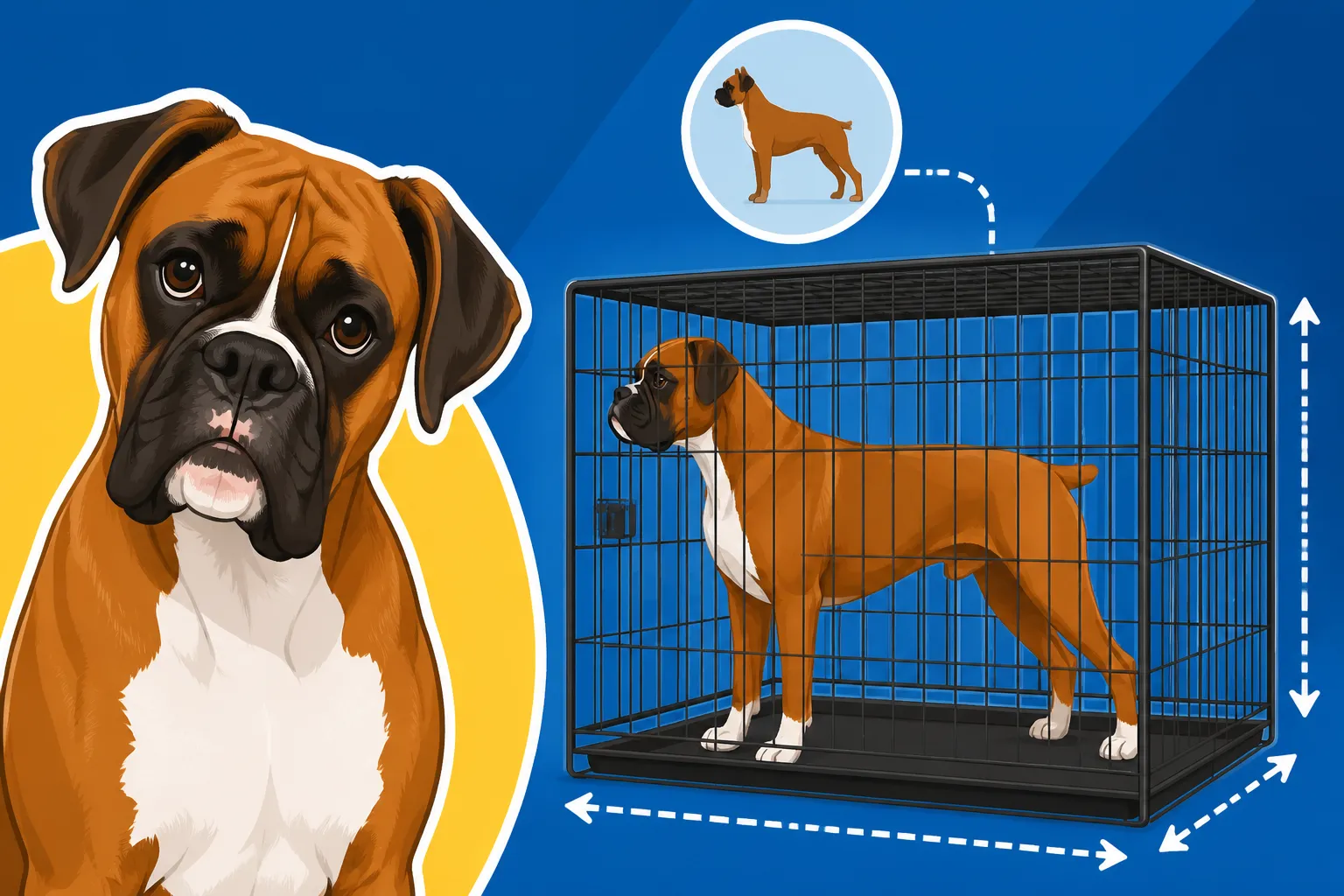
Sizing a Crate for a Boxer That Will Hit Seventy
Bringing home a Boxer puppy or even an adult Boxer means preparing for their powerful presence, and one of the first, most crucial purchases you'll make is a dog crate. Many new owners, myself included, have found themselves scratching their heads, wondering how on earth to choose a crate that's just right for a dog that seems to grow an inch a week. This guide will walk you through everything you need to know about correctly sizing a crate for your Boxer, ensuring comfort, safety, and proper development from puppyhood through their formidable adult years.
Why Crate Size Matters So Much for Your Boxer
It's easy to think a crate is just a box, but for your Boxer, it's so much more – it's their safe den, their quiet space, and a vital tool in their training. Getting the size wrong can lead to a host of problems, impacting both their physical well-being and their psychological comfort.
Comfort and Safety Avoiding a Too-Small Space
Imagine trying to sleep in a bed that's too short for you to stretch out, or so narrow you can't even turn over. That's essentially what happens to a Boxer forced into a crate that's too small. Boxers are muscular, athletic dogs, and they need room to stand up completely without their head touching the top, to turn around easily, and to lie down stretched out on their side.
A crate that's too snug isn't just uncomfortable; it can lead to actual physical problems. Your Boxer might develop pressure sores on their hips or elbows from constantly resting in an awkward position. They could become stiff or experience joint discomfort, especially as they age, if they can't shift their weight properly. Beyond the physical, it can create a feeling of claustrophobia and anxiety. Your Boxer should view their crate as a sanctuary, not a prison. If they associate it with discomfort, they'll resist going in, making training incredibly difficult. This is particularly true given the energetic and playful nature of the breed; they need a space where they can truly relax and unwind, even if it's just for a nap.
Behavioral Implications of the Wrong Crate Size
The right crate size plays a huge role in successful house training and overall behavior. A crate that's too large for a puppy, for instance, can inadvertently set back your house-training efforts. Puppies naturally don't want to soil their sleeping area. However, if the crate is so big that they can relieve themselves at one end and still sleep comfortably far away at the other, they'll learn that it's okay to go in their "den." This defeats the entire purpose of crate training for potty reliability.
On the flip side, a crate that's too small can lead to extreme anxiety and destructive behaviors. A Boxer feeling trapped might try to chew their way out, potentially damaging the crate (and themselves) or developing an intense aversion to it. They might bark, whine, or dig incessantly, turning their safe space into a source of stress. When a Boxer feels too confined, it can exacerbate feelings of boredom and frustration, which can manifest as unwanted behaviors. Providing a crate that allows them freedom of movement within a contained space fosters a positive relationship with their den, helping them understand it as a place of calm and security. For more on ensuring their comfort, you might find our guide on Crates, Beds and Gear Sized for a Boxer helpful.
Understanding Boxer Growth and Anticipating Their Adult Size
Boxers grow quickly, transforming from chunky puppies into powerful adults in what feels like the blink of an eye. Understanding their growth trajectory is key to selecting a crate that will serve them well through each stage.
The Rapid Growth Phase of a Boxer Puppy
When you bring home a Boxer puppy, often around 8 weeks old, they're relatively small, but don't let that fool you. They are large breed dogs and will undergo an intense period of growth, particularly in their first year. Most Boxers reach their full height by around 12 to 18 months, though they can continue to fill out and gain muscle mass until they're two or even three years old. During this phase, they can gain several pounds a week, and their legs seem to stretch overnight!
This rapid growth means that a crate perfectly sized for an 8-week-old puppy will be laughably small just a few months later. Many owners opt for a crate with a divider panel, which allows you to adjust the internal space as your puppy grows. This way, you invest in one adult-sized crate rather than several smaller ones. Keeping track of their growth and making sure their equipment, including their crate, keeps pace is an essential part of Year One With a Boxer Puppy Costed Out.
Male vs. Female Boxer Dimensions
While all Boxers grow quickly, there are some general size differences between males and females that will impact your ultimate crate choice.
- Male Boxers: Typically stand 22 to 25 inches tall at the shoulder and weigh between 65 to 80 pounds. Some may even lean slightly heavier, especially those from European lines.
- Female Boxers: Are generally a bit smaller, standing 21 to 23.5 inches tall at the shoulder and weighing 50 to 65 pounds.
These are just averages, of course, and individual dogs can vary. When choosing a crate, you'll want to err on the side of caution and consider the upper end of these ranges, especially if you have a male puppy. A good breeder might be able to give you an estimate of how large your puppy's parents were, which can offer a helpful clue about your puppy's potential adult size. Remember, you're sizing for the full-grown dog, not just the puppy you bring home.
The Goldilocks Principle: Not Too Big, Not Too Small
Finding that "just right" crate size is crucial. It’s a balance between providing enough space for comfort and movement, while still maintaining the den-like feeling that encourages cleanliness and security.
How to Measure Your Boxer for a Crate
Forget guesswork! The most accurate way to size a crate is to measure your individual Boxer. Here’s a simple, step-by-step method:
- Measure Length: Have your Boxer stand naturally. Measure them from the tip of their nose to the base of their tail (don't include the tail itself). Add 4 to 6 inches to this measurement. This extra length ensures they can stretch out fully when lying down.
- Measure Height: Again, have your Boxer stand in their natural posture. Measure them from the top of their head to the floor. If your Boxer has cropped ears that stand erect, measure to the tip of the ear. Add 4 to 6 inches to this measurement. This ensures they can stand up fully and turn around without stooping or bumping their head.
Once you have these two figures, look for a crate that meets or slightly exceeds these dimensions. For example, if your Boxer measures 30 inches long and 24 inches high, you’ll be looking for a crate that is roughly 34-36 inches long and 28-30 inches high. This will provide ample space for them to stand, comfortably turn around, and lie down without feeling cramped. Remember, they should also be able to sit up tall without hitting their head.
Why a Crate That's Too Large Can Hinder House Training
As mentioned earlier, a crate that offers too much space for a young puppy can sabotage your house-training efforts. Puppies inherently try not to soil their den. But if a crate is excessively large, a puppy might designate one corner as their bathroom area and still have plenty of clean, dry space to sleep and relax. This removes the natural incentive for them to "hold it" until they're outside.
This is where a divider panel becomes invaluable. Many modern wire crates come with these adjustable panels. When your Boxer puppy is small, you can adjust the divider to create a space that’s just big enough for them to stand up, turn around, and lie down comfortably. As they grow, you gradually move the divider to expand the space, eventually giving them access to the full crate when they are reliably house-trained. This method allows you to buy one large crate that will last their entire life, saving you money and hassle. For house-training tips that truly stick, our article on Getting a Boxer Puppy Reliable in the House offers more in-depth advice. Many reputable pet supply retailers, like Chewy, offer a wide range of crates with adjustable dividers, making it easy to find one that suits your growing Boxer.
The Risks of an Overly Small Crate
While an oversized crate has its house-training pitfalls, a crate that is too small for your Boxer poses more serious risks. Physically, it restricts natural movement, potentially leading to muscle stiffness, joint pain, or even orthopedic problems over time. Imagine being cramped in a small car on a long road trip; it's uncomfortable and can lead to aches and pains. For a growing Boxer, this discomfort can be detrimental to their developing joints and skeletal system.
Psychologically, a too-small crate can be a nightmare. It can induce significant stress, anxiety, and frustration, making your Boxer view the crate as a punishment rather than a safe haven. This negative association can be incredibly difficult to undo, leading to a dog who is resistant to crating, even for short periods. It can also cause them to act out in other ways, such as excessive barking, destructive chewing when left alone, or even aggression towards the crate itself. The goal is to make the crate a positive experience, a place where they feel secure and can relax. An adequately sized crate is the foundation for this positive relationship.
Choosing the Right Crate Type for Your Boxer
Beyond just size, the type of crate you choose also plays a significant role in your Boxer’s comfort, safety, and your daily convenience. Different materials and designs offer distinct advantages and disadvantages.
Wire Crates with Dividers The Versatile Choice
Wire crates are perhaps the most popular choice for Boxer owners, and for good reason. They are highly versatile, often coming with those invaluable divider panels that allow you to adjust the internal space as your Boxer grows from a puppy into an adult.
Pros:
- Excellent Airflow: The open wire design provides superior ventilation, which is crucial for a brachycephalic (flat-faced) breed like the Boxer, who can overheat easily.
- Visibility: Your Boxer can see what's happening around them, which can be comforting for some dogs who feel less isolated. You can also easily keep an eye on them.
- Portability (Relatively): Many wire crates fold down flat for easier transport or storage, though the larger sizes are still quite bulky and heavy.
- Durability: Made from sturdy steel wire, they can withstand a good deal of use.
- Cost-Effective: Often more affordable than other heavy-duty options, especially when considering the adjustable divider means you only buy one crate for life.
Cons:
- Less Den-Like: The open design may not appeal to Boxers who prefer a more enclosed, den-like space. This can be mitigated by covering the crate with a blanket or specialized crate cover.
- Can Be Noisy: If your Boxer shifts around or rattles the bars, it can create noise.
- Potential for Escape: While generally secure, a determined and strong Boxer might be able to bend lighter gauge wire or manipulate latches if not properly secured.
You can find a vast selection of durable wire crates on websites like Chewy, often with various door configurations (single or double) and finishes.
Heavy-Duty Crates for Escape Artists
Let's be honest, Boxers are strong and can be incredibly persistent when they want something. If you have a Boxer who has proven to be an escape artist, or you're concerned about their sheer strength, a heavy-duty crate might be your best bet.
These crates are typically made from thicker steel, often with reinforced welds, strong latches, and sometimes even a five-point locking system. Brands like Impact Dog Crates or Ruffland Kennels are well-regarded for their robust construction.
Pros:
- Unmatched Security: Designed to prevent even the most determined escape attempts, providing peace of mind.
- Extreme Durability: Built to last, often resisting bending, chewing, and general wear and tear from a powerful dog. This makes them ideal for dogs that would otherwise make quick work of a standard wire crate. Our guide Choosing a Crate a Boxer Cannot Wreck dives deeper into selecting escape-proof options.
- Safety: Minimizes the risk of your Boxer injuring themselves trying to break out.
Cons:
- Cost: Significantly more expensive than standard wire or plastic crates.
- Weight & Bulk: Very heavy and not easily portable, meant for more permanent placement.
- Less Ventilation: Some designs are more enclosed, requiring careful consideration of placement to ensure good airflow for your Boxer.
Soft-Sided or Travel Crates
Soft-sided crates are made from fabric over a lightweight frame. They're primarily designed for temporary use, like car travel, dog shows, or short visits to friends' houses where your Boxer is generally calm and well-behaved.
Pros:
- Lightweight & Portable: Easy to fold, carry, and set up, making them great for on-the-go situations.
- Comfortable: The fabric can be more comfortable against your Boxer, and they offer a cozier, den-like feel.
Cons:
- Not for Chewing/Escape Artists: Boxers with a tendency to chew or dig will make quick work of a soft-sided crate. The fabric can be easily torn, and zippers can be broken. If your Boxer is still in the Boxer Puppy Biting That Does Not Stop phase, these are definitely not suitable for unsupervised use.
- Limited Ventilation: While they often have mesh panels, airflow isn't as good as a wire crate, which is a concern for Boxers, especially in warmer weather.
- Not for Primary Crating: They do not offer the same level of security or durability for daily, unsupervised crating.
Plastic Crates for a Den-Like Feel
Plastic crates, often called "airline-approved" crates, are another solid option, particularly if your Boxer prefers a more enclosed, den-like environment.
Pros:
- Den-Like Comfort: Many dogs feel more secure in the enclosed space of a plastic crate, mimicking a natural den.
- Good for Travel: Their sturdy construction makes them a popular choice for air travel (though always check airline regulations).
- Easy to Clean: The smooth plastic surfaces are generally easy to wipe down in case of accidents.
Cons:
- Less Airflow: Fewer openings mean less ventilation compared to wire crates, again a consideration for Boxers.
- No Size Adjustability: Unlike wire crates with dividers, you'll need to buy separate plastic crates for puppy and adult stages, or simply start with an adult-sized one and hope your puppy doesn't have accidents.
- Limited Visibility: Your Boxer won't be able to see as much of their surroundings, which might not suit every dog.
- Bulky: They don't fold down, so they take up a significant amount of space even when not in use.
Practical Considerations Beyond Just Dimensions
Choosing the right crate isn't just about inches and pounds; it's also about how you integrate it into your home and your Boxer's life. Thoughtful setup and consistent training are just as important as the physical dimensions of the crate.
Placement and Environment
Where you place your Boxer's crate can significantly impact its effectiveness and your dog's comfort.
- Location, Location, Location: Initially, it’s often best to place the crate in a central, family area like the living room or kitchen. Boxers are social dogs and thrive on being part of the family action. Being near you, even in their crate, can prevent feelings of isolation and reduce anxiety. As they become more comfortable, you can experiment with placing the crate in a quieter area, like a bedroom, especially for nighttime sleeping.
- Avoid Extremes: Ensure the crate isn't in direct sunlight, in a drafty hallway, or right next to a noisy appliance. Boxers are sensitive to temperature extremes due to their short coats and brachycephalic nature, so a consistently temperate spot is ideal.
- Comfort is Key: Line the crate with comfortable, chew-proof bedding. While some Boxers might be tempted to destroy bedding, especially during puppyhood or if they're Training a Boxer That Gets Bored Fast, finding durable options is important. Look for sturdy pads or beds that fit snugly. You might even want to include a favorite toy or a puzzle feeder inside to make the crate an even more inviting place. For ideas on tough bedding, check out our guide on Chew-Proof Bedding for a Boxer That Digs. When choosing food for your Boxer, such as fresh meals from Ollie, remember their food bowls should also be safe for use inside the crate.
Introducing Your Boxer to the Crate
A crate is a tool, and like any tool, it needs to be used correctly. A positive introduction is paramount to making the crate a happy place for your Boxer.
- Positive Association: Never use the crate as a punishment. Instead, make it a positive experience. Throw treats inside, place favorite toys there, and feed meals in the crate with the door open initially.
- Gradual Introduction: Start with short periods. Have your Boxer go into the crate, reward them, and let them out. Slowly increase the time, gradually closing the door for a few minutes, then longer, building up to leaving them for extended periods or overnight.
- "Crate Games": Make it fun! Play games where your Boxer happily runs into the crate for a reward. This builds a positive emotional response to the crate. If you find your Boxer is A Boxer That Screams in the Crate, it's a sign you've likely moved too quickly and need to backtrack to shorter, more positive sessions. Boxers, like many intelligent breeds, require consistent and positive reinforcement to understand and accept new routines. The goal is for them to choose to go into their crate on their own.
When to Upgrade or Adjust the Crate
As your Boxer grows, or even as their needs change, you'll need to re-evaluate their crate situation.
- Puppy to Adult: If you started with a smaller crate, or a large one with a divider, monitor your Boxer’s growth. When they can no longer comfortably stand, turn, or stretch out, it’s time to remove the divider or upgrade to a larger adult-sized crate. Most Boxers will hit their adult size around 18 months, but some may take longer to fill out.
- Behavioral Changes: Sometimes, a Boxer who was perfectly fine in their crate might start showing discomfort or anxiety. This could be due to physical growth, a change in routine, or a newly developed aversion. Re-measure your dog, ensure the crate is still appropriately sized, and revisit positive reinforcement training.
- Health Needs: An older Boxer might need softer bedding or a more accessible crate if they develop arthritis or mobility issues. While pet insurance providers like Healthy Paws don't cover the cost of crates, investing in the right crate and ensuring it's comfortable can help prevent injuries or stress-related behaviors that could lead to costly vet visits. Remember, a well-crated dog is often a safer dog, reducing the risk of accidental ingestion or injury when unsupervised. Providing a safe, comfortable crate is part of general responsible pet ownership, which helps keep your Boxer healthy throughout their Boxer Lifespan and the Years That Decide It.
Here's a general guide to help you visualize common crate sizes for Boxers:
| Boxer Stage | Approximate Weight (lbs) | Approximate Height (in) | Recommended Crate Length (in) | Recommended Crate Width (in) | Recommended Crate Height (in) | Notes |
|---|---|---|---|---|---|---|
| Puppy (8-16 weeks) | 15-30 | 12-18 | 36 | 23 | 25 | Use a divider to create a smaller, appropriate space. |
| Young Adult (6-12 months) | 40-60 | 18-22 | 42 | 28 | 30 | May still use a divider or the full 42" if house-trained. |
| Adult Female | 50-65 | 21-23.5 | 42-48 | 28-30 | 30-32 | Ensure ample room to stand, turn, and stretch. |
| Adult Male | 65-80+ | 22-25+ | 48 | 30-31 | 32-34 | Some larger males may even benefit from an extra-large (54") crate for maximum comfort. |
Keep in mind these are general guidelines. Always measure your individual Boxer and add 4-6 inches to their standing height and length for the most accurate crate size.
Disclaimer
The information provided in this guide is for general educational purposes only and should not be considered a substitute for professional veterinary advice. Always consult with your veterinarian regarding your Boxer's specific health, dietary, and training needs.