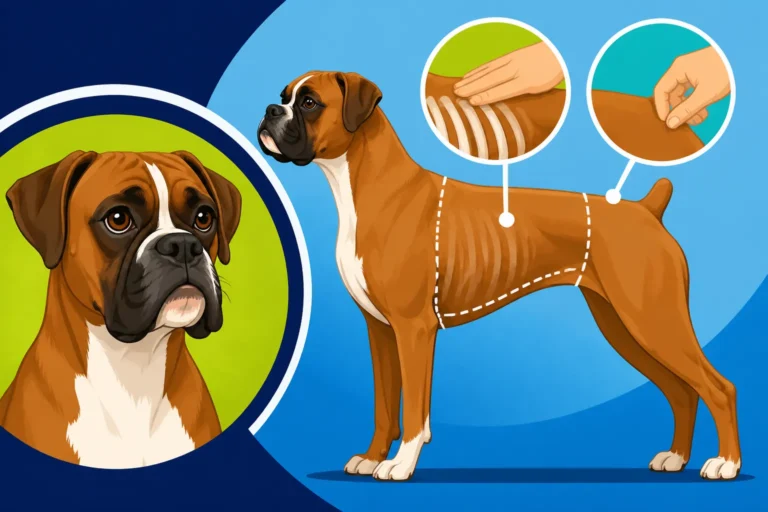
Stairs and a Growing Boxer
It’s a heart-stopping moment for many Boxer owners: seeing your clumsy, energetic puppy try to conquer a flight of stairs, whether it’s a confident bound or a wobbly, uncertain descent. While it might look adorable, or even impress you with their athleticism, allowing a young Boxer puppy unrestricted access to stairs can actually be one of the most detrimental things for their long-term joint health. Their rapidly developing bodies just aren't designed to handle that kind of repetitive impact.
This guide will walk you through the very real risks that stairs pose to a developing Boxer puppy and explain why restricting their access isn't just a suggestion, but a crucial part of ensuring their long-term health and mobility. We'll delve into the science behind growth plate vulnerability, discuss practical strategies for managing stairs in your home, and touch on how these considerations evolve as your Boxer ages.
Understanding the Vulnerable Joints of a Growing Boxer
It’s easy to look at a Boxer puppy, all legs and clumsy enthusiasm, and think they’re indestructible. They bounce, they zoom, they tackle everything with gusto. However, beneath that playful exterior, their skeletal system is undergoing rapid and delicate development, making them particularly vulnerable to certain types of stress and injury. Their joints, especially, are not yet fully formed or robust enough to handle the repetitive impact of navigating stairs.
The Delicate Nature of Growth Plates and Puppy Joint Development
At the ends of the long bones in your Boxer puppy's legs are areas known as "growth plates," or physes. These are essentially softer, cartilaginous areas where new bone cells are produced, allowing the bones to lengthen as your puppy grows. Think of them like the construction zones of your puppy's skeleton. Unlike mature bone, which is dense and strong, growth plates are relatively fragile and easily damaged. They remain "open" and vulnerable until your Boxer reaches skeletal maturity, which can vary but is generally between 12 and 18 months of age, or sometimes even later for larger breeds.
When a puppy repeatedly runs or jumps up and down stairs, the impact and twisting forces put immense stress on these delicate growth plates. This isn't just about a one-off stumble; it's the cumulative effect of constant jarring. Imagine jumping off a high step repeatedly onto an immature joint – that’s essentially what your puppy is doing. Over time, this stress can lead to inflammation, microfractures, or even complete closure of the growth plate prematurely. Any injury to a growth plate can interfere with the normal growth process, potentially leading to limb deformities, uneven leg length, or compromised joint function later in life. This is why careful management of a Boxer's physical activity, including stair use, is paramount during their rapid growth phase. Growth Limits on a Boxer Puppy's Joints delves into this in more detail.
Long-Term Health Implications from Early Joint Stress
The consequences of neglecting a Boxer puppy's joint protection during their formative months can extend far beyond immediate lameness. Boxers are unfortunately predisposed to several orthopedic conditions, such as hip dysplasia and elbow dysplasia. These are complex conditions where the joints don't develop correctly, leading to instability, pain, and eventually arthritis. While genetics play a significant role, environmental factors, including excessive or inappropriate exercise like stair climbing at a young age, can exacerbate these predispositions.
Repetitive impact on immature joints can contribute to the abnormal development of the joint surfaces, making them more susceptible to wear and tear. This can accelerate the onset and severity of conditions like Boxer Hip Dysplasia and Spondylosis or elbow dysplasia. Even if your Boxer doesn't develop severe dysplasia, the chronic stress can lead to early-onset arthritis, causing pain, stiffness, and reduced mobility as they age. A Boxer with arthritis might struggle with stairs as an adult, a problem that could have been mitigated by proactive care during puppyhood. Ensuring your Boxer puppy has a well-balanced diet, perhaps supported by reputable brands like Ollie that focus on joint-supporting ingredients, also plays a critical role in healthy development. Feeding a Boxer Puppy Through the Growth Year provides further insights into proper nutrition.
When to Safely Introduce Stairs to Your Boxer Puppy
So, if stairs are a no-go for very young puppies, when exactly can you start to introduce them? The answer isn't a hard-and-fast date, but rather a flexible guideline based on your Boxer's individual development, with a strong emphasis on caution and observation. Rushing this process can undo all your good intentions.
The "Wait and See" Approach for Young Pups
For most Boxer puppies, the general recommendation is to avoid regular, unsupervised stair use until their growth plates have largely closed, typically around 12 to 18 months of age. While your Boxer might look fully grown much earlier, their bones and joints are still maturing internally. Before this time, every single ascent or descent of a staircase carries a risk. It's not just about them falling; it's about the jarring impact on those developing joints.
During the initial months, especially up to six months old, you should actively prevent your Boxer puppy from using stairs. This means carrying them up and down, even if they're getting heavy, or using physical barriers like baby gates to block access. This might seem like a lot of effort, but it's a small investment in their long-term health. Consider that a healthy, mobile adult Boxer will be infinitely more enjoyable to live with than one suffering from preventable joint issues later on. Remember, Boxer Puppyhood That Lasts Three Years is a marathon, not a sprint, when it comes to their physical development.
Gradual and Supervised Training for Stair Navigation
Once your Boxer puppy is older – ideally over 12 months, and definitely with veterinarian approval if you have any concerns – you can begin a very gradual and supervised introduction to stairs. This isn't about letting them bolt up and down; it's a controlled training exercise. Start with a short flight of stairs, perhaps just two or three steps, and use a leash and positive reinforcement.
Encourage them with treats and praise, taking one step at a time. The goal is a slow, deliberate movement, not a hurried scramble. Teach them to go down first, as this often puts less strain on the joints than jumping up. Make it a calm, confident experience. If they seem hesitant or struggle, stop and try again another day. Never force them. You might find a high-value treat from a brand like Chewy, or even a small portion of a fresh food diet like Ollie, can be incredibly motivating for these training sessions. Always supervise them, even after they seem to have mastered it, especially during their enthusiastic zoomies, as Whether a Boxer Puppy Should Jump applies to stairs too.
Practical Strategies for Managing Stairs with Your Young Boxer
Living in a multi-level home with an energetic Boxer puppy who shouldn't be using stairs can feel like a logistical challenge. However, with some planning and the right tools, it's entirely manageable. The key is consistency and ensuring everyone in the household understands and follows the rules.
Utilizing Physical Barriers and Assistance Devices
One of the most effective ways to prevent unsupervised stair use is to install sturdy pet gates at the top and bottom of your staircases. These should be tall and robust enough to prevent a determined, growing Boxer from jumping over or pushing them down. You can find excellent options on Amazon or Chewy, ensuring they are securely mounted. This creates a safe, contained environment and removes the temptation and risk.
As your Boxer grows, carrying them might become impractical, especially if you have several flights of stairs or physical limitations yourself. In these cases, consider a dog ramp. While less common for interior stairs, they can be incredibly helpful for a dog that needs to avoid impact, particularly if they are recovering from an injury or if you have a very short set of steps that could still be problematic. For very large or elderly Boxers, a supportive harness or sling can be used to gently assist them up and down, providing stability and reducing strain. Carts and Slings for a Boxer With Myelopathy discusses similar supportive devices.
Safe Lifting Techniques and Training for Calmness
For young Boxer puppies, carrying them is the safest option. However, as they grow quickly, their weight can become substantial. It's crucial to use proper lifting techniques to protect both your back and their developing body. Always lift them by supporting their chest and hindquarters, keeping their spine straight and avoiding any twisting motions. If you have a large pup, it might be a two-person job.
Beyond physical barriers, training is vital. Teach your Boxer puppy a "wait" or "stay" command at the top and bottom of the stairs. This isn't just for safety around stairs but also for general impulse control, which is incredibly useful for a breed known for its exuberant personality. Reinforce calmness around the stairs, ensuring they don't see them as an invitation for a wild dash. If you teach them to approach stairs slowly and deliberately when permitted, you're not only protecting their joints but also building their confidence and obedience. This methodical approach will pay dividends as they mature and their physical capabilities increase, reducing the likelihood of accidents or injuries down the line.
Stairs and the Boxer Through Different Life Stages
While the focus on protecting a growing Boxer's joints from stair-related stress is paramount, the relationship between Boxers and stairs continues to evolve throughout their lives. Considerations change as they transition from a rambunctious adult to a senior companion, especially if health issues arise.
Navigating Stairs with an Older Boxer or One with Health Challenges
As your Boxer reaches their golden years, typically starting around seven or eight years old, their body naturally begins to show signs of wear and tear. Arthritis is common in older dogs, and conditions like Arthritis in an Older Boxer can make navigating stairs painful and difficult. Muscle mass can decrease, balance might not be as sharp, and even their vision can dim, making each step a potential hazard. If you notice your senior Boxer hesitating at the stairs, struggling to go up or down, or showing signs of discomfort afterward, it's a clear signal that they need assistance.
For Boxers diagnosed with conditions like Degenerative Myelopathy in an Older Boxer, a progressive neurological disease that affects their ability to use their back legs, stairs become an impossibility without significant help. In these cases, ramps or carrying them become essential again. Investing in sturdy, non-slip ramps can provide a smooth transition between levels, reducing the risk of falls and injury. For shorter flights, a simple supportive harness, perhaps one you can find on Amazon, can offer a handle to steady them. It's about maintaining their quality of life and preventing unnecessary pain or accidents.
Post-Surgery Precautions and Ongoing Joint Support
Beyond age-related issues, there might be times in an adult Boxer's life when stair use needs to be severely restricted due to injury or surgery. Whether it's recovery from a cruciate ligament repair, a soft tissue injury, or even a spay/neuter, restricting stair access is often a critical component of post-operative care. Vets will typically recommend strict rest, and this includes preventing jumping, running, and stair climbing, which could re-injure surgical sites or put excessive strain on healing tissues.
Even for healthy adult Boxers, ongoing joint support can be beneficial, especially for a breed prone to orthopedic issues. This includes maintaining a lean body weight, providing appropriate exercise that doesn't overstress joints, and potentially supplementing their diet with joint-friendly nutrients. Many high-quality dog foods, including some offered by Chewy, incorporate ingredients like glucosamine and chondroitin. You can also explore fresh food options like Ollie, which often tout their focus on whole, nutritious ingredients that support overall health, including joints. Regular check-ups with your veterinarian will help monitor their joint health and allow for early intervention if any issues arise, ensuring your Boxer remains as active and comfortable as possible throughout their life.
| Boxer Life Stage | Stair Management Recommendations | Key Considerations |
|---|---|---|
| Puppy (0-12 months) | Strictly restrict access. Carry up and down. Use baby gates. Avoid any jumping or uncontrolled running on stairs. | Growth plates are open and extremely vulnerable to injury. High risk of long-term joint damage (e.g., hip/elbow dysplasia, early arthritis). |
| Adolescent (12-18 months) | Gradual, supervised introduction. Start with short flights, on a leash, one step at a time, using positive reinforcement. Prioritize going down slowly. Continue using gates for unsupervised access. | Growth plates may still be closing. Joints are strengthening but still susceptible to repeated high impact. Focus on controlled movements, not speed. |
| Adult (18 months – 7 years) | Generally safe for controlled use. Encourage walking, not running or jumping. Ensure good footing (non-slip surfaces). Monitor for any signs of discomfort. | Joints are mature. Risk is lower but still present with excessive impact or poor footing. Maintain lean body weight and appropriate exercise. |
| Senior (7+ years) | Assess individually. Provide assistance (ramps, slings) if struggling. Keep stairs well-lit and clutter-free. Use gates if balance is an issue. Consider modifying the home environment. | Arthritis, muscle weakness, decreased balance, and neurological conditions (e.g., Degenerative Myelopathy) are common. Stairs can cause pain, increase fall risk, and exacerbate existing conditions. |
| Post-Surgery / Injury | Strict restriction. Follow veterinary advice precisely. This will likely involve complete avoidance of stairs, with the Boxer confined to one level or carried, to prevent re-injury and allow proper healing. | Healing tissues are fragile. Any strain can compromise recovery, prolong healing time, or cause permanent damage. |
Disclaimer
This article is for general informational purposes only and does not constitute professional advice. Laws, prices and regulations vary by location and change over time. Consult a qualified professional for guidance on your specific situation.