Whether a Flat-Faced Boxer Can Swim Safely
Many Boxer owners dream of enjoying water activities with their enthusiastic pups, but a nagging worry often arises: can a flat-faced Boxer actually swim safely? It's a valid concern, as their unique anatomy presents challenges that other breeds might not face. This guide will walk you through the realities, risks, and crucial precautions necessary to ensure your Boxer's safety and enjoyment around water, should you choose to introduce them to it.
Understanding the Challenges of Brachycephaly and Water for Boxers
The defining characteristic of a Boxer's charming face, its brachycephalic (flat-faced) structure, is also its biggest hindrance when it comes to swimming. This isn't just about how cute they look; it's about their fundamental ability to breathe and move efficiently, especially in an environment like water.
Breathing Difficulties in Water
Boxers, like all brachycephalic breeds, have foreshortened muzzles and often narrower nostrils, elongated soft palates, and sometimes hypoplastic tracheas (smaller windpipes). On land, this already means they can struggle to take in enough air, particularly when excited or exercising vigorously. When they're in water, these breathing challenges are amplified exponentially.
Think about it: they need to hold their head up higher to keep their nose and mouth clear of the water, which puts additional strain on their neck and back. Even with their head up, the effort to breathe becomes far greater because the airways are simply not designed for the rapid, deep breaths needed for sustained swimming. This restriction makes it incredibly difficult for them to get enough oxygen, leading to quick fatigue and even panic. They can't pant as efficiently to cool themselves either, which is a huge issue since swimming is strenuous and generates body heat. For a deeper dive into their breathing challenges, you might find Snoring and Noisy Breathing in a Boxer insightful.
Body Structure and Buoyancy Issues
Beyond their faces, a Boxer's overall physique is not built for natural buoyancy. They are muscular, dense dogs with a powerful build. While this is fantastic for their signature "boxer punch" play style and athletic prowess on land, it means they tend to sink rather than float. Unlike retrievers or other water-loving breeds with lighter bone structures and often more body fat, Boxers simply don't have the natural flotation device built in.
Imagine trying to swim while wearing a weighted vest – that's often what it feels like for a Boxer in the water. Their strong legs might propel them for a short burst, but the sheer effort required to stay afloat and move forward rapidly drains their energy. This lack of natural buoyancy, combined with their breathing difficulties, makes them prone to tiring out very quickly, which can turn a fun splash into a dangerous situation in mere moments.
Temperature Regulation and Overheating Risk
Boxers are notoriously prone to overheating, a direct consequence of their brachycephalic anatomy. Their flat faces make it harder for them to efficiently cool down through panting, which is a dog's primary method of heat dissipation. When they exert themselves, like during play or intense exercise, their body temperature can rise rapidly. This risk is compounded dramatically in water.
Swimming is a full-body workout. Even a short period of paddling can be intensely strenuous for a Boxer struggling with buoyancy and breathing. The combination of physical exertion and their inefficient cooling system means they can overheat dangerously fast, even in cool water. Water might feel refreshing to us, but for a Boxer working hard, it can quickly become a heat trap, especially if the air temperature is also warm. Owners should always be mindful of How Fast a Flat-Faced Boxer Overheats and factor this into any water activities. Knowing the signs of overheating is critical for any Boxer owner.
Assessing Your Boxer's Individual Capabilities and Enthusiasm
It's tempting to think of all Boxers as a single unit, but like people, each dog is an individual with their own personality, physical condition, and comfort level. When it comes to swimming, it's absolutely vital to assess your Boxer, rather than making assumptions based on the breed alone. Not all Boxers are destined to be water dogs, and that's perfectly okay.
Not All Boxers Are Alike: Acknowledging Individual Differences
While the breed generally faces challenges in water, some Boxers genuinely enjoy a good splash, while others want absolutely nothing to do with it. You might have a Boxer who loves to wade up to their belly, happily chasing toys near the shore, but panics if their feet leave the ground. Then there might be another who, against all odds, has developed a knack for paddling a short distance.
These differences can come down to early exposure, individual conformation (some Boxers have slightly less pronounced brachycephaly than others), and sheer personality. It's important to remember that just because some Boxers can manage a little swimming, it doesn't mean your Boxer will or should. Their unique physical makeup, including their overall fitness and muscling, plays a huge role. Learning what a Boxer needs to stay lean and muscled can help you understand their general physical condition, but water introduces new stresses.
Observing Their Water Temperament and Interest
Before you even think about full-on swimming, pay close attention to your Boxer's natural inclination around water. Do they cautiously sniff a puddle? Do they try to drink from the garden hose? Do they enthusiastically splash in a shallow kiddie pool? Or do they actively avoid getting their paws wet?
Never, ever force a Boxer into the water. This can create a traumatic experience that makes them fearful of water for life, and it's dangerous if they panic. Instead, let them explore at their own pace. If they show curiosity, encourage it gently with praise and treats. Start with very shallow water, where their feet can always touch the bottom. Their body language will tell you everything you need to know:
- Relaxed posture, wagging tail, gentle sniffing, happy splashing: Good signs of comfort.
- Stiff body, ears back, tail tucked, trying to escape, whining: Clear signs of distress or fear.
Respect their boundaries. If they're not keen, don't push it. There are plenty of other fun ways to exercise and cool down, which we'll cover later.
Physical Conditioning: More Than Just Land Fitness
A Boxer's general physical conditioning is crucial, but it's important to understand that "land fit" doesn't automatically translate to "water fit," especially for a brachycephalic breed. A Boxer that can run for miles might still struggle immensely in the water due to the unique demands on their respiratory system and buoyancy.
Before considering any water activity beyond wading, ensure your Boxer is in excellent health. Regular veterinary check-ups are essential, particularly focusing on their cardiac and respiratory health. Conditions like Subaortic Stenosis in a Boxer Puppy or Boxer Cardiomyopathy and the Holter Monitor can make swimming incredibly dangerous, even for short periods. Even a fit Boxer should have their exercise carefully managed, as described in Boxer Exercise Needs and the Heat That Limits Them.
Assess their weight and muscle tone by Reading a Boxer's Ribs and Waist. An overweight Boxer will have even greater difficulty staying afloat and will be at higher risk of overheating and exhaustion. Even if your Boxer is in peak physical condition on land, they will likely have very limited stamina in water. Keep initial sessions extremely short, think minutes, not long stretches, and always be prepared to end the activity immediately.
Essential Safety Measures for Boxer Swimming
If, and only if, your Boxer shows a genuine interest in water and you've thoroughly assessed their physical capabilities, then safety must become your absolute priority. For a brachycephalic breed like a Boxer, introducing them to water requires more than just common sense; it demands strict adherence to specific precautions.
Life Vests are Non-Negotiable
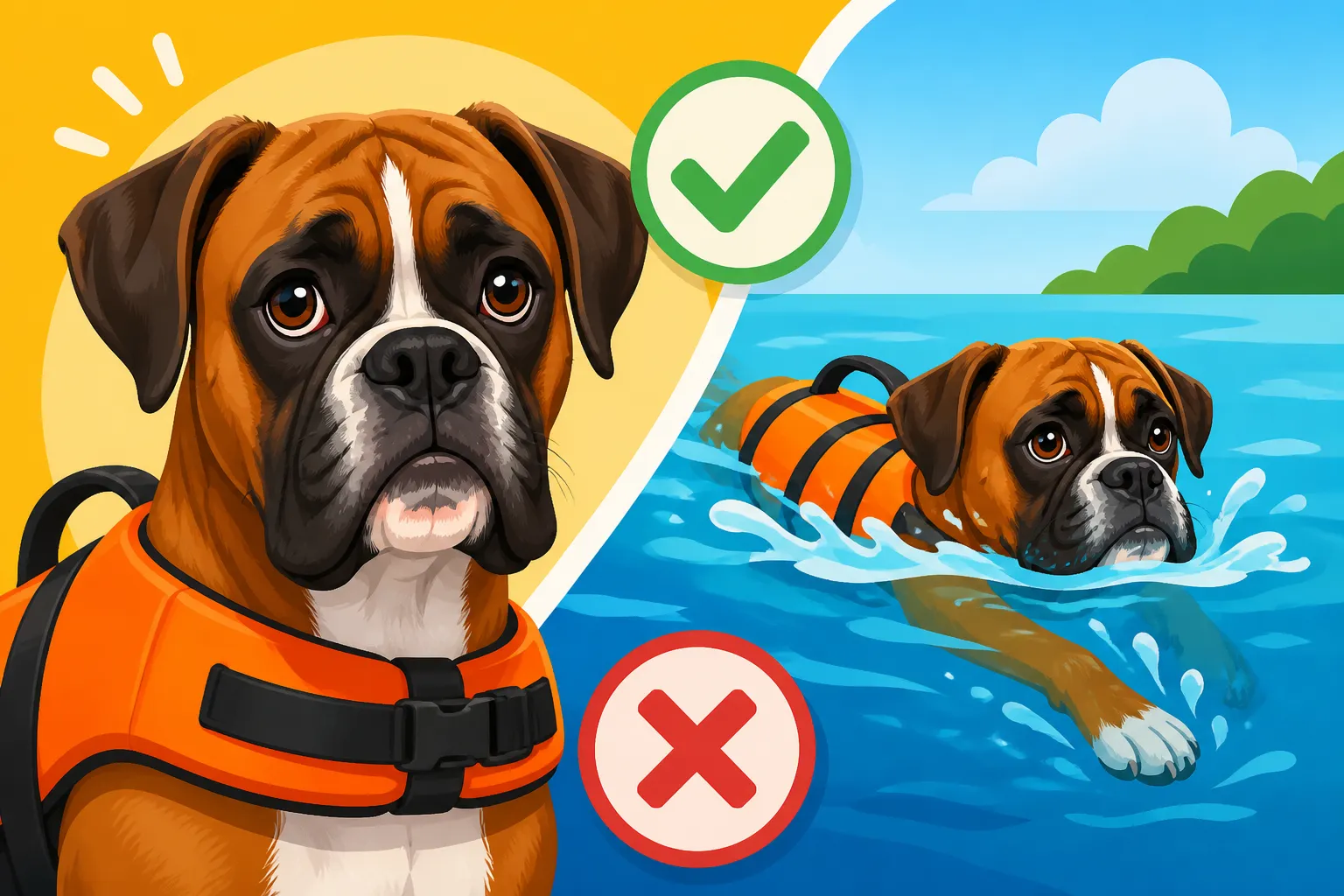
Let me say this clearly: a life vest is not optional for a Boxer in any body of water deeper than a few inches. It is an absolute necessity. Given their dense, muscular build and inherent buoyancy challenges, a life vest provides the critical flotation they lack.
A good quality life vest for a Boxer should:
- Provide ample buoyancy: Look for vests with foam panels along the back and sides, not just under the belly.
- Support their head: Many vests have a neck float or chin support, which is paramount for a Boxer to keep their flat face clear of the water, allowing them to breathe without excessive effort. This is probably the single most important feature for a Boxer.
- Fit securely: It should be snug but not restrictive, with adjustable straps around the chest and belly. It should not shift or ride up when they're in the water.
- Have a strong handle: This allows you to easily lift your Boxer out of the water if they get tired or into distress.
You can find excellent options on platforms like Amazon, searching specifically for dog life vests with good neck support. Invest in one before you even think about approaching water. Getting them accustomed to wearing it on land, with treats and positive reinforcement, will make the water experience much smoother.
Constant, Active Supervision is Key
Leaving a Boxer unsupervised around water, even for a second, is a recipe for disaster. This means you need to be within arm's reach, ready to intervene instantly. Forget about reading a book or scrolling on your phone; your eyes must be glued to your Boxer the entire time.
Learn to recognize the subtle signs of a Boxer tiring or getting into trouble:
- Slowing paddle strokes: Their enthusiasm wanes, and their paddling becomes less energetic.
- Head dipping lower: They struggle to keep their face clear, or water splashes over their nose.
- Wide, panicked eyes: A clear sign of distress.
- Gasping or heavy breathing: Even more pronounced than their usual brachycephalic breathing.
- Whining or struggling: They might try to claw at you or the side of the pool/boat.
At the first sign of any of these, gently but quickly remove them from the water. It's always better to err on the side of caution.
Choosing the Right Environment
Not all bodies of water are suitable for a Boxer.
- Avoid: Open oceans with waves, strong river currents, deep lakes without easy exits, pools with steep sides, and crowded areas where they might get bumped or jostled.
- Ideal: Calm, shallow lakes with a gentle slope, kiddie pools in your backyard, or designated dog-friendly beaches with very calm, shallow waters are far safer options. The water should be comfortably warm, but not hot. Remember, Keeping a Boxer Cool When It Cannot Pant Enough is paramount.
Ensure there is an easy entry and exit point, especially if using a pool. A ramp specifically designed for dogs or shallow steps are ideal. Never rely on them being able to haul themselves out of a steep-sided pool.
Gradual Introduction and Positive Reinforcement
Introduce your Boxer to water slowly, building positive associations.
- Life vest first: Let them wear the life vest around the house for short periods, associating it with treats and praise.
- Shallow water play: Start with a kiddie pool in the backyard, just a few inches of water. Throw a favorite floating toy. Allow them to simply wade and splash.
- Progression to deeper water: Once comfortable with the vest and shallow water, move to a calm, very shallow area where they can still touch the bottom, but might have to paddle a little.
- Support and praise: When they do start to paddle, support them gently under their belly, praising them enthusiastically. Keep sessions extremely short, no more than a few minutes of active paddling at first. End on a positive note, even if it's just one good paddle stroke.
Post-Swim Care and Recovery
After any water activity, proper care is crucial:
- Thorough drying: Especially around their face folds, ears, and between their toes. Boxers are prone to skin issues, and moisture trapped in folds can lead to infections. Wiping a Boxer's Jowls and Muzzle Folds daily is good practice, and even more so after water.
- Ear check: If your Boxer has natural ears, check for water. If cropped, ensure they are dry. Moisture can lead to ear infections.
- Rest: Even short bursts of swimming are tiring. Provide a quiet, cool place for them to rest and recover.
- Hydration: Offer fresh water, as they might have swallowed some pool or lake water.
Alternatives to Full-On Swimming for Water-Loving Boxers
Not every Boxer needs to be a proficient swimmer to enjoy water. Many Boxers simply aren't built for it, and that's perfectly fine! There are numerous safe and fun ways for your water-loving Boxer to interact with water without the inherent risks of deep-water swimming.
Shallow Wading Pools and Sprinklers
For many Boxers, a simple kiddie pool in the backyard is the perfect solution. Fill it with just enough water for them to splash, lie down, and cool off without their feet ever leaving the ground. This allows them to experience the refreshing sensation of water, chase floating toys, and "dig" in the water, which many Boxers adore, without any swimming required. It's a fantastic way to beat the heat on a warm day.
Sprinklers or a gentle stream from a garden hose can also provide endless entertainment and cooling relief. Many Boxers love to "attack" the water stream, jump through sprinklers, or simply stand in the cool spray. It's a low-impact, safe way for them to interact with water and cool down without any risk of drowning or overexertion. These activities are excellent for managing their energy, which is important given that Why a Boxer Wrecks Things When Under-Exercised is often due to boredom.
Hydrotherapy and Assisted Aquatic Exercise
For Boxers needing low-impact exercise, or those in rehabilitation from an injury, professional hydrotherapy facilities can be an excellent option. These centers often have specialized pools with ramps and trained therapists who work with dogs one-on-one. Critically, dogs in hydrotherapy almost always wear a life vest, and the sessions are closely monitored for duration and exertion levels.
Hydrotherapy provides a weightless environment that's gentle on joints, making it ideal for Boxers with conditions like arthritis or those needing to build muscle without high impact. The controlled environment and professional supervision mitigate many of the risks associated with recreational swimming. This isn't about teaching them to "swim" for sport, but rather using water as a therapeutic tool.
Training and Mental Enrichment Around Water
Even if your Boxer isn't a swimmer, their curiosity about water can be channeled into training and mental enrichment. Teaching strong "leave it" and "come" commands, especially in distracting environments like near a pond or stream, is invaluable for safety. A well-trained Boxer is a safer Boxer.
Platforms like BAXTER & Bella offer online puppy and dog training programs that can help reinforce these crucial commands, making your Boxer more responsive in all situations, including when they're near tempting bodies of water. Even if you're just playing with a hose in the backyard, using short, engaging training sessions can help keep their minds active and prevent boredom, which is key for a breed like the Boxer, as Training a Boxer That Gets Bored Fast is a common challenge for owners. You can incorporate water into fun, non-swimming games, such as retrieving floating toys from a very shallow pool or practicing recall with wet paws.
Ultimately, whether your flat-faced Boxer can swim safely is a question with a nuanced answer: some can, but only with extreme caution and the right equipment. For most, it's safer and more enjoyable to find alternative ways to enjoy water. Prioritizing their health, safety, and comfort should always be the guiding principle in every decision you make regarding your beloved Boxer.
Disclaimer
This article is for general informational purposes only and does not constitute professional advice. Laws, prices and regulations vary by location and change over time. Consult a qualified professional for guidance on your specific situation.