Keeping a Boxer Cool When It Cannot Pant Enough
Few things are more frightening for a Boxer owner than watching their beloved dog pant furiously, struggle for breath, and look utterly miserable on a warm day. Because of their unique flat faces, our Boxers have a much harder time regulating their body temperature than most other breeds, making them incredibly vulnerable to overheating, even when the weather doesn't feel extreme to us. This comprehensive guide will walk you through exactly why Boxers struggle with heat, how to spot the early warning signs of overheating, and, most importantly, provide practical, actionable strategies to keep your Boxer cool, comfortable, and safe, year-round.
Why Boxers Struggle with Heat More Than Other Breeds
It's a common lament among Boxer owners: "My dog just can't handle the heat!" And it's true. While any dog can overheat, Boxers are uniquely predisposed to it due to their distinctive physical characteristics. Understanding why they struggle is the first step in being able to effectively protect them. It's not just about them being "soft"; it's about their very anatomy.
The Brachycephalic Challenge: Understanding Their Airway Anatomy
Boxers are what we call a "brachycephalic" breed, meaning they have a shortened snout and a relatively flat face. While this gives them their signature charming expression, it comes with significant physiological trade-offs. Their nasal passages are often compressed, their soft palate can be elongated, and their tracheas can be narrower than dogs with longer snouts. Imagine trying to breathe through a pinched straw while running a marathon – that's often what a warm day feels like for a Boxer.
This anatomical structure means that the air they breathe in doesn't have enough space or time to cool down before it reaches their lungs. Dogs primarily cool themselves by panting, which involves rapid, shallow breathing that helps evaporate moisture from their tongues and respiratory tracts, carrying heat away from the body. For a Boxer, this essential cooling mechanism is significantly less efficient. The restricted airflow means less air exchange and less evaporative cooling, making them much more susceptible to heat build-up. It's like having a broken air conditioner in a hot car; the system just isn't working as it should.
Moreover, many Boxers have stenotic nares, which means their nostrils are too narrow, further restricting airflow. This adds another layer of difficulty to their breathing and cooling efforts. Owners often hear their Boxers snore loudly or make noisy breathing sounds, even when relaxed, which is a direct indicator of these airway challenges. When stressed by heat or exercise, these issues are severely exacerbated, quickly escalating the risk of overheating.
The Lack of Efficient Panting and Cooling Mechanism
As mentioned, panting is a dog's primary defense against overheating. A long-nosed dog can draw in a large volume of air, rapidly move it over the moist surfaces of its mouth, tongue, and respiratory tract, and exhale warm, humid air. This process effectively cools the blood flowing through these areas. Think of it like a natural swamp cooler.
For a Boxer, the compact nature of their upper respiratory system limits both the volume of air they can move and the surface area available for evaporation. They work much harder to pant, which ironically generates more body heat. It's a vicious cycle: they pant more to cool down, but the effort of panting makes them hotter. This makes their body temperature rise faster and fall slower compared to a German Shepherd or a Labrador, even in identical environmental conditions. Their limited ability to effectively dissipate heat means that what feels like a perfectly pleasant warm day to you could be a dangerous sauna for your Boxer.
Furthermore, some Boxers also have a thicker coat than might be immediately apparent, which, combined with their dense musculature, adds another layer of insulation. While their short fur seems low maintenance, it doesn't offer much protection from intense sun, nor does it magically wick away heat when their internal cooling system is already compromised. This combination of inefficient internal cooling and external factors makes them uniquely fragile in rising temperatures.
Their Athleticism Can Be a Double-Edged Sword
Boxers are renowned for their boundless energy, playfulness, and muscular athleticism. They love to run, jump, and engage in vigorous play. This is part of their charm and why we love them so much! However, this very trait can put them at higher risk for overheating. A Boxer's enthusiasm often overrides their physiological limits, especially when they're having fun. They might push themselves too hard during a game of fetch or a romp at the park, not realizing the danger they're putting themselves in.
When a dog exercises, their muscles generate a significant amount of heat. In a normal-nosed dog, this heat can be effectively managed through increased panting. But for a Boxer, that excess heat quickly overwhelms their already struggling cooling system. This means that activities that would be perfectly safe for another breed could quickly lead to a dangerous situation for a Boxer. A seemingly innocent game of chasing a frisbee for an extra five minutes on a warm afternoon can be enough to tip them over the edge into heat exhaustion.
This means owners have to be extra vigilant and proactive in managing their Boxer's activity levels, especially when temperatures are rising. We have to be their sensible brain, knowing that their heart and spirit will always say "go, go, go!" This often means cutting playtime short, enforcing rest breaks, and opting for less intense activities during warmer parts of the day. It's a balancing act between allowing them to express their natural zest for life and keeping them safe.
Recognizing the Signs of Overheating in Your Boxer
Being able to read your Boxer's body language and spot the subtle cues that they're getting too warm is absolutely critical. Early intervention can prevent a mild discomfort from escalating into a life-threatening emergency. Don't wait for obvious distress; look for the whispers before they become shouts.
Subtle Early Warning Signs That Are Easy to Miss
Before a Boxer is in full-blown distress, they'll often give off subtle signals that they're struggling with the heat. These are the cues you need to train yourself to notice, especially when you're out and about or even just inside on a warm day. One of the first things you might observe is an increase in their panting rate, even when they haven't been exercising vigorously. It might sound a little heavier or more rapid than usual, with less "gap" between breaths. They might also start seeking out cool spots to lie down, perhaps on tile floors or in shady areas, more frequently than normal. They're instinctively trying to lower their body temperature.
Another subtle sign is a change in their demeanor. Your usually playful, boisterous Boxer might become a bit more sluggish or less interested in their favorite toy. They might also start to seem a little restless, unable to get truly comfortable, constantly shifting position. Their gums might appear a little darker red than their usual healthy pink. You might notice their tongue starting to hang out further than usual, and their eyes might look a bit glazed or more wide-set. These are all their body's quiet ways of saying, "I'm not feeling great, I'm getting too warm." Pay attention to these shifts, as they are your first and best chance to intervene.
If you are seeing these signs, it's time to act immediately. Get them to a cooler area, offer water, and cease any activity. Don't assume they'll just "shake it off." This is especially important for dogs with underlying conditions like Subaortic Stenosis in a Boxer Puppy or Boxer Cardiomyopathy and the Holter Monitor, where cardiovascular strain can be even more dangerous. Recognizing these early signals allows you to prevent serious complications.
Clearer Indicators of Heat Exhaustion
As overheating progresses, the signs become more pronounced and harder to ignore. These indicate that your Boxer is moving beyond just being uncomfortably warm and is now experiencing heat exhaustion, which is a serious condition that requires immediate and effective action. Their panting will become even more exaggerated, deep, and often noisy, sometimes accompanied by a distinctive snorting or gasping sound as they work harder to get air. Their breathing might seem labored, and they might appear very distressed.
You'll likely notice excessive drooling, with thick, stringy saliva. This is a tell-tale sign that their body is desperately trying to cool itself through evaporation, but their system is overwhelmed. Their gums will appear very red or even brick red, and if you press on them, the color might take longer than two seconds to return (this is called prolonged capillary refill time). They might also become visibly weak, stumbling, or unsteady on their feet. Vomiting or diarrhea can also occur as their internal organs begin to be affected by the rising temperature.
At this stage, your Boxer is in real trouble. Their body temperature is rising to dangerous levels, and without quick intervention, it can rapidly escalate to heatstroke. It's crucial not to dismiss these signs. Every minute counts. Understanding Signs a Boxer Is Overheating is key to a swift response.
Emergency Red Flags: Heatstroke Symptoms
Heatstroke is a medical emergency that can be fatal if not treated immediately. If your Boxer is showing any of these symptoms, you need to get them to an emergency vet right now. These are the most severe and dangerous signs of overheating. They include collapse, seizures, loss of consciousness, or becoming completely unresponsive. Their gums might turn a pale grey or even bluish color, indicating poor oxygenation, which is a terrifying sight for any owner.
Muscle tremors, wobbly gait, or complete inability to stand are also critical signs. They might have glazed eyes that don't seem to focus, and their tongue might be bright red or purple. The vomiting and diarrhea can become more severe, sometimes bloody. Their body will feel hot to the touch, and you might even hear rapid, shallow breathing that sounds like they're struggling immensely. This is not just "feeling hot"; this is their internal systems shutting down due to extreme temperatures.
If you suspect heatstroke, do not wait. This is a race against time. While you are on your way to the vet, you can begin first aid cooling measures, but nothing replaces professional medical attention. The irreversible damage to organs like the brain, kidneys, and liver can occur very rapidly. Be aware that even after apparent recovery, Boxers who have suffered heatstroke can have lingering health issues.
Immediate Steps When Your Boxer is Overheating
When you realize your Boxer is overheating, panic is a natural reaction. But it's vital to stay calm and act decisively. Your immediate actions can make a huge difference in the outcome. Think quickly, move efficiently, and prioritize getting their temperature down safely.
Getting Them to a Cooler Environment Quickly
The very first thing you need to do is remove your Boxer from the heat source immediately. This sounds obvious, but in a moment of panic, it can be overlooked. If you're outside, get them into the shade, a cool car with the AC blasting, or, ideally, into an air-conditioned building. If you're indoors and the house is warm, move them to the coolest room, perhaps one with tile floors, and turn on the fan or AC to full blast.
Even a slight reduction in ambient temperature can start the cooling process. Don't linger. Your priority is to get them out of the direct sun or heat and into an environment where their body isn't absorbing more heat. If you're far from home, a nearby store that allows dogs (like a pet supply store or certain hardware stores) with strong AC could be a temporary refuge. The key is swift relocation to a noticeably cooler space.
Once they're in a cooler environment, ensure they are lying down in a comfortable position, ideally stretched out on their side, to allow for maximum heat dissipation from their body surface. Don't force them into a specific position, but gently encourage them to rest. This initial step creates the foundation for all other cooling efforts.
Applying Water and Cooling Methods Safely
Once your Boxer is in a cooler spot, the next step is to actively cool them down using water. Crucially, do not use ice-cold water or ice packs directly on their skin. While it seems counterintuitive, extremely cold water can cause their blood vessels to constrict, which traps heat inside their body and can worsen their condition. Lukewarm or cool, not cold, water is what you need.
Focus on wetting the areas where large blood vessels are close to the surface: their paws, the groin area, and the underside of their neck. You can use a hose with a gentle spray, wet towels, or even just pour water carefully. Gently wipe down their fur, paying special attention to their belly, armpits, and inside of their legs. You can also place cool, damp towels over these areas, changing them frequently as they warm up. Getting a Boxer's Temperature Down in Minutes is a critical skill here.
Offer them small amounts of cool (again, not icy) water to drink. Don't let them gulp down huge amounts, as this can lead to an upset stomach or even bloat, which is another emergency condition Boxers are prone to. A few sips at a time are best. If they refuse to drink, don't force it, but continue to offer. If you have a fan handy, direct it at them to help the evaporative cooling process. This combination of water and air movement is far more effective than water alone.
When to Seek Emergency Veterinary Care
Even if your Boxer seems to be cooling down and showing improvement after your initial first aid, it's always safest to call your vet. However, if your Boxer exhibits any of the heatstroke symptoms we discussed earlier—collapse, seizures, loss of consciousness, severe vomiting/diarrhea, or extreme lethargy—you must get them to an emergency veterinary clinic immediately. This is not a "wait and see" situation.
Call ahead if you can, to let them know you're coming and that you suspect heatstroke. This allows them to prepare for your arrival and begin treatment protocols as soon as you get there. While en route, continue your cooling efforts in the car with the AC on and wet towels if possible. Every minute counts in preventing long-term organ damage. Remember, Boxers are particularly susceptible, and their condition can deteriorate rapidly.
Even if your Boxer appears to recover, a vet check-up is still highly recommended. Overheating can cause internal damage that isn't immediately visible, such as kidney damage, liver issues, or even a condition called Disseminated Intravascular Coagulation (DIC), which can be life-threatening. A vet can assess their overall condition, perform blood tests, and monitor them for any delayed complications. It's truly better to be safe than sorry when it comes to heatstroke.
Proactive Strategies for Preventing Overheating
Prevention is always better than cure, especially when it comes to Boxer overheating. By implementing smart, proactive strategies into your daily routine, you can significantly reduce the risk of your beloved companion getting too hot. It's all about planning ahead and making conscious choices.
Timing Walks and Outdoor Activities Strategically
This is arguably the most important preventative measure for Boxer owners. During warmer months, you simply cannot walk your Boxer during the hottest parts of the day. This typically means avoiding walks and strenuous outdoor play between 10 AM and 4 PM, sometimes even longer depending on your climate and the specific day's temperature and humidity. Think about it: if it's too hot for you to comfortably exercise, it's definitely too hot for your Boxer.
Instead, shift your Boxer's exercise schedule to early mornings, ideally before the sun has fully risen and started heating everything up, or late evenings after the sun has set and the pavement has had a chance to cool. Even on seemingly mild days, humidity can make a huge difference to a Boxer's ability to cool itself, so always factor that in. Check the pavement temperature with your hand; if it's too hot for your bare hand for seven seconds, it's too hot for your Boxer's paws. You can learn more about The Temperature a Boxer Should Stop Walking At.
Consider shorter, more frequent potty breaks during the day, rather than one long walk. And if you have a yard, make sure there's ample shade available for them if they're outside for any length of time. Remember that grass is usually cooler than asphalt or concrete. This might mean adjusting your own schedule, but it's a small price to pay for your Boxer's safety and comfort.
Creating a Cool and Comfortable Home Environment
Your Boxer's indoor environment is just as crucial as their outdoor activities. Even inside, temperatures can rise to dangerous levels, especially if you live in an older home without central air conditioning, or if you're trying to save on utility bills. Investing in good cooling for your home is essential for a Boxer owner. Air conditioning is ideal, of course, but if that's not an option, strategic use of fans can help.
Place fans in areas where your Boxer likes to rest, but ensure they can move away from the fan if they choose. Circulating air helps with evaporative cooling. Keep blinds and curtains closed during the hottest parts of the day to block direct sunlight and prevent heat from building up inside your home. Consider cooling mats or elevated dog beds, which allow air to circulate beneath them, providing a cooler resting spot than a thick dog bed directly on the floor. Brands found on platforms like Chewy or Amazon often carry a variety of cooling mats that can make a real difference.
Providing access to cool, fresh water is non-negotiable. Have multiple water bowls around the house, and consider adding ice cubes to their water if they enjoy them, or even a pet fountain to encourage drinking. On particularly hot days, a damp towel on the floor for them to lie on can also offer relief. Your home should be their sanctuary from the heat, not another source of stress.
Hydration is Key: Encouraging Water Intake
Adequate hydration is a Boxer's best friend in the fight against overheating. Water helps regulate body temperature, lubricates joints, and aids in overall bodily functions. While it seems simple, some Boxers aren't naturally big drinkers, or they might not drink enough when they're distracted by play or discomfort. Therefore, actively encouraging water intake is crucial.
Always have fresh, clean water readily available both indoors and outdoors. Change the water frequently, as stale or warm water is less appealing. As mentioned, adding ice cubes to their bowl can make it more enticing, especially if they like to crunch on ice. For some Boxers, a pet water fountain can pique their interest and encourage more drinking due to the flowing water. You can find many options on Amazon or Chewy.
Consider incorporating water-rich foods into their diet. Certain fruits and vegetables like cucumber slices, watermelon (without seeds), or apple slices (without core/seeds) can be offered as cool, hydrating treats. You can also freeze low-sodium chicken broth in ice cube trays for a refreshing and tasty hydrating snack. For Boxers who struggle with drinking enough plain water, these creative methods can make a significant difference. Staying hydrated helps their bodies cope with heat more effectively and supports their overall health.
Essential Cooling Gear and Products for Boxers
Beyond timing and environment, there's a whole array of products designed to help keep your Boxer cool. Knowing which ones are genuinely effective and safe can make a big difference in their comfort during warm weather. Not all cooling gear is created equal, and some might be more suitable for your Boxer than others.
Cooling Vests and Bandanas: What Works and What Doesn't
Cooling vests and bandanas are popular options, and they can be quite effective for Boxers if chosen and used correctly. These products typically work by being soaked in water, which then evaporates, creating a cooling effect. The key is to ensure the water actually makes contact with their skin and that the evaporation is happening. A well-fitting cooling vest covers a good portion of their torso, where major blood vessels run close to the surface, and allows for effective evaporative cooling. Many owners report Whether a Cooling Vest Helps a Flat-Faced Boxer significantly during walks.
When selecting a cooling vest, look for one made from a breathable, lightweight material that allows for good air circulation once wet. Avoid anything that is too heavy or insulated, as this can actually trap heat. Bandanas are good for cooling the neck area, but they offer less overall coverage than a vest. Remember to re-wet these items frequently, as their cooling effect diminishes once they dry out. For vigorous activity, they might not be enough on their own but can be a good supplement.
One thing to watch out for is that some vests are designed to "hold" cold packs or gel inserts. While these can provide localized cooling, ensure they don't become too cold and that the gel isn't directly on your Boxer's skin, as this can be too intense and cause constriction. The most effective options rely on simple evaporative cooling from water-soaked fabric.
Elevated Beds and Cooling Mats for Rest
When your Boxer needs to rest and recover, especially after a walk or just on a hot afternoon, their bedding choice can make a significant difference. Traditional plush dog beds, while cozy in winter, can trap heat and become uncomfortably warm. This is where elevated dog beds and cooling mats come into their own.
Elevated dog beds, often made with a mesh or canvas fabric stretched over a frame, lift your Boxer off the hot floor. This allows air to circulate underneath them, preventing heat from building up and providing a much cooler resting surface. Many Boxers love them, and they are durable and easy to clean. This separation from the ground can be surprisingly effective in helping them regulate their temperature while they rest.
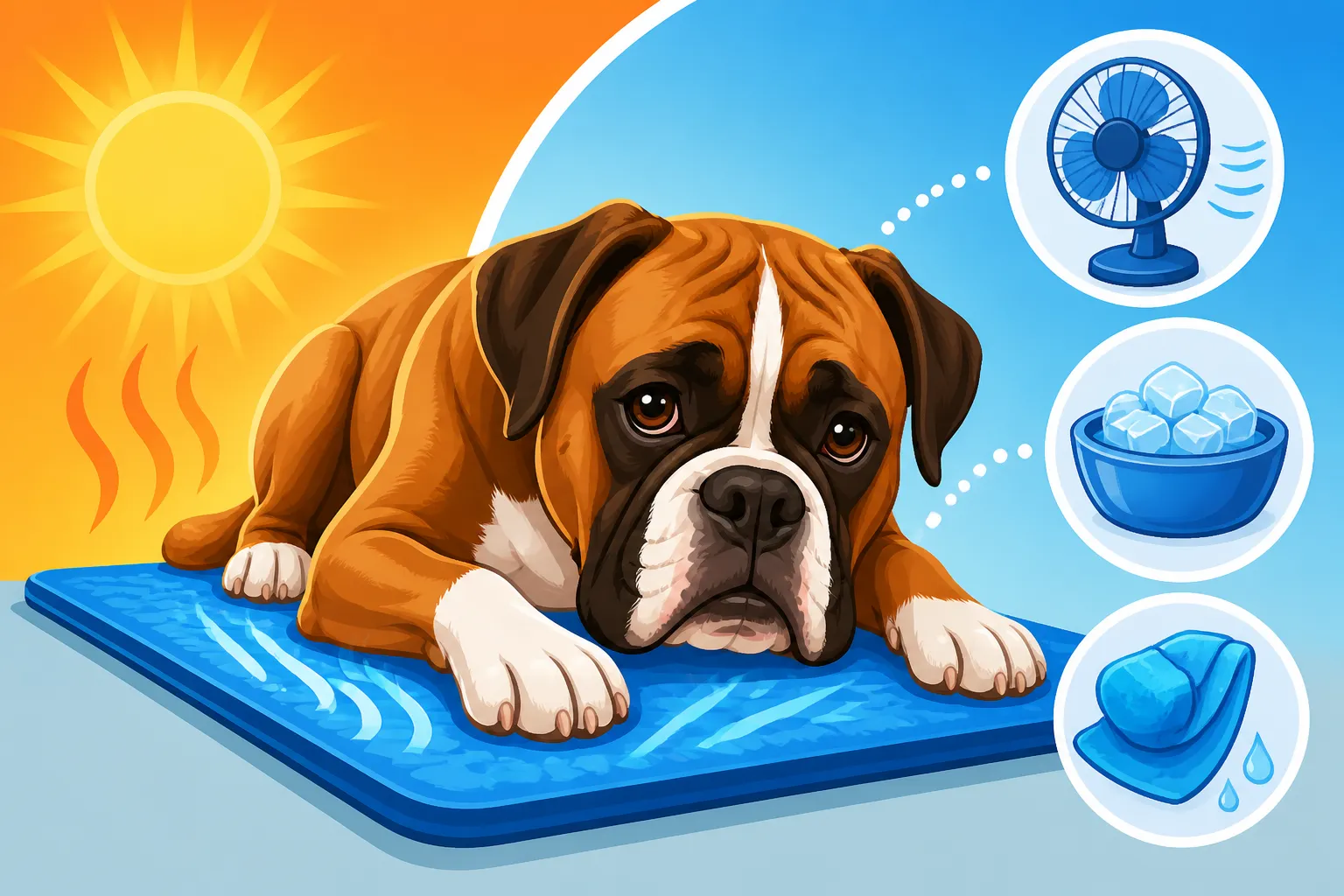
Cooling mats are another excellent option. These typically contain a gel that, when pressure is applied (i.e., when your Boxer lies on it), activates to create a cool surface. They don't require refrigeration or electricity, making them convenient for indoor or outdoor use (in the shade, of course). They can be purchased from pet supply retailers like Chewy or found on Amazon. Just ensure your Boxer isn't a chewer, as puncturing the mat could release the gel. For a non-chewer, they offer a consistent, cool spot for relaxation.
Portable Fans and Personal Cooling Stations
Creating dedicated "cooling stations" for your Boxer, both indoors and out, can be a game-changer. These don't have to be elaborate; often, it's just a strategic combination of existing items. A portable fan is an excellent investment. When directed at your Boxer, even a simple household fan can enhance evaporative cooling and make them feel much more comfortable. For outdoor use, battery-operated portable fans can be invaluable, especially when traveling or at events.
Indoors, combine a fan with a cooling mat or an elevated bed in a quiet, cool corner. You might even place a bowl of ice in front of the fan to create a makeshift "swamp cooler" effect, blowing slightly cooled air towards them. Outdoors, under a shady tree, an elevated bed with a portable fan can give them a much-needed retreat from the ambient heat. Even a small child's paddling pool filled with a few inches of cool water can serve as a personal cooling station for them to splash in or lie down, helping them to quickly reduce body temperature. Paddling Pools and a Boxer That Cannot Cool Itself can be a great resource.
These personal cooling stations empower your Boxer to self-regulate a bit more, giving them a go-to spot when they feel too warm. They learn to associate these areas with comfort and relief, making them more likely to use them when they start to feel the heat.
Dietary Considerations to Support Heat Management
What your Boxer eats, and when they eat it, can also play a role in their ability to cope with warm weather. While food isn't a primary cooling mechanism, smart dietary choices can support hydration and avoid adding unnecessary metabolic heat.
The Role of Hydration-Rich Foods
Just like for humans, consuming foods with high water content can contribute to a Boxer's overall hydration levels. While kibble typically has very low moisture, adding certain fresh foods can make a difference. As mentioned, small amounts of seedless watermelon, cucumber, or even plain, cooked zucchini or green beans can be hydrating and refreshing treats. These can be particularly appealing when chilled. Some owners find that incorporating a small amount of wet food into their Boxer's diet, especially during warmer months, can also boost their fluid intake.
Beyond specific treats, consider the overall quality of your Boxer's diet. A well-balanced, easily digestible diet supports their overall health and allows their body to function optimally, including temperature regulation. If you're feeding a subscription-based fresh food service like Ollie, ensure the portions are appropriate for their activity level and that the ingredients are hydrating. Always introduce any new foods gradually to avoid upsetting their sensitive digestive system, which Boxers are prone to.
Remember that these foods are supplements to, not replacements for, fresh water. They simply offer an additional way to sneak in some extra hydration, which can be particularly helpful for Boxers who are reluctant drinkers.
Avoiding Heavy Meals During Hot Periods
Digesting a large, heavy meal requires a significant amount of energy, and this metabolic process generates internal body heat. While this can be beneficial in cold weather, it's the last thing your Boxer needs when they're trying to stay cool. Therefore, it's advisable to adjust their feeding schedule and potentially even the size of their meals during periods of high heat.
Instead of one large meal, consider splitting your Boxer's daily food ration into two or even three smaller meals. This reduces the metabolic load at any one time and allows their body to process food more efficiently without generating excessive heat. Also, try to feed them during the cooler parts of the day – early morning and late evening – when their bodies are already less stressed by the external temperature. This is also a good strategy for preventing bloat, a life-threatening condition to which Boxers are predisposed, as discussed in Whether a Boxer Should Rest After Meals.
Avoid feeding them immediately before or after strenuous activity in the heat. Give them time to digest before exercise, and time to cool down and rehydrate after. This simple adjustment can make their digestive process more comfortable and less heat-generating during challenging temperatures.
Supplements That Might Offer Support
While no supplement can replace proper hydration and environmental management, some owners explore options that might support their Boxer's health during warmer months. Electrolyte supplements, designed for dogs, can be helpful if your Boxer has been particularly active or has experienced significant fluid loss, for example, during intense panting after accidental over-exertion. These help replenish vital minerals that are lost through sweating and panting. However, these should generally be used under veterinary guidance, as too many electrolytes can also be problematic.
Some owners also consider adding fish oil to their Boxer's diet. While primarily beneficial for skin, coat, and joint health, the anti-inflammatory properties of omega-3 fatty acids can support overall cellular function, which might indirectly aid in a dog's general resilience, though it's not a direct cooling agent. Always choose high-quality supplements specifically formulated for dogs and consult with your veterinarian before adding anything new to your Boxer's regimen, especially if they have any underlying health conditions. Remember, these are supportive measures, not magic bullets, and should never be used as an excuse to neglect primary cooling strategies.
Seasonal Adaptations: Summer vs. Mild Heat
Understanding that "heat" isn't a monolithic concept is important for Boxer owners. The strategies you employ will differ significantly between a scorching summer day and a milder, humid afternoon. Tailoring your approach to the specific conditions is key to keeping your Boxer safe and comfortable.
Extreme Summer Precautions
When the thermometer hits high numbers, especially combined with high humidity, extreme precautions are non-negotiable for Boxer owners. On days like these, the safest place for your Boxer is indoors, in air conditioning. Period. Outdoor activities should be limited to very brief potty breaks during the coolest parts of the day—think pre-dawn or late evening—and even then, remain vigilant for any signs of discomfort. Whether a Boxer Should Be Outside at All in July is a question many owners face, and often, the answer is no, or only for minutes.
During these heatwaves, never, ever leave your Boxer in a car, even with the windows cracked or in the shade. The temperature inside a vehicle can skyrocket in minutes to lethal levels. Restrict all strenuous exercise. If your Boxer has access to a yard, ensure there's ample, deep shade and a cool water source. A kiddie pool with a few inches of water can be a lifesaver for them to splash in.
You might also consider freezing Kongs filled with dog-safe treats or broth for a refreshing, long-lasting activity that doesn't generate heat. Essentially, during extreme summer heat, your mindset should shift from "how can I get them exercise?" to "how can I keep them cool and comfortable with minimal effort?" Prioritize their survival and well-being above all else.
Managing Heat on Humid or Warm But Not Scorching Days
It's easy to be lulled into a false sense of security on days that feel merely "warm" to us, especially if the sun isn't blazing. However, humidity can be just as dangerous, if not more so, for Boxers. High humidity prevents evaporative cooling from working effectively; there's already so much moisture in the air that your Boxer's panting can't evaporate enough water from their respiratory tract. This means heat gets trapped inside their body.
On humid days, even if the temperature is in the 70s or low 80s, you need to exercise caution. Reduce the intensity and duration of walks and play. Stick to shaded routes or grassy areas, avoiding hot pavement. Carry water with you and offer it frequently. Consider using a cooling vest or bandana, ensuring it stays damp. How Fast a Flat-Faced Boxer Overheats is often much faster than owners realize on these "mildly warm" but humid days.
Indoor activities become even more important. Engage them with puzzle toys, scent work, or short training sessions in a cool environment. The goal is to provide mental and light physical stimulation without risking their core body temperature rising to dangerous levels. Always err on the side of caution; a warm, humid day is much more challenging for a Boxer than a dry, hot day at the same temperature.
Travel and Car Safety in Warm Weather
Traveling with a Boxer, especially in warm weather, requires meticulous planning. As mentioned, leaving a Boxer unattended in a car is never acceptable, but even driving with them when it's hot can be risky. Ensure your vehicle's air conditioning is functioning perfectly and is directed towards their area. If your AC is weak or your car doesn't have rear vents, you may need a portable battery-operated fan to keep air circulating around them.
Plan your travel during the coolest parts of the day: early morning or late evening. Make frequent stops for potty breaks, always choosing shady spots and immediately getting them back into the cool car. Always carry plenty of fresh water and a bowl, and consider bringing a wet towel for quick cool-downs if needed. If you're staying somewhere overnight, confirm that your accommodation is pet-friendly and has adequate air conditioning.
If you must fly with your Boxer, be acutely aware of brachycephalic breed restrictions. Many airlines refuse to fly flat-faced breeds in cargo during warmer months or altogether, due to the high risk of respiratory distress and heatstroke. Always check airline policies well in advance and consider if travel is truly necessary. A good rule of thumb: if you're uncomfortable, your Boxer is likely in danger.
Long-Term Management and Lifestyle Adjustments
Beyond immediate interventions and seasonal tweaks, responsible Boxer ownership involves integrating heat management into their entire lifestyle. This means ongoing vigilance, preventative care, and understanding their unique needs for the duration of their lives.
Regular Vet Check-ups and Health Screening
Maintaining your Boxer's overall health is a crucial long-term strategy for heat management. Regular veterinary check-ups are essential to ensure they are in the best possible condition. Your vet can assess their breathing, check for any underlying respiratory issues (like an elongated soft palate or stenotic nares) that might make them even more susceptible to heat, and discuss surgical options if their airway is severely compromised. These are delicate decisions, but sometimes necessary for quality of life.
Furthermore, conditions like Boxer Cardiomyopathy and the Holter Monitor or Subaortic Stenosis in a Boxer Puppy can significantly impact a Boxer's ability to handle stress and heat. A dog with a compromised heart will struggle even more to cope with the increased cardiovascular demand of panting and overheating. Regular cardiac screenings, as recommended by your vet or breeder, are vital for early detection and management of these conditions. A healthy Boxer, even a brachycephalic one, will generally cope better with unavoidable warmth than an unhealthy one.
Discussing your Boxer's weight with your vet is also important. Lean Boxers handle heat much better than overweight ones, as excess fat acts as insulation and adds to the metabolic burden. Your vet can help you establish a healthy weight goal and a diet plan to achieve it.
Recognizing Individual Boxer Sensitivity
Just like people, not all Boxers are created equal. While the breed as a whole is sensitive to heat, individual Boxers can have varying degrees of tolerance. Some might struggle significantly even on moderately warm days, while others might tolerate slightly more before showing distress. It's vital to learn your own Boxer's unique tells and thresholds.
Spend time observing your Boxer. What's their normal panting rate? When do they start seeking shade? How quickly do they recover after light activity? Keep a mental note of the weather conditions on days they struggle. Is it the temperature, the humidity, or a combination? Over time, you'll develop an intuitive understanding of your individual Boxer's limits. Don't compare them to other dogs, even other Boxers; focus solely on their well-being.
Factors like age can also play a role. Puppies and senior Boxers tend to be more vulnerable to temperature extremes. Young puppies might not have fully developed their thermoregulation, and older Boxers might have underlying conditions or reduced stamina, making them more susceptible. Adjust your expectations and management strategies as your Boxer ages.
Creating a Boxer-Friendly Outdoor Space
If your Boxer spends any time outdoors, whether it's for play or just supervised yard time, their environment needs to be optimized for their heat sensitivity. Simply having a yard isn't enough; it needs to be a safe yard. Ensure there is abundant, reliable shade throughout the day. This might mean strategically planting trees, installing shade sails, or ensuring there's a covered patio they can access.
Beyond shade, consider ground surfaces. Grass is generally cooler than concrete or asphalt. If you have large paved areas that heat up, explore ways to minimize your Boxer's exposure to them during warm weather. A Paddling Pools and a Boxer That Cannot Cool Itself can be a fantastic addition, allowing them to cool their paws and belly. Make sure it's always filled with fresh, cool water, and supervise them while they use it.
Finally, always have multiple water sources available outside, not just one bowl that might get knocked over or quickly heat up in the sun. Consider a large, sturdy water bowl that's less likely to tip, or even a self-filling water station if you're comfortable with it. A cool, safe outdoor space allows your Boxer to enjoy the fresh air without putting their health at risk.
| Cooling Method / Product | Pros | Cons | Best Use Case |
|---|---|---|---|
| Air Conditioning | Most effective overall cooling, benefits entire household. | Can be expensive to run, not always available. | Primary cooling for home environment during hot days. |
| Fans | Affordable, improves air circulation, enhances evaporative cooling. | Doesn't cool air directly, less effective in very high humidity. | Boosting AC, creating personal cool zones, light cooling. |
| Cooling Vests/Bandanas | Targeted evaporative cooling, good for walks/short outings. | Needs re-wetting, can be less effective in high humidity, some Boxers dislike wearing them. | Active cooling during necessary outdoor time, walks in mild heat. |
| Cooling Mats (Gel) | Provides cool spot without electricity/refrigeration, portable. | Can be punctured by chewers, localized cooling only, effectiveness decreases with prolonged use. | Resting indoors or in shaded outdoor areas, during travel. |
| Elevated Dog Beds | Lifts dog off hot surfaces, allows air circulation. | No active cooling, requires space. | Providing a naturally cooler resting spot indoors or outdoors (in shade). |
| Paddling Pools | Fun, full-body cooling, allows Boxer to control exposure. | Requires supervision, can be messy, water needs frequent changing. | Supervised play/cooling in a secure outdoor space. |
| Frozen Treats (Kongs, Broth Cubes) | Hydrating, mentally stimulating, provides internal cooling. | Can be messy, requires preparation time. | Indoor enrichment, cool-down after mild activity. |
Disclaimer
This article is for general informational purposes only and does not constitute professional advice. Laws, prices and regulations vary by location and change over time. Consult a qualified professional for guidance on your specific situation.