Teaching a Boxer a Place to Go When Guests Arrive
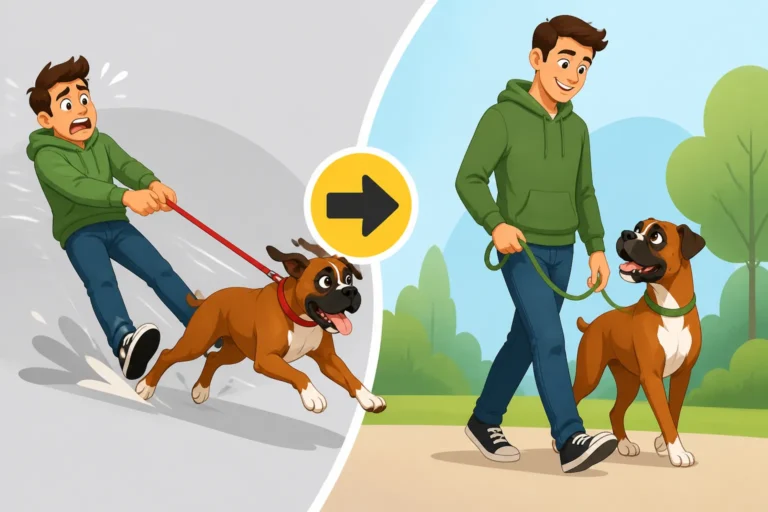
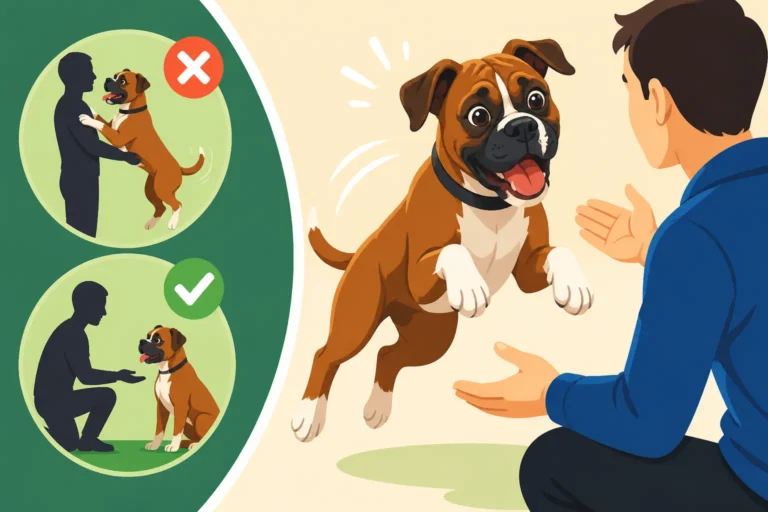
It's a familiar scene for any Boxer owner: the doorbell rings, and suddenly your usually well-behaved dog transforms into a leaping, barking, bundle of pure excitement, ready to bowl over your unsuspecting guests. This isn't naughtiness; it's just pure, unadulterated Boxer joy, but it can be overwhelming for visitors and even dangerous for elderly relatives or small children. This guide will walk you through the process of teaching your enthusiastic Boxer the invaluable "Place" command, giving them a clear, calm, and predictable job to do when new people arrive, turning chaotic greetings into controlled, positive experiences for everyone.
The Unique Challenge of Boxer Greetings
Boxers are renowned for their incredible enthusiasm, their joyful "wiggles," and their overall exuberant approach to life. While these traits are part of what we adore about them, they can present a real challenge when it comes to managing their behavior around guests. It’s not about stifling their personality, but channeling it appropriately.
Why Your Boxer Gets So Excited
Think about it from your Boxer's perspective. The doorbell or a knock means new smells, new people, and potentially new sources of attention and play! For a breed known for its strong attachment to its family and its playful nature, a visitor is like Christmas, their birthday, and the best walk ever all rolled into one. They don't mean to be rude or pushy; they're simply overflowing with delight and want to be part of the action, immediately. This natural exuberance, combined with their strong, muscular build, can lead to accidental knocking over, jumping, and an overall chaotic welcome that can leave guests feeling a little intimidated, even if they love dogs. Managing this energy is key, especially since The Boxer Puppyhood That Lasts Three Years reminds us they often act like puppies longer than other breeds.
The Problem with Unmanaged Excitement
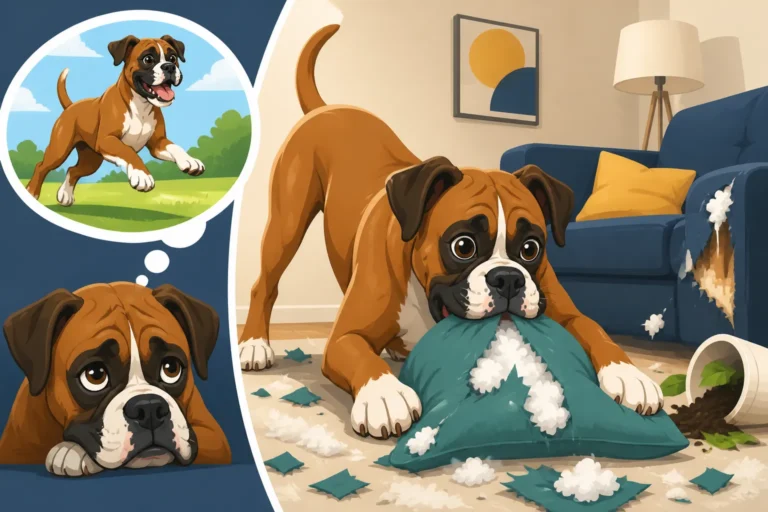
Beyond the sheer overwhelming nature of a seventy-pound dog bouncing off the walls, there are practical concerns. An excited Boxer might jump up, potentially scratching or even injuring a guest, especially if they are elderly, frail, or a young child. They might bark incessantly, making conversation impossible, or try to steal items from bags left on the floor. For some guests, this kind of greeting can be a real turn-off, making them hesitant to visit again. It also reinforces the idea for your Boxer that this wild display of energy is an acceptable, even desired, way to interact with new people, which can make it even harder to curb in the future. Imagine a small child being knocked over, or an elderly relative losing their balance; these are real risks that can be mitigated with proper training.
What "Place" Training Actually Means for Your Boxer
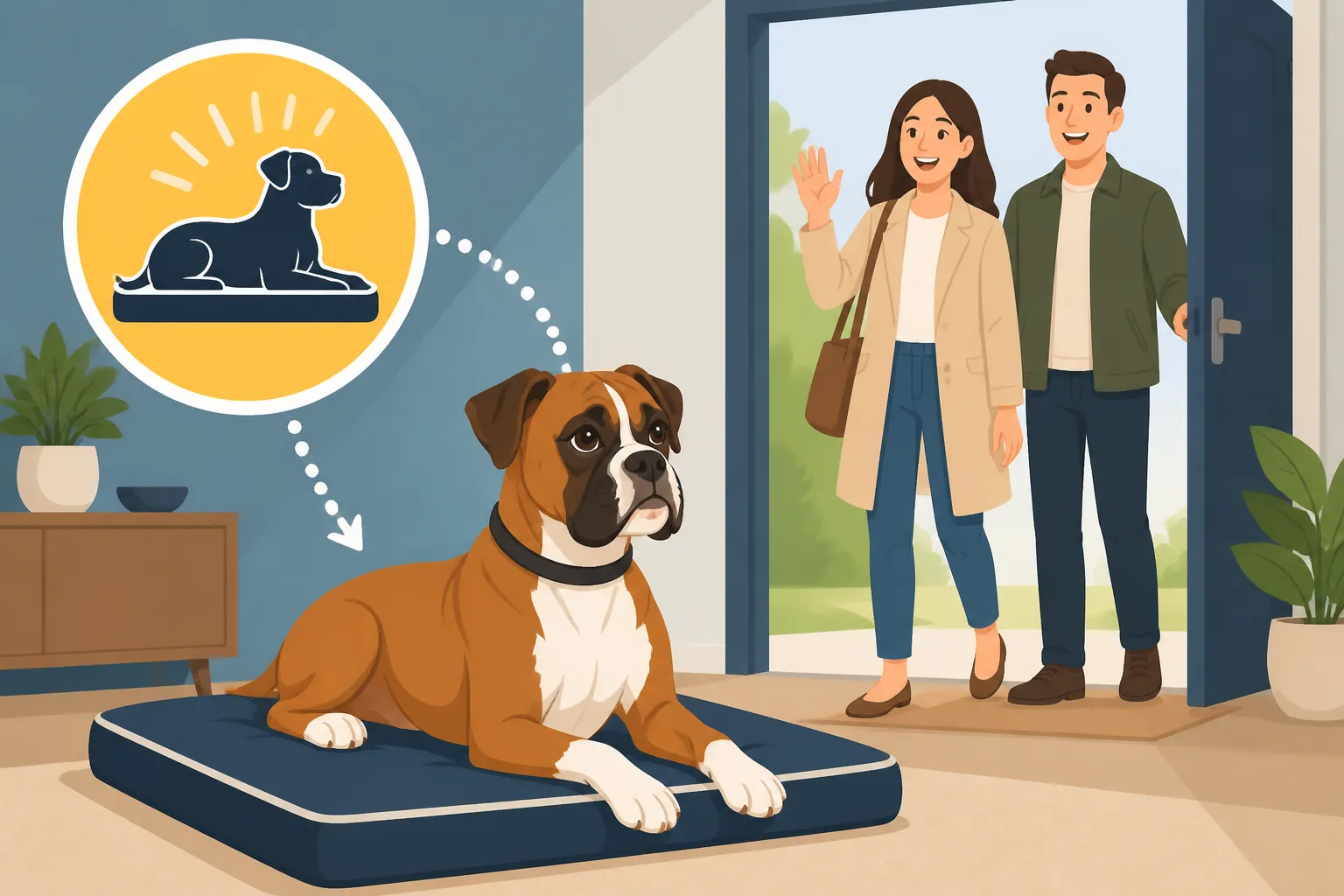
"Place" is more than just telling your dog to "go lie down." It's teaching your Boxer to go to a designated spot – whether it's their dog bed, a specific mat, or their crate – and remain there calmly until released. It's about providing a clear boundary and a defined role for your dog during potentially exciting situations, giving them a job to do rather than leaving them to make their own (often chaotic) decisions.
Defining Your Boxer's "Place"
Your Boxer's "place" should be a comfortable, safe, and clearly defined spot. This could be a dog bed, a mat, or their crate. The key is that it's their spot, and they learn to associate it with calm, positive experiences. Many Boxer owners find success with a raised dog bed, which creates a clear visual boundary. Others use a sturdy, comfortable crate, especially if their Boxer is prone to chewing or needs a stronger sense of enclosure. Whatever you choose, make sure it’s large enough for your adult Boxer to comfortably lie down, stretch out, and relax. For instance, a robust chew-proof bed that you can find on Amazon could be an excellent starting point, providing both comfort and durability. The spot should also ideally be in a common area where they can still see and feel part of the family, but far enough away from the front door or main guest traffic to prevent overstimulation.
The Benefits Beyond Guest Management
While the primary goal might be peaceful guest arrivals, the "Place" command offers a host of other benefits for your Boxer and your household. It builds impulse control, which is incredibly valuable for a high-energy breed like the Boxer. It teaches them to settle and be calm on command, a skill that can be generalized to many other situations, such as meal times, when you’re cooking, or even when you need them to stay out of the way during household chores. This command contributes significantly to their overall good manners and makes them a more relaxed and enjoyable companion in various settings. It’s a foundational command that enhances their self-control and provides mental stimulation, which can be just as tiring as physical exercise for a Boxer who might get bored fast.
Step-by-Step Guide to Teaching the "Place" Command
Teaching "Place" requires patience, consistency, and positive reinforcement, especially with a Boxer's playful and sometimes stubborn nature. Break it down into small, manageable steps.
Foundation: Introducing the "Place"
Start by luring your Boxer onto their designated "place" with a high-value treat. As soon as all four paws are on the mat/bed, say "Place" and reward them immediately. Repeat this many times in short, upbeat sessions throughout the day. Don't worry about staying yet; just focus on the action of getting on the place. Once they reliably go to their spot when you lure them, start fading the lure. Point to the place and say "Place." When they go, reward. If they don't, go back to luring.
Next, introduce duration. Once they're on their place, give them a treat, then wait one second, give another treat, then wait two seconds, another treat, and so on. Gradually increase the time they spend on their place. If they get off, don't scold them. Simply reset them with a calm "oops, let's try again" and guide them back, reducing the duration slightly. The goal is to make the "place" a highly rewarding spot to be. You can use a clicker if you use clicker training, clicking the moment their rear touches the mat. Many online dog training resources, like those offered by BAXTER & Bella, provide structured lesson plans and video demonstrations that can guide you through these initial steps effectively, helping you understand timing and technique.
Adding Duration and Distance
Once your Boxer can stay on their "place" for short periods (10-30 seconds) with you standing right there, start adding distance. Take one step away, then return and reward if they stayed. Gradually increase the number of steps you take away. Walk around the room, then walk to another room, always returning to reward them if they held their "place." If they break, calmly bring them back and start again with less distance. The key is to set them up for success.
Remember to vary the duration and distance. Don't always make them stay for the same amount of time or with you at the same distance. Mix it up! Sometimes it's a quick 5-second stay, other times it's a minute. This unpredictability helps them learn that "Place" means "stay until I tell you otherwise," rather than "stay until I walk to the kitchen." This stage is crucial for building the mental fortitude required, especially when Boxers have so much energy and can be distracted easily. When they're ready, you can start incorporating cues like "stay" after "place" to reinforce the behavior.
Practicing with Distractions and Guests
This is where the real work for guest management begins. Start with mild distractions. Have someone walk past the "place" while your Boxer is on it, rewarding them for staying. Gradually increase the level of distraction. You can drop a toy, open the front door without anyone entering, or have a family member pretend to be a guest. The goal is to gradually build up their ability to remain on "place" despite tempting stimuli.
When you're ready for real guests, start with a "set up" scenario. Ask a friend or family member to come over specifically to help you train. Before they arrive, put your Boxer on their "place" with a high-value, long-lasting chew or stuffed Kong to keep them occupied. When the guest arrives, maintain distance and reward your Boxer heavily for staying on their place. Have your guest ignore your Boxer at first. Once your Boxer is calm, and only if they remain calm, you can release them for a polite greeting, or let your guest approach them on their place. The more you practice this, the better your Boxer will become at Greeting Manners for an Excited Boxer.
| "Place" Option | Pros | Cons | Ideal For |
|---|---|---|---|
| Dog Bed | Comfortable, portable, integrates into home decor, soft on joints. | Can be destroyed by chewers, less defined boundary for some dogs. | Boxers with good impulse control, comfortable indoors. |
| Raised Dog Bed | Clear boundary, comfortable, easy to clean, good air circulation. | Can be more expensive, some dogs resist initially, not as plush. | Boxers needing a strong visual cue, active/warm climates. |
| Crate | Highly defined boundary, very secure, can prevent chewing/damage, good for temporary confinement. | Some dogs dislike crates, takes up space, less aesthetically pleasing. | Boxers who love their crate, those needing strong boundaries/chewing deterrent. |
| Designated Mat | Portable, inexpensive, easy to clean, can be used anywhere. | Less comfortable for long periods, less defined boundary than a bed/crate. | Training on the go, easy to move around the house. |
Troubleshooting Common "Place" Problems
Even with the best intentions, you're bound to hit a few bumps in the road. Boxers are smart, but they also have a playful streak and can test boundaries. It's important to approach these challenges with patience and consistency, rather than frustration, because Why Shouting Sets a Boxer Back is a real phenomenon.
My Boxer Won't Stay
If your Boxer keeps breaking their "place," it usually means you've progressed too quickly. Go back a step. If they won't stay for 10 seconds, try 5. If they break when you walk away, try only taking one step. You might be asking too much too soon. Ensure the rewards are high-value enough to compete with the distraction of wanting to be with you. Is it a bland kibble, or is it a piece of cooked chicken? For a Boxer, that difference can be huge.
Also, consider the environment. Is it too stimulating? Start in a quiet room with no distractions, then slowly add them in. Your Boxer might just be overwhelmed. Remember to keep sessions short and positive, ending on a success. It's much better to have ten successful 30-second stays than one failed 5-minute attempt. Reinforce Rewards a Boxer Will Work Hard For by finding what truly motivates your individual dog.
My Boxer Breaks "Place" When Guests Arrive
This is the ultimate test, and it's often the hardest part because the excitement level is so high. If your Boxer is consistently breaking "place" when guests arrive, it means they haven't generalized the command to this high-distraction scenario yet. Go back to practicing with simulated guests. Have family members walk in and out, making noise, but not interacting with your Boxer unless they are calm on their place.
It also helps to manage the environment. Can you give your Boxer their "place" in a slightly less stimulating area of the room, or even in an adjacent room with a baby gate, until they master the skill? Provide a super-duper, long-lasting chew (like a bully stick or a frozen Kong) only when guests arrive, making their "place" the most exciting spot in the house during this time. Consistency from everyone is key – no guest should inadvertently release your Boxer or encourage them off their place. Remind guests beforehand what your expectations are for your Boxer, so they can help you maintain the training. For more on managing this energy, check out Stopping a Seventy-Pound Boxer From Jumping.
Making "Place" a Positive Experience
For "Place" to be effective and well-received by your Boxer, it absolutely must be a positive experience. It should never be used as a punishment. If your Boxer associates "place" with being isolated or scolded, they will resist going there. Instead, make it their sanctuary. Occasionally toss treats onto their bed when they're not looking, so they "find" pleasant surprises there. Give them their favorite toys or chews only when they are on their "place."
Praise them calmly and enthusiastically when they go to their "place" and stay. Regularly release them with a clear release word (like "Okay!" or "Free!") and then engage them in a fun activity like fetch or a short play session. This teaches them that "place" is temporary and leads to good things. By consistently making "place" a safe, rewarding, and calm space, your Boxer will willingly go there, understanding it's their job, not a punishment, especially when you have visitors. Sometimes, even enrolling them in a group class can help them learn to settle around distractions, and you can learn about options by looking into Daycare Prices for a Boxer With Energy to Burn in your local area, or reputable trainers for guidance.
Learning the "Place" command is a game-changer for many Boxer owners. It transforms stressful guest arrivals into calm, manageable situations, fostering better behavior and a deeper bond with your enthusiastic companion.
Disclaimer
This article is for general informational purposes only and does not constitute professional advice. Laws, prices and regulations vary by location and change over time. Consult a qualified professional for guidance on your specific situation.