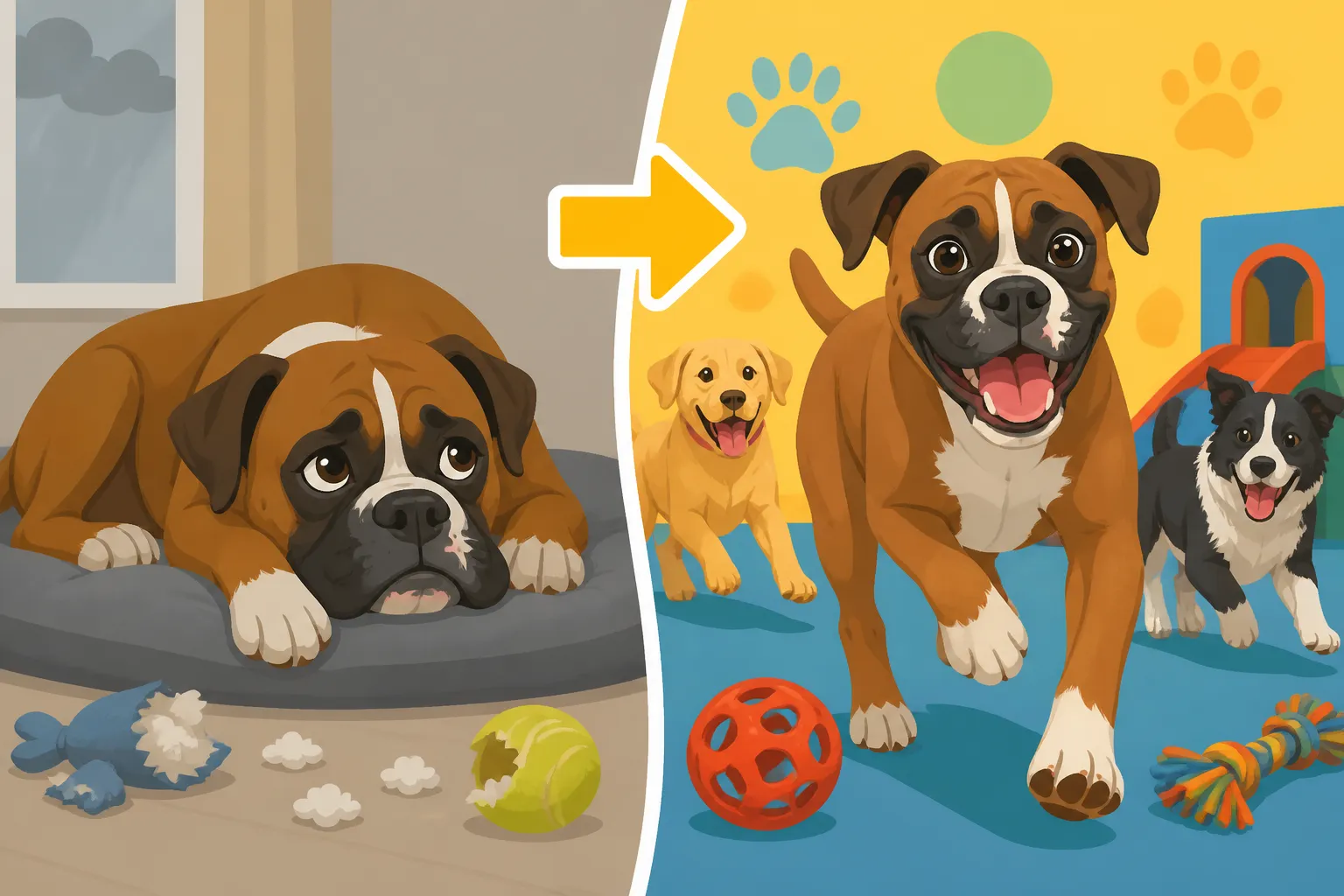
Whether Daycare Helps a Bored Boxer
There's nothing quite like the boundless energy and goofy charm of a Boxer, but when that energy isn't channeled correctly, it can lead to a whirlwind of frustration for both you and your beloved dog. Many Boxer owners find themselves battling destructive chewing, endless barking, or relentless attention-seeking behaviors, all signs of a deeply bored canine. This comprehensive guide will explore whether dog daycare can truly be the lifeline you need to manage your Boxer's intense needs and bring peace back to your home.
The Frustration of a Bored Boxer: Understanding Their Needs
Let's be real: living with a bored Boxer is tough. You love them dearly, but the constant need for engagement, the chewed furniture leg, or the persistent "woo-woo" bark at nothing in particular can wear even the most patient owner down. It’s not that your Boxer is being "bad" on purpose; it’s simply that their inherent traits make them prone to boredom if their needs aren't adequately met.
Boxers are a working breed, originally bred for hunting and later as guard dogs. This history means they are intelligent, physically robust, and possess a deep need for purpose and companionship. They're not content to simply lounge on the couch all day, no matter how comfy it might be. Their minds need stimulating, and their bodies need exercise. When these fundamental requirements go unfulfilled, that incredible Boxer energy often gets redirected into behaviors that are, frankly, infuriating for us humans. You might see them pacing, digging craters in your yard (even if they’re not usually a digger), or developing an insatiable craving to redecorate your home with their teeth. It's a cry for help, a clear signal that they need more.
Think about it: a typical workday leaves a Boxer alone for eight, nine, or even ten hours. That's a huge chunk of their day with no physical outlet, no mental challenges, and no social interaction beyond perhaps a quick potty break. For a breed that thrives on connection and activity, this stretches their patience and can quickly lead to an unhealthy level of frustration. This prolonged mental and physical stagnation can contribute to behavioral issues that might seem impossible to curb, making you question if you're doing something wrong. Why a Boxer Wrecks Things When Under-Exercised delves deeper into these destructive tendencies and their roots.
Dog Daycare: A Potential Solution for Boxer Energy
So, you're grappling with a bored Boxer, and the idea of dog daycare has probably crossed your mind more than once. But what exactly does it entail, and can it truly make a difference for a high-energy, social breed like the Boxer? Dog daycare is essentially a supervised environment where dogs can spend the day playing, socializing, and burning off excess energy while their owners are away. It's not just a holding pen; reputable daycares offer a structured program designed to engage dogs both physically and mentally.
For a Boxer, the benefits can be significant. First and foremost, they get ample physical exercise. Instead of snoozing on the rug, they're romping with other dogs, chasing balls, and engaging in supervised play. This isn't just a walk around the block; it's hours of sustained activity that can genuinely tire out even the most energetic Boxer. Imagine your dog coming home happily exhausted, ready to cuddle up instead of tearing through the house. This level of exertion also means they're less likely to develop health issues related to inactivity, which can be a concern for a breed prone to certain conditions.
Beyond the physical, daycare provides crucial mental stimulation. Boxers are smart, and they need puzzles and challenges to keep their minds sharp. At daycare, they're constantly processing social cues from other dogs, learning boundaries, and adapting to new situations. Many daycares incorporate structured activities like "fetch time," "brain games," or even brief training refreshers. This engagement prevents the mental stagnation that often leads to destructive behaviors at home. Some facilities might even have specific staff trained in positive reinforcement techniques, reinforcing good manners. For ongoing training at home, platforms like BAXTER & Bella offer online resources that complement the social learning at daycare, helping you maintain a consistent approach.
Socialization is another massive plus. Boxers are typically very friendly and thrive on interaction. Daycare allows them to hone their social skills with a variety of dogs, learning how to play appropriately and respectfully. This can be especially valuable for young Boxers during their formative years, helping them become well-adjusted adults. However, it's vital to choose a daycare that understands Boxer play style. Boxers love to "box" with their front paws and can play quite boisterously. A good daycare will supervise closely to ensure this play doesn't escalate or overwhelm more timid dogs. You might find our article Boxer Play Style With Other Dogs helpful in understanding their unique way of interacting.
When considering a daycare, look for places that offer different play groups based on size and temperament. A smaller, less boisterous Boxer might not thrive in a group of large, high-drive retrievers. Likewise, a confident Boxer needs playmates who can match their energy. Transparency is key; look for places with live webcams or open viewing areas so you can see your Boxer in action. Ensure the staff are certified in pet first aid and understand canine body language. The right environment can be a game-changer, turning a restless, bored Boxer into a happy, well-adjusted companion.
Weighing the Pros and Cons: Is Daycare Right for Your Boxer?
Deciding whether dog daycare is the right choice for your Boxer involves more than just looking at your schedule; it's about understanding your individual dog's personality, health, and how they react to new environments. While daycare offers many benefits, it's not a universal panacea, and there are crucial factors to weigh.
Firstly, consider your Boxer's temperament. Are they a social butterfly who loves every dog they meet, or are they more of an independent spirit, perhaps a bit anxious around crowds? Some Boxers thrive on the constant interaction and excitement of daycare, coming home blissfully tired. Others, especially those prone to anxiety or who are naturally more reserved, might find the constant stimulation overwhelming. An overstimulated Boxer can become stressed, which might manifest as irritability, excessive panting, or even a shutdown where they just want to hide. It's essential to differentiate between a truly happy, tired dog and one who is simply exhausted from stress.
Your Boxer's age and physical condition are also paramount. Young, energetic Boxers in their The Boxer Puppyhood That Lasts Three Years phase are often ideal candidates, benefiting greatly from the outlets daycare provides. However, a very young puppy might be susceptible to illnesses if not fully vaccinated, and over-exertion can be a concern for growing joints. Conversely, an older Boxer might appreciate a calmer, more structured environment or even a daycare with a separate "senior" or "low-energy" area. Boxers are also prone to certain health conditions, like Boxer Cardiomyopathy and the Holter Monitor or Boxer Hip Dysplasia and Spondylosis, which might limit their ability to engage in strenuous, unsupervised play. Always consult your vet before enrolling a Boxer with known health issues.
Cost is another undeniable factor. Dog daycare can be a significant expense, especially if you're looking at daily attendance. Prices vary wildly depending on location and the services offered, but it's important to budget for it realistically. While the investment in your Boxer's well-being is priceless, financial constraints are a real concern for many families.
Evaluating a Daycare Facility for Your Boxer:
When you're shopping around for a daycare, don't just pick the first one you see. Ask questions and observe carefully.
| Feature | What to Look For (and Why it Matters for a Boxer) |
|---|---|
| Staff Ratio | A high staff-to-dog ratio (e.g., 1 staff for every 10-15 dogs) ensures proper supervision, crucial for managing energetic Boxer play. |
| Cleanliness | A clean facility reduces the risk of illness. Boxers have short coats, but cleanliness helps prevent skin issues and general health problems. |
| Play Structure | Look for organized play rather than just a free-for-all. Boxers benefit from activities and breaks to avoid overstimulation and encourage good manners. |
| Separate Areas | Dedicated areas for different sizes/temperaments prevent smaller or shyer dogs from being overwhelmed by a boisterous Boxer. |
| Outdoor Space | Boxers love to run. Secure outdoor space for exercise, with shade and water, is essential, especially given their How Fast a Flat-Faced Boxer Overheats tendency. |
| Emergency Plan | Confirm procedures for injuries, illness, or behavioral issues. Knowing they have a vet on call and clear communication protocols is vital. |
| Trial Period | Many daycares offer a trial day. This allows you to see how your Boxer adjusts and helps the staff assess their fit. |
If daycare isn't a perfect fit, or if you need supplementary solutions, there are still many ways to combat Boxer boredom. Investing in high-quality puzzle feeders from places like Amazon can provide mental stimulation at home, making them "work" for their food. Chews that stand up to a powerful Boxer jaw, like durable Kongs or Nylabones, can also keep them occupied. Engaging in regular, structured training sessions, even for short bursts, can be incredibly enriching. Online resources, like those offered by BAXTER & Bella, can guide you through positive reinforcement techniques to keep your Boxer's mind engaged and reinforce good habits. Training a Boxer That Gets Bored Fast offers more tips for keeping those training sessions fresh and exciting.
Maximizing Daycare's Benefits and Creating a Balanced Boxer Life
Bringing daycare into your Boxer's routine can be transformative, but it's not simply a matter of dropping them off and picking them up. To truly maximize the benefits and ensure your Boxer thrives, it requires a thoughtful approach and continued effort on your part to create a balanced life for them.
When first introducing your Boxer to daycare, think of it as a gradual process. Most reputable daycares will recommend a trial day or a series of half-days to help your dog acclimate. This allows them to get used to the sounds, smells, and routines without becoming overwhelmed. Pay close attention to how your Boxer behaves when they come home. Are they happily tired, flopping into their bed for a well-deserved nap? Or are they frantic, restless, or exhibiting signs of stress like excessive panting or hiding? A good daycare will communicate with you about your Boxer's behavior throughout the day, giving you insights into how they're truly coping.
Daycare should be seen as a valuable tool in your Boxer care arsenal, not the only tool. Even with regular daycare attendance, your Boxer still needs your engagement at home. Continue with your daily walks, even if they're shorter on daycare days. Engage in interactive play, like fetch with their favorite squeaky toy or a game of tug. Mental enrichment at home remains crucial. Puzzle toys, especially those that dispense treats, can keep their minds busy after a long day of play. Items found on Amazon, from snuffle mats to complex treat-dispensing gadgets, can be excellent investments for stimulating your Boxer's brain.
Training is also an ongoing journey that complements daycare beautifully. A well-trained Boxer is a happier Boxer, and daycare can reinforce good social manners. Working on basic obedience cues or even advanced tricks at home helps maintain that bond with you and keeps their mind active. Keeping Boxer Training Sessions Interesting can give you ideas for varied activities. If your Boxer is struggling with a particular behavior, like pulling on the leash during walks, consistent training at home—perhaps with guidance from online programs like BAXTER & Bella—can make a big difference, and a good daycare might even offer supplementary training.
Ultimately, a balanced life for a Boxer involves a blend of physical exercise, mental stimulation, social interaction, and plenty of loving companionship with their human family. Daycare can provide a significant portion of the exercise and socialization, freeing you up to focus on quality time, training, and mental enrichment when you are together. By carefully selecting a facility, monitoring your Boxer's well-being, and integrating daycare into a broader strategy of care, you can turn your bored, frustrated Boxer into a content, well-adjusted member of your family, ready to offer all the affection and goofy antics they're famous for.
Disclaimer
This article is for general informational purposes only and does not constitute professional advice. Laws, prices and regulations vary by location and change over time. Consult a qualified professional for guidance on your specific situation.