Cutting a Boxer’s Dewclaws
Few things make a Boxer owner wince quite like the thought of trimming those tricky dewclaws. Many of us have been there, watching our beloved Boxer bound through tall grass or snagging a paw on a stray branch, only to remember that little "thumb" nail that’s so easy to overlook. Untrimmed dewclaws aren't just an aesthetic issue; they can become a real source of pain, injury, and infection for your energetic companion. This guide is here to walk you through everything you need to know about safely and effectively trimming your Boxer's dewclaws, turning a potentially daunting task into a manageable part of your regular grooming routine.
Understanding Your Boxer's Dewclaws: More Than Just a "Thumb"
Before we dive into the nitty-gritty of trimming, let’s get a clear picture of what dewclaws are and why they matter. Often described as a dog's "thumb," the dewclaw is a digit located higher up on the paw, typically on the inside of the front legs. Unlike the other nails that bear weight and naturally wear down from walking, dewclaws rarely touch the ground, making them prone to overgrowth.
What Exactly Is a Dewclaw?
Think of a dewclaw as a vestigial toe, a remnant from ancient canine ancestors that might have used them for gripping or climbing. On most Boxers, you'll find dewclaws on their front legs, often positioned just above the carpal pad on the inner side of the leg. These are typically quite firmly attached with bone and muscle. Some Boxers, though less commonly, might also have dewclaws on their hind legs. These hind dewclaws are often less developed, sometimes only attached by skin and not bone, making them even more susceptible to getting caught or torn.
The primary difference between a dewclaw and the other nails on your Boxer's paw is its lack of ground contact. When your Boxer walks, runs, or plays, their main paw pads and weight-bearing nails naturally get a bit of a workout, which helps to keep them shorter. The dewclaw, however, is out of the action, continuing to grow without that natural wear. This is why regular trimming is so crucial for these specific nails.
It's also worth noting that the structure of the dewclaw nail itself is much like the others, containing a sensitive "quick" (the pink part containing nerves and blood vessels) that can be incredibly painful if cut. Because dewclaws often curl inwards as they grow, the quick can extend further than you might expect, making careful and consistent trimming essential.
Why Some Boxers Have Them and Others Don't
The presence of dewclaws is largely genetic, and it varies from breed to breed and even within individuals of the same breed. For Boxers, front dewclaws are quite common and are generally considered a normal anatomical feature. You'll find that most Boxers come equipped with them, and they are not typically removed unless there's a medical reason, or sometimes for working dogs where they might be a hindrance.
Rear dewclaws are a different story. While front dewclaws are a consistent feature in many breeds, rear dewclaws are less common in Boxers and are sometimes seen as an anomaly. In some breeds, like the Great Pyrenees, double rear dewclaws are even part of the breed standard. However, for a Boxer, if you encounter rear dewclaws, they might be more loosely attached. It’s important to pay extra attention to these if your Boxer has them, as their loose attachment can make them even more vulnerable to injury. Responsible breeders typically monitor for these traits, especially those considering Whether a Boxer With ARVC Should Be Bred or other health-related breeding considerations.
Whether your Boxer has front, rear, or no dewclaws at all, the principle remains the same: if they are present, they need to be cared for. It's not about whether they "should" be there, but about managing the health and comfort of your individual dog.
The Risks of Neglecting Dewclaw Care
Ignoring your Boxer's dewclaws can lead to a host of problems that are easily preventable. The most common and painful issue is the dewclaw growing so long that it curls around and digs into the soft pad of your Boxer's leg. Imagine having a constantly growing nail slowly piercing your skin – that's the kind of discomfort your Boxer could experience. This can lead to open wounds, which are prime targets for bacterial infections, causing swelling, pus, and intense pain.
Beyond this, dewclaws are notorious for getting caught on things. Because they are positioned higher up on the leg, they can easily snag on carpets, furniture, thick undergrowth during a walk, or even during rough play with other dogs. A torn or ripped dewclaw is an extremely painful injury that often results in profuse bleeding and a trip to the vet. This type of injury can sometimes require sedation and even surgical removal of the damaged nail, which is a costly and stressful experience for both you and your Boxer.
Consistent, diligent care is the best prevention. Regular checks, perhaps during your Weekly Lump Checks on a Boxer or other grooming routines, will ensure you catch any overgrowth before it becomes a problem. Preventing these painful scenarios is a huge part of responsible Boxer ownership and will save your dog a lot of suffering in the long run.
The Essential Tools for Safe Dewclaw Trimming
Just like any good craftsman, you need the right tools for the job. When it comes to trimming your Boxer's dewclaws, having the proper equipment on hand makes the process safer, less stressful, and more efficient for everyone involved. Don't skimp on quality here; a good pair of clippers is a worthwhile investment.
Choosing the Right Nail Clippers
There are a few main types of nail clippers available, and the best choice often comes down to personal preference and what you find easiest to use with your Boxer.
- Scissor-Style Clippers: These look and operate much like a pair of heavy-duty scissors. They are often favored for larger breeds like Boxers because they offer a strong, clean cut and allow for good visibility of the nail. Brands like Safari or Miller's Forge are popular and can be easily found on sites like Amazon or Chewy. They come in different sizes, so make sure to get a large enough pair for a Boxer's thick nails.
- Guillotine Clippers: These have a small hole where you insert the nail, and a blade slides across to cut it. While popular for some dog owners, they can sometimes be more challenging to use on dewclaws because of the angle and the fact that dewclaws often curl. It can be harder to see the quick with these, increasing the risk of cutting too deep.
- Nail Grinders: A rotary tool with a sanding drum, like a Dremel, can be an excellent option, especially for Boxers who are nervous about clippers or have dark nails where the quick is hard to see. Grinders allow you to take off tiny layers of the nail at a time, gradually receding the quick. The downside is the noise and vibration, which some Boxers dislike. If you go this route, introduce it slowly and with lots of positive reinforcement.
Whichever type you choose, ensure the blades are sharp. Dull clippers can crush the nail rather than cut it cleanly, which is painful for your Boxer and makes the whole experience negative. You might want to try both scissor-style clippers and a grinder to see which your Boxer tolerates best.
Essential Safety Supplies
Accidents happen, even to the most careful owners. Having a few safety items on hand isn't just a good idea; it's absolutely essential when trimming nails, particularly dewclaws.
- Styptic Powder: This is your best friend if you accidentally nick the quick. Styptic powder contains a clotting agent that will quickly stop bleeding. Keep it within arm's reach every single time you trim nails. Kwik Stop is a well-known brand, and you can pick it up at most pet stores or online retailers like Chewy. Simply apply a pinch of the powder directly to the bleeding nail and apply gentle pressure.
- High-Value Treats: Positive reinforcement is key to making nail trims a less stressful experience. Have a generous supply of your Boxer's absolute favorite treats ready. We're talking about something they go crazy for – perhaps small pieces of cooked chicken, cheese, or even special training treats you might find from a brand like Ollie, or a selection from Amazon's treat aisle. These aren't just for after the trim; use them during the process to create positive associations.
- Good Lighting: You need to be able to clearly see the nail, especially the quick. Work in a well-lit area, or use a headlamp or a small, bright flashlight to illuminate the nail from below, which can help you see the quick more easily, particularly in Boxers with dark nails.
- A Calm Environment: Minimize distractions. Turn off the TV, ask family members to give you space, and choose a time when your Boxer is relatively relaxed, perhaps after a good walk but before mealtime. A quiet space helps both you and your dog focus.
Getting Your Boxer Comfortable with the Tools
Many Boxers are wary of nail trims, often because of past negative experiences or just the unfamiliar sensation. Desensitization is key, especially if you have a young Boxer or one new to your home.
Start by simply showing your Boxer the clippers or grinder without actually doing anything with them. Let them sniff the tools, and immediately follow with a high-value treat and praise. Repeat this several times a day for a few days. The goal is to create a positive association: clippers appear, good things happen.
Next, gently touch the clippers to your Boxer's paws, specifically around the dewclaws, again followed by a treat and praise, without actually trimming. You're building trust and showing them the tools aren't scary. If using a grinder, turn it on in another room first so they get used to the sound, then slowly bring it closer, always pairing it with treats. Remember, patience is paramount. Rushing this step will only create more resistance down the line, and with a strong-willed breed like a Boxer, you really want to avoid a battle of wills over grooming. Consistency here will pay dividends, making future trims much smoother.
A Step-by-Step Guide to Trimming Your Boxer's Dewclaws
Now that you're equipped with the right tools and your Boxer is (hopefully!) a little more comfortable, it's time to tackle the trim itself. Remember, consistency and calm are your biggest assets. Don't try to do all four paws or all nails in one go if your Boxer is stressed; small, frequent sessions are far better than one traumatic one.
Preparing for the Trim
Setting the scene for a successful trim involves a few important steps to ensure both your and your Boxer's comfort and safety.
First, choose your location wisely. A comfortable, well-lit spot where you can sit or kneel with your Boxer is ideal. Some owners prefer to have their Boxer lie down, while others find it easier with the dog standing. Find what works best for your Boxer and you. Make sure you have all your tools within easy reach: clippers, styptic powder, and, most importantly, those delicious high-value treats. You don't want to be fumbling around mid-trim.
Ensure your Boxer is calm and settled before you even pick up the clippers. A good way to achieve this is to tire them out a bit beforehand. A vigorous walk or a stimulating play session can take the edge off their energy, making them more amenable to staying still. Avoid trying to trim when they're overexcited or full of zoomies; that's just asking for trouble! You might also find that doing a quick Weekly Lump Checks on a Boxer helps them get used to being handled, softening them up for nail time.
The Trimming Technique
This is where the magic happens – or, at least, where the nails get shorter! The key is to be confident, quick, and precise.
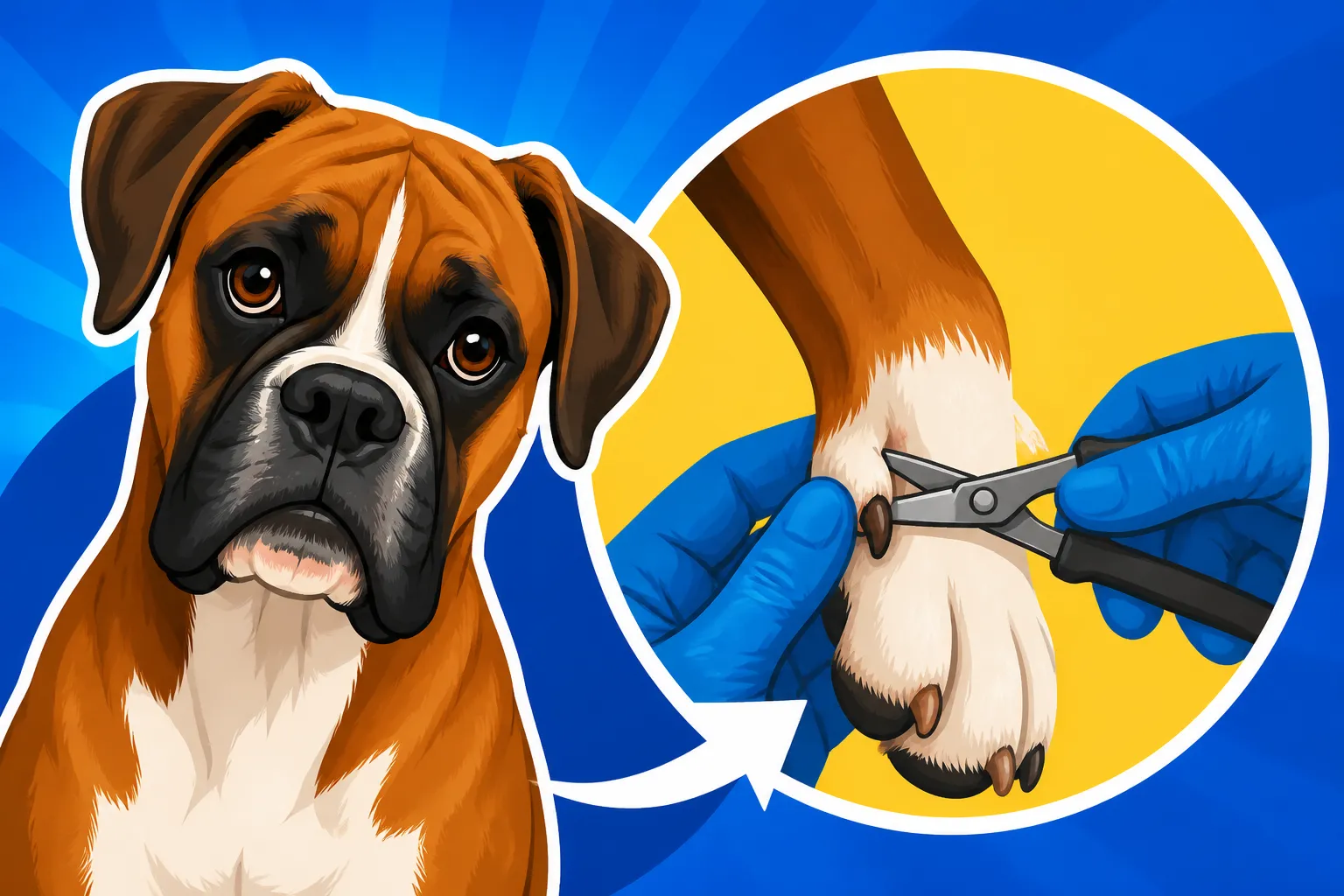
- Hold the Paw Securely: Gently but firmly take one of your Boxer's paws in your hand. Use your thumb to push down on the top of the paw, just behind the dewclaw, and your forefinger to push up from underneath the toe. This helps to extend the nail and isolate the dewclaw, giving you a clear view. If your Boxer has long leg hair, you might need to gently push it back to get a better look.
- Identify the Quick: This is the most crucial step. The quick is the living part of the nail, containing blood vessels and nerves. Cutting into it is painful and will cause bleeding.
- For clear or white nails: You'll usually see the pink quick through the translucent nail. Cut only the white tip, well away from the pink.
- For dark or black nails: This is trickier. Look at the underside of the nail. The quick will often appear as a solid, fleshy circle in the center, while the outer shell of the nail looks flaky or chalky. Cut tiny slivers at a time. As you get closer to the quick, the center of the cut nail surface will start to show a small, dark dot, which is the beginning of the quick. Stop cutting when you see this, or ideally, before you do!
- Make the Cut: Position the clippers at a 45-degree angle, with the cutting edge facing away from the paw. With a scissor-style clipper, align the blades. Make a swift, decisive snip. A clean cut is less likely to splinter the nail. Immediately praise your Boxer and offer a treat, even if it was just one nail.
- Repeat as Needed: Work slowly and patiently. If your Boxer becomes agitated, take a break. You don't need to do all the dewclaws in one sitting. Maybe just one or two, then resume later or the next day. The goal is positive association, not perfection in one go.
| Clipper Type | Pros | Cons | Best For |
|---|---|---|---|
| Scissor-Style | Strong, clean cut; good visibility | Requires practice to get the right angle | Large, thick Boxer nails; owners who prefer a quick, decisive cut |
| Guillotine | Quick action; generally easy to handle | Can be harder to see the quick; less ideal for very curved dewclaws | Smaller nails; experienced users |
| Nail Grinder (Dremel) | Allows gradual removal; less risk of quicking | Noise/vibration can scare some dogs; takes longer; dust | Dark nails; fearful dogs; maintaining short nails after initial trim |
What to Do if You Cut Too Deep
It happens. Even experienced owners can accidentally nick the quick. Don't panic. Your Boxer will likely yelp, pull away, and the nail will bleed.
- Stay Calm: Your reaction will influence your Boxer's. If you get upset, they will too. Reassure them with a calm voice.
- Apply Styptic Powder: Immediately grab your styptic powder. Take a pinch and press it firmly against the bleeding tip of the nail. Hold it there for 10-15 seconds. The powder will help clot the blood. If you don't have styptic powder, cornstarch or flour can work in a pinch, but styptic powder is far more effective.
- Offer Reassurance and a Treat: Once the bleeding stops, give your Boxer a high-value treat and lots of calm praise. You want to end the session on as positive a note as possible, despite the mishap.
- Monitor: Keep an eye on the paw for the next hour or so to ensure the bleeding doesn't restart. Avoid letting your Boxer run around vigorously immediately after.
Don't let one quicking incident deter you from future trims. It's a learning experience for both of you. The key is to learn from it and be even more careful next time. Many Boxers, especially those who had a rough start, might already be wary. Consistent positive reinforcement, even with mistakes, is critical, as discussed in Managing a Boxer Between Six and Eighteen Months for behavior challenges.
Common Challenges and Troubleshooting Tips
Trimming a Boxer's dewclaws isn't always a walk in the park. Their strength, energetic nature, and sometimes sensitive disposition can make it a challenging task. But with patience, the right approach, and a few tricks up your sleeve, you can overcome most hurdles.
Dealing with a Reluctant Boxer
A Boxer that hates having its nails done can turn a simple trim into a wrestling match. This is frustrating and stressful for everyone involved. If your Boxer is actively fighting you, pulling their paw away, or trying to mouth your hand, it's a clear sign they are uncomfortable or even fearful.
- Patience is a Virtue: Don't force it. If your Boxer is too stressed, stop. You can try again later, or even the next day. A short, positive session is far better than a long, traumatic one.
- Breaks and Positive Reinforcement: Incorporate frequent breaks. Do one nail, give a treat and praise, let them relax for a moment, then try another. Use your highest value treats to reward even the smallest cooperation. This could be a tiny piece of hot dog or some specially formulated training treats that you ordered from Chewy.
- Change of Scenery: Sometimes a different location can help. If you usually do it on the floor, try a raised surface (if safe for your Boxer and you can support them), or even outside in a quiet spot.
- Enlist Help: Having a second person to gently distract your Boxer with treats or cuddles can make a huge difference. They can offer a steady stream of tasty morsels while you focus on the trim.
- Professional Assistance: If you truly can't manage, don't feel bad about seeking professional help. Your vet or a professional groomer can often trim your Boxer's nails quickly and safely. They also have techniques and tools (and sometimes even sedative options for extremely fearful dogs) that can help. Observing how they handle your Boxer might also give you some valuable tips you can apply at home. Getting a strong-willed Boxer to cooperate takes time and consistent effort, much like teaching them Getting a Boxer to Walk Without Towing You.
Managing Dark or Overgrown Dewclaws
Dark nails present a unique challenge because the quick is invisible. Overgrown dewclaws, especially those that have started to curl, require a different strategy than a routine trim.
- For Dark Nails: When dealing with dark dewclaws, "little and often" is the mantra. Instead of trying to take a big chunk off, trim off tiny slivers at a time. After each small cut, look at the freshly cut surface. You'll see a white or grayish outer ring, and as you get closer to the quick, a darker, moist-looking dot will appear in the center. Stop cutting when you see this dot. If you're using a grinder, this process is even safer as you can sand down fractions of a millimeter at a time. With consistent, small trims every few days, the quick will gradually recede, allowing you to shorten the nail further over time.
- For Overgrown Dewclaws: If the dewclaw is extremely long or has already started to curl into the pad, you might not be able to get it to a healthy length in one go without quicking. Again, the "little and often" approach is best. Trim off as much as you safely can without hitting the quick, then repeat every few days. The quick will slowly recede as the nail gets shorter. If the nail has already pierced the skin, or if it's severely inflamed, it's time for a vet visit. They can address the injury and trim the nail under sedation if necessary. Remember that these situations require extra care to prevent infections, which can be particularly tricky in a breed prone to skin issues, as might be discussed in Why a Boxer's Short Coat Shows Every Rash.
When to Seek Professional Help
There's absolutely no shame in admitting you need a professional for your Boxer's dewclaw care. Sometimes, it's the safest and kindest option for your dog and for your peace of mind.
- Injury or Infection: If your Boxer's dewclaw is torn, bleeding profusely, appears infected (swollen, red, painful, discharge), or has grown into the paw pad, a trip to the vet is non-negotiable. They can properly clean and treat the wound, prescribe antibiotics if needed, and safely trim the nail.
- Extreme Fear or Aggression: If your Boxer becomes overly fearful, anxious, or even aggressive during nail trims despite your best efforts at desensitization and positive reinforcement, a professional can help. A vet can offer sedation options, or a skilled groomer might have specialized techniques to manage anxious dogs. For extremely fearful Boxers, a qualified dog trainer or behaviorist might also be able to help you work through the underlying anxiety.
- Lack of Confidence: If you simply don't feel confident trimming the dewclaws, especially if your Boxer has dark nails or has been quicked before, a professional can provide peace of mind. Regular visits to a groomer or vet can ensure your Boxer's nails are always in top condition. This is especially true as a Boxer ages and becomes less mobile, making handling more difficult, as explored in Caring for a Boxer Past Eight. Don't risk hurting your dog or damaging your bond over a task you're not comfortable with.
Regular and careful attention to your Boxer's dewclaws is a small but mighty act of care that contributes significantly to their overall health and happiness. With the right tools, technique, and a good dose of patience, you can ensure your Boxer’s paws stay healthy and pain-free for years to come.
Disclaimer
This article is for general informational purposes only and does not constitute professional advice. Laws, prices and regulations vary by location and change over time. Consult a qualified professional for guidance on your specific situation.