Getting a Boxer to Walk Without Towing You
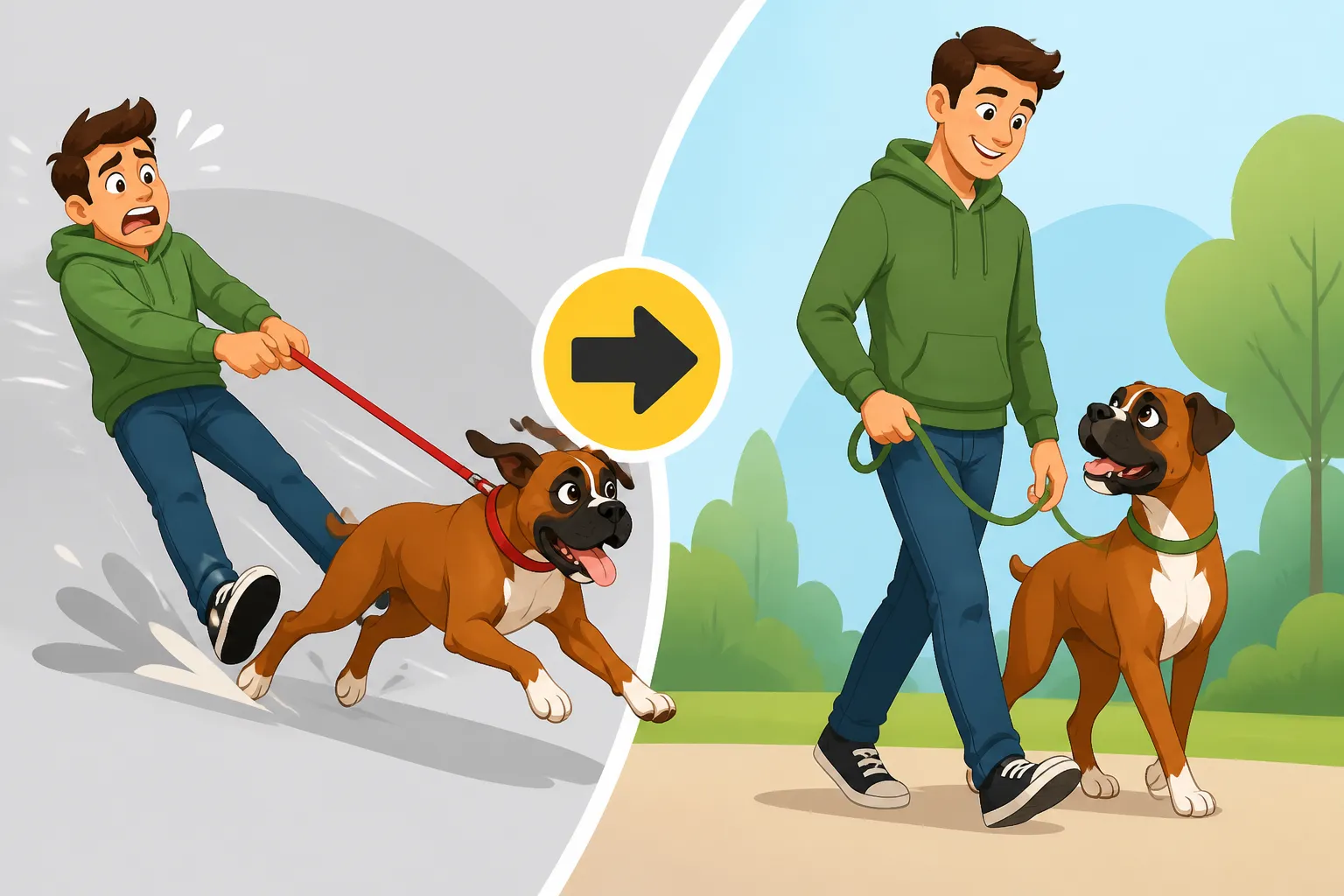
It's incredibly frustrating when your powerful, enthusiastic Boxer turns a simple walk into a tug-of-war, leaving your arm aching and your patience thin. This guide is dedicated to helping you reclaim the joy of walks by teaching your Boxer to master loose-leash walking, transforming those pulls into pleasant strolls.
Understanding Why Your Boxer Pulls in the First Place
Before we can fix the pulling, we need to understand why Boxers do it. It's not usually out of malice or stubbornness, but rather a combination of their innate traits and our human tendencies. Recognizing these root causes is the first step toward effective training.
The Boxer's Natural Enthusiasm and Strength
Let's face it, Boxers are powerhouses. They're bred to be strong, athletic, and full of boundless energy, often acting like overgrown puppies well into their adult years. When you clip on the leash, the world outside is a huge, exciting playground, and their natural instinct is to charge forward, eager to explore every scent, see every person, and greet every dog. This isn't just a casual stroll for them; it's an adventure waiting to happen, and they're ready to lead the charge. Their sheer physical strength means that even if they're not trying to be defiant, a quick lunge can easily unbalance you. Many an owner has been caught off guard by a Boxer spotting a squirrel or a friend from a distance, resulting in a sudden, jarring pull that feels like being hooked to a freight train. It's important to remember that this drive and enthusiasm, while challenging on the leash, is also part of what we love about their vibrant personalities.
Moreover, Boxers have a deep-seated curiosity. Their sensitive noses and keen eyes mean they're constantly taking in the world around them. A walk isn't just about moving from point A to point B; it's an entire sensory experience. Every bush might hold a fascinating scent, every rustle in the leaves could be a creature to investigate, and every person is a potential new friend. When they're pulling, they're often just trying to get to the source of that overwhelming sensory input faster. They haven't yet learned that the best way to experience these wonders is with you, at a comfortable pace. Without proper guidance, their natural zest for life translates directly into pulling power.
Lack of Early Leash Training and Reinforcement
Often, the pulling habit starts subtly and then escalates. Perhaps as a puppy, a little tug wasn't a big deal because they were small and manageable. We might have even unconsciously reinforced the pulling by allowing them to drag us to the exciting thing they wanted to see or sniff. If pulling gets them to their destination faster, or to that interesting smell, they quickly learn that it's an effective strategy. Consistency is key, and if we occasionally give in, even just a little, the Boxer learns that pulling sometimes works, which is enough to keep them trying.
Think about it from your Boxer's perspective: if they pull and eventually get to sniff the lamppost, greet the person, or reach the dog park, then pulling has been rewarded. They don't understand that you'd have taken them there anyway, perhaps just a moment later, without the strain. This pattern of accidental reinforcement makes the pulling deeply ingrained. It's not that they're trying to be disobedient; they're simply doing what has proven effective for them in the past. This is why it's so critical to establish clear boundaries and expectations from the very first day you introduce the leash, even if it's just for a few steps in the living room. It's much harder to un-train a habit than to prevent it from forming in the first place.
Environmental Distractions and Overstimulation
The outside world is a whirlwind of distractions for a Boxer. Squirrels scampering up trees, children playing, other dogs barking, cyclists whizzing by, the smell of last night's takeout on the sidewalk – all of these can be incredibly stimulating. For a high-energy, sensitive breed like a Boxer, this overstimulation can quickly lead to frantic pulling. They might be trying to get to something or get away from something, but the result is the same: tension on the leash.
Consider the challenge of teaching a Boxer to focus on you when there’s a fluffy white dog bouncing past, or a delicious-smelling patch of grass just ahead. It requires immense self-control for them, and even more so if they haven't been taught how to manage these impulses. High-value distractions outside will almost always trump a boring handler inside their mind if we haven't built up enough value for staying by our side. This is why starting training in quiet environments and gradually introducing more stimulating ones is so crucial. Without this graduated exposure, every walk becomes a battle against the environment, and your Boxer's natural instincts will almost always win out against an untrained handler.
Essential Gear for Successful Loose-Leash Walking
Having the right tools can make a significant difference in your success when teaching loose-leash walking. While no piece of equipment is a substitute for consistent training, some options can provide better control and make the learning process more comfortable for both you and your Boxer.
Choosing the Right Collar or Harness
This is perhaps the most debated topic among dog owners when it comes to walking gear. For Boxers, with their strong necks and often short snouts, the choice is especially important. A standard flat buckle collar is generally not ideal for a Boxer that pulls strongly, as it can put undue pressure on their throat and potentially damage the trachea. While fine for identification tags and well-trained dogs, it offers little leverage against a determined puller.
Instead, many Boxer owners find success with a front-clip harness. Unlike traditional back-clip harnesses, which can actually encourage pulling by mimicking a sled dog's harness, a front-clip harness redirects your Boxer's momentum. When they pull, the leash attachment point on their chest turns them to the side, making it uncomfortable and ineffective for them to continue pulling forward. Brands like the Easy Walk harness are popular choices and can be found readily on platforms like Amazon. Another excellent option is a head halter, sometimes called a head collar. This gentle tool fits over your Boxer's muzzle and behind their ears, similar to a horse's halter. It gives you steering control of their head, and where the head goes, the body follows. It requires a bit of an adjustment period for your Boxer to get used to wearing it, but it offers immediate and effective control without causing discomfort to their neck or throat. Whether a Boxer Should Wear a Head Halter delves deeper into this option.
| Gear Type | Pros for Boxers | Cons for Boxers | Best Use Case |
|---|---|---|---|
| Flat Collar | Simple, good for ID tags, comfortable for non-pullers | No control for pullers, can injure trachea, encourages pulling | Well-trained dogs, identification |
| Front-Clip Harness | Redirects pulling force, prevents choking, good control | Can sometimes rub armpits, some dogs dislike the fit | Effective for moderate to strong pullers |
| Head Halter | Excellent steering control, very effective for strong pullers, gentle | Some dogs resist wearing it initially, can look like a muzzle (it's not) | Training strong pullers, advanced control |
| Back-Clip Harness | Comfortable, good for small/non-pulling dogs | Can encourage pulling, offers less control for strong Boxers | Dogs that don't pull, attaching to car restraints |
The Importance of a Sturdy Leash
While the collar or harness dictates where the pulling force is distributed, the leash itself is your direct line of communication with your Boxer. A flimsy, retractable leash is an absolute no-go for training loose-leash walking with a powerful Boxer. Retractable leashes teach dogs that pulling is acceptable because they are rewarded with more length, and they offer virtually no control in an emergency. A sudden lunge on a retractable leash can lead to injury for both you and your dog, or even cause the leash to snap.
Instead, invest in a sturdy, fixed-length leash, ideally 6 feet long, made of durable nylon or leather. This length provides enough slack for your Boxer to explore a little while still keeping them close enough for you to maintain control and provide guidance. It's crucial that the hardware – the clasp that attaches to the collar or harness – is also robust and high-quality. A weak clasp can bend or break under the force of a strong Boxer, leading to a runaway dog situation. Look for leashes with heavy-duty metal clasps. A good leash is an investment in your safety and your Boxer's training success, providing a consistent physical boundary and a reliable connection between the two of you. For practicing in open, safe areas, a Long Line Work With a Young Boxer can be invaluable for building recall while still allowing freedom.
High-Value Treats and Training Aids
Training a Boxer, especially outdoors, requires something truly motivating to hold their attention against the myriad of distractions. Dry kibble or everyday treats often won't cut it when there's a squirrel or another dog nearby. You need high-value treats – something your Boxer absolutely adores and rarely gets. This could be small pieces of cooked chicken, cheese, hot dogs, or commercially available soft, smelly training treats. The smellier and tastier, the better!
These treats become powerful motivators, signaling to your Boxer that staying by your side and paying attention to you is far more rewarding than pulling towards a distraction. Keep them in an easily accessible treat pouch or pocket so you can reward instantly. Timing is everything in dog training: the reward needs to happen within 1-3 seconds of the desired behavior for your Boxer to make the connection. Beyond treats, consider a clicker. A clicker is a precise marker that tells your Boxer, "YES! That's exactly what I want!" The click is then immediately followed by the high-value treat. It helps your Boxer understand exactly what behavior earned them the reward. Rewards a Boxer Will Work Hard For provides more insights into what motivates this energetic breed.
Foundational Training Techniques for Loose-Leash Walking
Now that you're geared up and understand the "why" behind the pulling, it's time to dive into the practical "how." These foundational techniques will set the stage for polite leash manners and build a strong communication system between you and your Boxer.
Starting in a Low-Distraction Environment
One of the biggest mistakes people make when teaching loose-leash walking is jumping straight into a busy park or sidewalk. For a Boxer, this is like trying to learn calculus in the middle of a rock concert. You need to start where your Boxer can actually focus on you. Begin your training sessions in your home, backyard, or a very quiet, fenced area where distractions are minimal. The goal here is to establish the basic concept of walking calmly by your side without tension on the leash.
In this low-distraction setting, you can fully capture your Boxer's attention. Practice walking a few steps, and as soon as the leash is loose, mark the behavior with a verbal "Yes!" or a clicker, and immediately reward with a high-value treat. If the leash tightens, stop. Don't pull back, just stand still. The moment your Boxer releases the tension, even slightly, reward them. Repeat this over and over, gradually increasing the number of steps they can take with a loose leash. The early stages are all about building positive associations with walking politely and teaching them that a slack leash earns rewards, while a tight leash means "stop." Remember, Boxers are intelligent but can be easily Training a Boxer That Gets Bored Fast, so keep these early sessions short, positive, and engaging.
The "Stop and Go" Method
This technique is a cornerstone of loose-leash training and works beautifully with strong pullers like Boxers. The principle is simple: pulling gets you nowhere, and a loose leash gets you moving. Here's how it works:
- Start Walking: Begin walking with your Boxer by your side.
- Monitor the Leash: Pay close attention to the leash. The moment you feel any tension, or see the leash taut, immediately stop walking. Do not say anything, do not yank the leash, just become a tree.
- Wait for Slack: Wait for your Boxer to realize that pulling doesn't achieve forward motion. They might turn to look at you, or take a step back, or simply stand still. The instant the leash goes slack, even for a moment, mark it with a "Yes!" or a click, and immediately reward them.
- Resume Walking: As soon as the reward is given, resume walking.
- Repeat: Repeat this process every single time the leash tightens.
Initially, you might find yourself stopping every few seconds, especially in new environments. This is perfectly normal! It requires patience and consistency, but your Boxer will quickly learn that pulling stops the fun, while a loose leash keeps the walk going and earns treats. This method empowers your Boxer to make the correct choice rather than being constantly corrected. It truly teaches them that they control the pace by managing the leash tension.
Rewarding Desired Behavior Consistently
Consistency is absolutely non-negotiable when training a Boxer, especially for something as ingrained as pulling. Every single time your Boxer walks with a loose leash, they should be acknowledged and rewarded. This doesn't mean you need to give them a treat every second, but you should frequently praise them, say "Good loose leash!" or "Good walk!" and offer treats periodically for sustained good behavior. Think of it as building a strong neural pathway: loose leash = good things happen.
Vary your rewards to keep things interesting. Sometimes it's a treat, other times it's enthusiastic verbal praise, a quick game of tug with a toy you brought along, or permission to go sniff that interesting lamppost (but only after they've walked nicely to it, not pulled!). The goal is to make walking politely by your side the most rewarding option available. Don't forget to reward them for Getting a Boxer's Attention Outdoors when they manage to disengage from distractions and look to you. If you're using a specific training program, like one from a platform such as BAXTER & Bella, ensure you follow their protocols for consistent reinforcement. Over time, as the behavior becomes a habit, you can gradually reduce the frequency of tangible rewards, but never stop acknowledging good behavior entirely.
Addressing Common Pulling Scenarios and Challenges
Even with foundational training, real-world walks present their own set of challenges. Boxers are reactive and curious, and certain situations are almost guaranteed to test their leash manners. Knowing how to pre-empt and handle these moments is crucial for success.
When Your Boxer Pulls Towards Other Dogs or People
This is arguably one of the most common and frustrating scenarios for Boxer owners. Your dog spots another dog or a friendly person down the street, and suddenly, all your training goes out the window as they lunge and pull with all their might. It's not usually aggression; it's often over-excitement and a desperate desire to greet. However, a large Boxer lunging can be intimidating and even dangerous.
The key here is management and controlled exposure.
- Increase Distance: The moment you see another dog or person your Boxer is likely to react to, increase the distance. Cross the street, turn around, or step behind a parked car. Find a distance where your Boxer can notice the distraction but still remain calm enough to respond to you.
- Engage and Reward: At this safe distance, engage your Boxer immediately. Use their name, ask for a "Watch Me" cue, or do some quick "Stop and Go" exercises. The moment they look at you or walk nicely, reward heavily with high-value treats. You are teaching them that you are more interesting than the approaching distraction, and looking at you when a distraction appears is incredibly rewarding.
- Gradual Approach: Only decrease the distance to the distraction if your Boxer remains calm and focused on you. If they start to get over-threshold (fixating, whining, pulling), you've moved too close, too fast. Retreat and try again. This process can be slow, but it's essential for teaching them self-control. For more specific guidance, explore articles like Getting a Boxer to Walk Past Other Dogs.
Handling Excitement at the Start of a Walk
For many Boxers, the mere sight of the leash sends them into a frenzy of excited wiggles, spins, and barking. This energy often translates directly into powerful pulling the moment you step out the door. If your Boxer is already over-threshold before the walk even begins, it's incredibly difficult for them to learn polite leash manners.
To combat this, you need to desensitize them to the pre-walk routine and teach them calm behavior before the walk starts.
- Practice "Nothing Happens": Pick up the leash, then put it down. Jingle your keys, then put them away. Do this repeatedly throughout the day, randomly, without actually going for a walk. Your Boxer will learn that these cues don't always mean "walkies!" and their excitement will gradually diminish.
- Calm Entry: Before putting the leash on, require calm behavior. If your Boxer is jumping, spinning, or barking, calmly ignore them or walk away. Only approach with the leash when they are sitting or standing calmly. If they get excited again, stand still and wait for them to calm down. The walk doesn't start until they are composed.
- Controlled Exit: Don't let your Boxer bolt out the door. Practice "Wait" at the door. Open it slightly, if they lunge, close it. Repeat until they can wait calmly for your release cue. This teaches them that calm focus is required even at the threshold. Loose Leash Work With an Excited Boxer provides additional strategies for these high-energy moments.
What to Do When Your Boxer Ignores You Outdoors
You've done the indoor training, but out in the real world, your Boxer seems to have selective hearing. This is a common hurdle, especially with Boxers who are highly stimulated by their environment. When your Boxer is intensely focused on a scent trail, another dog, or a distant sound, your voice might become background noise.
- Re-establish Value: If your Boxer is ignoring you, it means your value (and your treats) isn't high enough compared to the environment. Go back to a less distracting environment.
- Use High-Value Rewards: Ensure your treats are truly irresistible. When training outdoors, you might need even higher-value rewards than you use indoors.
- Engage Before Distraction: The best strategy is to engage your Boxer before they become fixated. As you approach a potentially distracting area, say their name, get their attention, ask for a "Watch Me," and reward them heavily before they even notice the distraction. This teaches them to check in with you regularly.
- Change Direction: If your Boxer is pulling and ignoring you, suddenly change direction. If they're pulling left, turn right. If they're pulling straight, turn back the way you came. The abrupt change in direction will break their focus and require them to pay attention to you to avoid tripping. When they reorient to you and the leash is slack, praise and reward.
- Be More Interesting: Sometimes, we're just not engaging enough. Use a cheerful tone, make silly noises, do quick sprints (if appropriate), or play a mini game of tug with a toy. Why a Boxer Stops Working Mid-Session often comes down to boredom, so keep things dynamic.
Advanced Strategies for a Polished Walk
Once your Boxer has grasped the basics of loose-leash walking in various environments, you can begin to refine their skills and introduce more advanced concepts. These strategies aim to build a truly cooperative and enjoyable walking experience.
Incorporating Heel Work and Advanced Cues
Loose-leash walking is about your Boxer walking politely without pulling, but it doesn't necessarily mean they are in a strict "heel" position right by your leg. For situations where you need your Boxer to be particularly close and focused – navigating a crowded street, passing an aggressive dog, or moving through a tight space – teaching a formal "heel" cue is incredibly valuable. This cue means your Boxer should be walking with their shoulder aligned with your leg, paying rapt attention to you.
To teach heel:
- Start with Lure and Reward: In a quiet environment, hold a high-value treat at your Boxer's nose, luring them into the heel position by your side. As they walk with you, keeping their nose to the treat and staying in position, continuously give small pieces of the treat.
- Add the Cue: Once they are consistently following the lure in position, start saying "Heel" as you bring the treat to their nose and begin moving.
- Fade the Lure: Gradually move the treat away from their nose, eventually just gesturing to the heel position with your hand and relying on the verbal cue. Reward for maintaining position.
- Practice Turns and Stops: Practice stopping and turning while in heel. Reward heavily when they adjust their position to stay with you.
Advanced cues like "Leave It" are also essential for real-world walks. "Leave It" teaches your Boxer to disengage from tempting items on the ground (like discarded food or dangerous objects) or things they want to chase (like squirrels). Practice this initially with low-value items, gradually increasing the temptation. These cues provide you with proactive tools to manage your Boxer's behavior on walks, giving you more control and peace of mind.
Practicing in Increasingly Distracting Environments
Once your Boxer is a pro at loose-leash walking in low-distraction areas and has a solid understanding of "heel" and "leave it," it's time to incrementally increase the challenge. The goal isn't to completely avoid distractions, but to teach your Boxer how to manage them while still focusing on you.
Think of it as a ladder of distractions:
- Step 1 (Low): Your home, backyard, quiet cul-de-sac.
- Step 2 (Moderate): A park during off-peak hours, a quiet residential street, walking past a stationary, calm dog from a distance.
- Step 3 (High): A bustling park, a busy sidewalk, a farmers' market, walking past other dogs, children playing.
Never jump too many steps at once. If your Boxer starts pulling consistently in a new environment, it means the distraction level is too high, and you need to go back a step. At each new level, go back to the basics:
- Short Sessions: Keep training sessions brief and focused. Boxers have incredible energy, but their attention spans, especially in distracting environments, can be shorter. Why Short Sessions Suit a Boxer's Attention Span explains this well.
- High-Value Rewards: Always bring your Boxer's absolute favorite treats.
- Engage Actively: Don't just walk passively. Be animated, use your voice, and play quick focus games.
- Be Prepared to Stop: Use the "Stop and Go" method rigorously whenever the leash tightens.
- Positive Reinforcement: Shower your Boxer with praise and treats for every moment of loose-leash walking, especially when they choose to ignore a distraction and check in with you. This gradual exposure ensures they build confidence and skills to handle the real world.
Maintaining Consistency and Long-Term Success
Loose-leash walking isn't a "one-and-done" training endeavor; it's an ongoing process that requires continuous effort throughout your Boxer's life. Boxers are intelligent, but they will test boundaries, and if you become lax with your expectations, they will revert to old habits. Consistency applies to everyone who walks your Boxer – every family member, dog walker, or friend needs to uphold the same rules and use the same techniques. If one person allows pulling, it undermines all the training you've put in.
Regular practice, even if it's just a few minutes of focused training during a longer walk, helps reinforce good habits. As your Boxer gets older and more reliable, you won't need to be as rigorous with treats, but occasional rewards for exceptionally good behavior will keep them motivated. Incorporate other stimulating activities, like playtime in a fenced yard or puzzle toys, to ensure their energy is being met in constructive ways, reducing the likelihood of pent-up energy leading to pulling on walks. Remember, a well-exercised Boxer is a better-behaved Boxer, so ensuring they get their Sixty to Ninety Minutes a Day With a Boxer of appropriate activity is key. By remaining consistent and committed, you'll not only achieve those coveted loose-leash walks but also strengthen the bond and communication between you and your wonderful Boxer.
Disclaimer
This article is for general informational purposes only and does not constitute professional advice. Laws, prices and regulations vary by location and change over time. Consult a qualified professional for guidance on your specific situation.