Whether a Boxer’s Bite Traps Food
It's a familiar sight for many Boxer owners: your beloved blockhead finishes their meal with gusto, but then you notice them pawing at their mouth, or maybe you catch a whiff of something less-than-pleasant when they yawn. The unique structure of a Boxer's jaw, while giving them that undeniably endearing "smushed" face and signature undershot bite, can unfortunately create little nooks and crannies where food loves to hide. This guide is all about understanding why food gets trapped in a Boxer's mouth and, more importantly, what you can do about it to keep their pearly whites healthy and their breath fresh.
The Boxer's Unique Bite and Why It's a Food Trap
Boxers are famous for their distinctive brachycephalic, or "flat-faced," skull shape, which leads to that characteristic undershot jaw. Unlike breeds with scissor bites where the upper teeth neatly overlap the lower teeth, a Boxer's lower jaw protrudes beyond the upper jaw, causing the lower incisors to sit in front of the upper ones. While this look is part of their charm and breed standard, it means their teeth don't always meet in the most efficient way for chewing, and it can create an environment ripe for food entrapment.
Understanding the Undershot Jaw
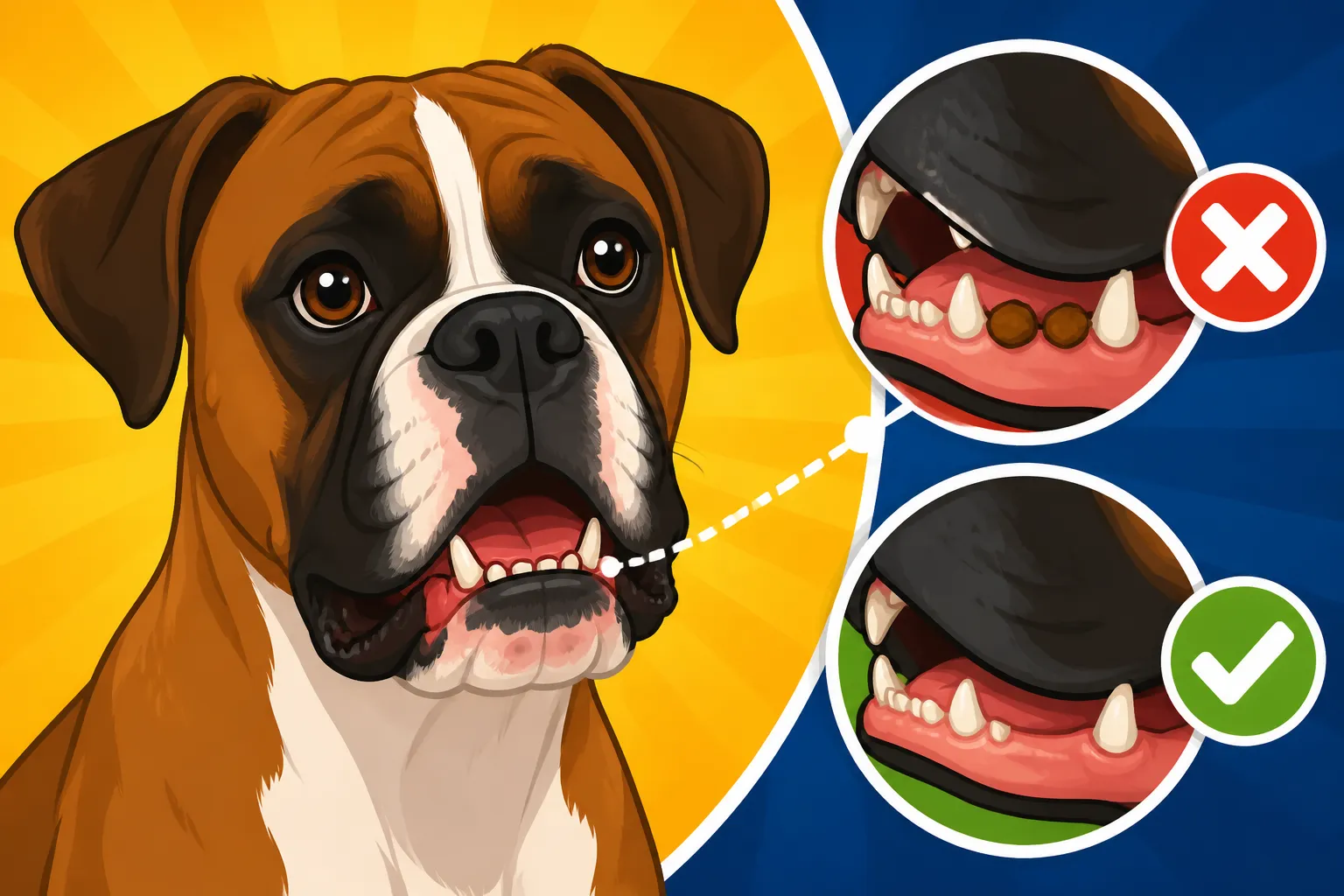
Imagine trying to fit two puzzle pieces together, but one piece is slightly too big and overlaps the other. That's a bit like what happens in a Boxer's mouth. The lower jaw often has teeth that are spaced a little differently, or that point in slightly different directions, because they're trying to fit into a space that's not quite perfectly aligned. This isn't a fault; it's simply how the breed is constructed. However, these natural misalignments and the sometimes crowded nature of the lower jaw can create small shelves, gaps, and crevices where food particles, especially softer, stickier remnants, can easily get lodged after a meal. It's not uncommon for owners to find bits of kibble, meat, or even dental chew fragments stuck between teeth or tucked into the folds of gum tissue.
The Problem of Crowded Teeth
Beyond the undershot nature, Boxers can also experience dental crowding, particularly in their lower jaw. Even though their jaws are powerful, the overall shortening of the muzzle means that the same number of teeth that would typically be spread out in a longer-snouted dog are packed into a smaller area. This crowding leads to teeth being rotated, overlapped, or simply too close together. Each one of these tight spots is an invitation for food debris and plaque to accumulate. Think of it like trying to floss a very tightly packed set of human teeth; it's just harder to get everything clean. These areas are difficult for the tongue to reach and nearly impossible for the natural chewing action to dislodge, making them prime real estate for bacteria to feast on trapped food and kickstart dental problems. For a deeper dive, check out Keeping a Boxer's Crowded Lower Jaw Clean.
The Unpleasant Consequences of Trapped Food
When food consistently gets trapped in your Boxer's mouth, it's not just an aesthetic issue or a minor inconvenience. It kicks off a chain reaction that can lead to significant discomfort, pain, and serious health issues if left unaddressed. It's important for every Boxer owner to understand these potential consequences so they can be proactive in their dog's oral care.
Bad Breath and Bacterial Buildup
The most immediate and obvious sign that food is being trapped is often the development of truly awful breath. This isn't just "dog breath" – it's often a pungent, off-putting smell that can clear a room. This malodor is a direct result of bacteria in your Boxer's mouth breaking down the trapped food particles. As these bacteria multiply and digest the food, they release volatile sulfur compounds, which are the primary culprits behind bad breath, or halitosis. Beyond the smell, this bacterial feast leads to the formation of plaque, a sticky film of bacteria, saliva, and food debris that adheres to the tooth surfaces. If plaque isn't removed regularly, it hardens into tartar (calculus), which is even more difficult to remove and acts as a rough surface for even more plaque to accumulate. You might also notice Tartar on a Boxer's Undershot Jaw developing quite quickly.
Dental Disease and Pain
The progression from plaque and tartar to full-blown dental disease is a serious concern for Boxers. When plaque and tartar build up along the gumline, they irritate the gums, leading to inflammation known as gingivitis. You might notice your Boxer's gums look red, swollen, or bleed easily when they chew or when you try to brush their teeth. If gingivitis is left untreated, it can advance to periodontitis, a more severe form of gum disease that damages the supporting structures of the teeth, including the bone and ligaments. This stage is incredibly painful for your dog and can lead to receding gums, loose teeth, and ultimately, tooth loss. Imagine having a persistent toothache or gum inflammation that never goes away – that's what many dogs experience. This pain can impact their willingness to eat, play, or even be touched around the face. The long-term implications can be severe, potentially leading to the need for Pulling Teeth From a Boxer's Undershot Jaw.
Systemic Health Risks
While oral health might seem confined to the mouth, the reality is that the mouth is a gateway to the rest of the body. The chronic bacterial infection associated with severe dental disease doesn't just stay in the mouth; those bacteria can enter the bloodstream. Once in the bloodstream, they can travel to major organs, including the heart, kidneys, and liver, potentially causing or exacerbating other serious health conditions. For instance, bacteria from oral infections have been linked to heart valve infections (endocarditis). The constant inflammatory response within the mouth also places a burden on the immune system. Therefore, managing your Boxer's oral health isn't just about fresh breath; it's a critical component of their overall well-being and longevity. This is why a comprehensive approach to Boxer Dental Care and the Undershot Bite is so vital.
Proactive Strategies for Preventing Trapped Food Issues
The good news is that with a little proactive effort, you can significantly reduce the risk and severity of food trapping and its associated dental problems in your Boxer. It's all about establishing a routine that addresses their unique oral anatomy. Think of it as an investment in their long-term health and comfort.
The Power of Daily Brushing
Hands down, the single most effective way to combat trapped food and prevent dental disease is daily tooth brushing. Yes, daily! This might sound daunting, especially with a wiggly Boxer, but it makes an enormous difference. Just like with humans, mechanical brushing physically removes plaque and food particles before they can harden into tartar.
To start, you'll need a dog-specific toothbrush and enzymatic toothpaste. Human toothpaste contains fluoride and other ingredients that are toxic to dogs if swallowed. Look for toothbrushes designed for dogs, which might have different head sizes or angles to better reach those tricky spots in a Boxer's mouth. Finger brushes can also be a good starting point to get your Boxer used to the sensation.
Introduce brushing gradually. Let your Boxer lick some of the toothpaste off your finger first to get them used to the taste. Then, try a quick brush of just a few teeth, praising and rewarding them heavily. Slowly increase the duration until you can brush most of their teeth. Focus on the outside surfaces, especially along the gumline, where plaque tends to accumulate most. Because of the undershot jaw, pay extra attention to the lower incisors and canines, as these are prime trapping areas. Consistency is key, even if you can only manage a minute or two each day.
| Tool/Method | Primary Benefit | Frequency | Notes |
|---|---|---|---|
| Dog Toothbrush | Mechanical removal of plaque & food debris | Daily | Use dog-specific toothpaste; gradual introduction recommended |
| Finger Brush | Good for starting, allows tactile feedback | Daily | Easier for some dogs to accept initially |
| Enzymatic Toothpaste | Breaks down plaque, enhances brushing | Daily | Must be dog-specific; palatable flavors help |
| Dental Chews/Treats | Abrasive action, some have plaque-reducing ingredients | Daily/Few times a week | Choose appropriate size and hardness; supervise chewing |
| Water Additives | Inhibits bacterial growth in drinking water | Daily | Easy to use; consult vet for suitable products |
| Dental Diets | Kibble design helps clean teeth as they chew | Every Meal | Can be a primary food source; often veterinary prescribed |
Strategic Food Choices and Eating Habits
What your Boxer eats and how they eat it can also play a role in preventing trapped food.
- Kibble Size and Texture: Some dental-specific kibbles are designed with larger, more fibrous pieces that encourage chewing and help scrape plaque off teeth as your Boxer crunches. Avoid overly sticky or soft foods that are more likely to cling to teeth, unless medically necessary. Brands like Chewy and Amazon offer a variety of dental-focused kibbles.
- Split Meals: Instead of one large meal, feeding your Boxer two or three smaller meals throughout the day can sometimes help reduce the amount of food that might get trapped at any one time. This also aligns with the advice for preventing bloat in Boxers. For more on this, see Feeding a Boxer Twice a Day.
- Water Rinse (Post-Meal): While not always practical, encouraging your Boxer to drink water immediately after eating can help rinse away some loose food particles. Some owners even offer a small amount of water from a syringe (without forcing) to gently flush the mouth, though this requires a very cooperative dog.
- Consider Fresh Food Options: While not a direct solution for trapped food, some fresh food options like those from Ollie can be softer and less prone to crumbling into tiny, sticky particles compared to some traditional kibbles. However, even with fresh food, manual cleaning is still paramount.
Dental Chews and Water Additives
While not a substitute for brushing, dental chews and water additives can be valuable adjuncts to your Boxer's oral hygiene routine.
- Dental Chews: Look for dental chews that are appropriately sized for a Boxer and are clinically proven to reduce plaque and tartar. The mechanical action of chewing these can help scrape off plaque from the tooth surfaces. Always supervise your Boxer when they're enjoying a dental chew to ensure they don't choke and that they chew it thoroughly. Be mindful of hardness; some chews can be too hard and risk fracturing teeth. For safe options, explore Chews Safe for a Boxer's Jaw.
- Water Additives: These are solutions you add to your Boxer's drinking water that contain ingredients to help reduce bacteria and plaque formation in the mouth. They're an easy, passive way to provide some level of oral hygiene, but again, they won't replace brushing. Make sure to choose a product recommended by your veterinarian.
Regular Veterinary Dental Check-ups
Even with the most diligent home care, professional veterinary dental cleanings are often necessary for Boxers. Your vet can perform a thorough examination, often requiring sedation, to assess the full extent of any dental disease, including problems beneath the gumline that aren't visible to the naked eye. They can then professionally scale and polish the teeth, removing hardened tartar and addressing any other issues like extractions if needed. These cleanings are crucial, especially given the Boxer's predisposition to dental issues. Your vet can also advise you on the frequency of these cleanings and discuss your at-home care routine. Many vets recommend yearly dental check-ups, and depending on your Boxer's individual needs, they might suggest Whether a Boxer Needs Yearly Dental Cleaning more or less often. This proactive approach can save your Boxer from significant pain and prevent more costly and invasive procedures down the line, so it's worth understanding Dental Cleaning Prices for a Boxer beforehand.
Addressing Existing Trapped Food Issues and Prevention Long-Term
If you've already noticed signs that your Boxer is trapping food or developing dental problems, it's never too late to take action. Early intervention can prevent further progression and relieve your dog's discomfort. Beyond immediate solutions, adopting a long-term strategy is essential for your Boxer's continued oral health.
What to Do if You Suspect Trapped Food
The first step is always a visit to your veterinarian. They can perform an oral exam to identify exactly where food might be getting trapped, assess the condition of your Boxer's gums and teeth, and rule out any underlying issues that might be contributing to the problem, such as broken teeth, foreign objects, or even oral masses. They can also offer guidance on the best brushing techniques for your dog's specific mouth structure and recommend appropriate dental products.
If your Boxer is already showing signs of gingivitis or has significant tartar buildup, a professional dental cleaning under anesthesia will likely be recommended. This procedure allows the vet to thoroughly clean above and below the gumline, remove all tartar, and identify any teeth that might need extraction. Trying to manage severe dental disease at home without professional intervention is not only ineffective but can cause your Boxer unnecessary pain.
Cultivating a Lifelong Dental Routine
The key to preventing trapped food from becoming a chronic problem is consistency. Just like you brush your own teeth every day, your Boxer needs a regular oral care routine that fits into your daily life.
- Make it a Habit: Try to brush your Boxer's teeth at the same time each day, perhaps after their last meal or during a quiet evening snuggle. This helps both you and your dog get into a rhythm.
- Positive Reinforcement: Keep brushing sessions short, positive, and always end with praise and a favorite treat or toy. You want your Boxer to associate toothbrushing with good things, not a struggle.
- Observe and Monitor: Regularly inspect your Boxer's mouth. Look for any new lumps, discolored teeth, bleeding gums, or persistent bad odors. A quick visual check can help you spot potential problems early, before they escalate. You can also learn how to tell a harmless Boxer wart from a more serious growth by looking at Weekly Lump Checks on a Boxer.
- Dietary Adjustments: Re-evaluate your Boxer's diet with your vet if you're consistently finding food trapped. Sometimes switching to a different kibble formula or even exploring Prescription Food Costs for a Boxer With Colitis if they have other GI sensitivities, might help.
- Consider Early Intervention for Puppies: Even Boxer puppies can benefit from early exposure to mouth handling and gentle brushing. Getting them used to having their mouths touched and teeth cleaned from a young age will make it much easier to maintain a routine as adults. This also helps you get accustomed to Getting a Toothbrush Behind a Boxer's Jowls.
By understanding the unique challenges of your Boxer's bite and committing to a consistent, proactive dental care routine, you can keep their mouth healthy, prevent painful problems, and ensure they continue to flash that characteristic goofy smile for years to come.
Disclaimer
This article is for general informational purposes only and does not constitute professional advice. Laws, prices and regulations vary by location and change over time. Consult a qualified professional for guidance on your specific situation.