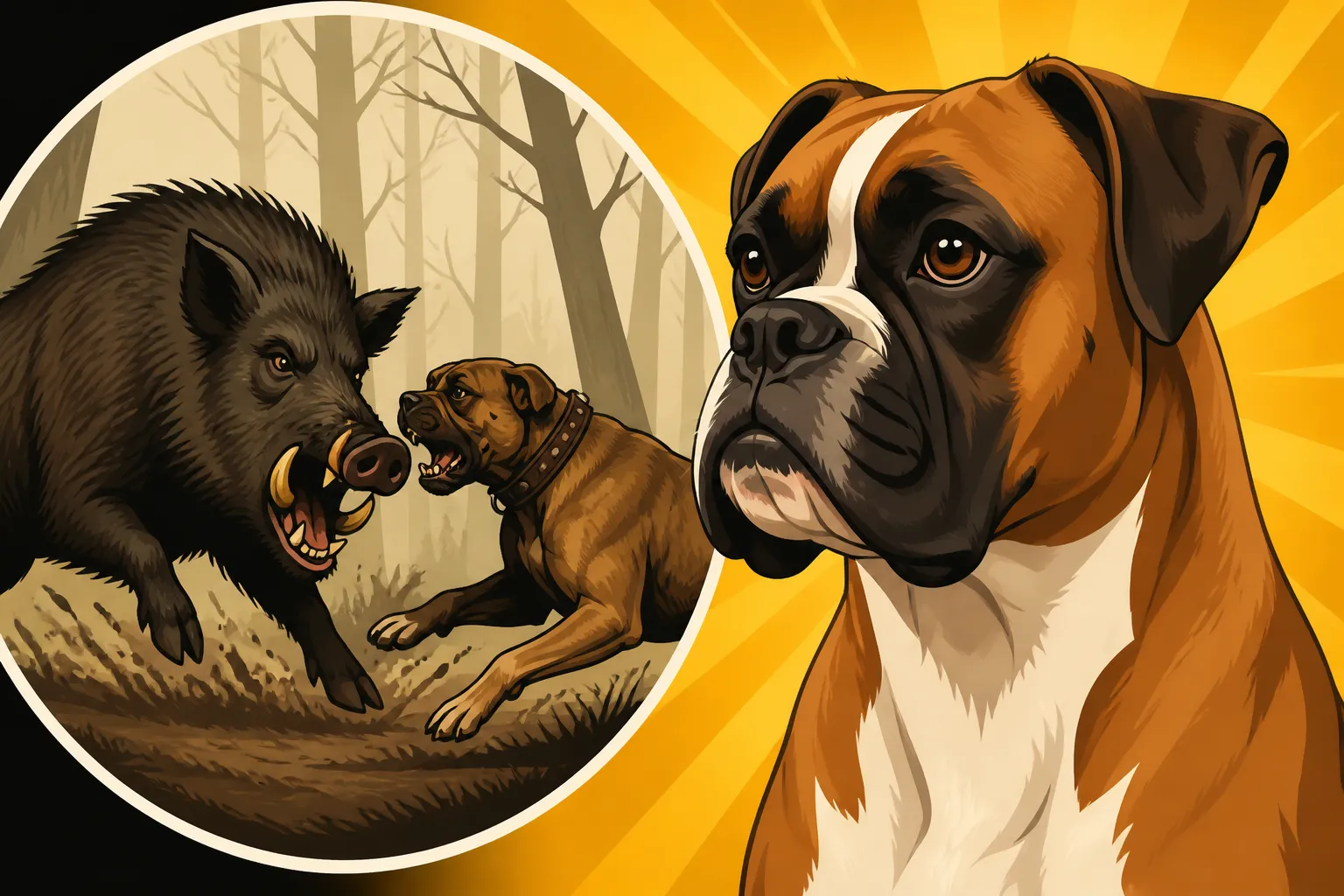
What the Boxer’s Bullenbeisser Ancestor Hunted
It’s easy to look at a majestic Boxer today, with their powerful, muscular build and that strong, expressive jaw, and wonder what kind of history shaped such a magnificent animal. Many owners feel a deep curiosity about where their beloved companion came from, and how those origins might explain some of their unique quirks and undeniable strength. This guide is here to shed light on the Boxer's ancient lineage, specifically exploring the often-discussed Bullenbeisser, its formidable ancestor, and the dangerous game it was bred to hunt in a very different world.
Unpacking the Boxer's Ancestral Lineage: The Mighty Bullenbeisser
When we talk about the Boxer's deep roots, we inevitably come back to the Bullenbeisser. This wasn't just some distant relative; it was the direct forefather, the powerful dog from which the modern Boxer eventually emerged. Understanding the Bullenbeisser helps us truly appreciate the strength, courage, and unique physical attributes that are still so evident in our Boxers today.
A Glimpse into the Past: What Was the Bullenbeisser?
Imagine a dog built like a tank, with a powerful, stocky frame, incredibly muscular shoulders, and a head that screamed strength. That's essentially what the Bullenbeisser was – a type of mastiff, originating from Germany, specifically bred for its gripping power and sheer tenacity. Its name literally translates to "bull-biter," which tells you a lot about its intended purpose. These weren't dainty lapdogs; they were rugged, no-nonsense working dogs whose existence depended on their ability to face down formidable opponents. They had broad heads, a strong, square muzzle, and an incredibly powerful bite, all perfectly adapted for holding on to large animals.
They weren't bred for their beauty or companionship, at least not in the way we think of companion dogs today. Their value was entirely in their utility during the hunt. This dog was a tool, a partner in survival and providing food, and its physical characteristics were honed over generations to be the best at that very specific, very dangerous job. Every part of its anatomy, from its robust skeletal structure to its deep chest, was optimized for strength and endurance.
The Landscape of Medieval European Hunting
To understand why the Bullenbeisser was bred, you have to picture the hunting scene in medieval and early modern Europe. This wasn't sport hunting with rifles from a distance; this was often a close-quarters, highly dangerous endeavor, necessary for sustenance and controlling potentially dangerous wild animal populations. The forests were dense, and populated with animals far more formidable than anything most modern hunters encounter.
Picture wild boar, with their razor-sharp tusks and aggressive nature, capable of disemboweling a human or dog with a swift charge. Envision bears, massive and powerful, a true force of nature. Even large deer, though less immediately aggressive, could pose a serious threat when cornered, especially to an unequipped hunter. Humans, even with primitive weapons, were at a significant disadvantage against these animals without the help of specialized dogs. This is where the Bullenbeisser shone, acting as a crucial, courageous partner, willing to put itself in harm's way to assist the hunting party. It was a brutal world, and only the toughest dogs survived and thrived in such roles.
The Hunt: What the Bullenbeisser Was Bred To Do
The primary role of the Bullenbeisser in the hunt was not to kill the prey outright but to corner, engage, and hold it until the hunters could arrive and deliver the killing blow. This required immense courage, pain tolerance, and incredible jaw strength. It was a specialized task, and the Bullenbeisser was perfectly engineered for it.
Takedown Tactics: Hunting Wild Boar
Wild boar hunting was perhaps the Bullenbeisser's most iconic task. These aren't your friendly barnyard pigs; wild boar are fierce, incredibly strong, and notoriously dangerous. A pack of Bullenbeissers would track and corner a boar, then move in. Their job was to latch onto the boar's snout, ear, or throat, effectively immobilizing it or slowing it down considerably, creating an opening for the hunters with their spears or knives. This was not a quick or easy feat.
The dogs needed to be incredibly brave to stand up to a charging boar, and resilient enough to withstand potential injuries from tusks. Their powerful jaws allowed them to maintain a vice-like grip, preventing the boar from breaking free and turning on the hunters. This required not just physical might, but an unwavering mental fortitude. A dog that hesitated or let go could mean serious injury or death for itself or a human companion. The Bullenbeisser's bite was its weapon, a tool honed for survival.
Engaging Larger Game: Bear and Deer
While wild boar was their specialty, Bullenbeissers were also utilized for even larger and more dangerous game, such as bears. In these scenarios, a single Bullenbeisser might not have been enough; a larger pack or a combination with other powerful hunting breeds would likely have been used. Their role remained consistent: to engage the animal, hold it, and prevent its escape, giving the human hunters a safe window to approach. This required them to be agile enough to avoid crushing blows, yet sturdy enough to take a hit if necessary.
Hunting deer was also part of their repertoire, though perhaps less dramatic than boar or bear. Here, their speed and endurance would have been utilized to run down and hold deer, preventing them from fleeing. While deer are not as aggressive as boar or bear, a large stag could still injure a dog. In all these scenarios, the Bullenbeisser was the brute force, the courageous anchor, without which successful and safe hunting of large game would have been incredibly difficult, if not impossible. Their presence drastically reduced the risk for the human hunters involved.
From Hunter to Companion: The Bullenbeisser's Legacy in the Modern Boxer
It’s truly remarkable to see how many of the Bullenbeisser's essential characteristics have been passed down and lovingly preserved in our modern Boxers. While your Boxer isn't likely to be chasing down wild boar in your backyard, those ancestral traits manifest in ways that are both endearing and sometimes a little challenging for today’s owners.
How Bullenbeisser Traits Live On in Your Boxer
Think about the Boxer's well-known strength and athleticism. That's a direct inheritance from the Bullenbeisser. Our Boxers still possess incredible power and muscle, which is why they excel in various dog sports and need plenty of exercise to stay happy and healthy. Their robust build, deep chest, and powerful hindquarters are all echoes of their hunting ancestors. They might not be gripping a boar, but they can certainly out-pull you on a leash if not properly trained!
And then there's the jaw. While the Boxer's undershot jaw is now a breed standard, it originally evolved from the Bullenbeisser's need for a strong, tenacious grip that could hold without breaking. This powerful bite means Boxers need sturdy chew toys – a visit to a store like Chewy will show you countless options, and you'll quickly learn that a flimsy toy won't last five minutes with a determined Boxer. Their protective instinct, that watchful eye over their family, also comes from generations of guarding and working closely with humans in dangerous situations. They might not be protecting you from a bear, but they’ll certainly alert you to the mail carrier! Furthermore, their playful "boxing" with their front paws, a trait that gave the breed its very name, is a charming, non-aggressive vestige of those powerful forelimbs used to engage and hold prey. This playful behavior is a clear link to Why a Boxer Boxes With Its Front Paws.
Managing the Instincts: Modern Boxer Care
Given this powerful lineage, it's no surprise that Boxers are not dogs who thrive on being couch potatoes all day. They have an innate drive for activity and mental engagement. Without proper outlets, these intelligent and energetic dogs can become bored, and a bored Boxer is often a destructive Boxer. Think of it this way: their ancestors had a very clear job to do every day, involving intense physical and mental exertion.
Today, we need to provide suitable substitutes. This means daily, vigorous exercise – not just a stroll around the block. Running, fetch, interactive play, and structured training sessions are vital. For their strong jaws, providing appropriate, durable chew items is non-negotiable. Look for high-quality, long-lasting chews and toys, many of which are readily available through online retailers like Chewy. This not only satisfies their instinct to chew but also helps maintain dental health. Furthermore, early and consistent training and socialization are critical to channel their protective instincts positively, ensuring they are well-mannered companions rather than overly boisterous or reactive. Addressing behaviors like Boxer Mouthing From Puppy to Adult through redirection to appropriate chew items is a prime example of managing these inherited traits.
The Evolution of the Boxer: Refinement and Purpose
The transition from the rugged Bullenbeisser to the sleek, athletic, and loving Boxer we know today wasn't a sudden leap. It was a deliberate process of selective breeding, driven by changing societal needs and a desire to refine certain characteristics while preserving the core essence of strength and loyalty.
The Journey to the Modern Boxer Breed
The original Bullenbeissers, while formidable, were not uniform in appearance. Over time, as large game hunting became less common, their role began to shift. Breeders in Germany, particularly in the late 19th century, started crossing smaller Bullenbeisser types with the English Bulldog. This crossbreeding was crucial in developing the distinct look of the modern Boxer. The Bulldog influence contributed to the shorter, broader muzzle, the powerful jaw, and likely the distinct undershot bite, which was an advantage for gripping and holding. This blending of bloodlines is a key part of The German Origins of the Boxer and specifically Bulldog Blood in the Early Boxer.
The goal was to create a versatile working dog that could still perform tasks like guarding, herding cattle, and eventually military and police work, but also possess a more manageable temperament suitable for family life. The German Boxer Club, established in 1895, played a pivotal role in standardizing the breed, setting the guidelines for appearance and temperament that we largely recognize today. The physical prowess remained, but the raw, untamed nature of the Bullenbeisser was tempered into the intelligent, trainable, and devoted companion we cherish.
Honoring the Heritage: Responsible Boxer Ownership Today
Understanding the Bullenbeisser heritage isn't just a fascinating history lesson; it's a vital component of responsible Boxer ownership. It informs how we care for them, train them, and interact with them. Their inherited strength and energy mean they thrive in active households where they receive consistent training and plenty of opportunities to exercise both body and mind. This might mean engaging in dog sports like Agility and Dock Diving With a Boxer, participating in obedience classes, or simply enjoying long, vigorous walks and playtime in a securely fenced yard.
Recognizing their powerful jaws and love for chewing, providing them with durable toys and chews, perhaps from a trusted source like Chewy, is essential for their well-being and for protecting your furniture! Furthermore, this history underscores the importance of health screenings, as certain conditions like heart issues or joint problems can be linked to the demands placed on these powerful working dogs over generations. For example, understanding their physical structure helps explain why vigilance for conditions like Boxer Hip Dysplasia and Spondylosis is so important. By appreciating their past, we can better understand their present needs and provide them with the best possible future as cherished family members.
Here’s a comparison of the Bullenbeisser and the modern Boxer:
| Feature | Bullenbeisser (Ancestor) | Modern Boxer (Descendant) |
|---|---|---|
| Primary Role | Large game hunter (wild boar, bear, deer) | Family companion, guardian, versatile working dog, athlete |
| Temperament | Fierce, tenacious, courageous, highly driven | Loyal, courageous, playful, intelligent, sometimes stubborn |
| Physicality | Muscular, powerful jaws, robust, rugged | Athletic, muscular, powerful jaws, distinct undershot bite |
| Bite Strength | Extremely strong, designed for gripping and holding | Very strong, still a testament to gripping power |
| Exercise Needs | Constant, high-intensity hunting | High, requires daily vigorous exercise and mental stimulation |
| Socialization | Bred for utility, likely less focus on broad social skills | Requires early, consistent socialization for balanced behavior |
| Living Space | Outdoor working dog | Primarily indoor family dog, thrives with yard access |
Disclaimer
This article is for general informational purposes only and does not constitute professional advice. Laws, prices and regulations vary by location and change over time. Consult a qualified professional for guidance on your specific situation.