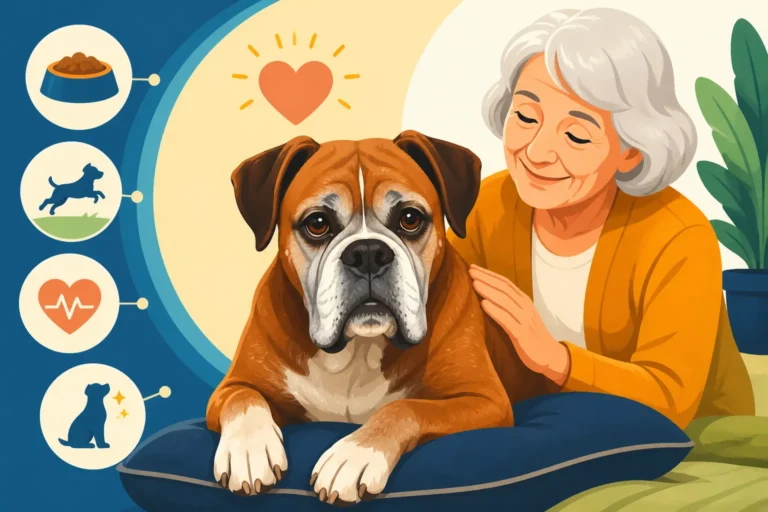
Weekly Lump Checks on a Boxer
There's nothing quite like the boundless energy and goofy affection of a Boxer, but a chill runs down every Boxer owner's spine at the mention of "lumps." These dogs are, heartbreakingly, predisposed to certain types of growths, and the thought of discovering something sinister can keep us up at night. This comprehensive guide is here to walk you through the essential practice of weekly lump checks, empowering you to be your Boxer's first line of defense against potentially serious health issues.
The Critical Importance of Weekly Lump Checks for Your Boxer
It’s a tough truth that comes with loving a Boxer: these magnificent dogs are statistically more susceptible to certain types of cancers than many other breeds. This isn't to say every bump you find is a disaster, but it does mean we, as their guardians, need to be extra vigilant. Weekly lump checks aren't just a suggestion; they are a fundamental part of responsible Boxer ownership, offering peace of mind and, more importantly, the potential to save their life.
Why Boxers Are Prone to Lumps and Bumps
Boxers have a genetic predisposition to certain cancers, particularly mast cell tumors, lymphoma, and various skin tumors. This isn't just anecdotal; studies and veterinary statistics consistently show Boxers at a higher risk. This breed’s unique genetic makeup, likely tied to their heritage, unfortunately makes them a target. It's a cruel twist, given their otherwise robust and energetic nature. Many owners will sadly tell you that they've faced the daunting reality of Why Cancer Kills More Boxers Than Anything Else. Beyond cancerous growths, Boxers can also develop benign fatty tumors (lipomas), cysts, or even histiocytomas, especially when they're young. It's a breed that just seems to love its dermatology appointments!
The Lifesaving Power of Early Detection
When it comes to lumps, especially cancerous ones, time is truly of the essence. Detecting a lump when it’s still small and localized significantly increases the chances of successful treatment and a better prognosis. Imagine finding a small, pea-sized lump on your Boxer's flank during your routine check, versus stumbling upon a golf-ball sized mass that has been growing for months. The difference in treatment complexity, cost, and outcome can be monumental. Early detection allows for prompt veterinary intervention, which might involve a simple removal of a low-grade tumor, rather than complex, extensive surgeries or more aggressive chemotherapy protocols down the line. It really can mean the difference between life and death, or at the very least, a much better quality of life through treatment.
Integrating Checks into Your Routine
Adding a full-body inspection into your already busy week might sound like another chore, but it can easily become a cherished bonding experience. Think of it as a massage session for your Boxer, a special time where you connect. You could do it while they're relaxing on the couch with you in the evening, during their post-walk cooldown, or even while you're giving them a good brush. The key is consistency. Making it a predictable, positive experience for your dog means they'll come to enjoy it, making your job much easier. Whether it's Sunday evening cuddles or a Tuesday night belly rub, pick a time that works and stick to it. This regular habit is what makes the "weekly" part of Weekly Lump Checks on a Boxer so powerful.
A Step-by-Step Guide to Performing Your Boxer's Skin Exam
You don't need to be a vet to perform a thorough lump check. What you need is consistency, attention to detail, and a calm approach. This isn't about panicking; it's about being proactive and informed.
Creating a Calm and Thorough Checking Environment
First things first, set the scene. Choose a quiet spot where both you and your Boxer can be comfortable and relaxed. A soft dog bed, a cozy rug, or even the couch can work well. Have some high-value treats on hand – think small pieces of cheese, cooked chicken, or their absolute favorite. Your goal is to make this a positive, low-stress experience. Speak in a soothing voice, offer gentle praise, and give those treats generously. If your Boxer is squirmy or restless, start with shorter sessions and gradually extend them as they get used to the routine. The more relaxed they are, the more thorough you can be, and the less likely you are to miss anything important.
The Head to Tail Approach: What to Feel For
The trick is to be systematic. Start at your Boxer's head and work your way down to their tail and paws. Use the pads of your fingers to gently, but firmly, palpate their skin. You're feeling for anything unusual:
- Head and Face: Feel around their muzzle, cheeks, under their chin, and around their ears. Don't forget their eyelids and inside their mouth (if they tolerate it). Check their neck and throat area for any swelling.
- Body: Move to their chest, shoulders, and along their back. Pay close attention to their armpits and groin area, as lymph nodes are located here and can swell with certain conditions, including Boxer Lymphoma and How It Presents. Work your way down their sides and belly.
- Legs and Paws: Check all four legs, feeling down to their toes. Don't forget to examine between their paw pads.
- Tail and Rear: Finish by checking their tail, around their anus, and under their hind legs.
As you feel, notice any changes in texture, size, or shape. Is it hard or soft? Mobile or fixed? Is it painful when you touch it? Don't forget to look for any changes in the skin itself, like redness, scabbing, hair loss, or discharge. Remember, Boxers have short coats, which can make things easier to spot, but also easier to miss if you're not actively feeling. A good technique is to use broad, flat strokes with your palm first, and then follow up with a more focused, finger-tip examination of any areas that felt suspicious.
Recording Your Findings: A Vital Habit
It's easy to forget the exact details of a small bump you found last week, especially if it seemed minor at the time. This is where documentation becomes incredibly valuable. Keep a small notebook or a dedicated app on your phone. For every lump or skin abnormality you find, make a note of:
- Date Found: When did you first notice it?
- Location: Be precise! "Left flank, just above the hip bone" is much better than "on his side." You can even draw a little diagram of your Boxer's body and mark the spots.
- Size: Measure it if you can (a small ruler or even comparing it to a pea, marble, or grape helps).
- Texture: Is it hard, soft, squishy?
- Mobility: Does it move freely under the skin, or is it fixed in place?
- Color/Appearance: Is the skin over it normal, red, inflamed, or does it have a scab?
- Your Impression: Did it seem painful? Did your Boxer react when you touched it?
This log will be a lifesaver when you visit the vet. It provides a clear, objective history of any growths, helping your vet track changes and make more informed decisions. It also helps you spot if a benign-looking bump suddenly starts to grow or change, indicating it might be time to get Finding a Lump on a Boxer Early properly checked out.
| Lump Type | Common Appearance | Texture/Mobility | Common Age Range | Urgency for Vet Visit |
|---|---|---|---|---|
| Lipoma (Fatty Lump) | Soft, movable, often round or oval | Soft, squishy, freely movable | Middle-aged to senior | Non-urgent, but good to confirm |
| Histiocytoma | Small, red, raised, often ulcerated | Firm, fixed, can grow fast | Young Boxers (under 3) | Often resolves, but vet confirm |
| Sebaceous Cyst | Small, firm, often under skin, can burst | Firm, fixed, sometimes fluid-filled | Any age | Non-urgent, but can get infected |
| Wart (Papilloma) | Small, cauliflower-like growth | Bumpy, firm, usually fixed | Any age, often young | Non-urgent, but can spread |
| Mast Cell Tumor | Highly variable, can look like anything | Soft to firm, mobile or fixed | Middle-aged to senior | Urgent, early biopsy crucial |
| Melanoma | Dark, pigmented lesions (can be non-pigmented) | Firm, often fixed | Middle-aged to senior | Urgent, especially if dark |
| Lymphoma (Lymph Node) | Swelling of lymph nodes (neck, armpits, groin) | Firm, non-painful swelling | Any age, more senior | Urgent, typically generalized |
Deciphering What You Find: Common Boxer Lumps and Their Characteristics
Discovering a lump can be terrifying, but not every lump signals disaster. Understanding the common types of growths Boxers experience can help you discuss your findings more effectively with your veterinarian.
Benign Bumps: Fatty Lumps, Warts, and Cysts
Many lumps you find on your Boxer will thankfully be benign, meaning non-cancerous.
- Lipomas (Fatty Lumps): These are perhaps the most common benign lumps, especially in older Boxers. They're typically soft, somewhat squishy, and you can often move them around freely under the skin. They're essentially just collections of fat cells and usually pose no threat unless they grow to an uncomfortable size or are in a location that interferes with movement. However, it's virtually impossible to truly distinguish a lipoma from a cancerous mass like a mast cell tumor just by touch. This is why Telling a Boxer Fatty Lump From a Tumor almost always requires veterinary assessment.
- Histiocytomas: Often seen in younger Boxers (under two or three years old), these are small, red, button-like growths that can appear quite suddenly. They might even look a bit angry or inflamed. The good news is that most histiocytomas regress and disappear on their own within a few months. While they often resolve, it’s wise to get them checked to confirm they aren't something more serious, as Boxer Skin Tumors That Are Not Cancer can still sometimes cause concern.
- Sebaceous Cysts: These occur when a sebaceous gland (which produces oil for the skin) becomes blocked, forming a sac under the skin filled with oily, cheesy, or pasty material. They can sometimes rupture, leading to a localized infection. They often feel firm and round, and might appear suddenly.
- Warts (Papillomas): Caused by viruses, these are usually cauliflower-like growths that can appear anywhere on the skin or inside the mouth. They are more common in younger dogs or those with compromised immune systems. While generally harmless, some can become irritated, bleed, or indicate a need for further investigation, especially if rapidly spreading. Knowing Whether a Boxer Wart Needs Removing depends on its location and how much it bothers your dog.
The Worrying Ones: Mast Cell Tumors and Other Cancers
This is where our vigilance truly comes into play. Some lumps are, unfortunately, indicative of cancer.
- Mast Cell Tumors: These are the notorious chameleons of canine cancer. A mast cell tumor can literally look like anything – a small pimple, an angry red welt, a soft fatty lump, or a firm growth. They can also change in size, sometimes appearing to shrink and then suddenly grow again, a phenomenon known as Darier's sign. This unpredictable nature is why any new lump on a Boxer, regardless of how innocent it looks, warrants a vet visit. Boxers are particularly prone to these, and their grade (how aggressive they are) determines the prognosis, making prompt What a Boxer Mast Cell Grade Means through biopsy crucial.
- Lymphoma: While often affecting internal lymph nodes, lymphoma can sometimes present as swollen peripheral lymph nodes (under the jaw, in the armpits, or behind the knees) that you might feel during a lump check. These would feel like firm, non-painful swellings.
- Other Cancers: Fibrosarcomas, squamous cell carcinomas, and even some types of melanomas can present as lumps or skin abnormalities. Melanomas, for instance, are often darkly pigmented but can also be non-pigmented and easily mistaken for something else. The age at which The Age Boxer Cancer Usually Appears varies by type, but vigilance is key across their lifespan.
Knowing When to Call the Vet Immediately
It's natural to hesitate, to wonder if you're overreacting. But when it comes to Boxer lumps, it's always better to be safe than sorry. You should call your vet right away if you notice any of the following:
- Rapid Growth: A lump that appears to be growing quickly in size.
- Changes in Appearance: A lump that changes color, texture, or becomes red, inflamed, or ulcerated.
- Pain or Discomfort: If your Boxer reacts with pain when you touch the lump, or if they are constantly licking, chewing, or scratching at it.
- Fixed Lumps: Lumps that feel firmly attached to underlying tissue, rather than moving freely under the skin.
- Any New Lump on a Boxer: Given their predisposition to aggressive cancers like mast cell tumors, any new lump, regardless of its appearance, should be evaluated by a vet. This is especially true for lumps that appear on the torso, face, or paws.
Don't try to self-diagnose based on internet pictures or advice from well-meaning friends. Your vet is the only one who can properly assess a lump and determine the best course of action. Peace of mind is priceless, and early intervention is literally life-saving.
Navigating Veterinary Consultations and Next Steps
Once you've found something suspicious, the next step is a trip to the vet. This can feel daunting, but being prepared makes a huge difference.
Preparing for Your Vet Appointment
Before you head to the vet, grab that lump log you've been keeping. It will provide your veterinarian with invaluable information about the lump's history. You'll want to share:
- When you first noticed it.
- Its exact location.
- Any changes in size, shape, or appearance.
- If your Boxer seems bothered by it.
- Any other symptoms your Boxer might be exhibiting (e.g., lethargy, changes in appetite, vomiting, diarrhea), as sometimes skin lumps can be connected to internal issues.
Your vet will conduct a thorough physical exam, carefully palpating the lump and assessing your Boxer's overall health. They'll likely discuss diagnostic options with you. Remember, good communication with your vet is key. Don't be afraid to ask questions about the recommended tests, what they're looking for, and what the potential next steps might be.
Understanding Diagnostic Tests for Boxer Lumps
When a vet finds a lump, they typically recommend one or more diagnostic tests to determine its nature.
- Fine Needle Aspiration (FNA): This is often the first step. The vet uses a very fine needle to collect a small sample of cells from the lump. These cells are then spread on a slide and examined under a microscope (cytology). An FNA is quick, minimally invasive, and often can be done during the same appointment. It's excellent for identifying common benign growths like lipomas or histiocytomas, and can often strongly suggest a mast cell tumor, though it can't always give a definitive grade. For complex cases, a Needle Biopsy on a Boxer Lump might be performed, which takes a larger tissue sample.
- Biopsy: If the FNA is inconclusive, or if the vet suspects a more serious tumor, a biopsy will be recommended. This involves surgically removing a small piece of the lump (incisional biopsy) or the entire lump (excisional biopsy) under local or general anesthesia. The tissue is then sent to a pathology lab for a definitive diagnosis and, if cancerous, grading. This provides the most accurate information.
- Blood Work/Imaging: Depending on the type of lump and if cancer is suspected, your vet might recommend blood tests (to check overall health or look for signs of systemic disease) or imaging (like X-rays or ultrasound) to see if the cancer has spread to other organs. This is part of "staging" a cancer.
The cost of these diagnostic tests can vary. This is where pet insurance, like a plan from Healthy Paws, can be a real game-changer. Having coverage in place before issues arise can help alleviate the financial stress of diagnosis and treatment.
Coping with a Cancer Diagnosis and Treatment Options
Receiving a cancer diagnosis for your beloved Boxer is devastating. It's okay to feel overwhelmed, scared, and even angry. Take time to process the information, and don't hesitate to get a second opinion from a veterinary oncologist if recommended by your primary vet. Remember, a diagnosis doesn't mean it's the end. Many cancers are treatable, especially with early detection.
Treatment options for Boxer cancer depend entirely on the type, grade, and stage of the cancer. They might include:
- Surgery: Often the first line of defense, especially for localized tumors like mast cell tumors. The goal is to remove the entire tumor with clean margins (a border of healthy tissue).
- Chemotherapy: Used for cancers that have spread or are likely to spread, such as lymphoma or high-grade mast cell tumors. Chemotherapy in dogs is often less aggressive than in humans, aiming to maintain a good quality of life. You can learn more about Chemotherapy for a Boxer With Cancer to understand what to expect.
- Radiation Therapy: Used for tumors that are difficult to remove surgically or to shrink tumors before surgery.
- Palliative Care: Focused on managing symptoms and ensuring comfort, especially for advanced cancers or when aggressive treatment isn't an option.
Throughout this process, lean on your veterinary team. They are there to guide you, answer your questions, and help you make the best decisions for your Boxer. Remember that companies like Healthy Paws often cover a significant portion of cancer treatment costs, providing invaluable support during an incredibly challenging time. Every Boxer deserves the best chance at a long, healthy life, and your dedication to these weekly checks is a monumental step in making that happen, giving them the best shot at seeing Caring for a Boxer Past Eight with vitality and joy.
Disclaimer
The information provided in this article is for general informational purposes only and is not a substitute for professional veterinary advice, diagnosis, or treatment. Always seek the advice of your veterinarian or other qualified animal health provider with any questions you may have regarding a medical condition or the health and welfare of your pet.