Needle Biopsy on a Boxer Lump
Few things strike more fear into a Boxer owner's heart than running your hand over that sleek, short coat and feeling a lump where there shouldn't be one. It’s an instant jolt, a stomach-dropping moment that sends your mind racing through every worst-case scenario. This guide will walk you through what a needle biopsy on a Boxer lump involves, what to expect, and how to navigate this incredibly anxious time.
The Initial Panic of Finding a Lump on Your Boxer
That feeling of finding a new lump on your beloved Boxer is truly unnerving. You immediately start poking it, trying to figure out if it's hard or soft, movable or fixed, and measuring it against your memory of what was there before. Boxers, bless their blocky heads and loyal hearts, seem to be magnets for these mysterious bumps and growths, making this a common, albeit terrifying, experience for many of us.
Why Boxers Are So Prone to Lumps
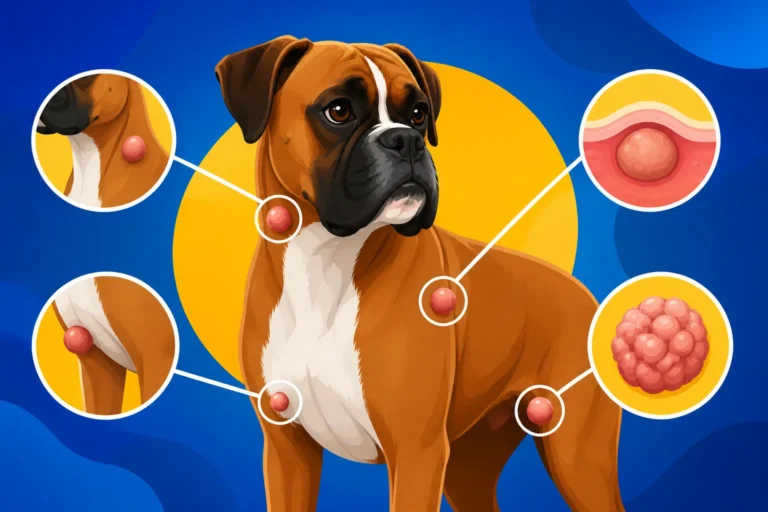
It feels like Boxers are predisposed to all sorts of lumps and bumps, and unfortunately, you're not wrong. Our breed has a higher incidence of certain types of tumors, both benign and malignant, compared to many other breeds. Mast cell tumors, in particular, are notoriously common in Boxers, and they can range from completely harmless to very aggressive. Beyond mast cell tumors, you'll also frequently find benign fatty tumors (lipomas), cysts, and even histiocytomas, especially in younger Boxers. This genetic predisposition means that finding a lump, while stressful, is a pretty regular occurrence for Boxer parents, making those Weekly Lump Checks on a Boxer an absolutely vital routine. It's not a matter of if you'll find one, but when.
The Immediate Questions and Fears
Once you discover that lump, a million questions race through your mind. "What is it?" "Is it serious?" "How fast did it grow?" And the biggest fear of all: "Is it cancer?" It's a natural reaction to immediately worry about the worst. You might even try to rationalize it away – "Oh, it's probably just a fatty lump" – but that persistent little voice of concern keeps nagging. The truth is, without a professional evaluation, there's simply no way to know for sure. While some lumps are clearly benign, like a small, movable fatty tumor, others can be deceptive. Distinguishing between a harmless growth and something more sinister is exactly why your vet will likely recommend further investigation. Sometimes, you might think you know the difference, but Telling a Boxer Fatty Lump From a Tumor often requires more than just touch.
Understanding the Needle Biopsy Procedure for Boxers
When you bring your Boxer to the vet with a lump, one of the first and most common diagnostic tools they'll suggest is a needle biopsy. It sounds intimidating, but it's actually a very routine and relatively non-invasive procedure designed to get answers quickly.
Fine Needle Aspiration FNA Explained
The most common type of needle biopsy is called a Fine Needle Aspiration, or FNA. This is often the first step in investigating a new lump. Here's how it generally works:
Your vet will carefully locate the lump, feeling its borders and assessing its texture. Then, using a very thin, sterile needle (similar to those used for vaccinations, sometimes even smaller), they will insert it into the lump. The "aspiration" part comes from pulling back on the syringe plunger, which creates suction to draw cells and fluid from the mass into the needle. The vet might redirect the needle a few times within the lump to ensure they get a good, representative sample from different areas. They usually do this several times to ensure multiple samples are collected.
The process itself is incredibly quick, usually taking just a few seconds per stick. Most Boxers tolerate FNA remarkably well, often without any sedation at all, though a particularly anxious dog might need a gentle muzzle or a calm handler. Many vets will perform the FNA right there during your exam, especially if the lump is easily accessible. Once the samples are collected, they're carefully expressed onto microscope slides, stained, and then examined under a microscope by either your vet or sent off to a specialized veterinary pathologist for a more detailed analysis.
Pros of FNA:
- Minimally Invasive: It’s a very low-risk procedure with little to no downtime. Your Boxer will likely be completely back to normal within minutes.
- Quick Results: Depending on whether your vet can examine the slides in-house or needs to send them out, you might get preliminary results the same day or within a few business days.
- Cost-Effective: Generally less expensive than more invasive biopsies or surgical removals.
- Often No Sedation Needed: Reduces risks associated with anesthesia for our brachycephalic (flat-faced) Boxers, who can sometimes have Anesthesia Risk in a Flat-Faced Boxer.
Cons of FNA:
- Can Be Inconclusive: This is the biggest drawback. Sometimes, the needle doesn't collect enough cells, or the cells collected aren't diagnostic. Think of it like trying to sample a cake with a toothpick – you might get icing, you might get cake, or you might get nothing. Some tumors, like certain mast cell tumors, don't exfoliate cells well, making FNA less reliable for them.
- Doesn't Provide Architectural Information: FNA tells you about individual cells, but not how those cells are organized within the tissue. This "architecture" can be crucial for an accurate diagnosis and for determining the aggressiveness of certain tumors.
Core Needle Biopsy – When More is Needed
If an FNA comes back inconclusive, or if the vet strongly suspects a particular type of tumor that FNA isn't great at diagnosing (like a soft tissue sarcoma), they might recommend a core needle biopsy. This procedure is a step up in invasiveness but provides a much larger, more substantial tissue sample.
A core needle biopsy uses a larger, specialized needle with a cutting tip designed to extract a small cylinder of tissue, rather than just individual cells. Because it takes more tissue, it often requires some local anesthetic at the site of the lump, and sometimes light sedation to keep your Boxer perfectly still and comfortable. This is usually done in a treatment room rather than the exam room. The vet will numb the area, then insert the biopsy needle to extract one or more tissue cores. Afterward, the site might need a single suture or a small bandage, and your Boxer might be a little sore for a day or two.
This type of biopsy is particularly valuable because it allows the pathologist to examine the structure of the tissue, not just the individual cells. This can lead to a much more definitive diagnosis, especially for tumors where cell arrangement is key to grading and treatment planning. Many larger veterinary hospitals, like the VCA Animal Hospitals network or regional specialty centers, have the equipment and expertise to perform these regularly.
Pros of Core Needle Biopsy:
- More Definitive Diagnosis: Provides more comprehensive information, significantly reducing the chances of an inconclusive result compared to FNA.
- Better for Certain Tumors: Ideal for lumps that don't readily shed cells, or when tissue architecture is critical for diagnosis.
- Grading Information: Can sometimes provide initial grading information for malignant tumors, which is crucial for prognosis and treatment planning. What a Boxer Mast Cell Grade Means
Cons of Core Needle Biopsy:
- More Invasive: Involves a larger needle and sometimes sedation, meaning slightly higher risks and a bit more recovery time.
- Higher Cost: Generally more expensive than an FNA due to the equipment, anesthesia, and pathologist fees.
- Still Not Always 100%: While better than FNA, even core biopsies can sometimes miss the most representative part of a heterogeneous tumor.
What Happens After the Biopsy? The Waiting Game and Results
Once the needle biopsy is done, whether it’s an FNA or a core biopsy, the hardest part for us owners begins: the waiting. That period between the procedure and getting the results can feel like an eternity, filled with anxiety and endless speculation.
The Pathologist's Role and What They Look For
After your vet collects the samples, they're meticulously prepared and sent to a veterinary pathology lab. These labs, often large diagnostic companies like IDEXX Laboratories or Antech Diagnostics, employ highly skilled veterinary pathologists who specialize in diagnosing diseases by examining tissues and cells.
When your Boxer's sample arrives, the pathologist will prepare the slides and examine them under a powerful microscope. They are looking for several key things:
- Cell Type: What kind of cells are present? Are they normal skin cells, fat cells, inflammatory cells, or something else entirely?
- Cellular Characteristics: Do the cells look normal and uniform, or are they abnormal in size, shape, and nuclear appearance? Cancer cells often exhibit specific characteristics like large or multiple nuclei, abnormal cell division (mitotic figures), and poor differentiation.
- Arrangement (for core biopsies): How are the cells organized? Are they forming typical structures, or are they chaotic and invading surrounding tissue? This is where a core biopsy really shines, giving the pathologist a 3D view.
- Presence of Inflammation: Sometimes, a lump is simply an inflammatory reaction, and the pathologist can identify the specific inflammatory cells involved (e.g., neutrophils, eosinophils).
The pathologist's report will provide a diagnosis (e.g., "lipoma," "mast cell tumor," "histiocytoma," "lymphoma"), or it might come back as inconclusive, especially with FNA, indicating that insufficient diagnostic material was obtained. It's a precise science, and their expertise is crucial for getting an accurate picture of what's going on inside that lump.
Interpreting the Results and Next Steps
Once the pathology report comes back, your vet will review it with you, explaining what it means for your Boxer. This is a critical conversation, and it can bring immense relief or, unfortunately, profound concern.
Possible Outcomes:
- Benign Diagnosis: This is the best-case scenario! If the lump is identified as a benign growth (like a lipoma or a histiocytoma), your vet might recommend simply monitoring it for changes. For example, a small, benign lipoma on a Boxer’s chest might be left alone, especially if it’s not bothering them. However, if it’s growing rapidly, interfering with movement, or in a location where future growth could be problematic, surgical removal might still be an option.
- Malignant Diagnosis: If the results indicate cancer (e.g., mast cell tumor, lymphoma, sarcoma), this is understandably devastating news. However, it's also the crucial first step toward developing a treatment plan. The type of cancer, its grade, and its location will all influence the next steps, which could include further diagnostics like X-rays, ultrasound, or CT scans to check for spread (staging), and then discussing treatment options like surgery, chemotherapy, or radiation. Chemotherapy for a Boxer With Cancer is a journey many Boxer owners sadly face.
- Inconclusive Results: This is a frustrating outcome, but it's not uncommon, especially with FNA. It means the pathologist couldn't gather enough information to make a definitive diagnosis. In this situation, your vet will typically recommend a more invasive biopsy, such as a core needle biopsy, or even an excisional biopsy (surgical removal of the entire lump) to get a clearer answer. It might feel like a setback, but it's part of the diagnostic journey to ensure your Boxer gets the right care.
The waiting game for these results is truly tough. It’s a period where you’re just trying to hold it together, showering your Boxer with extra love and treats. The cost of these diagnostics and potential treatments can also add significant stress, which is where having good pet insurance like Healthy Paws can be a real lifesaver, helping to cover a portion of these unexpected expenses. Remember, no matter the outcome, your vet will guide you through the next steps, offering comfort and practical advice. For some, after a lot of consideration, the decision might even be Deciding Against Treatment for a Boxer, and that’s a valid choice too, made with your dog's best interest at heart.
Weighing Your Options and Future Considerations
Getting a needle biopsy is a critical first step, but it’s just one piece of the puzzle. Depending on the results, you'll have more decisions to make, each with its own set of considerations for your Boxer's health and your peace of mind.
When to Opt for Immediate Removal Instead
Sometimes, your vet might suggest skipping the biopsy and going straight to surgical removal of the lump. This isn't a decision taken lightly, but there are several scenarios where it makes good sense:
- Highly Suspicious Appearance: If a lump has a very aggressive or unusual appearance, is growing rapidly, or is located in a tricky area where multiple biopsies might be difficult or provide limited information, immediate removal might be the most practical approach.
- Inaccessible Location: Lumps located deep within muscle, or in sensitive areas like the paw pads or around the eyes, can be challenging to biopsy accurately with a needle. Removing the entire mass allows for a comprehensive analysis once it’s out.
- Small, Easily Removable Lumps: For very small lumps that are easily excised with minimal invasiveness, a vet might recommend removing it entirely and sending the whole thing off for histopathology. This provides the most definitive diagnosis because the pathologist can examine the entire mass and its margins.
- Concern for Surgical Margins: In cases where a mast cell tumor is highly suspected, knowing that these tumors require How Wide a Boxer Tumor Margin Should Be to prevent recurrence, some vets prefer to go straight to removal. This ensures they can take wide, clean margins the first time, reducing the need for a second surgery.
The advantage of immediate removal is that if the lump is cancerous, you've already taken the most important step in treatment. However, it means your Boxer undergoes a surgical procedure without a definitive diagnosis beforehand, which can be a bigger commitment in terms of recovery and cost.
Managing Benign Lumps and Continued Monitoring
If the biopsy results come back benign – a huge sigh of relief! – your vet will likely recommend a strategy for managing it. Many benign lumps, like soft, movable lipomas (fatty tumors), often don't need to be removed unless they grow large enough to cause discomfort or interfere with your Boxer's movement. Whether a Boxer Wart Needs Removing is a common question, and often, small warts can also be left alone. Histiocytomas, which are benign skin tumors, are common in young Boxers and often resolve on their own within a few months. Histiocytomas on a Young Boxer usually don’t require intervention.
However, "benign" doesn't mean "forget about it." Continued vigilance is crucial. You'll need to keep a close eye on any benign lump, regularly checking it for changes in size, shape, texture, or color. Your vet might even suggest measuring it every month and noting it down. If it starts to change, a repeat biopsy or surgical removal might be warranted. This diligent Finding a Lump on a Boxer Early approach helps ensure that if a seemingly benign lump does decide to cause trouble, you'll catch it quickly.
Preparing for a Potential Cancer Diagnosis
If the needle biopsy unfortunately confirms a cancer diagnosis, it's a gut-wrenching moment. It's okay to feel overwhelmed, sad, and even angry. Boxers are so deeply embedded in our families, and this news hits hard. However, it's important to remember that a diagnosis is the start of a new phase, not necessarily the end.
A cancer diagnosis opens the door to a detailed discussion about treatment options. Your vet might recommend further tests, such as X-rays of the chest, abdominal ultrasound, or bloodwork, to determine if the cancer has spread (this is called "staging"). Knowing the stage of the cancer is critical for guiding treatment decisions and understanding the prognosis.
Treatment options for Boxer cancer can vary widely depending on the type and stage of the cancer. They might include:
- Surgery: To remove the tumor with wide margins.
- Chemotherapy: Often used for systemic cancers like lymphoma, or as an adjuvant therapy after surgery to kill any remaining cancer cells.
- Radiation Therapy: Can be used to shrink tumors or as a follow-up to surgery.
- Palliative Care: For advanced cases where a cure isn't possible, focusing on managing pain and maintaining a good quality of life.
The decision-making process can be emotionally and financially taxing. This is another area where a comprehensive pet insurance plan, like those offered by Healthy Paws, can alleviate some of the financial burden, allowing you to focus on what's best for your Boxer without immediate worry about the hefty bills that often accompany cancer treatment. Be sure to lean on your veterinary team for support and guidance; they are there to help you navigate these difficult choices.
Here’s a quick overview of the two main types of needle biopsies:
| Feature | Fine Needle Aspiration (FNA) | Core Needle Biopsy |
|---|---|---|
| Purpose | Collects individual cells for microscopic exam. | Collects a small cylinder of tissue for microscopic exam. |
| Invasiveness | Minimally invasive (like a vaccination). | Moderately invasive. |
| Anesthesia | Usually none needed; sometimes light restraint. | Local anesthetic often needed; sometimes light sedation. |
| Sample Size | Small, individual cells. | Larger tissue sample (e.g., 14-gauge needle). |
| Diagnostic Yield | Can be inconclusive; good for cellular details. | More definitive; good for tissue architecture and grading. |
| Cost | Lower. | Higher (due to sedation, larger sample processing). |
| Recovery | Immediate, no downtime. | Slight soreness for 1-2 days; possibly small bandage. |
| Best For | Initial screening, soft/cystic lumps. | Suspicious lumps, firm lumps, when FNA is inconclusive. |
Disclaimer
The information provided in this article is for general informational purposes only and is not a substitute for professional veterinary advice. Always consult with a qualified veterinarian for any health concerns or before making any decisions about your Boxer's care.