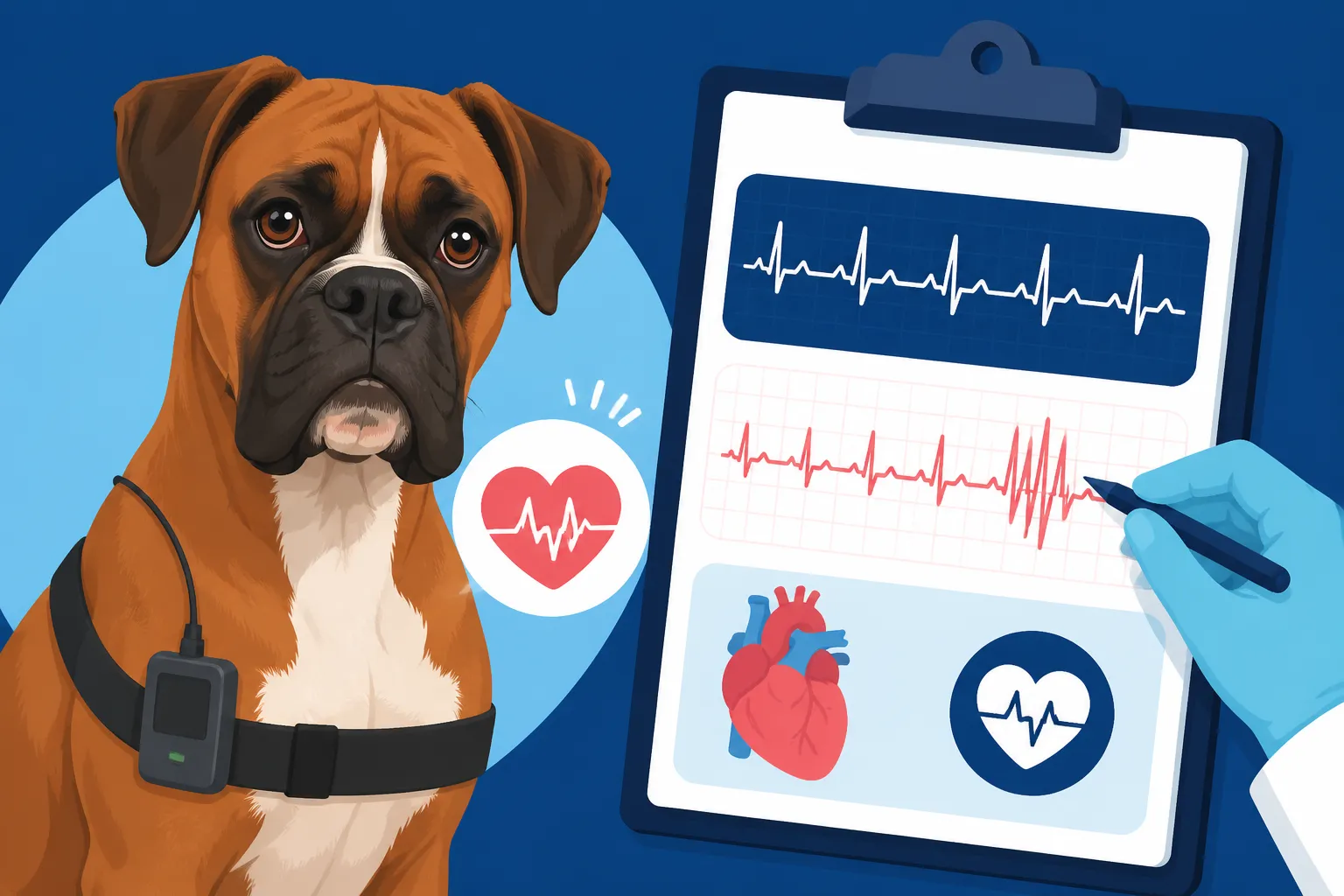
Reading a Boxer Holter Report
Receiving your Boxer's Holter monitor report can feel like getting a medical decree written in a foreign language. You see numbers, abbreviations, and terms that sound alarming, and it’s completely natural to feel overwhelmed, anxious, and even confused about what it all means for your beloved companion. This guide is here to demystify that report, helping you understand the key sections and the implications for your Boxer's heart health, so you can have a more informed conversation with your vet.
The Initial Wave of Information on Your Holter Report
When you first glance at a Holter report, it's a lot to take in. There's usually a summary at the top, followed by more detailed breakdowns. Don't panic if it looks like a complex medical document—because it is! But with a little guidance, you can grasp the crucial elements.
Understanding the Basics: Heart Rate and Total Beats
Every Holter report starts with the fundamentals: your Boxer's heart rate statistics. This includes the minimum, maximum, and average heart rates recorded over the 24-hour monitoring period. For a Boxer, a normal resting heart rate can range anywhere from 60 to 100 beats per minute (bpm), sometimes even lower during deep sleep. During exercise or excitement, it can easily jump to 180 bpm or even higher.
The average heart rate gives a general sense of how hard your Boxer's heart worked throughout the day, but it’s the extremes that often tell a more important story. A very low minimum heart rate might indicate issues with the heart's natural pacemaker, while sustained high rates, even during rest, could signal an underlying problem or excessive anxiety during the monitoring period. The total number of beats is simply the sum of all heartbeats recorded, which helps contextualize the overall activity. For instance, if your Boxer had a particularly active 24 hours while wearing the monitor, the total beat count would be higher, which might also influence other findings. This foundational data provides the canvas upon which all other findings are painted, and understanding it is the first step in assessing your dog's overall cardiac performance.
The Importance of a Clean Recording Period
One often-overlooked but incredibly critical aspect of a Holter report is the quality of the recording. You might see mentions of "artifacts" or "noise" on the report. This refers to interference that isn't actual heart activity but electrical signals picked up by the monitor. These can be caused by your Boxer's movement, the monitor rubbing against their fur, a loose lead, or even static electricity.
A "clean recording period" means the vast majority of the 24 hours provided clear, unambiguous heart rhythm data. If a significant portion of the recording is compromised by artifacts, it can make accurate interpretation very difficult. Imagine trying to read a book with half the pages blurry – you'd miss critical information. Your veterinarian will carefully assess the quality of the recording because a report riddled with noise might necessitate another Holter study to get a truly reliable picture of your Boxer's heart. It's frustrating when this happens, especially after the effort of getting the monitor on and keeping it secure, but it's essential for a precise diagnosis. When dealing with complex diagnostic reports, services like Healthy Paws can often provide resources or clarify what these technical terms mean in the context of your dog's health journey.
Decoding the Arrhythmia Data: PVCs and V-Tach
Now, we get to the core of why Boxers wear Holter monitors: to detect and characterize arrhythmias, particularly those related to Boxer Cardiomyopathy, also known as Arrhythmogenic Right Ventricular Cardiomyopathy (ARVC). This is often the most anxiety-inducing part of the report.
Ventricular Premature Contractions PVCs: What They Are and Their Count
Ventricular Premature Contractions, or PVCs, are extra, abnormal heartbeats that originate in the ventricles (the lower chambers of the heart) instead of the normal pacemaker. These are the main "bad guys" we look for in Boxers susceptible to ARVC. On your report, you'll see a total PVC count, often broken down by hourly counts as well.
It's important to know that a very low number of PVCs (say, under 50-100 in 24 hours) can sometimes be considered benign in otherwise healthy dogs. However, in Boxers, even low numbers warrant careful monitoring due to the breed's predisposition to ARVC. The higher the number, the more significant the concern. Beyond just the total count, the report will describe the nature of these PVCs. Are they "isolated," meaning single abnormal beats occurring sporadically? Or are they "grouped," appearing in pairs (couplets) or triplets? Grouped PVCs are generally more concerning than isolated ones, as they indicate increased electrical instability in the heart.
The distribution of PVCs throughout the 24 hours is also telling. Are they more frequent during rest, during activity, or constantly present? Understanding these nuances is crucial for your vet to determine the severity and potential progression of the condition. This data directly relates to concerns raised in articles like Boxer Cardiomyopathy and the Holter Monitor, which delves deeper into the specifics of this condition. When you’re trying to interpret these numbers, remember that your vet will be looking at the overall pattern and context.
Ventricular Tachycardia V-Tach Runs: Severity and Duration
This is where things can get truly serious. Ventricular Tachycardia, or V-tach, is defined as three or more consecutive PVCs. Think of it as the heart's lower chambers beating rapidly and ineffectively, taking over from the normal rhythm. V-tach runs are a much greater concern than isolated PVCs because they signify a more unstable heart and carry a higher risk of adverse events, including fainting or sudden cardiac death.
Your Holter report will detail several aspects of V-tach runs:
- Number of runs: How many distinct episodes of V-tach occurred.
- Longest run: The maximum number of consecutive PVCs in a single episode.
- Fastest rate: The highest heart rate reached during a V-tach episode.
- Longest duration: The longest period (in seconds or minutes) that the heart was in V-tach.
A high number of V-tach runs, especially long or fast ones, is a significant indicator of advanced ARVC and often prompts immediate discussion about treatment. These are the arrhythmias that can lead to frightening events like Fainting Episodes in a Boxer or even A Boxer That Collapses After Exercise. Another important term you might see is "R-on-T phenomenon" or "coupling." This refers to a PVC occurring very close to the previous normal heartbeat, which can be particularly dangerous as it can trigger more severe arrhythmias like ventricular fibrillation. All these factors contribute to the overall picture of your Boxer's heart health, guiding decisions on medication and lifestyle changes. The goal is to accurately assess How Many PVCs a Boxer Can Have Safely before considering therapeutic interventions.
Beyond PVCs: Other Abnormalities to Look For
While PVCs and V-tach are the most common and often the most critical findings in a Boxer's Holter report, the monitor can detect other types of arrhythmias and heart rate irregularities that are also important to recognize.
Supraventricular Arrhythmias and Bradycardia
Sometimes, a Holter report might show "supraventricular" arrhythmias (SVAs). These are abnormal heartbeats that originate in the atria (the upper chambers) or the AV node (the junction between the atria and ventricles). While Boxers are primarily predisposed to ventricular arrhythmias like ARVC, SVAs can occur and might indicate other underlying heart conditions or even non-cardiac issues. They are typically less common and often less immediately life-threatening than V-tach in Boxers, but they still warrant investigation.
On the other end of the spectrum is bradycardia, an abnormally slow heart rate. While some very athletic or sleeping Boxers might have naturally low heart rates, sustained bradycardia or significant drops in heart rate that aren't related to rest can be problematic. This could be due to a problem with the heart's natural pacemaker or the electrical pathways that conduct signals. Symptoms of severe bradycardia might include lethargy, weakness, or even collapse. Your vet will look at the minimum heart rate recorded and compare it with periods of activity and rest to determine if bradycardia is clinically significant and potentially requires intervention, such as exploring Medication for a Boxer With an Arrhythmia.
Interpreting the Striatin Gene Test in Conjunction with the Holter
For Boxers, the journey to understanding ARVC doesn't always begin and end with the Holter monitor. Many responsible breeders and owners utilize a genetic test for the striatin gene, which is associated with a higher risk of developing ARVC. Your Holter report becomes even more meaningful when interpreted alongside the results of this genetic screening.
If your Boxer tests positive for one or two copies of the striatin gene mutation, it indicates a genetic predisposition to ARVC. However, it's crucial to understand that a positive genetic test doesn't mean your Boxer will definitely develop clinical ARVC, nor does a negative test guarantee they won't. This is where the Holter monitor bridges the gap. A Boxer with a positive genetic test showing a high PVC count or V-tach on their Holter report is a strong indicator that the genetic predisposition is indeed manifesting as active ARVC. Conversely, a genetically positive Boxer with a clean Holter report might be in the early stages or may never develop severe symptoms.
On the flip side, a genetically negative Boxer who does show significant arrhythmias on their Holter still has ARVC, but it might be caused by a different genetic mutation or mechanism not covered by the standard striatin test. This highlights why both tools are important for a comprehensive understanding. The article The Striatin Gene Test for Boxers goes into much more detail about what this genetic test can and cannot tell you. When managing your Boxer's health, having all these pieces of information, and understanding how they fit together, empowers you to make the best decisions. Organizations like Healthy Paws emphasize the value of proactive diagnostics like these for long-term pet health.
What Your Vet Will Discuss and Next Steps
Once the Holter report is in hand and your veterinarian has thoroughly reviewed it, they will sit down with you to explain the findings and outline a plan. This discussion is often the most critical part, as it dictates your Boxer's future care.
Establishing a Baseline and Monitoring Over Time
For many Boxers, especially those who are asymptomatic, the initial Holter monitor serves to establish a baseline. Your vet will look at the number of PVCs and V-tach runs and determine if it's within an acceptable range for a Boxer of their age and activity level. Remember, what's considered "normal" can vary slightly between veterinary cardiologists, but there are generally accepted thresholds. For instance, many cardiologists begin to consider treatment when PVC counts consistently exceed 1,000 to 2,000 in a 24-hour period, especially if V-tach is present. However, even lower counts might warrant concern depending on the individual Boxer's symptoms and genetic status.
The baseline is vital because ARVC is often a progressive disease. Subsequent annual Holter screenings, ideally starting around three years of age, will compare current results to previous ones, revealing any increase in arrhythmia burden. This continuous monitoring is crucial for tracking disease progression and making timely decisions about intervention. This is why it's recommended to begin annual screenings, as highlighted in Why a Boxer Holter Starts at Three Years. Consistent monitoring allows your vet to catch any significant changes early, which can vastly improve the prognosis and quality of life for your Boxer. Regularly reviewing Counting PVCs on a Boxer's Holter Result over time provides a valuable history.
Treatment Considerations and Lifestyle Adjustments
If the Holter report reveals significant arrhythmias, particularly frequent V-tach runs or high PVC counts, your veterinarian will likely discuss treatment options. The primary goal of treatment is to reduce the frequency and severity of the arrhythmias, thereby minimizing the risk of fainting episodes, collapse, and sudden death, and improving the Boxer's quality of life.
Medications often include antiarrhythmics like Sotalol, which works to stabilize the heart's electrical activity. Your vet will explain the dosage, potential side effects, and what to expect. This is a big decision, and it’s natural to feel overwhelmed. The cost of these medications and ongoing specialist visits can add up, which is where understanding What Boxer Cardiomyopathy Costs a Family becomes important. Many owners find that pet insurance, such as Healthy Paws, can be incredibly helpful in managing these long-term expenses, allowing them to focus on their Boxer's health rather than the financial strain.
Beyond medication, lifestyle adjustments are almost always part of the plan. This often means limiting strenuous exercise and avoiding situations that cause extreme excitement or stress, as these can trigger arrhythmias. For example, a Boxer diagnosed with ARVC may need to avoid intense fetch games or long runs, instead opting for calmer, shorter walks. It's a difficult change for high-energy Boxers and their owners, but crucial for their health. Understanding the impact of excitement and activity on the heart is paramount for owners of Boxers with ARVC. Discussing specific medications like Sotalol for a Boxer With Ventricular Beats will be part of this conversation.
Here's a quick reference guide to some common terms you might see on your Boxer's Holter report:
| Term | Definition | Significance in Boxers |
|---|---|---|
| PVC | Premature Ventricular Contraction: An extra, abnormal heartbeat from the ventricles. | Primary indicator of ARVC; increasing numbers are concerning. |
| V-tach | Ventricular Tachycardia: Three or more consecutive PVCs. | High risk for collapse, fainting, or sudden death; requires intervention. |
| Couplet / Triplet | Two or three consecutive PVCs. | More concerning than isolated PVCs, can precede V-tach. |
| Avg HR (Heart Rate) | Average heart rate over 24 hours. | Provides a general overview; look at min/max for specifics. |
| Min HR / Max HR | Minimum and Maximum heart rates recorded. | Extremely low or high rates can indicate problems. |
| Artifact | Electrical interference, not true heart activity. | Can obscure accurate readings; may require re-monitoring. |
| Supraventricular | Arrhythmias originating in the upper chambers of the heart. | Less common for ARVC but can indicate other cardiac issues. |
| Bradycardia | Abnormally slow heart rate. | Can cause weakness, lethargy; needs investigation if significant. |
| R-on-T | A PVC occurring on the T-wave of the preceding beat. | Potentially dangerous, can trigger more severe arrhythmias. |
Navigating a Boxer's Holter report is a significant part of caring for this wonderful breed. It might seem daunting, but armed with this knowledge, you can approach these reports with more confidence and work effectively with your veterinary team to ensure your Boxer receives the best possible care.
Disclaimer
The information provided in this guide is for general educational purposes only and should not be considered a substitute for professional veterinary advice. Always consult with a qualified veterinarian or a board-certified veterinary cardiologist for any health concerns or before making any decisions related to your Boxer's medical care.