Whether a Boxer Should Rest After Meals
There’s a silent, terrifying fear that often keeps Boxer owners up at night: bloat. This isn't just a tummy ache; it's a life-threatening emergency that can strike with alarming speed, and how you manage your Boxer's activity around meal times can play a crucial role in preventing it. This guide will walk you through the undeniable reasons why a period of calm after eating isn't just a suggestion, but a vital part of your Boxer's well-being.
The Urgent Reason Boxers Need Post-Meal Rest: Bloat (GDV)
Let's not mince words: Gastric Dilatation-Volvulus, or GDV, commonly known as bloat, is a Boxer owner's worst nightmare. It's a condition where the stomach fills with gas, food, or fluid and then twists, cutting off blood supply and trapping everything inside. For a Boxer, this isn't a "maybe it'll pass" situation; it's an immediate, critical emergency that requires swift veterinary intervention. The speed at which it can develop, going from seemingly fine to critically ill in a matter of minutes or hours, is what makes every Boxer parent so acutely aware of feeding habits.
What is Bloat (GDV) and Why Boxers Are Prone?
Imagine a balloon being twisted shut; that's essentially what happens to your Boxer's stomach during bloat. The stomach dilates (fills with gas) and then often volves (twists) on its axis. When this happens, blood flow to the stomach is compromised, and the pressure can also affect other organs, including the heart and lungs. It's a cascade of deadly events.
Boxers, like other large and deep-chested breeds such as Great Danes, Standard Poodles, and German Shepherds, are disproportionately susceptible to bloat. Their unique anatomy, characterized by a deep and narrow chest, creates a larger space in the abdomen where the stomach can more easily rotate or flip when distended. This anatomical predisposition is why proactive measures are so critical. You might have heard about specific concerns like Why a Boxer's Chest Shape Invites Bloat, and it really highlights the inherent risk our beloved Boxers carry. It's not just about what they eat, but how their bodies are built.
The Immediate Danger and Signs to Watch For
The danger of bloat lies in its rapid progression. Without treatment, GDV is almost always fatal. The clock starts ticking the moment the stomach twists. Early recognition of symptoms is paramount for a positive outcome.
Here are the critical signs every Boxer owner needs to engrave in their memory:
- Restlessness and Pacing: Your typically calm dog might seem unusually anxious, unable to settle. They might shift their weight, stand, and lie down repeatedly.
- Unproductive Retching or Vomiting: This is one of the most classic and harrowing signs. Your Boxer will try to vomit, heaving and gagging, but nothing or very little (perhaps some foamy saliva) will come up. This is because the twisted stomach exit is blocked.
- Distended Abdomen: The belly may appear visibly swollen, especially on the left side, and feel hard and taut to the touch. This can be harder to spot in very furry dogs, but on a Boxer's short coat, it's often quite noticeable.
- Drooling: Excessive drooling can occur due to nausea and discomfort.
- Pain and Discomfort: Your Boxer might whine, grunt, or look at their side. They may resist being touched on the abdomen.
- Weakness and Collapse: As the condition progresses, your dog may become weak, collapse, have pale gums, and show signs of shock.
If you observe any of these symptoms, especially the unproductive retching and a distended abdomen, consider it an immediate veterinary emergency. Do not wait to see if it improves. Speed is of the essence. You need to get to an emergency vet now. We delve deeper into this in Bloat Signs Every Boxer Owner Should Know.
How Rest Helps Prevent Bloat
Now, to the core of it: how does simply resting help? When your Boxer eats a meal, their stomach is full and heavy. If they then engage in vigorous activity—running, jumping, rolling, or even intense tug-of-war—that full, heavy stomach can jostle and move around more easily within the abdominal cavity. This movement, especially combined with gulping air during excitement, increases the chances of it twisting.
A period of calm after eating allows the food to settle in the stomach and begin its journey through the digestive tract without excessive agitation. It minimizes the physical forces that could potentially cause the stomach to rotate. It’s not about preventing digestion; it’s about allowing it to happen peacefully and safely. Think of it like a washing machine: you wouldn't want to violently shake it mid-cycle when it's full of water and clothes. The same principle applies to your Boxer's stomach. This period of rest, often overlooked in our busy lives, is a simple yet powerful preventative measure.
Beyond Bloat: Other Digestive Benefits of a Post-Meal Calm
While bloat is the most critical concern driving the need for post-meal rest, it’s far from the only benefit. Allowing your Boxer to wind down after eating supports their overall digestive health in several meaningful ways, reducing discomfort and maximizing nutrient absorption.
Preventing Upset Stomachs and Regurgitation
Boxers, with their boundless enthusiasm, can be notorious gobblers. They often eat quickly, sometimes gulping down air along with their kibble. If they then immediately run around, jump, or play vigorously, all that swallowed air and recently ingested food can create a recipe for an upset stomach.
This can manifest as simple indigestion, leading to burping, flatulence (and if you own a Boxer, you know Why Boxers Are Famously Gassy already!), or even acute regurgitation. Regurgitation is different from vomiting; it’s the passive expulsion of undigested food, often tubular in shape, that never made it past the esophagus into the stomach. It's less forceful than vomiting, but still unpleasant for both your dog and you (especially if it happens on your new rug!). A calm period allows the esophagus to move food into the stomach properly and for the initial stages of digestion to begin without interruption. It prevents the stomach from bouncing around, reducing the likelihood of contents being pushed back up.
Enhancing Nutrient Absorption
Digestion is a complex process that requires the body to be in a relatively relaxed state to function optimally. When a dog is stressed or highly active, their body diverts resources towards muscle activity and away from the digestive system. This is a natural "fight or flight" response.
During a period of rest, the parasympathetic nervous system (often called "rest and digest") is dominant. This system promotes efficient digestion by increasing blood flow to the stomach and intestines, stimulating the release of digestive enzymes, and enhancing the rhythmic contractions (peristalsis) that move food through the gut. When your Boxer is relaxed, their digestive system can break down food more effectively, extract nutrients more efficiently, and ultimately contribute to their overall health and vitality. It means they're getting the most out of their A Month of Food for a Seventy-Pound Boxer and all those beneficial ingredients you carefully selected.
Practical Strategies for Implementing Post-Meal Rest
Knowing why your Boxer needs to rest after meals is one thing; actually making it happen with a dog known for endless energy is another challenge entirely. But with a bit of planning and consistency, it's entirely achievable.
Defining "Rest" for an Energetic Boxer
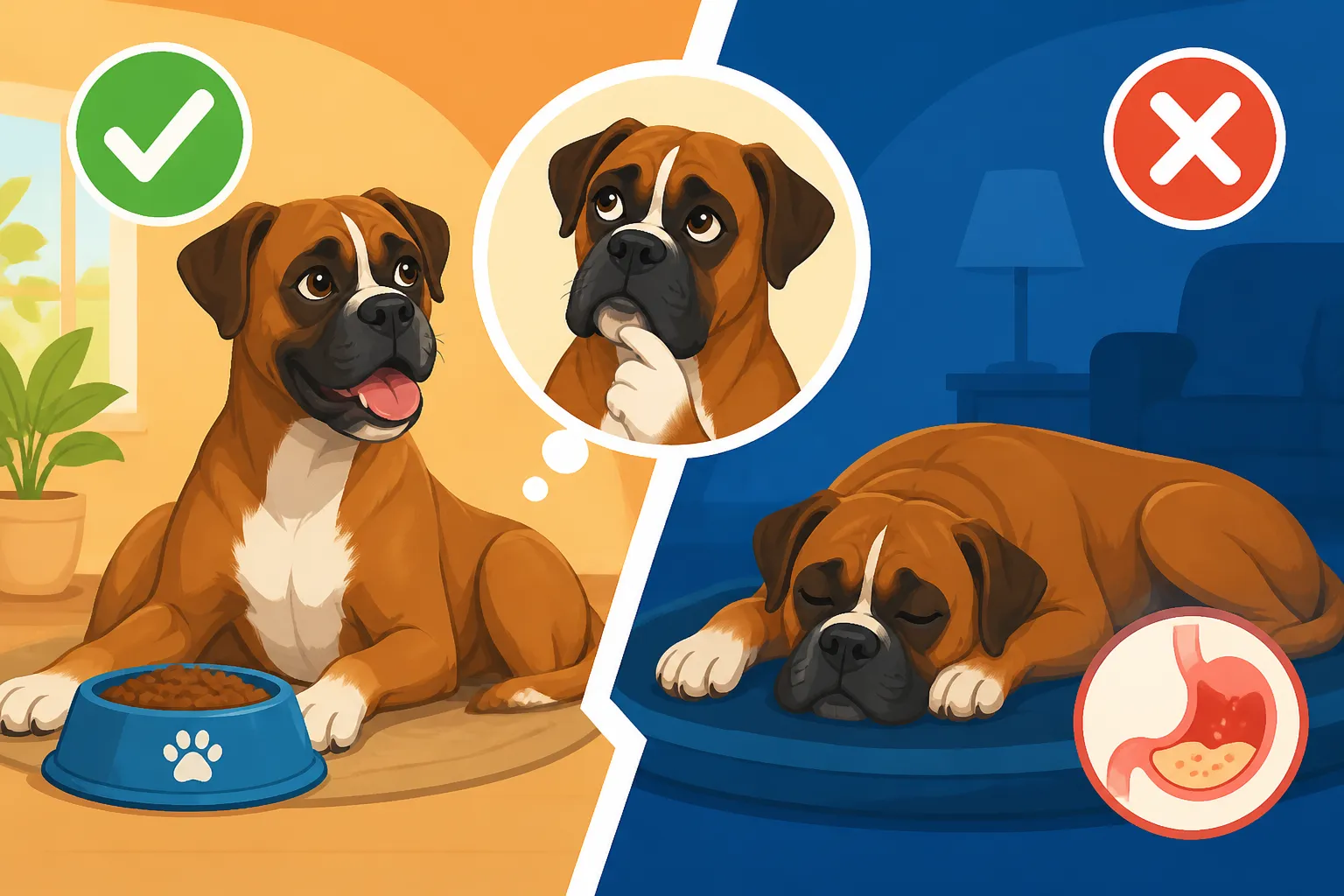
When we talk about "rest" for a Boxer after eating, we’re not suggesting you sedate them or lock them in a dark room. What we mean is a period of low-impact, calm activity. This isn't always easy for a breed whose puppyhood seems to last three years, but it's crucial.
Here's what ideal post-meal rest looks like:
- Crate Time: For many Boxers, a comfortable crate can be their den of peace. After eating, usher them into their crate with a safe, quiet chew toy (like a Kong stuffed with a treat) or simply let them settle down. This prevents them from zooming around the house.
- Quiet Snuggle Time: If your Boxer is a cuddler, a quiet snuggle on the couch can be perfect. Just ensure they're not getting overly excited or trying to wrestle.
- Chew Toys: Provide appropriate, non-strenuous chew toys that can occupy their mind without engaging their body too much. Puzzle toys where they have to gently work for a treat can also be good, as long as they don't involve frantic activity.
- Supervised Down-Time: Simply having them lie on their bed in the same room as you, perhaps gently chewing on a bone, counts as rest. The key is supervision to ensure they don't suddenly decide to play.
The goal is to avoid anything that causes abrupt body movements, jumping, twisting, or heavy breathing.
The Ideal Post-Meal Waiting Period
Veterinarians generally recommend a waiting period of at least 30 minutes to an hour after a meal before any strenuous activity. Many experienced Boxer owners and breeders extend this to 90 minutes or even two hours to be extra cautious, especially after a larger meal.
This might seem like a long time, particularly if you have a busy schedule, but it's a small investment for your dog's safety. It's also why many owners opt for Feeding a Boxer Twice a Day, splitting their daily caloric intake into two meals, morning and evening, rather than one large one. This also helps with Resting a Boxer Before and After Meals overall.
Consider this guideline:
| Activity Level | Before Meal | After Meal |
|---|---|---|
| High Energy (Running, Jumping, Dog Park) | Avoid 1 hour prior | Avoid 1-2 hours post |
| Moderate (Leash Walk, Training Session) | Okay | Avoid 30-60 mins post |
| Low Energy (Potty Break, Quiet Chewing) | Okay | Okay |
This table provides a general framework, but always err on the side of caution with your Boxer.
Meal Timing and Exercise Schedule
Integrating post-meal rest into your daily routine requires a bit of thoughtful scheduling.
- Morning Meals: If your Boxer typically gets a morning walk or play session, feed them after their exercise. Allow for a cool-down period, then feed, and then enforce quiet time before you leave for work or start your day. This might mean waking up a little earlier, but it’s worth it. For example, a 6:00 AM walk, 6:45 AM breakfast, then 7:00-8:00 AM quiet crate time.
- Evening Meals: The evening meal is often easier to manage. If your Boxer has a final burst of energy, take them for their evening walk before dinner. Then, feed them, and they can settle down for the night. This schedule neatly accommodates the recommended rest period. It also ties into principles covered in Why a Boxer's Meals Have to Be Split and Timed, emphasizing the importance of a structured feeding schedule.
- Weekend Adjustments: On weekends, when routines might be more flexible, still prioritize the post-meal rest. If you're planning a hike or a trip to the dog park, feed them well in advance, or wait until after the activity and a good cool-down.
When to Seek Vet Advice and Proactive Measures
Even with the most diligent post-meal rest, accidents and emergencies can happen. Being prepared, knowing when to act, and understanding proactive measures are critical for every Boxer owner.
When Symptoms Point to Trouble
We've discussed the signs of bloat already, but it bears repeating: if you suspect bloat, do not hesitate. This is not a "wait and see" situation. Get to an emergency veterinary clinic immediately. Bloat can progress incredibly fast, and survival rates drop significantly the longer treatment is delayed.
Your emergency vet will likely take X-rays to confirm GDV, and if confirmed, your Boxer will require emergency surgery to de-rotate the stomach and potentially perform a gastropexy (tacking the stomach to the abdominal wall to prevent future twisting). This is a major, life-saving surgery. Being prepared for this kind of emergency, both mentally and financially, is paramount. Details about what happens during the actual intervention are explained in What Bloat Surgery Involves for a Boxer, and the sheer urgency of the situation is reflected in Emergency Bloat Surgery on a Boxer.
Proactive Steps: Slow Feeders, Water, and Diet
While rest is key, there are several other proactive measures you can take to reduce the risk of bloat and support healthy digestion in your Boxer:
- Slow Feeder Bowls: For Boxers who eat like it's a race, a slow feeder bowl is a game-changer. These bowls have ridges or obstacles that force your dog to eat around them, significantly slowing down their ingestion of food and, crucially, reducing the amount of air they swallow. This simple tool can make a huge difference. You might want to explore specific options like Bowls That Stop a Boxer Swallowing Air.
- Elevated Bowls: The debate around elevated bowls and bloat is complex. While some studies initially suggested they increased bloat risk, others remain inconclusive. It’s best to discuss this with your vet, especially considering your Boxer’s individual eating habits and any history of neck or back issues. For most, feeding on the floor is generally considered safe.
- Access to Water: Always ensure your Boxer has access to fresh water. However, avoid allowing them to gulp large quantities of water immediately before or after meals, as this can also contribute to stomach distension. Offer smaller amounts more frequently.
- Dietary Choices: While no diet can guarantee bloat prevention, some owners find certain foods agree better with their Boxer's digestion. High-quality kibble with easily digestible ingredients, fed as smaller, multiple meals, is often recommended. Avoid feeding a single, large meal per day.
- Gastropexy: For Boxers at extremely high risk (e.g., those with a close relative who bloated, or if they have certain conformation characteristics), a prophylactic gastropexy may be considered. This surgical procedure permanently tacks the stomach to the abdominal wall, preventing it from twisting. While it doesn't prevent dilation, it largely eliminates the deadly volvulus. This procedure can sometimes be done at the same time as a spay or neuter. It's a significant decision, and you can learn more about it in Whether Preventive Bloat Surgery Suits a Boxer.
The Role of Pet Insurance
Let's be realistic: emergency bloat surgery is expensive. The costs for diagnosis, surgery, and post-operative care can easily run into thousands of dollars, depending on your location and the complexity of the case. This is where pet insurance can be a literal lifesaver.
Brands like Healthy Paws offer comprehensive pet insurance plans that can cover a significant portion of these unexpected veterinary bills. Having a good insurance policy in place means you can focus on making the best medical decisions for your Boxer during a crisis, rather than being crippled by financial stress. Enrolling your Boxer in a policy like Healthy Paws when they are young and healthy means that conditions like bloat, if they occur later, are more likely to be covered (provided they aren't pre-existing). The peace of mind alone is invaluable. It’s always wise to consider something like Insuring a Boxer Before the First Lump for any potential health issues. Healthy Paws can truly help alleviate the financial burden of such critical emergencies, allowing you to give your beloved Boxer the best chance at recovery.
Disclaimer
The information provided in this article is for general informational purposes only and is not a substitute for professional veterinary advice, diagnosis, or treatment. Always seek the advice of your veterinarian or other qualified health provider with any questions you may have regarding a medical condition.