Bowls That Stop a Boxer Swallowing Air
It’s a familiar sight for many Boxer owners: your dog eyes their food bowl with an intensity usually reserved for squirrels, then proceeds to inhale their entire meal in what feels like mere seconds. Before you can even turn around, the bowl is empty, and your beloved Boxer is looking at you, perhaps with that hopeful "Is there more?" expression. But this rapid eating, while sometimes endearing in its enthusiasm, is more than just a quirky habit. It often means your Boxer is swallowing a lot of air right along with their food, and that can lead to some truly uncomfortable, and even dangerous, issues like excessive gas and, most concerningly, bloat. This guide is all about tackling that exact problem, helping you understand why your Boxer eats like a vacuum cleaner and, more importantly, exploring practical solutions, especially specific types of bowls designed to slow them down.
Why Boxers Gulp and the Risks Involved
The speed at which a Boxer can devour a meal is legendary, and while it might seem like just a funny quirk, it's rooted in their unique physical characteristics and innate drives. Understanding these factors is the first step toward effectively managing their mealtime habits and safeguarding their health.
The Anatomy of a Boxer's Eating Habits
Boxers, like many brachycephalic breeds (those with "flat" faces), have a unique oral structure. Their shorter muzzles and often undershot jaws mean they don't always have the same chewing efficiency as breeds with longer snouts. They tend to gulp food rather than thoroughly chew each bite, especially if it's kibble. Add to this their boundless energy and intense excitement, and mealtime can become a frantic race.
Think about it: your Boxer sees the bowl, the anticipation builds, and then bam! — it's go time. They plunge their muzzle in, scooping up large quantities of food, and with each frantic gulp, they're inadvertently swallowing significant amounts of air. This air then travels down into their digestive tract, setting the stage for discomfort and potentially more serious conditions. It’s not a reflection of starvation or poor feeding; it's simply how many Boxers are wired to eat when given the chance.
The Silent Threat: Bloat (GDV)
The biggest, most terrifying risk associated with rapid eating and air swallowing in Boxers is Gastric Dilatation-Volvulus, commonly known as bloat. Boxers are unfortunately one of the breeds predisposed to this life-threatening condition. Their deep, narrow chests are a contributing factor, creating a space where the stomach, once distended with gas and food, can more easily twist upon itself.
When a Boxer gulps air with their food, that air expands in their stomach. If the stomach then twists, it traps the gas and food, cutting off blood supply and quickly becoming an emergency. It’s every Boxer owner's nightmare, and the speed at which it can become fatal is why understanding and mitigating the risks is so crucial. Early signs can include a distended abdomen, unproductive retching, restlessness, and obvious discomfort. Learning to recognize Bloat Signs Every Boxer Owner Should Know is vital for any Boxer parent. While no single factor guarantees or prevents bloat, reducing air intake during meals is a common and recommended preventative measure. It's a proactive step we can take to keep our happy-go-lucky Boxers safe.
Types of Slow Feeder Bowls for Boxers
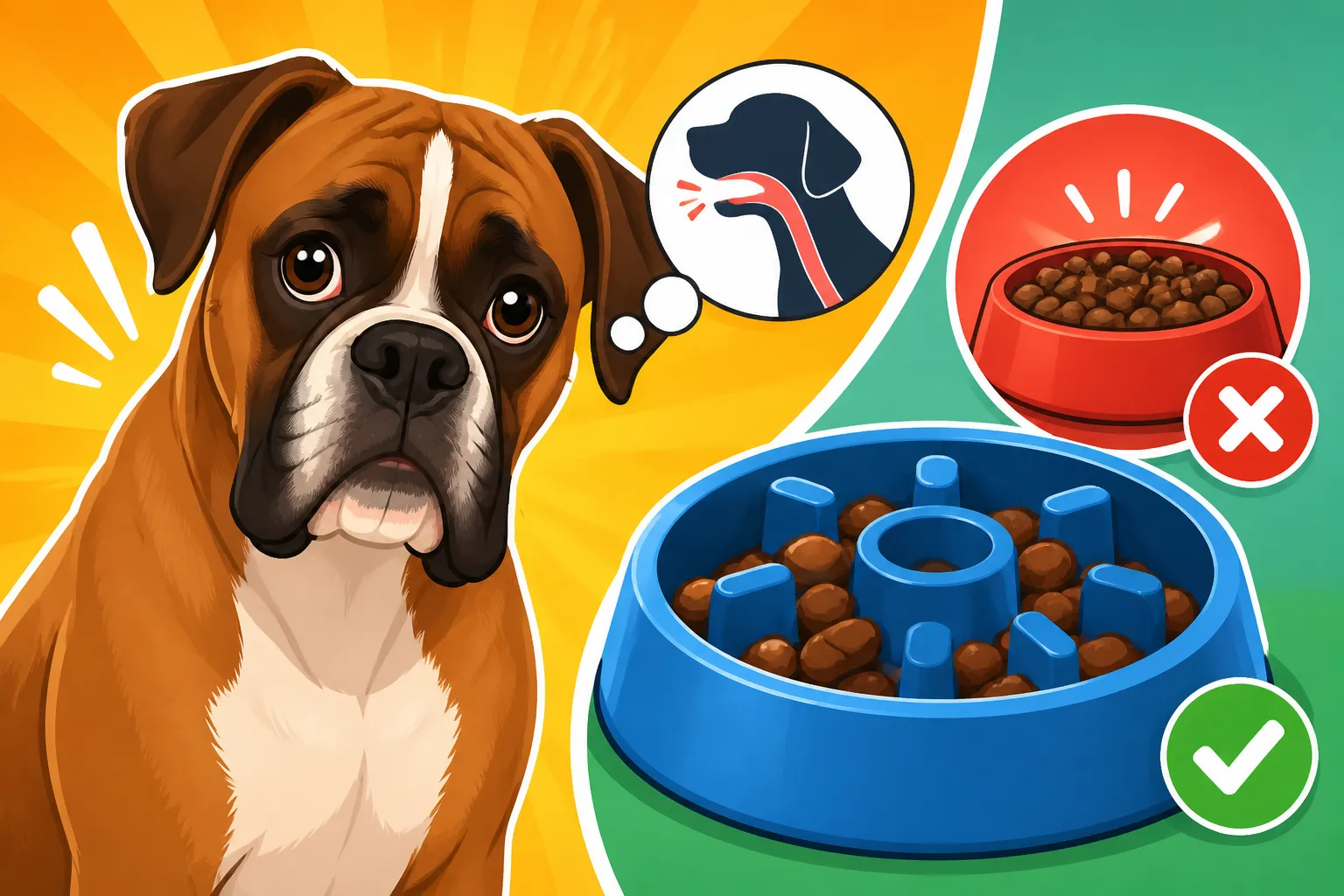
Once you understand why your Boxer eats so fast, the next logical step is to explore how to slow them down. Thankfully, there's a whole world of specially designed bowls out there crafted for this very purpose. They work by making it physically harder or more time-consuming for your Boxer to access their food, thereby reducing the rate of ingestion and, crucially, the amount of air they swallow.
The Classic Maze or Ridge Bowl
These are probably what most people picture when they think of a slow feeder. Imagine a regular dog bowl, but instead of a smooth interior, it's filled with a series of ridges, bumps, or a labyrinthine pattern. The food gets scattered between these obstacles, forcing your Boxer to work their way around them, taking smaller bites and slowing down considerably.
- How They Work: Your Boxer can't just dive in and scoop. They have to use their tongue or nose to push food out from between the dividers. This turns eating into more of a "seek and retrieve" mission.
- Pros: They are generally effective for most rapid eaters, straightforward to use, and come in a wide variety of materials and designs. Many are dishwasher safe, which is a huge plus for busy owners. You can find a huge selection of these on sites like Chewy or Amazon, allowing you to compare different patterns and brands easily.
- Cons: Some Boxers, especially very determined ones, might still find ways to "defeat" simpler maze designs, or they might get frustrated and push the bowl around. Cleaning can be a bit more fiddly than a smooth bowl, as kibble dust and drool can get into all the nooks and crannies.
Interactive Puzzle Feeders
Taking the "slow" concept up a notch, interactive puzzle feeders go beyond simple ridges and involve more complex challenges. These often require your Boxer to manipulate parts of the feeder, like sliding covers, lifting flaps, or spinning components, to reveal their meal.
- How They Work: These feeders don't just slow down eating; they engage your Boxer's brain. They transform mealtime into a mental exercise, which can be fantastic for intelligent breeds like Boxers who thrive on challenges. They might have multiple compartments, each requiring a different action to open.
- Pros: Excellent for mental enrichment, reducing boredom, and significantly extending meal times. They can be particularly good for Boxers who are highly food motivated and need extra stimulation. The cognitive effort involved can also tire them out in a positive way.
- Cons: They can be more expensive and some Boxers might find them too frustrating, leading them to give up or chew on the feeder itself. They can also be harder to clean due to their multiple moving parts and crevices. Not all puzzle feeders are created equal in terms of durability, so choosing one that can withstand a Boxer's enthusiasm is key.
Inverted Cone or "Island" Bowls
These bowls offer a simpler, less aggressive approach to slowing down eating. Instead of a full maze, they feature a raised section in the center of the bowl, often shaped like a cone or a dome, creating a ring around which the food is placed.
- How They Work: The central obstruction prevents your Boxer from getting a full mouth of food at once. They have to eat around the "island," which naturally limits their gulping ability without creating an overly complex challenge.
- Pros: Generally easier to clean than intricate maze bowls, as there are fewer tight spaces. They tend to be less frustrating for Boxers who might get discouraged by complex puzzles, offering a gentle slowing effect. They're often quite durable and stable.
- Cons: For Boxers who are extremely aggressive eaters, the effect might be less pronounced compared to a full maze or puzzle feeder. The central cone might not be high enough or wide enough to significantly deter a truly determined gulper.
Choosing the right type often involves a bit of trial and error, seeing what works best for your individual Boxer's eating style and personality.
| Slow Feeder Bowl Type | Primary Mechanism | Effectiveness (for Boxers) | Ease of Cleaning | Frustration Level for Dog |
|---|---|---|---|---|
| Classic Maze/Ridge | Physical obstructions | High | Moderate | Moderate |
| Interactive Puzzle | Mental and physical tasks | Very High | Low (complex parts) | High |
| Inverted Cone/Island | Central obstruction | Moderate | High | Low |
Choosing the Right Slow Feeder Bowl for Your Boxer
Selecting the perfect slow feeder isn't just about picking the prettiest one off the shelf. It requires a bit of thought about your Boxer's unique characteristics, your lifestyle, and what will genuinely be most effective and safe.
Material and Durability Considerations
Boxers are strong dogs, and they can be quite enthusiastic at meal times. The material of the bowl is a critical factor for both durability and hygiene.
- Stainless Steel: This is often a top choice. It's incredibly durable, resistant to chewing, easy to clean, non-porous (which means it won't harbor bacteria), and generally dishwasher safe. It's also heavy enough not to be easily tipped or pushed around by an eager Boxer.
- Ceramic: Ceramic bowls are heavy and stable, which is great for preventing spills. They can also be very aesthetically pleasing. However, they are prone to chipping or breaking if dropped, and a cracked ceramic bowl can have sharp edges that pose a risk to your dog.
- Plastic: Plastic bowls are lightweight and often the most affordable. However, they can scratch easily, creating tiny crevices where bacteria can thrive. Boxers, with their powerful jaws, might also be able to chew on the plastic, especially if they get frustrated, leading to ingestion of plastic pieces or damage to the bowl. If you opt for plastic, look for high-quality, BPA-free, food-grade plastic, and inspect it regularly for scratches or damage.
Considering a Boxer's strength and tendency to be a bit clumsy in their excitement, a sturdy, non-chewable material like stainless steel is often the safest long-term bet.
Size and Depth for a Boxer's Snout
This is a crucial point for brachycephalic breeds like Boxers. Their unique facial structure means that bowls designed for long-nosed dogs might not be ideal.
- Width: The bowl needs to be wide enough for your Boxer to comfortably get their whole muzzle in without squishing their face against the sides.
- Depth: A bowl that is too deep, even a slow feeder, can actually exacerbate air swallowing. If your Boxer has to push their face too far into a deep bowl, it can restrict their breathing and encourage even more frantic gulping when they do come up for air. Look for shallower designs or those with very open, accessible maze patterns that don't force their face too deep. The goal is to make them take smaller bites horizontally, not to make them dig vertically.
Ease of Cleaning and Hygiene
Let's be honest, Boxers are messy eaters. Their jowls, drool, and the sheer enthusiasm of their eating can leave a sticky residue. A bowl that's difficult to clean thoroughly can become a breeding ground for bacteria, leading to skin irritation around their muzzle or even digestive upset.
- Dishwasher Safe: This is a huge convenience. Most stainless steel and many ceramic slow feeders are dishwasher safe.
- Minimal Crevices: While the ridges are necessary to slow eating, look for designs where the crevices aren't so tight or deep that food particles become permanently lodged, making manual cleaning a chore.
- Non-Porous Materials: As mentioned, stainless steel is excellent because it doesn't absorb liquids or odors.
Your Boxer's health, and your sanity, will thank you for choosing a bowl that makes daily cleaning easy. You might even find yourself wiping their face and jowls more frequently after meals, something many Boxer owners get used to! Wiping a Boxer's Jowls and Muzzle Folds
Assessing Your Boxer's Personality
Every Boxer is an individual, and what works for one might not work for another.
- Frustration Tolerance: Some Boxers are highly persistent and will eventually figure out any puzzle, enjoying the challenge. Others might get easily frustrated, abandon the bowl, or resort to trying to flip it over or chew on it. If your Boxer is easily frustrated, start with a simpler inverted cone or a wide, shallow maze design.
- Chewing Habits: If your Boxer is a known chewer, steer clear of plastic and opt for heavy-duty stainless steel.
- Enthusiasm Level: For the most extreme gulpers, a more complex puzzle feeder might be necessary, while a more moderate eater might do well with a simpler design. Observe your Boxer's reaction during the first few meals with a new bowl, and don't be afraid to try a different type if the first one isn't working as intended.
You can often find a wide array of options on online retailers like Chewy and Amazon, which allows you to read reviews from other Boxer owners and compare different designs before committing.
Beyond the Bowl: Other Strategies to Reduce Air Swallowing
While the right slow feeder bowl is a fantastic tool, it's part of a larger strategy to promote healthier eating habits for your Boxer. There are several other proactive steps you can take to further reduce air swallowing and manage potential digestive issues.
Smaller, More Frequent Meals
Instead of feeding your Boxer one or two large meals a day, consider splitting their total daily food allowance into three or even four smaller meals. This simple change can make a huge difference.
- Reduced Volume: Each meal contains less food, meaning there's less for your Boxer to gulp down rapidly. This inherently reduces the amount of air swallowed per meal.
- Consistent Digestion: Smaller, more frequent meals can also lead to more consistent digestion throughout the day, preventing that "stuffed" feeling that can trigger discomfort. This ties into the advice of Splitting a Boxer's Ration Into Three Meals for overall digestive health.
- Less Frenzy: If your Boxer knows they'll be eating again in a few hours, the extreme hunger and frantic pace might lessen over time.
This approach requires a bit more planning but can significantly benefit your Boxer's digestive system and overall well-being.
Elevated Bowls vs. Floor Feeding
The topic of elevated bowls and bloat prevention has been a subject of much debate among veterinarians and Boxer owners for years. While it was once thought that elevated bowls prevented bloat, current research suggests that for large, deep-chested breeds like Boxers, they might actually increase the risk of bloat.
- Current Recommendations: Most veterinary recommendations now lean towards feeding Boxers from bowls placed on the floor, especially if bloat prevention is the primary concern. The idea is that eating from the floor encourages a more natural head and neck position that may reduce air ingestion.
- Exceptions: There are some cases where an elevated bowl might be necessary, such as for Boxers with severe arthritis or neck problems that make bending down painful. In such instances, consult your vet about the best way to manage feeding while minimizing bloat risk. You might find more detailed discussion on this in articles like The Raised Bowl Argument in a Boxer Household.
Unless specifically advised by your vet for a medical reason, it's generally best to keep your Boxer's food and water bowls at ground level.
Rest Before and After Meals
Activity around meal times, especially vigorous activity, can increase the risk of bloat in predisposed breeds like Boxers. Their excitement and movement can contribute to stomach instability.
- Pre-Meal Calm: Encourage a period of calm before feeding. Avoid exciting play, long walks, or training sessions right before mealtime. Make sure your Boxer has had a chance to relieve themselves and has settled down.
- Post-Meal Quiet Time: This is perhaps even more critical. After your Boxer eats, ensure they have at least 60-90 minutes of quiet, restful time. This means no running, jumping, roughhousing, or even strenuous walks. A gentle potty break on a leash is fine, but intense activity should be avoided. This is a common piece of advice reiterated in resources like Resting a Boxer Before and After Meals. During this time, the stomach is processing food and is more vulnerable to twisting.
Adding Water to Kibble
For Boxers who are extreme gulpers, simply adding a bit of warm water or low-sodium broth to their kibble can work wonders.
- Softens Food: Moistened kibble is often harder to gulp down dry and whole. It becomes softer and slightly mushy, encouraging your Boxer to take smaller, more deliberate mouthfuls.
- Hydration: It also adds a bit of extra hydration, which is always a good thing.
- Ollie and Fresh Food: If you're feeding a fresh food diet, like those offered by Ollie, it often has higher moisture content naturally, which can already help in this regard. For kibble feeders, adding water is a simple trick to replicate some of that benefit. Just remember to discard any uneaten moistened food promptly, especially in warmer weather, as it can spoil faster.
Managing Excitement at Mealtime
Boxers are notoriously enthusiastic, and this excitement often peaks around mealtime. This heightened state can lead to even more frantic eating and air swallowing.
- Establish a Routine: Dogs thrive on routine. Feeding at consistent times in a consistent location can help reduce anxiety and over-excitement.
- "Sit" and "Wait": Practice basic obedience commands like "sit" and "wait" before putting the bowl down. Make your Boxer hold the "wait" command for a few seconds, or even a minute, before releasing them to eat. This teaches impulse control and helps them approach the bowl in a calmer state.
- Remove Distractions: Feed your Boxer in a quiet area away from high traffic, other pets, or boisterous children. Reducing external stimuli can help them focus on eating calmly.
- Avoid Hyping Them Up: While it's tempting to talk to your Boxer in an excited voice about their dinner, try to keep your own demeanor calm and steady during meal prep and serving.
Implementing these strategies in conjunction with a good slow feeder bowl will give your Boxer the best chance at healthier, more comfortable mealtimes, and provide you with peace of mind.
Disclaimer
This article is for general informational purposes only and does not constitute professional advice. Laws, prices and regulations vary by location and change over time. Consult a qualified professional for guidance on your specific situation.