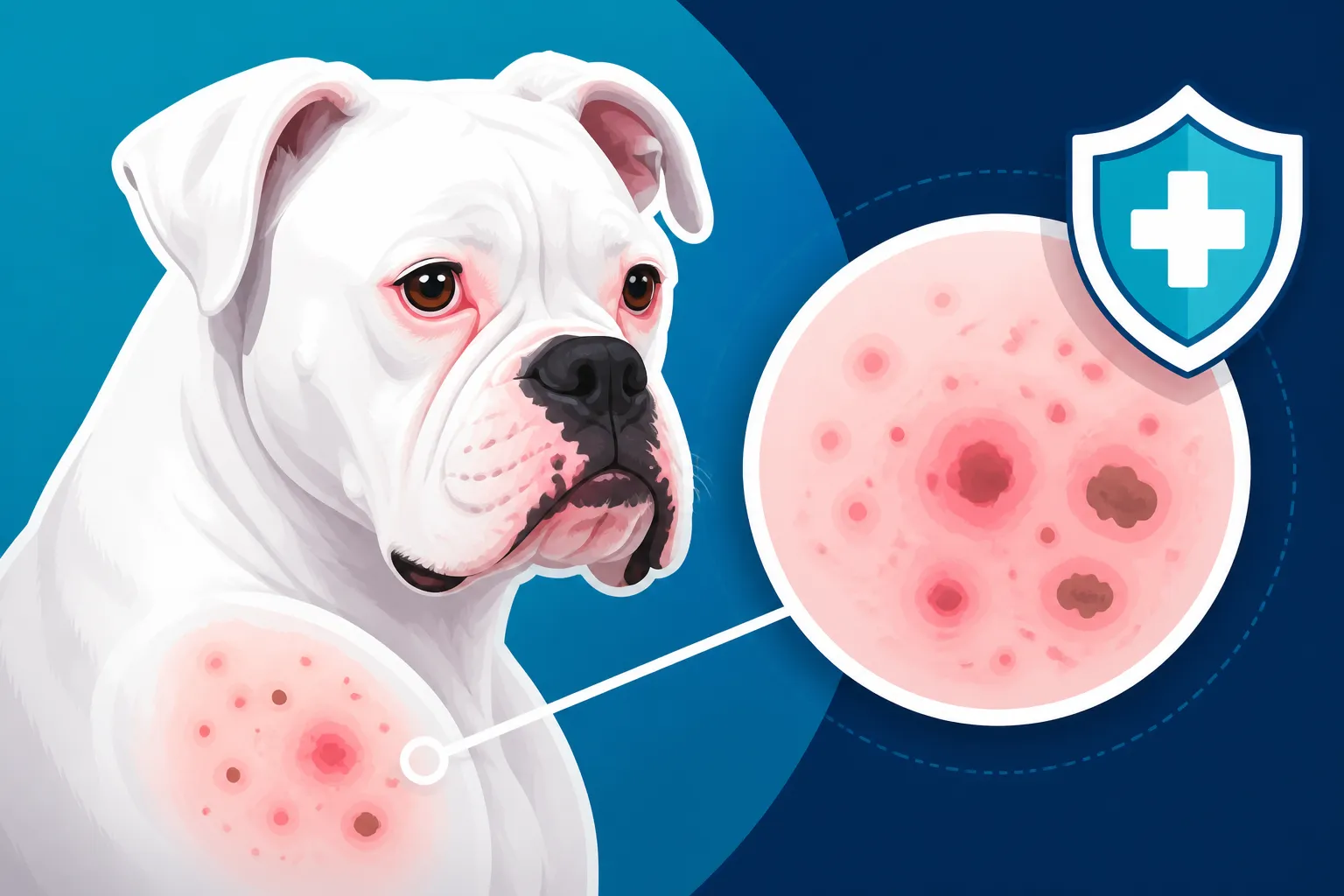
Skin Cancer Risk on a White Boxer
It's an undeniable joy to witness the playful energy and striking beauty of a white Boxer, with their luminous coats and expressive faces. However, it's also a stark reality that owning one of these magnificent dogs comes with particular responsibilities, especially when it comes to their health. Many white Boxer owners worry constantly about the potential for skin issues, and for good reason: these beautiful pups are significantly more susceptible to skin cancer than their fawn or brindle counterparts. This guide is here to shed light on why this is the case, what signs to look for, and most importantly, how to proactively protect your beloved companion from this serious threat.
The Unique Vulnerabilities of White Boxers to Skin Cancer
When you look at a white Boxer, you're seeing more than just a stunning coat; you're looking at a dog whose genetics make them inherently more exposed to the sun's harsh rays. This isn't just about appearance; it's about fundamental biological protection, or rather, the lack thereof.
Understanding Pigmentation and Protection
The reason white Boxers are so vulnerable boils down to melanin, the natural pigment that gives skin and hair its color. Melanin acts as a natural sunscreen, absorbing ultraviolet (UV) radiation from the sun and dissipating it as heat, preventing it from damaging skin cells. It's like a built-in protective shield.
In white Boxers, the genetic mechanism that produces melanin is either absent or significantly reduced. This is the same genetic trait that often leads to Deafness in White Boxers, another concern for these dogs. Their white coat, rather than being pigmented, is actually a lack of pigment. This means their skin beneath that beautiful white fur is largely unprotected from UV radiation. Think of it this way: a fawn or brindle Boxer has a natural, albeit thin, layer of sunscreen built into their skin. Your white Boxer? They're practically walking around naked in the sun, in terms of cellular protection. This makes their skin cells far more prone to UV-induced damage, which is a primary trigger for cancerous changes. The DNA in these unprotected skin cells can be damaged by UV light, leading to uncontrolled cell growth and, eventually, tumors.
Common Areas Susceptible to Sun Damage
While their entire body is technically more vulnerable, certain areas on a white Boxer are especially prone to sun damage because they have very thin hair, or no hair at all, making them easy targets for UV exposure. These are the spots you really need to keep a close eye on.
The nose, with its often pink pigment, is a prime candidate for sun exposure and subsequent damage. Just like a human's nose, it sticks out and catches a lot of sun. The tips of their ears, often thin-skinned and lightly haired, are also extremely vulnerable. You might notice them getting dry, flaky, or even reddish after spending time outdoors. The eyelids are another delicate area; while they might be partially shielded by surrounding fur, direct sunlight can still reach them. Similarly, the belly and inner thighs, which typically have very sparse hair and delicate skin, are easily exposed when your Boxer lies on their back enjoying a sunbath, or even just when they're walking in bright sunlight where reflected UV rays can reach these areas. Even the thin skin around their lips can be at risk. Owners often mistakenly believe that simply being under a tree is enough, but reflected light from concrete, sand, or water can still cause significant damage to these sensitive zones. It's a continuous battle against the sun's sneaky rays, and understanding these hotspots is the first step in effective protection.
Recognizing the Signs of Skin Cancer in White Boxers
One of the biggest advantages we have as Boxer owners in the fight against cancer is early detection. Regularly checking your dog's skin, especially in those vulnerable areas, can literally be a lifesaver. Knowing what to look for, and taking action swiftly, makes all the difference.
Early Warning Signs to Watch For
Routine checks are your best defense. I can't stress this enough: make it a habit to do Weekly Lump Checks on a Boxer. When you're petting your white Boxer, run your hands over their entire body, paying special attention to those areas we just discussed—nose, ears, eyelids, belly, and inner thighs. What are you looking for?
- Redness or Persistent Irritation: Any area that looks consistently red, inflamed, or irritated, especially if it's not responding to typical soothing treatments for minor irritations, should raise a red flag. It might look like a persistent rash or chafing.
- Scaling, Crusting, or Flakiness: Watch for patches of skin that are dry, scaly, or seem to have a crusty texture. These can sometimes be precancerous lesions or early forms of skin cancer.
- Non-Healing Sores: This is a big one. If your Boxer has a scrape, cut, or sore that just doesn't seem to heal, or heals only to reappear, get it checked immediately. Normal wounds close up; persistent ones demand attention.
- Raised Bumps or Lumps: While Boxers can get benign fatty lumps or warts, any new bump, especially if it's firm, rapidly growing, or oddly colored, needs a vet's opinion. You can learn more about The Lumps a Boxer Owner Has to Check For in another helpful guide. Keep a mental (or even better, physical) map of existing lumps to easily spot changes.
- Changes in Pigmented Spots: Even white Boxers can have small areas of black pigment on their skin. Any change in size, shape, color, or texture of these spots, or if they start to bleed or itch, warrants immediate veterinary examination.
Remember, early skin cancers can be very subtle. They might not look like the scary, ulcerated tumors you see in pictures. They can often mimic benign conditions, which is why a vet's trained eye is so crucial.
Types of Skin Cancer Affecting White Boxers
Unfortunately, white Boxers are susceptible to several types of skin cancer, some of which can be quite aggressive. Knowing a little about them can help you understand the urgency of prompt diagnosis.
One of the most common types is Squamous Cell Carcinoma (SCC). This type of cancer originates in the squamous cells, which are flat cells found in the outer layer of the skin. On white Boxers, SCC often appears as raised, firm, sometimes ulcerated lesions, particularly on the nose, ear tips, and around the eyes. They can look like warts, crusty sores, or non-healing wounds. SCC can be locally invasive, meaning it can spread into surrounding tissues, and in some cases, it can metastasize (spread) to lymph nodes or other organs, though this is less common than with some other cancers.
Another concern is Melanoma. While often associated with dark-pigmented skin, melanoma can still occur in white Boxers, though less frequently. These can appear as dark, pigmented masses, but amelanotic melanomas (those without pigment) can also occur, making them harder to identify. Melanomas can be highly aggressive and prone to spreading quickly.
Less common but equally serious are certain types of Sarcomas, which can develop in the connective tissues of the skin. These often present as firm, growing masses under the skin.
Finally, while not exclusively a skin cancer, Mast Cell Tumors are very common in Boxers (both colored and white) and can appear on or under the skin. These are notoriously unpredictable and can range from benign to highly aggressive. Finding a Lump on a Boxer Early and having it biopsied is especially critical with mast cell tumors, as their appearance doesn't always reflect their severity. The Age Boxer Cancer Usually Appears for mast cell tumors can vary, but regular checks are always prudent.
Practical Prevention Strategies for White Boxer Owners
Prevention is truly the best medicine when it comes to skin cancer in white Boxers. You can significantly reduce your dog's risk by implementing simple, consistent strategies into your daily routine. It's about being proactive and thoughtful about their exposure.
Limiting Sun Exposure
The most straightforward way to prevent sun damage is to limit direct exposure, especially during peak UV hours. This might require a shift in your daily routine, but your Boxer's health is worth it.
- Timing Walks and Outdoor Play: The sun's UV rays are strongest between 10 AM and 4 PM. During these hours, it's best to keep your white Boxer indoors. Plan walks for early mornings or late evenings when the sun is lower and less intense. This also helps prevent overheating, which is another concern for flat-faced breeds like Boxers.
- Providing Ample Shade: If your Boxer spends time in the yard, ensure there is always plenty of natural or artificial shade available. Large trees, patio umbrellas, or covered kennels can provide refuge from direct sunlight. Remember that UV rays can penetrate thin cloud cover, so even on an overcast day, caution is advised.
- Indoor Activities: Embrace indoor games and training sessions during sunny periods. Fetch in the living room, puzzle toys, or even just some quality cuddle time can keep your Boxer happy and stimulated without exposing them to harmful UV. Remember that dogs, like people, can get a lot of vitamin D from short bursts of sun, so don't completely eliminate all sun exposure, just be mindful of intensity and duration. For more on how much sun is too much, read our guide on Whether a White Boxer Burns in Normal Sun.
Safe Sunscreens and Protective Gear
Just like we use sunscreen and wear hats, there are options to provide an external layer of protection for your white Boxer.
When choosing sunscreen for your dog, it's absolutely crucial to pick one specifically formulated for pets. Human sunscreens often contain zinc oxide or para-aminobenzoic acid (PABA), which are toxic to dogs if ingested. Dogs tend to lick themselves, so any sunscreen applied must be safe for them. Look for products that are broad-spectrum (protect against both UVA and UVB rays) and water-resistant. Apply it generously to those vulnerable areas: the nose, ear tips, belly, inner thighs, and any other thinly haired spots. Reapply frequently, especially after swimming or vigorous activity. Brands like Epi-Pet Sun Protector Spray or My Doggy Place Sunscreen are often recommended by vets.
Beyond topical sunscreen, protective clothing can be a game-changer. Lightweight, UV-protective shirts or "rash guards" designed for dogs can shield large areas of their body. These are particularly useful for dogs who love to lounge in the sun or have extensive hair loss. Dog hats with brims can also protect sensitive noses and ear tips. Look for materials with a UPF (Ultraviolet Protection Factor) rating, similar to human sun-protective clothing. Incorporating these simple protective measures can make a significant difference in reducing their lifetime sun exposure and, consequently, their cancer risk.
Regular Vet Checks and Early Detection
Even with the best preventative measures, things can happen. This is why consistent veterinary care is an absolutely non-negotiable part of owning a white Boxer.
Your annual veterinary check-up should include a thorough skin examination. Don't hesitate to specifically mention your concerns about skin cancer due to your Boxer's white coat. Ask your vet to pay extra attention to those highly susceptible areas, feeling for any lumps or bumps and inspecting for any unusual skin changes. A good vet will already be doing this, but a gentle reminder never hurts!
Beyond yearly visits, if you notice anything suspicious during your weekly home checks—a new lump, a persistent sore, an odd patch of skin—don't wait for your next annual appointment. Get it checked out promptly. Early detection dramatically improves the prognosis for many types of cancer. If your vet finds something concerning, they might recommend a fine needle aspirate (FNA) or a biopsy to determine if it's benign or malignant. While the thought of a biopsy can be scary, it’s a vital step. These preventative and diagnostic steps are part of the overall cost of ownership, and having pet insurance, like a plan from Healthy Paws, can truly be a lifesaver, helping to cover the costs of these crucial examinations and any subsequent treatments. It gives you peace of mind that you can always afford the best care without financial strain.
Managing a Diagnosis and Treatment Options
Receiving a skin cancer diagnosis for your beloved white Boxer can be devastating, but it's important to remember that it's not always a death sentence. Advances in veterinary medicine mean there are often viable treatment options, especially with early detection.
What Happens After a Suspicious Lump is Found
When your vet finds something suspicious, the first step is usually to identify exactly what it is. This diagnostic journey can feel anxious, but each step brings you closer to a clear path forward.
Typically, the vet will start with a fine needle aspirate (FNA). This involves inserting a tiny needle into the lump and withdrawing a sample of cells. These cells are then examined under a microscope by a pathologist. An FNA is quick, minimally invasive, and often can be done right in the exam room without sedation. While very helpful, an FNA doesn't always provide a definitive diagnosis, especially for complex tumors like mast cell tumors.
If the FNA is inconclusive or suggests malignancy, a biopsy will likely be recommended. This involves surgically removing a small piece of the lump, or sometimes the entire lump (an excisional biopsy), for more detailed analysis by a veterinary pathologist. This provides a much more accurate diagnosis, including the specific type of cancer and its grade (how aggressive it appears). Understanding Skin Biopsy Costs on a Boxer can help you prepare for this step. Once a diagnosis is confirmed, your vet will discuss whether further staging tests are needed to determine if the cancer has spread. This might include X-rays, ultrasound, or blood tests.
Treatment Avenues for Boxer Skin Cancer
The treatment plan for your Boxer's skin cancer will depend entirely on the type, location, size, and grade of the tumor, as well as whether it has spread.
- Surgical Removal: For many skin cancers, surgical removal of the tumor is the primary treatment. The goal is to remove the entire tumor with "clean margins," meaning a border of healthy tissue around the tumor to ensure all cancerous cells are gone. This is often curative for less aggressive tumors, especially if caught early. For more aggressive tumors, or those in difficult locations, wide surgical margins might be necessary, sometimes requiring reconstructive surgery. You can read more about What a Boxer Lump Removal Costs in our detailed guide on expenses.
- Radiation Therapy: If complete surgical removal isn't possible, or if the tumor is particularly aggressive, radiation therapy might be an option. This involves using high-energy radiation to shrink or destroy cancer cells. It's often used after surgery to target any remaining microscopic cancer cells or as a primary treatment for tumors that cannot be surgically removed.
- Chemotherapy: For certain types of skin cancer, particularly those that are highly aggressive or have a high risk of spreading (metastasizing), chemotherapy may be recommended. This involves using drugs to kill cancer cells throughout the body. While the word "chemotherapy" can sound frightening, veterinary chemotherapy protocols are often designed to be less harsh than human chemotherapy, aiming for quality of life over aggressive cures. Your dog might experience some side effects, but many dogs tolerate it well.
- Cryotherapy or Electrocautery: For very small, superficial tumors or precancerous lesions, freezing (cryotherapy) or burning (electrocautery) can sometimes be effective, offering less invasive alternatives.
The journey through cancer treatment for a Boxer can be emotionally and financially challenging. This is where comprehensive pet insurance can be a true lifeline. A robust policy from a company like Healthy Paws can cover a significant portion of diagnostic tests, surgery, chemotherapy, and radiation, alleviating the financial burden and allowing you to focus on your Boxer's recovery and well-being. Thinking ahead and establishing The Cancer Fund a Boxer Owner Should Build is also a wise decision to prepare for unforeseen health challenges.
| Intervention Type | Purpose | Common Application for White Boxers | Potential Cost Impact (High/Medium/Low) |
|---|---|---|---|
| Daily Sunscreen | Preventative | Nose, ear tips, belly, sparse areas | Low (recurring product cost) |
| Protective Clothing | Preventative | Large body areas, outdoor play | Low (initial purchase, occasional replacement) |
| Weekly Skin Checks | Early Detection | Entire body, especially vulnerable spots | Low (owner time, minimal vet if no issues) |
| Vet Exams (Annual) | Health Monitoring | General check-up, targeted skin exam | Medium (standard annual vet bill) |
| Biopsy/FNA | Diagnosis | Any suspicious lump or lesion | Medium (diagnostic procedure) |
| Surgical Removal | Treatment | Primary treatment for many tumors | High (can be very costly depending on complexity) |
| Radiation Therapy | Treatment | Post-surgery, non-surgical tumors | High (specialized, multiple sessions) |
| Chemotherapy | Treatment | Aggressive, metastatic cancers | High (ongoing medication and monitoring) |
Disclaimer
The information provided in this article is for educational purposes only and is not intended to be a substitute for professional veterinary advice. Always consult with a qualified veterinarian for any health concerns or before making any decisions related to your Boxer's health and treatment.