Boxer Listings That Take Money and Vanish
The excitement of bringing home a Boxer puppy is unmatched. Their goofy grins, boundless energy, and undeniable loyalty make them one of the most beloved breeds. But in the rush to find "the one," many aspiring Boxer parents fall prey to heartbreaking scams, handing over their hard-earned money only for their dream puppy to vanish without a trace. This guide will walk you through the insidious world of Boxer puppy scams, helping you identify red flags and protect yourself from becoming another victim of these cruel schemes.
The Heartbreaking Reality of Puppy Scams
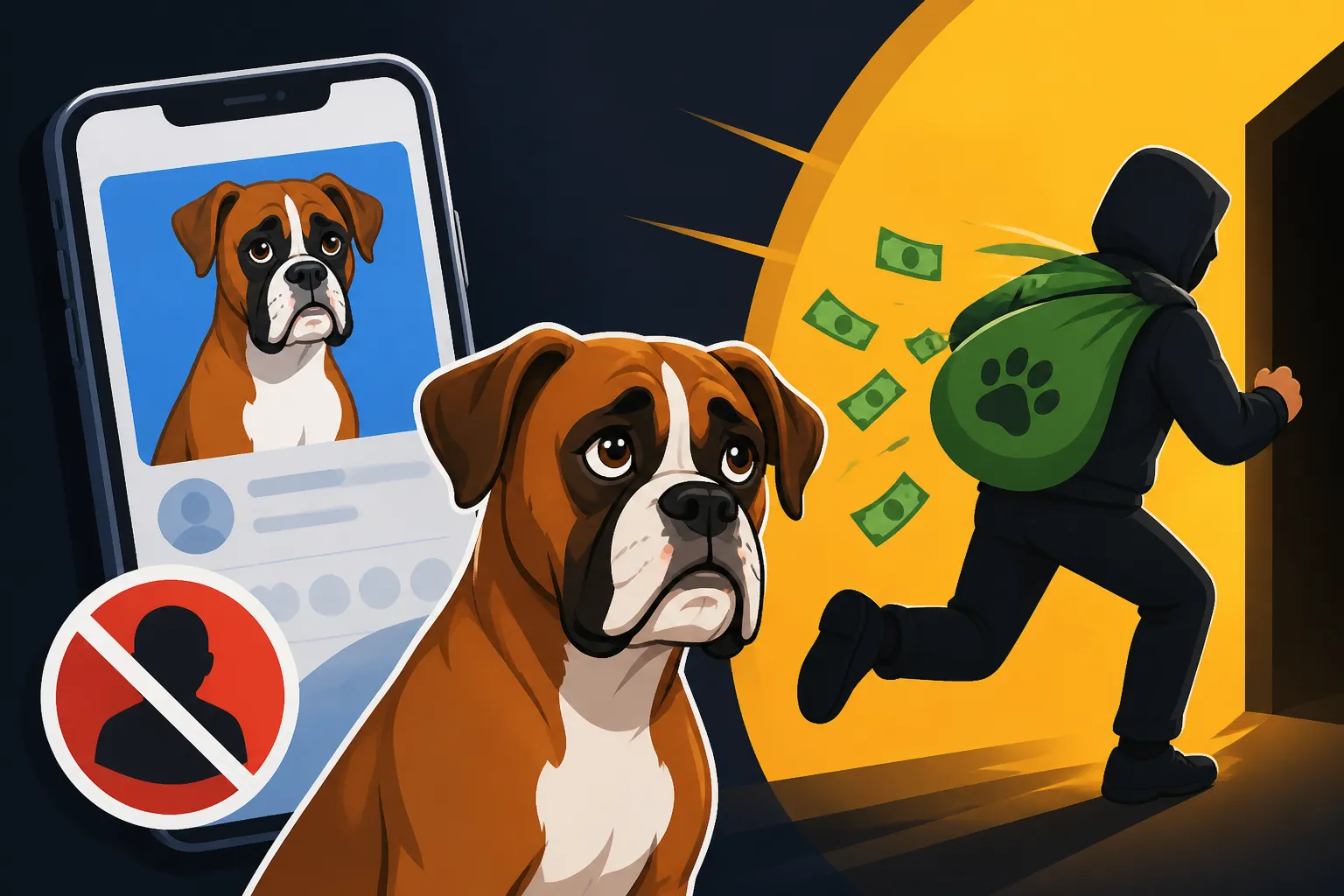
It's a devastating scenario: you find an adorable Boxer puppy online, the pictures are perfect, the price is right, and you instantly fall in love. You send money, eagerly anticipating your new family member, only to find the seller has disappeared, the phone number disconnected, and your hopes shattered. This isn't just a financial loss; it's an emotional wound that can make it incredibly hard to trust again. Scammers prey on our deepest desires, especially the longing for a furry companion, and they've become increasingly sophisticated in their tactics.
How Scam Listings Look and Sound
Scam listings often share a distressingly similar playbook. You'll typically encounter prices that seem almost too good to be true for a purebred Boxer, especially one that looks as stunning as the photos suggest. The photos themselves might be stock images stolen from legitimate breeders or even from other scam sites. They're often generic, showing puppies in a way that doesn't reveal any specific identifying features of a real breeder's home or kennels. Sometimes, the background is blurred, or the image quality is poor, suggesting it's been copied multiple times.
The language used in these ads often strikes a particular chord. It might be overly emotional, full of urgent pleas to rehome puppies quickly due to sudden, tragic circumstances, or it might be riddled with grammatical errors and awkward phrasing that doesn't quite sound native. They might promise things no responsible breeder ever would, like immediate shipping without any vetting process for the buyer, or a "health guarantee" that's completely worthless because the seller is untraceable. You might inquire about a "flashy fawn" Boxer and they'll confirm they have it, even if their other listings show only brindles, simply because they don't actually have any puppies.
The Psychology Behind These Schemes
Scammers are master manipulators of human emotion. They understand that when you're looking for a puppy, you're not just looking for an animal; you're looking for a companion, a family member, a source of unconditional love. They exploit this emotional vulnerability by creating a sense of urgency and scarcity. "Only one puppy left!" or "Must find a home this week!" are common refrains designed to make you act quickly, without taking the time for proper due diligence. They want you to bypass critical thinking and respond purely from the heart.
They often create fake narratives—a sudden military deployment, a severe illness in the family, or an unexpected move—to explain why they need to rehome the puppies so cheaply and quickly. These stories pull at your heartstrings and make you feel like you're helping someone in a difficult situation, rather than being fleeced. When you try to ask specific questions about the Boxer breed, like their typical temperament or health concerns, they'll often give vague, boilerplate answers or deflect, because they don't actually own a Boxer and lack any real knowledge about the breed.
Why Boxers Are Prime Targets for Scammers
Boxers are incredibly popular, ranking consistently high among America's favorite breeds. Their distinct look, playful nature, and generally robust health (though they do have specific health challenges like any breed) make them highly sought after. This popularity, combined with the fact that a well-bred Boxer puppy from a reputable breeder often comes with a significant price tag, creates a perfect storm for scammers. People looking for a "deal" on a purebred Boxer can be easily lured by promises of lower prices.
A responsible breeder invests heavily in their dogs – from health screenings like those detailed in The Health Screening a Boxer Breeder Owes You to proper nutrition, veterinary care, and early socialization. These costs, along with careful genetic testing to avoid issues like ARVC (which might involve Annual Holter Screening as a Boxer Expense), mean that a healthy Boxer puppy cannot be sold for pennies. Scammers, however, have no such overhead. They don't care about the lineage, the health, or the future well-being of the non-existent puppies they're "selling." This allows them to offer ridiculously low prices that hook unsuspecting buyers, promising them a beautiful Boxer without any of the legitimate costs involved in ethical breeding.
Red Flags to Spot Before Sending a Single Dollar
Identifying a scammer requires a keen eye and a healthy dose of skepticism. It's easy to get swept up in the emotion of finding a potential new family member, but stepping back and scrutinizing the details can save you immense heartache and financial loss.
Communication Cues and Inconsistencies
The way a "breeder" communicates can be a massive giveaway. Pay close attention to their language. Do their emails contain numerous grammatical errors, awkward phrasing, or unusual sentence structures? While not every legitimate breeder is a master of prose, a consistent pattern of poor writing can indicate someone operating from overseas or using translation software, common tactics among scammers.
A huge red flag is a refusal or inability to do a video call. In this day and age, with smartphones readily available, there's no reason a breeder shouldn't be able to show you the puppies and their parents live. If they offer excuses like "bad internet connection," "no camera," or "I'm out of town," be wary. A reputable breeder will be proud to show off their dogs and their facilities. They should also be able to answer specific questions about the Boxer breed, such as how long The Ten to Twelve Year Boxer Lifespan typically is, or what kind of exercise a Boxer needs. If they can't discuss these basics, or if their answers are generic and could apply to any breed, it's time to walk away.
Moreover, if the person claims to be local but uses a non-local phone number, or if their email address is generic (like Gmail, Hotmail, etc.) and doesn't match a website or kennel name, these are small but significant inconsistencies. Legitimate breeders often have dedicated websites, sometimes affiliated with reputable organizations, and professional contact information.
Unrealistic Pricing and Availability
This is perhaps the most obvious and common red flag. If you see a purebred Boxer puppy advertised for a fraction of what breeders typically charge, especially for a popular color like a "flashy fawn" (which often costs more due to demand), your internal alarm bells should be ringing. What a Boxer Puppy Costs From a Real Breeder can easily be found, and knowing this baseline helps immensely. Boxer puppies from health-tested parents, raised with proper care, generally fall within a specific price range, which can vary by region and lineage but rarely dips into "bargain basement" territory. If the price seems too good to be true, it almost certainly is. Responsible breeders invest heavily in health clearances for the parents, quality food, vet care for the litter, and early socialization. These costs are reflected in the puppy's price.
Scammers will also claim to have multiple puppies of various breeds, all available immediately, or they might promise a specific coat color or marking that is rare or in high demand, but without any verifiable photos. This "phantom litter" scenario is classic. They're trying to appeal to as many potential buyers as possible, not because they have puppies, but because they have a desire to steal your money. Be especially cautious if the "breeder" pushes you to make an immediate deposit, claiming there are many other interested parties, without allowing you to ask questions or verify information. This urgency is designed to prevent you from doing your due diligence, such as researching Boxer Puppy Prices From a Health-Testing Breeder to see if the price aligns.
Payment Demands and Logistics
The method of payment is a critical indicator of a scam. Legitimate breeders typically accept traceable methods like personal checks (with enough time to clear), credit card payments via a secure processor, or cash in person. Huge red flags appear when a "breeder" insists on untraceable payment methods such as:
- Wire Transfers: Services like Western Union or MoneyGram are impossible to trace or reverse once the money is sent. This is a favorite method for scammers.
- Gift Cards: Asking for payment in the form of gift cards (e.g., Apple, Amazon, Google Play) is a sure sign of a scam. No legitimate business operates this way.
- Cryptocurrency: While cryptocurrency is gaining traction, it's still highly uncommon for a dog breeder to only accept payment in Bitcoin or similar digital currencies, precisely because transactions are irreversible.
Another common tactic is when the scammer "ships" the non-existent puppy and then contacts you with bogus additional fees for "shipping insurance," a "temperature-controlled crate," or "vet checks" needed mid-transport. They'll demand more money, often with threats that the puppy will be stranded or worse if you don't pay. These are all additional layers to the scam, designed to extract as much money as possible from you. Remember, a reputable breeder would never spring unexpected fees on you once a puppy is on its way, nor would they use a third-party shipping service that demands direct payment from you.
| Red Flag Characteristic | Scam Tactic | Legitimate Breeder Practice |
|---|---|---|
| Pricing | Unusually low, "too good to be true" deals. | Prices reflect investment in health, care, and lineage (e.g., $1500-$3500+). |
| Communication Style | Poor grammar, vague answers, emotional pleas, high pressure. | Clear, professional, detailed answers, willingness to educate. |
| Photo/Video Verification | Stock photos, blurry images, refuses video calls, cannot show parents/litter. | Provides current, clear photos/videos, encourages video calls, shows parents. |
| Payment Methods | Demands wire transfers, gift cards, cryptocurrency. | Accepts traceable methods: credit card, check (with clearance), cash in person. |
| Availability/Urgency | Multiple breeds available, "last puppy," urgent rehoming reasons. | Often has waiting lists, careful screening of buyers, honest about timelines. |
| Transparency | No verifiable information, no physical address, fake vet references. | Provides vet references, AKC/breed club info, invites visits, has contracts. |
| Health Info & Screening | Vague health promises, no proof of parent health tests. | Provides extensive health clearances for parents (OFA, CERF, ARVC, SAS, DM). |
Due Diligence: Protecting Yourself When Searching for a Boxer
The best defense against puppy scams is thorough research and a proactive approach. Don't let your excitement override your common sense. Take your time, ask tough questions, and verify every piece of information.
Verifying Breeder Credentials and References
When you find a potential breeder, your first step should be to verify their legitimacy. Start by asking for references. A reputable breeder will happily provide contact information for their veterinarian and previous puppy buyers. Take the time to call these references. Ask the vet if they routinely provide care for the breeder's dogs, if the parents of the litter have received appropriate health screenings (like those for Boxer Cardiomyopathy and the Holter Monitor or Subaortic Stenosis in a Boxer Puppy), and if the breeder is known for responsible practices. Speak to previous puppy owners about their experience, the health and temperament of their dog, and the breeder's ongoing support.
Check for affiliations with breed clubs like the American Boxer Club (ABC) or local Boxer clubs. These organizations often have breeder directories and codes of ethics their members must follow. If a breeder is a member, verify their membership status directly with the club. Don't just take their word for it. They should be transparent about their dogs' lineage, provide AKC registration papers (or equivalent), and show genuine knowledge about their specific lines and the breed standard. If you're looking for a specific type of Boxer, for example, a German Boxer line, they should be able to articulate the differences and advantages. Furthermore, they should readily provide proof that A Boxer That Tests Clear but Still Has ARVC is still a possibility if a parent carries one copy of the gene, for example, and the measures they take to mitigate this.
Perhaps the most crucial step is to insist on an in-person visit or, at the very least, an extended video call where you can see the puppies with their mother (the dam) in their actual living environment. Scammers will invent endless excuses to prevent this. A legitimate breeder will welcome you (within reasonable boundaries to protect the health of young puppies) or be eager to show you their clean, well-maintained facilities and the interaction between the dam and her litter. You should be able to observe the puppies' temperament, cleanliness, and overall health. Meeting the dam is incredibly important, as it gives you insight into the temperament and health of the parents, which greatly influences the puppies. This is why it's so important to be Seeing a Boxer Litter's Dam Before You Buy.
The Power of Social Media and Reverse Image Search
In the digital age, technology is your friend in uncovering scams. If you're looking at an online ad, take the puppy's photos and perform a reverse image search (e.g., using Google Images or TinEye). This can quickly reveal if the pictures have been stolen from another website, another breeder, or are generic stock photos used across multiple fake listings. If the images appear on several different sites with different contact information, it's a huge red flag.
Leverage social media, but wisely. Join reputable Boxer breed groups on Facebook or forums. Many of these groups have strict rules against puppy sales but are excellent resources for recommendations for legitimate breeders in your area. You can also post the breeder's name or website and ask if anyone has experience with them. Often, community members will be quick to identify known scammers or vouch for ethical breeders. However, be cautious of direct recommendations from unknown individuals, as scammers can also infiltrate these groups. Always cross-reference any information you receive.
Safe Payment Methods and Contracts
Once you've done your due diligence and feel confident about a breeder, it's time to talk payment. As discussed, steer clear of anyone who demands untraceable methods. If paying a deposit, a credit card is often the safest as it offers buyer protection. If paying the full balance, an in-person cash payment at the time of pickup, or a traceable bank transfer, are generally secure options. Never pay in full upfront without a legally binding contract and without having seen the puppy in person (or via live video if distance is a major factor and you're working with a highly reputable, vetted breeder).
A comprehensive written contract is non-negotiable for a legitimate transaction. This contract should clearly outline:
- Health Guarantee: What happens if the puppy develops a genetic health issue, particularly those common to Boxers, such as What Boxer ARVC Actually Does to the Heart?
- Vaccination and Worming Schedule: Documentation of all treatments the puppy has received.
- Spay/Neuter Clause: Often, puppies are sold on a spay/neuter contract unless specifically purchased for breeding.
- Return Policy: What happens if you cannot keep the puppy or if a serious health issue arises?
- Registration Information: Details about the puppy's AKC or equivalent registration.
- Breeder's Responsibilities and Buyer's Responsibilities.
Review the contract carefully before signing. A breeder who is unwilling to provide a written contract or whose contract is vague and doesn't offer any guarantees should be avoided. The price you pay for your Boxer puppy, whether it's on the lower end or a premium for Boxer Prices at a Breeder Who Holters, should always come with the security of a clear, legally sound agreement.
What to Do If You've Been Scammed (or Almost Were)
Realizing you've been scammed is a gut-wrenching experience. The emotional toll can be just as heavy as the financial one. While getting your money back isn't always possible, taking action can prevent others from falling victim and potentially aid law enforcement.
Reporting the Scam
Even if you can't recover your money, reporting the scam is crucial. Here's where to start:
- Federal Trade Commission (FTC): File a report with the FTC. They track scam trends and share information with law enforcement agencies. Go to reportfraud.ftc.gov.
- Internet Crime Complaint Center (IC3): If the scam occurred online, report it to the FBI's IC3. This is especially important for scams crossing state lines or international borders.
- Local Law Enforcement: File a police report with your local police department. While they may have limited resources for online fraud, it creates a paper trail and can be helpful if the scammer is local or if other victims come forward.
- Better Business Bureau (BBB): Report the scam to the BBB. This helps alert other consumers and build a public record of the scammer's activities.
- Pet Scam Websites: Websites like PetScams.com specifically compile data on puppy scams. Reporting there can help them track patterns and warn others.
- Payment Processors: If you used a credit card or a digital payment service that offers buyer protection (unlikely if it was a wire transfer or gift card), contact them immediately to dispute the charge.
- Website/Platform where the Ad was Posted: Report the fraudulent listing to the website or social media platform where you found it (e.g., Facebook Marketplace, Craigslist). This helps get the ad taken down and potentially ban the scammer's account.
Gather all evidence: screenshots of ads, emails, text messages, phone numbers, payment receipts, and any information you have about the scammer. The more detail you provide, the better.
Learning from the Experience and Moving Forward
It's okay to feel angry, sad, or foolish after a scam. But remember, these scammers are professionals who exploit trust, and it's not your fault. Give yourself time to process the experience.
Once you're ready to continue your search, adjust your approach. Use the lessons learned to inform your next steps. Focus on reputable sources:
- Breed Clubs: Connect with your national Boxer club (e.g., American Boxer Club) or local Boxer clubs for breeder referrals.
- Reputable Breeders: Look for breeders who openly share their health testing results (e.g., for issues like Degenerative Myelopathy in an Older Boxer), invite visits, and provide comprehensive contracts. They are often members of kennel clubs and show their dogs.
- Boxer Rescue Organizations: Consider adopting an adult Boxer or even a Boxer puppy from a dedicated rescue. Organizations like American Boxer Rescue often have Boxers of all ages looking for homes, and these dogs come fully vetted and assessed. Boxer Rescue Fees and What They Cover are usually much lower than buying from a breeder and ensure the dog is healthy and well-cared for before adoption. Adopting an adult Boxer, perhaps one that is already Adopting a Boxer That Is Already Six, can bring just as much joy and often comes with the added benefit of knowing their established temperament.
When you do find your legitimate Boxer companion, remember to prepare for their arrival with high-quality supplies from trusted retailers like Chewy, which offers everything from crates and toys to specialized food. Consider premium dog food brands like Ollie, which provides fresh, human-grade meals tailored to your Boxer's needs. And most importantly, protect your new family member's health with pet insurance from providers like Healthy Paws, ensuring that any unforeseen health issues are covered. This proactive approach to ownership is part of being a responsible Boxer parent, and it starts with making sure you acquire your dog ethically.
Disclaimer
The information provided in this guide is for general informational purposes only and does not constitute legal or financial advice. While we strive to provide accurate and up-to-date information, puppy scam tactics evolve rapidly. Always exercise caution and perform your own thorough due diligence when seeking to acquire a pet.