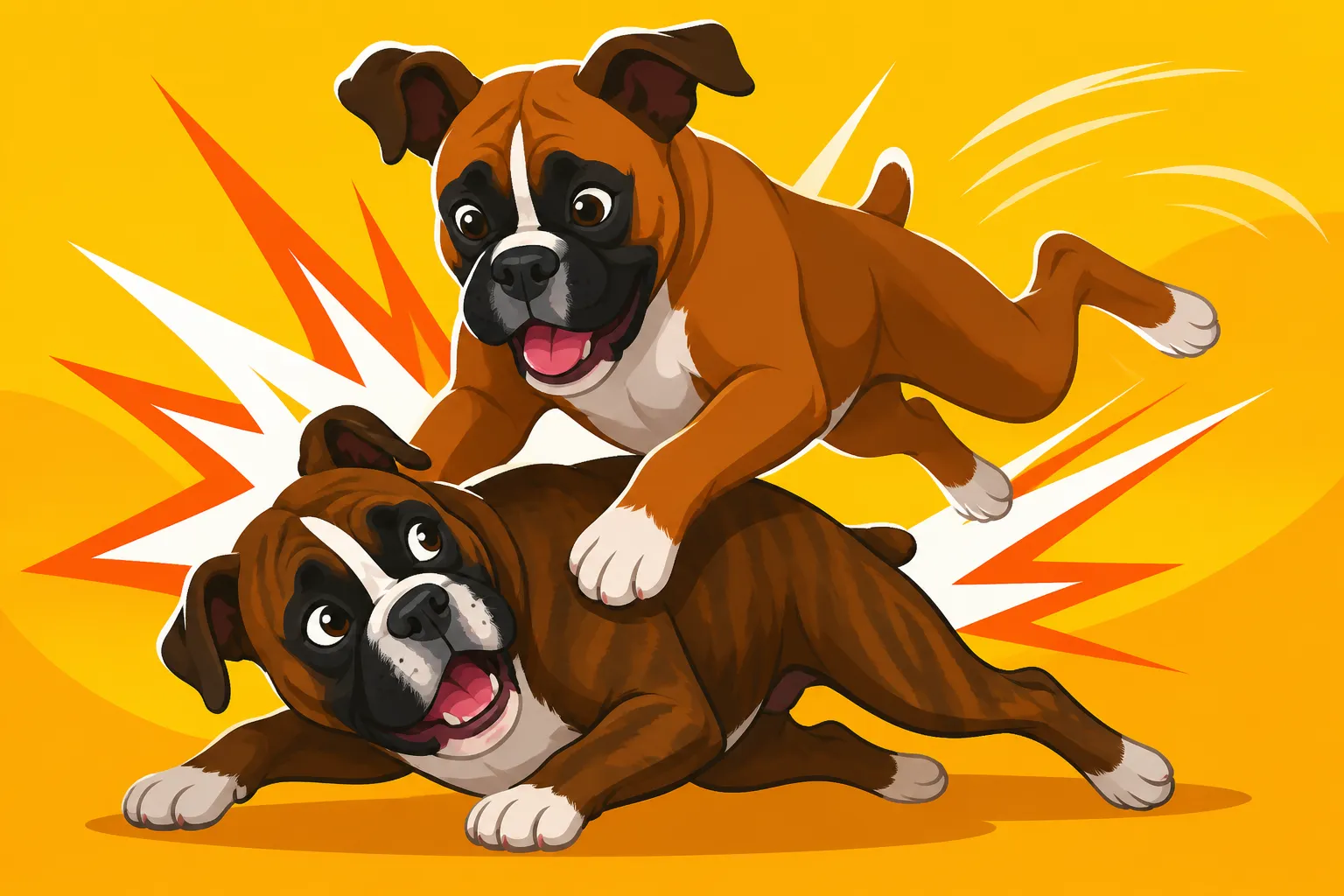
Boxer Body Slamming During Play
It’s a scenario many Boxer owners know all too well: you’re standing, minding your own business, or perhaps playing a casual game of fetch, and suddenly, you’re met with a seventy-pound bundle of muscle and enthusiasm that sends you stumbling. This isn't usually aggression, but simply the Boxer's signature "body slam" during play, a boisterous display that can be alarming, painful, or even dangerous. This guide will walk you through understanding why your Boxer plays this way, the risks involved, and practical strategies to manage and redirect this energetic, full-body style of interaction, ensuring playtime remains fun and safe for everyone.
Understanding the "Boxer Body Slam": Why They Do It
If you’ve ever owned a Boxer, you’ll understand that their play isn’t for the faint of heart. Unlike some breeds that might nip or chase, Boxers often engage their entire muscular frame, leading to what affectionately (or sometimes painfully) gets called a "body slam." This isn't them being mean; it's a deeply ingrained part of their heritage and their unique way of interacting with the world.
The Instinctive Roots of Their Play Style
To truly grasp why your Boxer acts like a furry battering ram, we need to look back at their ancestors. Boxers descended from a line of dogs called Bullenbeissers, which were powerful hunting dogs used for holding large game like boar and bear. These dogs needed immense strength, a tenacious grip, and a willingness to use their entire body to wrestle and control their prey. While today's Boxers are loving family companions, that foundational instinct to engage with their whole body during intense activity still runs deep. When they "body slam," they're tapping into that ancient drive for physical interaction and control, albeit in a playful, less predatory way. It’s their way of saying, "Let's really play!" and it's often accompanied by their famous wiggle and a joyful expression.
Consider a young Boxer puppy. They don't just bite and tug; they tumble, they pounce, they launch themselves at their littermates. This full-contact style is how they learn their strength, their limits, and their social cues within the pack. This physical communication carries over into adulthood. For a Boxer, pushing, bumping, and using their weight is a natural, almost primal, form of interaction. They aren't trying to hurt you; they're trying to play using the tools nature gave them – their powerful body. It's often a sign of immense excitement and a desire for engagement, not malice.
The Role of High Energy and Exuberance
Boxers are renowned for their boundless energy, especially during their extended puppyhood, which can feel like it lasts forever. The Boxer Puppyhood That Lasts Three Years is a real thing, and during this time, they have an incredible amount of physical and mental energy to burn. When this energy isn't adequately channeled, it can manifest in over-the-top behaviors like body slamming. They might be so thrilled to see you, or so utterly delighted by a game, that their exuberance simply overwhelms their impulse control.
Imagine coming home after a long day. Your Boxer has been waiting, maybe a little bored, and when you walk through the door, it’s like a dam bursts. They don’t just wag their tail; they launch themselves at you, maybe jumping, maybe bumping you with their chest or shoulder. This is often an expression of pure, unadulterated joy. For many Boxers, gentle greetings are an acquired skill, not an innate one. Their enthusiasm simply bubbles over, and they use their bodies as the primary means of expressing it. This isn't to excuse the behavior, but to help us understand the root cause. Without sufficient exercise, mental stimulation, and training, this natural exuberance can become an overwhelming force. If your Boxer is feeling under-exercised, they'll seek an outlet, and rough play is often an easy default. Why a Boxer Wrecks Things When Under-Exercised is a common frustration many owners face, and it's closely related to this issue.
The Risks and Realities of Rough Boxer Play
While a Boxer's body slam is usually well-intentioned, the reality is that a large, strong dog launching itself at people or other animals can have serious consequences. It's not always just a comical tumble; it can lead to injuries, fear, and even behavioral problems if not addressed.
Potential for Injury to Humans and Other Dogs
The most immediate concern with a Boxer's body slamming is the risk of injury. A seventy-pound dog, moving at speed, can easily knock an adult off balance, leading to falls, sprains, or worse. This risk is amplified exponentially when children or elderly individuals are involved. A child can be seriously hurt by a Boxer's playful bump, potentially breaking bones or sustaining head injuries. Similarly, older individuals might be more fragile, making a fall much more dangerous. It's a real fear for many Boxer owners who love their dogs but worry about their exuberant greetings around vulnerable family members.
Beyond humans, other dogs can also be at risk. A confident, equally boisterous dog might enjoy the rough-and-tumble play, but a smaller or more timid dog could be terrified, hurt, or even develop fear-based aggression as a defense mechanism. Imagine taking your Boxer to the dog park, and they playfully body slam a tiny terrier. The terrier could be injured, and its owner would rightfully be upset. Even with dogs of similar size, if one Boxer's play style is too intense, it can escalate quickly into a conflict. It's crucial to distinguish between healthy, mutually enjoyable rough play and play that crosses a line into dangerous territory. Boxer Play Style With Other Dogs is typically full-contact, but boundaries are still essential.
| Play Scenario | Potential Risk to Humans | Potential Risk to Other Dogs | Management Strategy |
|---|---|---|---|
| Greeting guests at the door | Falls, bruises, broken bones (especially for elderly/children) | Fear, intimidation, potential for defensive snaps | Leash greetings, "place" command, crating |
| During active fetch/chase games | Accidental collisions, being knocked down | Over-arousal, potential for injury to smaller dogs | Structured play, clear boundaries, one-on-one play |
| Zoomies in the house | Tripping, knocking over furniture/objects | Accidental trampling, overwhelming smaller pets | Designated safe spaces, outdoor exercise, managing arousal |
| Unsupervised play with children | Serious injury, fear of the dog | N/A (focus on child-dog interaction) | Constant supervision, teaching children how to interact |
Developing Unwanted Behavioral Patterns
Allowing unchecked body slamming can inadvertently teach your Boxer that this rough behavior is acceptable and even rewarding. Every time they get a reaction from you—even a negative one like a shout or a push back—they might interpret it as engagement, reinforcing the behavior. This can lead to a cycle where the Boxer continues to use its body to demand attention or initiate play, making it harder to manage over time. It can also make walks challenging; if they're used to using their body to get what they want, Getting a Boxer to Walk Without Towing You becomes an uphill battle.
Furthermore, if a Boxer constantly overwhelms other dogs with its body slams, those dogs may learn to avoid your Boxer, or worse, become reactive towards them. This limits your Boxer's ability to socialize politely and can lead to a reputation as an "unruly" dog, making dog park visits or playdates stressful. It’s not just about the physical injury, but about the long-term impact on your Boxer’s social skills and your relationship with them. You want your Boxer to be a joyful, confident companion, not a bull in a china shop that everyone avoids. Understanding the connection between their natural exuberance and the need for polite manners is key to harmonious living.
Strategies for Managing and Redirecting Boxer Body Slamming
The good news is that you can absolutely teach your Boxer more polite ways to interact, even if their natural inclination is to use their whole body. It requires consistency, patience, and a clear understanding of what you want them to do instead.
Establishing Clear Boundaries and Training Polite Greetings
The first step is to establish clear boundaries for physical interaction. This means teaching your Boxer that all four paws must remain on the floor when greeting people. The "four on the floor" rule is non-negotiable. When your Boxer jumps or body slams, immediately disengage. Turn your back, walk away, or step behind a piece of furniture. Only re-engage when they have all four paws on the ground, even for a second. This teaches them that calm behavior gets attention, while rough behavior does not. Many owners find value in online training programs, such as BAXTER & Bella, which emphasize positive reinforcement and structured learning to help establish these foundational manners from a young age.
For greetings at the door, practice polite entries. Keep a leash near the door and put it on your Boxer before anyone comes in. Have them sit or go to a designated "place" command. Reward calm behavior generously. If they start to get over-excited, gently lead them away from the door and try again when they're calmer. Consistency is the magic word here. Every family member and every visitor needs to be on the same page. It can feel like a lot of work initially, but it pays off immensely in the long run. Remember, you're not punishing their excitement, you're just showing them an alternative, more appropriate way to express it. Using a sturdy harness designed for strong pullers can also help with control during these moments, such as those readily available on Amazon.
Channeling Energy Through Structured Exercise and Mental Stimulation
A tired Boxer is a well-behaved Boxer. Much of the body slamming comes from an excess of unchanneled energy. Boxers need significant daily exercise, not just a quick stroll around the block. Aim for at least 60-90 minutes of vigorous activity each day, split into multiple sessions. This could be intense games of fetch, running in a securely fenced yard, or long, brisk walks. Boxer Exercise Needs and the Heat That Limits Them is an important consideration, as their brachycephalic (flat) face makes them prone to overheating, so schedule exercise during cooler parts of the day.
Beyond physical exercise, mental stimulation is equally vital. Boxers are intelligent and get bored easily. Engage their minds with puzzle toys, interactive feeders, and short, frequent training sessions. Keeping Boxer Training Sessions Interesting is key, as they thrive on novelty and positive reinforcement. Teach them new tricks, practice obedience cues in different environments, or enroll in dog sports like agility or obedience. A Boxer whose mind is engaged is less likely to resort to chaotic physical play out of boredom. For example, a KONG Classic stuffed with frozen peanut butter or a puzzle ball where they have to work for their kibble can provide valuable mental exercise.
Supervised Play and Timely Interruption
When your Boxer plays with other dogs or children, supervision is non-negotiable. Learn to read their body language and the body language of the other dog or child. Look for signs that play is escalating too quickly: stiff bodies, relentless pursuit, or one dog trying to disengage. During play with other dogs, it's particularly important to ensure that Whether a Boxer Plays Too Rough for a Small Dog isn't becoming an issue.
It’s your job to intervene before play gets out of hand. Use a verbal cue like "too rough" or "easy" and then call your Boxer away for a brief "time out." This doesn't have to be a punishment; it's simply a chance for everyone to de-escalate. Once they've calmed down, you can allow them to resume play. If your Boxer continues to body slam despite your efforts, it might be time to remove them from the situation entirely. This teaches them that overly rough play ends the fun. Always ensure that playmates are well-matched in terms of size and play style. Sometimes, a confident, equally robust dog is a perfect playmate, while a shy, delicate dog is not.
When to Get Professional Help for Over-the-Top Play
While many Boxer owners can manage exuberant play with consistent training, there are times when professional guidance becomes invaluable. Recognizing these moments can save you a lot of frustration and prevent potential problems from escalating.
Identifying When Play Crosses the Line into Problem Behavior
It's one thing for a Boxer to be a bit clumsy and over-enthusiastic, but it's another if their body slamming or rough play becomes genuinely concerning. You should consider seeking professional help if you notice any of the following:
- Injury or Near Misses: If your Boxer's play consistently results in injuries to people or other animals, or if you're constantly worried about them causing harm.
- Fear and Avoidance: If children, other pets, or even adults in your household actively avoid your Boxer because of their rough play, this is a clear sign that boundaries are not working.
- Aggression: While body slamming is usually playful, if you notice any accompanying growling, snarling, or hard stares that seem genuinely aggressive rather than purely boisterous, it's a serious red flag.
- Unmanageable Energy: Despite your best efforts with exercise and mental stimulation, your Boxer remains uncontrollably energetic and destructive, especially when left alone. A Boxer That Destroys the Yard or home out of boredom or anxiety often needs a behavior specialist.
- Social Difficulties: If your Boxer struggles to interact politely with other dogs, consistently causing conflict or being ostracized at dog parks due to their rough style.
If these scenarios sound familiar, you're not failing as an owner; you're simply at a point where specialized expertise can make a profound difference.
Choosing the Right Professional: Trainers vs. Behaviorists
Deciding who to call can be confusing. Dog trainers and veterinary behaviorists serve different, though sometimes overlapping, roles.
Dog Trainers are excellent for teaching basic obedience, manners, and general behavioral modification using positive reinforcement techniques. They can help you implement strategies for polite greetings, leash manners like Loose Leash Work With an Excited Boxer, and impulse control. A good trainer will observe your Boxer's play style and help you apply consistent boundaries. When looking for a trainer, make sure they have experience with Boxers or other high-energy working breeds and use force-free, reward-based methods. Ask them if Whether a Trainer Has Worked With a Boxer Before and how they approach boisterous play. Many local pet stores or community centers offer Boxer Training Class and Trainer Costs information.
Veterinary Behaviorists are veterinarians who have gone on to specialize in animal behavior, similar to how a human doctor might specialize in cardiology. They can diagnose and treat underlying behavioral issues such as anxiety, aggression, or compulsive disorders, which might be contributing to extreme play. If your Boxer’s behavior feels extreme, deeply ingrained, or you suspect there might be a medical component (e.g., pain causing irritability), a veterinary behaviorist is the appropriate choice. They can prescribe medication if necessary, alongside a comprehensive behavior modification plan. It's often a good idea to start with your regular vet, who can refer you to a board-certified veterinary behaviorist if they deem it necessary.
Don't feel discouraged if you need to seek help. Many devoted Boxer owners face challenges with their dog's enthusiasm, and a professional can provide tailored strategies, support, and peace of mind. Investing in professional help early can prevent minor issues from becoming major problems, ensuring a happier, safer life for you and your beloved Boxer.
Disclaimer
This article is for general informational purposes only and does not constitute professional advice. Laws, prices and regulations vary by location and change over time. Consult a qualified professional for guidance on your specific situation.