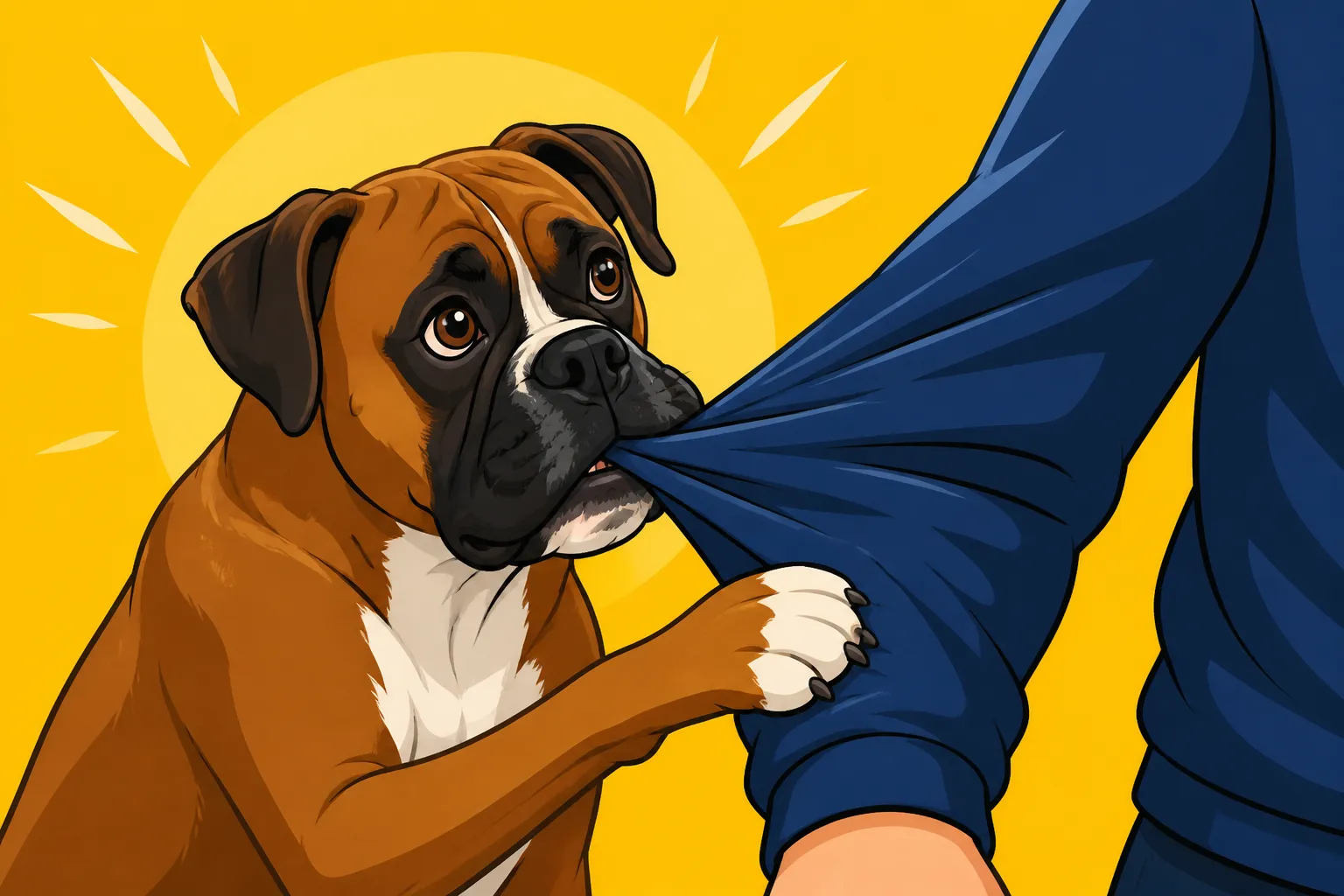
A Boxer That Grabs Sleeves
It's incredibly frustrating, and let's be honest, sometimes a little painful, when your otherwise loving Boxer decides your sleeve is the perfect tug toy or attention-grabbing device. This behavior, while usually not malicious, can quickly escalate from an annoying habit to a ripped shirt or even a bruised arm if your Boxer is particularly enthusiastic. This guide is here to help you understand why your Boxer might be grabbing your sleeves and, more importantly, equip you with practical strategies and consistent training methods to put a stop to it and redirect that energy into more appropriate behaviors.
Understanding Why Your Boxer Grabs Sleeves
When your Boxer grabs your sleeve, it's rarely because they're trying to be naughty or aggressive. More often, it stems from a combination of their natural instincts, high energy, and a desire for interaction. Boxers are incredibly playful dogs, and sometimes that playfulness manifests in ways that aren't ideal for human clothing or skin.
Play Instincts and Excitement
Boxers are known for their boisterous play, which often involves their mouths and paws – hence the breed's name! A sleeve can easily become an impromptu tug toy, especially during moments of high excitement like greetings or when they're soliciting play. Think about how a Boxer interacts with another dog: lots of wrestling, mock-biting, and pawing. They don't always understand that humans have different rules. If your Boxer gets worked up when you come home, or when guests arrive, that surge of excitement can trigger a burst of undirected energy, and your arm, conveniently presented, becomes an easy target. It's their way of saying, "Yay, you're here! Let's play!" without really understanding the implications for your wardrobe.
They might also be trying to initiate a game of tug, which is a favorite pastime for many Boxers. If you've ever played tug-of-war with them using a proper toy, they might associate the feeling of fabric in their mouth with that fun interaction. The challenge, of course, is teaching them that only certain fabrics are fair game for tugging. For a deeper dive into their playful nature, you might find our article Boxer Mouthing From Puppy to Adult particularly insightful.
Seeking Attention and Engagement
Another common reason for sleeve-grabbing is a simple bid for attention. Boxers thrive on interaction with their people. If they're feeling a bit ignored, or if they've learned that a quick nip or grab at your sleeve gets a reaction (even if it's negative attention like a gasp or a push), they'll continue the behavior. For a Boxer, any attention is often better than no attention at all. They might paw at you, whine, or bring you a toy, but if those cues don't work, a more direct approach like a sleeve grab might be next on their list.
This behavior can become a self-reinforcing cycle. You react, they get attention, and the behavior is cemented. It's a classic example of a dog figuring out "what works" to get what they want. They're smart, and they're learning from our reactions all the time, even when we don't realize we're teaching them.
Lack of Impulse Control
Many Boxers, especially in their younger years, can struggle with impulse control. They might know, intellectually, that they shouldn't grab your clothes, but in the heat of the moment – perhaps during an exciting greeting or a game – their excitement overrides their training. This is why consistency is key. We need to help them practice self-control in a variety of situations so that the desired behavior becomes their default, even when their energy is running high. Think of it like a child learning to wait their turn; it takes practice and gentle guidance.
Boxers mature slowly, often behaving like puppies well into their second or even third year. This extended "puppyhood" means they need a longer period of consistent training and guidance to develop those crucial impulse control skills. If you're wondering about this extended maturity, our article Why a Boxer Acts Like a Puppy Until Three offers more context.
Practical Strategies for Redirecting the Behavior
Stopping the sleeve-grabbing requires a multi-pronged approach: prevention, interruption, and consistent redirection to appropriate outlets. It's not about punishing the behavior, but about teaching your Boxer what to do instead.
Immediate Interruption and Redirection
When your Boxer grabs your sleeve, the absolute first thing you need to do is avoid rewarding the behavior with any form of attention. This means no yelling, no pulling your arm away vigorously (which can turn it into a game of tug), and no eye contact. Instead, become a "tree." Stand perfectly still, cross your arms, and turn your back. The moment your Boxer releases your sleeve, calmly turn around and immediately offer an appropriate chew toy or tug toy. Praise them gently when they take the toy.
The key here is speed and consistency. They need to understand that fabric-grabbing gets them absolutely nothing, while engaging with a proper toy gets them your undivided, positive attention. Keeping appropriate toys readily available in every room, perhaps even clipping one to your belt or pocket, can make this redirection process much smoother. You can find robust and engaging toys that stand up to a Boxer's powerful jaws on platforms like Amazon. Look for durable tugs or interactive feeders that can hold their attention.
Environmental Management
Sometimes, simply preventing the opportunity for sleeve-grabbing is the best first step. This might involve:
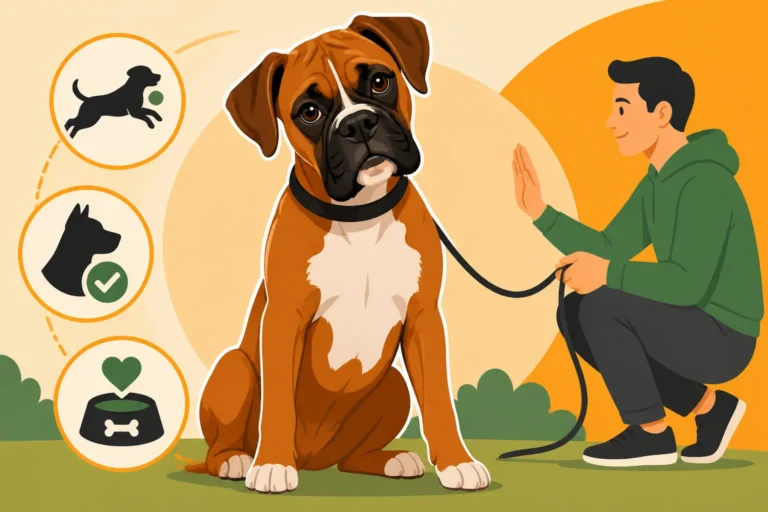
- Leash Management: If your Boxer is particularly prone to sleeve-grabbing during greetings, consider keeping them on a leash when guests arrive or when you first come home. This allows you to control their movements and physically prevent them from jumping up and grabbing. You can then use the leash to guide them to a "place" command or to their toy.
- Gate Control: Use baby gates to create physical barriers, especially if you're in a busy household or have children your Boxer might be overly enthusiastic with. This gives them a moment to calm down before interacting directly.
- Clothing Choices: While not a long-term solution, in the short term, avoiding loose, dangling sleeves or clothing with easily snagged fabric can reduce the temptation and prevent damage.
Managing the environment proactively means you're setting your Boxer up for success by removing the easy opportunities to practice unwanted behaviors. This can reduce frustration for both of you as you work on training.
Boosting Mental and Physical Exercise
Often, unwanted behaviors like sleeve-grabbing stem from pent-up energy, both physical and mental. Boxers are intelligent, high-energy dogs that need a lot more than just a quick walk around the block.
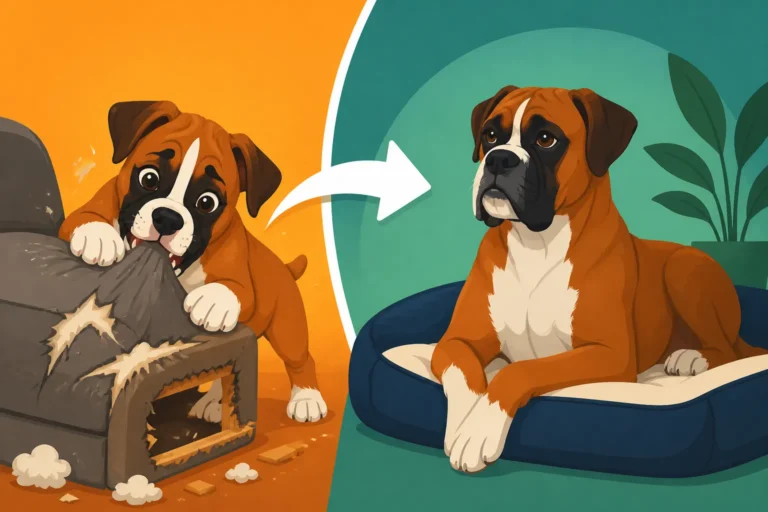
- Physical Activity: Ensure your Boxer is getting at least 60-90 minutes of vigorous exercise daily, broken into sessions. This could be fetch in a secure yard, brisk walks, runs (if cleared by your vet and weather-appropriate), or even swimming. A tired Boxer is a well-behaved Boxer. If you're dealing with a Boxer that destroys things when under-exercised, our post Why a Boxer Wrecks Things When Under-Exercised offers further insights.
- Mental Stimulation: Don't underestimate the power of mental exercise. Puzzle toys, snuffle mats, and training sessions can tire a Boxer out just as much, if not more, than physical exercise. Hiding treats around the house for them to find, practicing new tricks, or even engaging in scent work can be incredibly beneficial. Brands like BAXTER & Bella offer online training programs that incorporate mental engagement and can provide structured activities to keep your Boxer's mind busy.
A well-exercised Boxer is less likely to resort to attention-seeking or over-excited behaviors.
Training Solutions for Long-Term Success
While redirection and management are crucial, solid training provides the foundation for lasting change. You want to teach your Boxer alternative, acceptable behaviors that they can offer instead of sleeve-grabbing.
Teaching "Leave It" and "Drop It"
These two commands are indispensable for any Boxer owner.
- "Leave It": Start by holding a treat in your closed hand. Say "leave it." When your Boxer looks away from your hand, even for a second, open your hand and reward them with a different, higher-value treat from your other hand. Gradually progress to placing the treat on the floor, then to more distracting items. The goal is for them to understand that ignoring the tempting item (like your sleeve) leads to a better reward.
- "Drop It": If your Boxer already has your sleeve (or an inappropriate item) in their mouth, this command is vital. Start with a toy they like. Offer a high-value treat right near their nose. As they open their mouth to take the treat, say "drop it," and when they release the toy, give them the treat. Once they reliably drop the toy for the treat, you can add a "take it" command to let them re-engage with the toy. The key is to make "dropping" a positive experience, not a punishment.
Consistent practice, several times a day in short, fun sessions, will build a strong understanding of these commands. For more on managing mouthing, our article Teaching a Boxer to Drop It is a great resource.
Teaching a "Place" or "Mat" Command
A "place" command teaches your Boxer to go to a designated spot (like a dog bed or mat) and stay there until released. This is incredibly useful for managing excitement, especially when guests arrive or during mealtimes.
Start by luring your Boxer onto their mat with a treat. As soon as all four paws are on the mat, say "place" and reward them. Gradually increase the time they spend on the mat before getting a reward, and then add distance. Practice with distractions. When guests come over, you can direct your Boxer to their "place" with a chew toy, teaching them that calmness and independent play on their mat are rewarding.
Structured Play and Boundary Setting
Your Boxer loves to play, so channel that energy into appropriate games. Tug-of-war is fine, but it needs rules:
- You initiate and end the game: Start with a cue like "let's play" and offer a designated tug toy.
- No teeth on skin/clothes: The moment teeth touch skin or clothes, the game stops immediately. Say "too bad!" and put the toy away for a minute or two.
- "Drop It" on cue: Practice "drop it" throughout the game. If they don't drop it, the game ends.
By setting clear boundaries, you're teaching your Boxer that play is only fun when they follow the rules. This reinforces the idea that your clothes are not toys. For more advice on playful mouthing, check out Boxer Puppy Biting That Does Not Stop.
Consistency, Patience, and Professional Guidance
Successfully addressing sleeve-grabbing behavior in a Boxer requires dedication. Remember, they aren't doing it to be malicious, but because they're being a Boxer, often full of energy and looking for interaction.
The Power of Consistency
Every single interaction is a training opportunity. If you let them get away with sleeve-grabbing "just this once" because you're tired or in a hurry, you're undermining all your hard work. Everyone in the household needs to be on the same page and react consistently every time. This means if you have children, they too need to understand how to react appropriately to prevent accidental reinforcement.
It's a marathon, not a sprint. Boxers are incredibly smart and eager to please, but they're also exuberant and can be easily distracted. Focus on progress, not perfection.
When to Seek Professional Help
If you've been consistent with these strategies for several weeks or months and aren't seeing improvement, or if the behavior is escalating, it might be time to call in a professional. A certified professional dog trainer or a veterinary behaviorist can observe your Boxer, assess the underlying causes of the behavior, and provide personalized guidance.
They can help you troubleshoot specific scenarios, refine your techniques, and ensure you're using the most effective, positive reinforcement methods. Sometimes an outside perspective is all it takes to identify a missing piece in your training puzzle. An online training program like BAXTER & Bella can also offer structured support and expert advice from certified trainers, often providing a community of like-minded owners and a curriculum tailored to common puppy and adolescent challenges. If you are considering group classes or private work, our article Group Class Against Private Work for a Boxer offers valuable insights.
Training Tools for Success
Having the right tools can make a big difference in managing and training your Boxer.
| Tool Type | Purpose | Examples/Considerations |
|---|---|---|
| High-Value Treats | Motivation for "leave it," "drop it," and "place." | Small pieces of cooked chicken, cheese, or specialized training treats. |
| Durable Chew Toys | Redirecting mouthing, providing appropriate outlets. | Kongs (stuffed with peanut butter), Nylabones, robust rubber chew toys from Amazon. |
| Tug Toys | Channeling play drive, teaching rules for tugging. | Strong rope tugs, fleece tugs, rubber tugs. |
| Long Line/Leash | Management during greetings, teaching boundaries. | A 6-foot leash for daily walks, a 15-30 foot long line for outdoor recall practice. |
| Interactive Feeders | Mental stimulation, slowing down eating, reducing boredom. | Puzzle balls, snuffle mats, slow-feeder bowls. |
| Crate/Mat | Designated "place" for calmness and relaxation. | A comfortable dog bed or mat, a properly sized crate. |
By consistently applying these strategies, you'll not only curb the sleeve-grabbing but also strengthen the bond with your Boxer, built on mutual understanding and clear communication. Remember, the goal is to guide your Boxer to be a well-mannered member of your family, and with patience and persistence, you absolutely can get there.
Disclaimer
This article is for general informational purposes only and does not constitute professional advice. Laws, prices and regulations vary by location and change over time. Consult a qualified professional for guidance on your specific situation.