Puzzle Feeders That Hold a Boxer’s Attention
There’s nothing quite like the boundless energy of a Boxer, is there? But that incredible zest for life, coupled with their sharp minds, can sometimes lead to an all-too-common problem: boredom, followed by destruction. If you’ve ever come home to a shredded cushion or watched your Boxer inhale their dinner in 30 seconds flat before looking for more trouble to get into, you know exactly what I mean. This guide is all about how puzzle feeders can become your secret weapon, turning mealtime into a mental workout and keeping your beloved Boxer happily engaged.
Why Your Boxer Needs More Than Just a Bowl
Boxers are not just pretty faces; they are intelligent, active dogs with a history rooted in working tasks. Simply plopping their food into a bowl for them to gobble down in moments is a missed opportunity for enrichment, and frankly, it often leaves them feeling unsatisfied and ready to find their own "fun" — which might not always align with your household rules.
The Boxer Brain: Smart, Energetic, and Easily Bored
Let's be real, Boxers are smart cookies. They learn quickly, they observe everything, and they have an incredible capacity for understanding. But this intelligence, combined with their high energy levels, means they need more than just physical exercise to be truly content. A Boxer’s mind needs a job, even if that job is figuring out how to get a kibble out of a toy. When their brains aren't sufficiently stimulated, that pent-up mental energy can quickly manifest as undesirable behaviors.
Think about it: a Boxer left with nothing to do can quickly become a creative problem-solver in ways you don't appreciate. That couch pillow? A fascinating deconstruction project. That table leg? A perfectly acceptable chew toy. Excessive barking at every leaf that blows by? A desperate plea for engagement. This isn't naughtiness; it's often a sign of boredom. Many Boxer owners will tell you that their dogs act like puppies for a remarkably long time, and it's true, their "puppyhood" can genuinely feel like it lasts three years or more! This means a prolonged period where they need constant, positive redirection and mental challenges to help them mature into well-adjusted adults. If you're wondering how long that energetic phase really lasts, you might find some insights in Why a Boxer Acts Like a Puppy Until Three. Providing them with puzzle feeders taps into their natural instincts to forage and solve problems, giving them an appropriate outlet for their cleverness and energy.
The Downsides of Fast Eating: Bloat and Boredom
Boxers, with their deep chests and often enthusiastic eating habits, are unfortunately predisposed to a serious and life-threatening condition called Gastric Dilatation-Volvulus (GDV), more commonly known as bloat. While the exact causes are complex, eating too quickly and gulping air is often cited as a contributing factor. A regular dog bowl encourages rapid consumption, allowing your Boxer to inhale their meal in mere seconds. This not only increases the risk of bloat but also provides absolutely no mental stimulation.
Imagine being incredibly excited for a meal, only for it to be over before you've even properly registered it. That's often what happens to a Boxer with a standard food bowl. They eat, they're done, and then they're left with that same restless energy, still feeling like they need to do something. This can lead to them looking for more food (begging), or, as mentioned, finding other less desirable ways to occupy their minds. By extending mealtime with a puzzle feeder, you slow down their eating, potentially reducing the risk of bloat, and simultaneously give their brain a satisfying workout. It’s a win-win, turning a mundane daily task into a valuable enrichment activity. It’s a key part of understanding Why a Boxer's Meals Have to Be Split and Timed.
Different Kinds of Puzzle Feeders for Your Boxer
The world of dog puzzle feeders is vast and wonderful, offering everything from simple designs to complex contraptions that will challenge even the most seasoned canine intellectual. The trick is finding the right level of difficulty for your particular Boxer and knowing when to level up.
Entry-Level Puzzles for Beginners
For Boxers new to the world of puzzle feeders, it’s best to start with something straightforward and rewarding. The goal is to build confidence and enthusiasm, not frustration. Slow-feeder bowls are an excellent starting point. These bowls have raised ridges or obstacles that force your Boxer to eat around them, significantly slowing down their mealtime. They don't require much problem-solving beyond navigating the maze, but they achieve the crucial goal of slowing ingestion.
Then there are treat-dispensing balls or toys, like the classic Kong Wobbler or similar robust designs you can easily find on Amazon. These are typically weighted at the bottom, so when your Boxer nudges, bats, or rolls them, kibble or treats fall out. They learn quickly that movement equals reward. A simple rubber treat ball with an opening for kibble is also great. You can start by making the opening larger, so food falls out easily, and then gradually reduce the size as your Boxer gets the hang of it. The key here is immediate gratification and understanding the basic cause-and-effect. These are perfect for introducing the concept of "working for food" without overwhelming them.
Intermediate and Advanced Brain Games
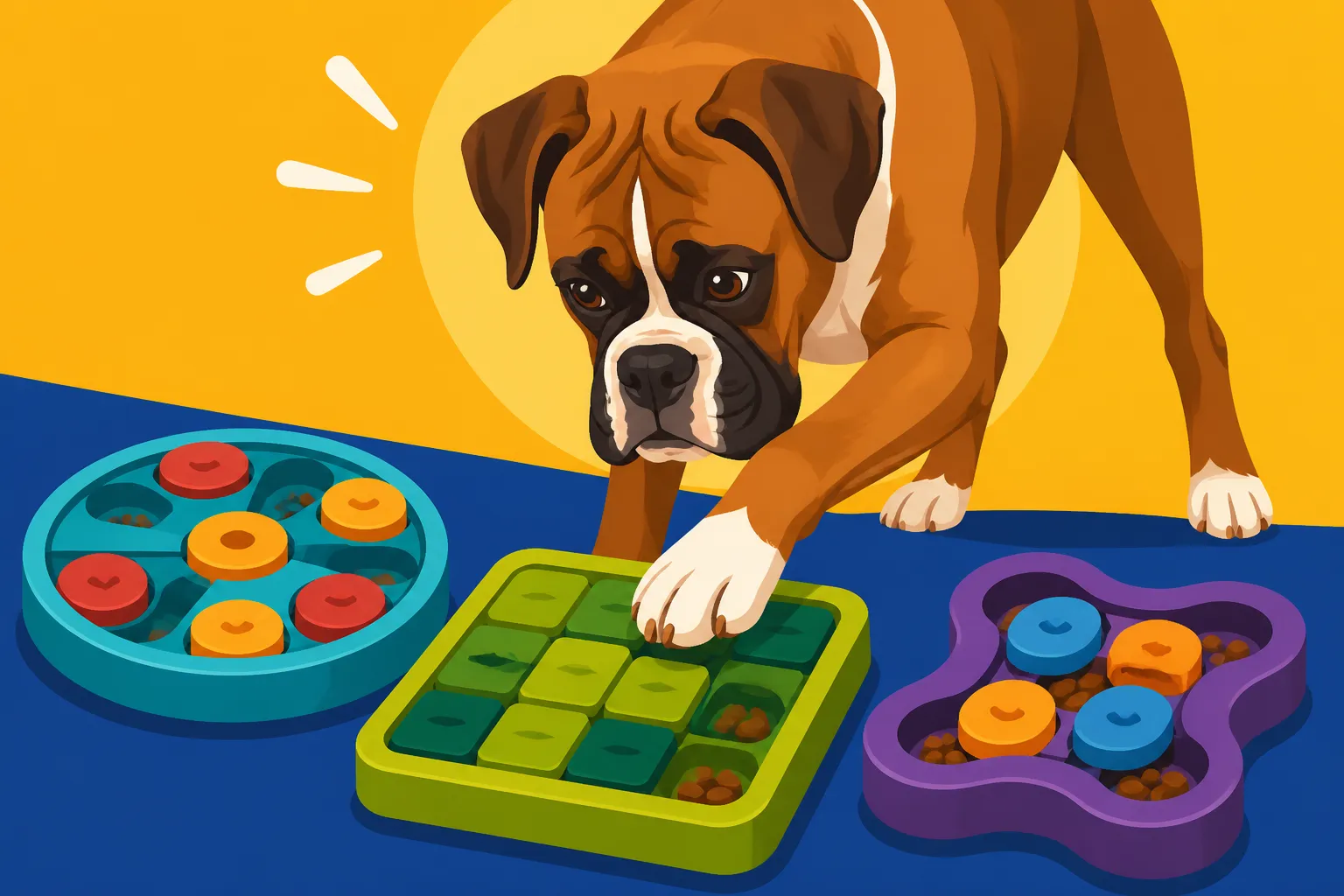
Once your Boxer has mastered the basics and is gleefully extracting every last morsel from their entry-level puzzles, it's time to crank up the mental challenge. Intermediate puzzles often involve sliding panels, lifting pieces, or rotating compartments. Your Boxer will need to use their nose, paws, and strategic thinking to uncover the hidden goodies. For example, some puzzles have small cups where treats are hidden, and your dog has to lift a cone or push a slider to access them. Others require a sequence of actions, like pushing a lever to unlock a sliding door.
These more complex feeders engage a deeper level of cognitive function. They encourage perseverance, critical thinking, and fine motor skills (for a dog, that means precise nose pokes and paw taps). Brands like Nina Ottosson make fantastic multi-level puzzles that are durable and designed for progressive learning. Introducing these requires a bit more guidance from you at first, but watching your Boxer's brain whir as they figure out a new step is incredibly rewarding. Companies like BAXTER & Bella, which focus on comprehensive puppy training and support, often emphasize the importance of mental enrichment activities, including various puzzle toys, as a cornerstone of a well-rounded training program. They understand that a stimulated mind is a happy mind, and for a Boxer, that’s absolutely essential.
DIY and Homemade Puzzle Options
You don't always need to spend a fortune on fancy toys to engage your Boxer's brain. Many effective puzzle feeders can be made with items you already have around the house. The beauty of DIY puzzles is that you can tailor them exactly to your Boxer’s current skill level and always have a new challenge ready.
One popular and simple idea is the "muffin tin game." Take a muffin tin, place a few treats in some of the cups, and then cover all the cups with tennis balls. Your Boxer has to figure out how to remove the tennis balls to get to the treats. Another easy one is rolling up kibble or treats inside an old towel or blanket, tying a loose knot, and letting your Boxer unravel it. For a chewier challenge, you can stuff a hollow toy (like a Kong) with wet food or peanut butter and freeze it; this makes it last much longer. Always remember to supervise your Boxer with homemade puzzles, especially initially, to ensure they don't ingest any non-food items or get frustrated to the point of destructive chewing on the puzzle itself. Using safe, non-toxic materials is paramount. These simple solutions are fantastic for regular use and can be swapped out frequently to keep things fresh and interesting.
Here’s a quick overview of different puzzle feeder types:
| Puzzle Type | Difficulty Level | Common Materials | Boxer Suitability | Best For |
|---|---|---|---|---|
| Slow Feeder Bowl | Easy | Plastic, Ceramic | All ages, especially fast eaters | Daily meals, bloat prevention |
| Treat-Dispensing Ball | Easy to Medium | Rubber, Hard Plastic | All ages, good for active play | Independent play, energy release |
| Sliding Panel Puzzle | Medium to Hard | Wood, Hard Plastic | Boxers who enjoy problem-solving | Mental stimulation, boredom busting |
| Multi-Component Puzzle | Hard | Wood, Hard Plastic | Experienced puzzle solvers | Advanced cognitive challenge |
| Snuffle Mat | Easy to Medium | Fabric | All ages, good for scent work | Slowing eating, calming activity |
| DIY (e.g., Muffin Tin) | Varies | Household items | Flexible, customizable | Introducing concepts, variety on a budget |
Maximizing the Benefits of Puzzle Feeders for Boxers
Just buying a puzzle feeder isn't enough; knowing how to introduce it, integrate it, and troubleshoot issues is key to making it a successful tool for your Boxer's mental well-being and behavior.
Introducing Puzzles Successfully and Gradually
The first rule of introducing any new puzzle feeder to your Boxer is to start easy. You want to set them up for success, not frustration. When you first present a puzzle, make sure the reward is highly visible and easily accessible. For example, with a treat-dispensing ball, make sure some kibble falls out almost immediately with a gentle nudge. With a sliding panel puzzle, leave a few panels already open or barely covering the treats. Use high-value treats that your Boxer absolutely adores – small pieces of cooked chicken, cheese, or their favorite dry kibble mix.
Always supervise your Boxer during their first few interactions with a new puzzle. This allows you to provide encouragement, show them how it works if they get stuck, and prevent them from getting frustrated or trying to chew the puzzle itself. If they seem confused, gently guide their paw or nose to demonstrate the action needed. Praise them enthusiastically when they succeed! The goal is for them to associate the puzzle with positive experiences and delicious rewards. Once they've mastered an easy version, you can gradually increase the difficulty, keeping them engaged and preventing them from getting bored with the same old challenge. Remember, Keeping Boxer Training Sessions Interesting is crucial for these smart dogs.
Integrating Puzzles into Daily Routine and Beyond
Puzzle feeders aren't just for special occasions; they can become an invaluable part of your Boxer's daily routine. One of the best ways to use them is for their regular meals. Instead of pouring their breakfast and dinner into a bowl, divide their daily kibble ration among a few different puzzle feeders. This transforms mealtime from a five-second gulp into a 15-30 minute engaging activity. This consistent mental exercise helps burn off mental energy, makes them feel more satisfied, and keeps them from seeking out less desirable activities. Feeding a Boxer Twice a Day in puzzle feeders can make a huge difference.
Beyond meals, puzzle feeders are fantastic for specific situations. Do you need to leave your Boxer alone for a short period? Stuff a durable puzzle toy with something tasty and long-lasting to keep them occupied and alleviate any separation anxiety. This can be a game-changer when you need your Boxer to manage Hours a Boxer Can Manage Alone. Is the weather too hot or cold for a long walk? A challenging puzzle feeder can provide significant mental stimulation indoors when physical activity is limited. You might be surprised at how tired a good brain workout can make them, offering a perfect solution for Indoor Exercise for a Boxer in a Heatwave. They're also great for crate training, helping to create a positive association with their crate.
Troubleshooting Common Boxer Puzzle Challenges
Even with the best intentions, your Boxer might encounter some bumps on their puzzle-solving journey. One common issue is frustration. If a puzzle is too difficult, or if your Boxer is used to instant gratification, they might get discouraged and give up, or worse, try to chew the puzzle apart. If this happens, take a step back. Make the puzzle easier, or try a different, simpler one. Ensure the treats you're using are motivating enough.
Another challenge can be destructive chewing. Some Boxers, if frustrated or just particularly mouthy (which, let’s be honest, many Boxers are!), might try to destroy the puzzle itself rather than solve it. For these Boxers, choosing highly durable, robust puzzle feeders is essential. Look for those made from hard rubber or strong, chew-resistant plastics. Always supervise, especially with new or more fragile toys. If you see them trying to chew, gently redirect them to the puzzle-solving action, or swap out the toy for a more durable option. Patience is key. Remember that a Boxer responds far better to positive encouragement and redirection than to scolding. If you start to get loud or frustrated, your Boxer is likely to shut down, which defeats the entire purpose of this enriching activity. Always be mindful of Why Shouting Sets a Boxer Back and keep interactions positive and calm. Over time, with consistent, positive experiences, your Boxer will become a puzzle-feeder pro!
Disclaimer
This article is for general informational purposes only and does not constitute professional advice. Laws, prices and regulations vary by location and change over time. Consult a qualified professional for guidance on your specific situation.