Whether a Boxer Can Live With Chickens
The dream of fresh eggs from a backyard flock often bumps up against the reality of owning a high-energy, prey-driven Boxer, leaving many owners wondering if their beloved, boisterous companion can ever truly live safely alongside delicate chickens. It's a completely valid concern, filled with anxiety about tragic accidents, and it's a dynamic that demands serious consideration, not just hopeful thinking. This comprehensive guide will delve into the intricacies of Boxer temperament and instinct, offering practical strategies for either peaceful coexistence or, more realistically, safe and effective separation, to ensure the well-being of both your beloved dog and your feathered friends.
Understanding the Boxer's Instincts Around Prey
It's easy to look at our Boxers, with their goofy grins and affectionate cuddles, and forget they were originally bred for tasks that involved a lot more than just warming a spot on the couch. Their heritage is deeply rooted in working roles, which come with a set of instincts that are powerful and, at times, contradictory to modern domestic life. When it comes to chickens, understanding these inherent drives is the first crucial step.
The Boxer's Hunting Heritage and Prey Drive
Boxers descend from a line of dogs historically used for hunting large game and guarding. While they've evolved into fantastic family companions, that underlying drive to chase, catch, and "hold" or "box" with their front paws is still very much present. A flock of chickens, with their sudden movements, clucking noises, and tendency to flee, can ignite this instinct quickly and powerfully. It's not about malice or aggression on your Boxer's part; it's simply a genetic predisposition to react to small, fast-moving objects.
Imagine a chicken suddenly flapping its wings and squawking when your Boxer approaches. For a dog wired with a prey drive, this isn't a sign of distress; it's a trigger that says, "Game on!" The sheer thrill of the chase, the excitement of the capture, can override even the best training in a split second. This is why you often see Boxers fixate on squirrels, rabbits, or even leaves blowing across the yard. Their ancestors were much larger and used their strength to subdue formidable opponents. A chicken simply doesn't stand a chance against that inherent power and drive.
"Prey Drive" Versus "Play Drive"
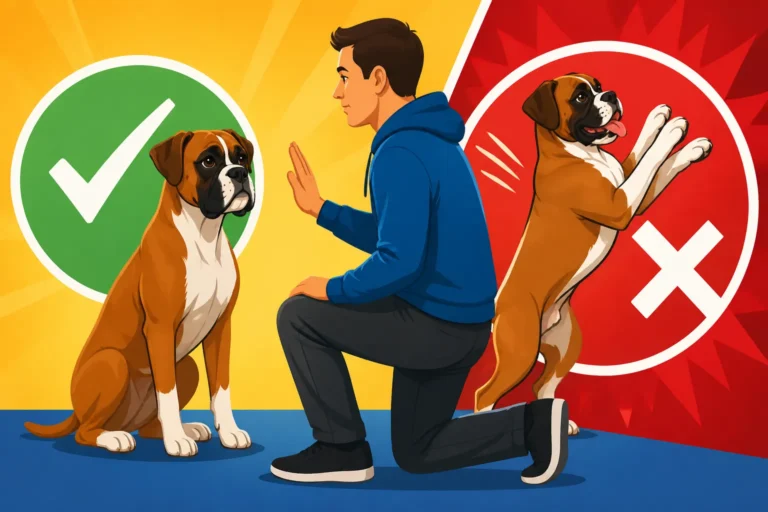
This is a critical distinction that often gets overlooked, much to the detriment of a chicken flock. A Boxer's play style is famously boisterous and physical. They "box" with their front paws, body-slam, and chase with incredible speed and enthusiasm. While this is endearing and fun with another dog or a human, it can be deadly for a chicken. What might start as an innocent, curious "play" interaction from your Boxer's perspective can very quickly escalate into a tragic accident for a bird.
Consider your Boxer's enthusiasm during a game of fetch or a wrestling match with another dog. That boundless energy and physicality are part of their charm. However, a chicken, being fragile and much smaller, interprets a playful pounce or a paw swipe as a direct threat to its life. The difference in size and strength between a Boxer Size the Standard Calls For and a small hen is immense. Even if your Boxer has no intention of harming the chicken, an excited "play-bite" or a forceful paw can easily cause fatal injuries. It's not that your Boxer is being intentionally mean; it's simply that their natural physical interactions are too intense for a delicate creature like a chicken. Understanding Boxer Play Style With Other Dogs highlights just how rough they can be, even with companions of similar size.
Assessing the Risks and Challenges
Successfully integrating Boxers and chickens isn't just about managing a single interaction; it's about understanding a complex ecosystem where instincts, physical differences, and environmental factors all play a role. There are significant risks involved that every owner must seriously consider before moving forward.
The Physical Mismatch and Unintended Harm
Let's be blunt: a Boxer is a powerful, athletic dog. Even a smaller female Boxer typically weighs in the 55-60 pound range, with males often hitting 70 pounds or more of pure muscle. Chickens, on the other hand, are delicate birds, usually weighing only a few pounds. Their bones are hollow, and their bodies are not built to withstand the impact of a full-grown Boxer, even if the dog is just being "playful."
Imagine your Boxer bounding towards a chicken with a happy wiggle, perhaps trying to nudge it with its nose or paw. While this might be an expression of curiosity or excitement for your dog, the sheer force behind that nudge, the weight of their body, or the strength of their jaw could instantly crush or severely injure a chicken. There's also the risk of your Boxer accidentally stepping on a chicken during a zoomie. It's not a matter of malicious intent, but rather a profound mismatch in physical capabilities. This is why even a well-meaning Boxer can cause irreparable harm in mere seconds, leaving you heartbroken and your flock devastated.
Stress on the Flock and Diminished Production
Even if your Boxer never physically touches a chicken, its mere presence can be a constant source of stress for your flock. Chickens are prey animals, and the sight, smell, or sound of a predator (even a friendly family dog) can trigger their innate fight-or-flight response. This chronic stress isn't just unpleasant for the birds; it has tangible, negative effects on their health and productivity.
A stressed flock is a flock that's more susceptible to illness, less likely to lay eggs consistently, and generally unhappy. They may hide more, eat less, and their immune systems can be compromised. If your Boxer is frequently patrolling the fence line, barking, or attempting to get near the coop, your chickens will live in a constant state of anxiety. You might notice a decrease in egg production, thinner shells, or even behavioral changes like feather picking. The goal of having backyard chickens is often to enjoy their fresh eggs and companionship, and a constantly stressed flock will deliver neither.
Escape Artists and Opportunists: When Management Fails
Both Boxers and chickens, in their own ways, can be surprisingly adept at getting where they shouldn't. You might have the most secure coop imaginable, but what happens if a latch is left undone? What if a tree branch falls, creating a breach in the fence? Or what if a determined Boxer, driven by curiosity or that strong prey instinct, decides to dig under a fence or chew through a weaker spot? This is where an ounce of prevention is truly worth a pound of cure.
A common scenario involves a chicken, perhaps startled by something, flapping over a low fence into the dog's yard. Or a Boxer, with time on its paws and a lack of exercise (see Why a Boxer Wrecks Things When Under-Exercised), finding a weak spot in the coop's perimeter. These are moments where tragedy can strike in an instant, even with the best intentions and generally good management. It's crucial to consider every "what if" scenario and build redundant layers of security, because given enough time and opportunity, both species can find a way to test the boundaries.
Strategies for Successful Coexistence or Safe Separation
The key to successfully managing Boxers and chickens lies in understanding that "coexistence" might not always mean direct interaction. For many, it means creating a secure environment where both animals thrive in their own spaces, minimizing risk. For those considering introductions, an even more rigorous approach is necessary.
Management and Containment are Non-Negotiable
This is perhaps the most important takeaway: foolproof management and containment are absolutely essential. This isn't just about throwing up a flimsy fence; it's about creating secure, separate zones that prevent any accidental interactions. Think of it as building a fortress for your chickens and a secure, engaging environment for your Boxer.
For your chickens, this means a coop that is not only predator-proof from foxes and raccoons but also dog-proof. Strong, securely latched doors, sturdy hardware cloth (not chicken wire, which a Boxer can easily tear or chew through) on all openings, and ideally, a completely enclosed run that even the most determined Boxer can't access. Many owners create a "double fence" system, where the chicken run has its own perimeter, and then there's a separate, robust fence for the main yard where the Boxer has access.
For your Boxer, this might mean a dedicated, securely fenced area that they can enjoy without any possibility of reaching the chicken run. If your yard isn't naturally compartmentalized, investing in strong, tall fencing is a must. You can find durable fencing materials and hardware cloth online, for example, on platforms like Amazon, to reinforce boundaries and ensure no chicken can accidentally wander into your Boxer's space, and vice-versa. Remember, even a small gap is an invitation for trouble.
Training for Supreme Impulse Control
Even with the best physical barriers, there will be times when your Boxer is in the yard and chickens are within sight or earshot. This is where excellent obedience and impulse control become lifesavers. Commands like "leave it," "stay," and a rock-solid "come" are not just good manners; they are critical safety measures.
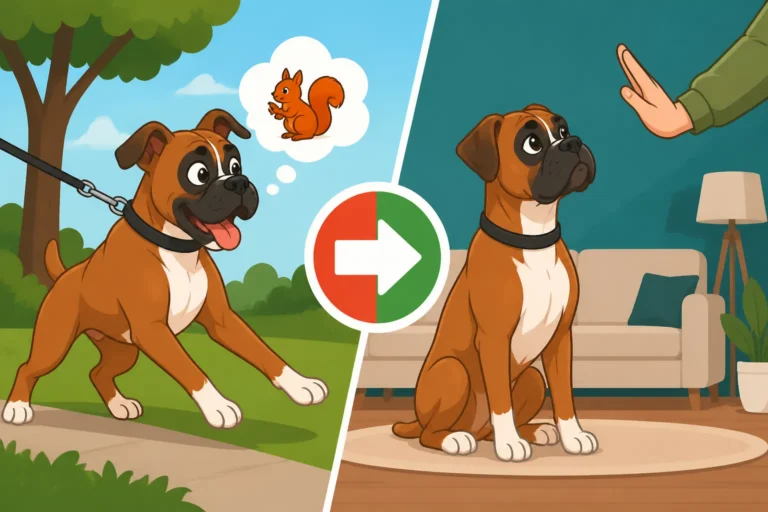
Teaching your Boxer to "leave it" and consistently disengage from whatever has caught its attention (be it a stray feather or the sound of clucking) is paramount. This requires consistent training, often starting in a low-distraction environment and gradually increasing the challenge. Boxers are smart, but they can also be easily bored or distracted. Training a Boxer That Gets Bored Fast is a real challenge, so keep sessions short, fun, and highly rewarding. Utilizing positive reinforcement methods and high-value treats can make a huge difference.
A reliable recall is also vital. If, by some slim chance, a chicken does end up in the Boxer's area, you need to be able to call your dog away immediately, without hesitation. This takes dedicated work, often with a long line in a secure area to practice bringing your dog back to you even when distracted. Online training platforms, like BAXTER & Bella, offer structured programs that can guide you through teaching these critical life skills, providing the resources to build a solid foundation of obedience for your Boxer, ensuring they listen even when tempted by a flapping chicken. Getting a Boxer's Attention Outdoors is a common struggle that needs specific strategies.
Early Socialization with Extreme Caveats
While some people swear by early socialization to create a dog that ignores or even tolerates chickens, this approach comes with significant risks and is absolutely not suitable for every Boxer. If you decide to go this route, it must be done with extreme caution, constant supervision, and a realistic understanding that failure is always a possibility.
If you are raising a Boxer puppy and already have established chickens, the ideal (though still risky) scenario is to start with the puppy. Never leave a puppy unsupervised with chickens, even for a second. Begin with the puppy on a leash, at a distance, observing the chickens. Reward calm behavior. Gradually decrease the distance, always maintaining control. Never allow chasing or rough play. The goal is indifference, not friendship. A Boxer that simply ignores the chickens is a success; a Boxer that tries to interact is a risk.
It's important to understand that even a Boxer puppy that seems indifferent might still develop a strong prey drive as it matures. The Boxer Puppyhood That Lasts Three Years means they retain their puppy-like exuberance and lack of full impulse control for a long time, making them a potential danger for chickens for years. This is not a situation for casual observation; it requires dedicated, intentional training and supervision for the lifetime of your animals. Frankly, for most Boxer owners, complete separation is the safest and most stress-free option for both the dog and the flock.
Practical Steps for Introduction (or Maintaining Separation)
Whether you're attempting a cautious introduction or, more likely, committing to a lifetime of safe separation, a structured plan is essential. Thinking through the practical logistics ensures the safety and well-being of all your animals.
Secure Habitats: Building the Fort Knox for Your Flock
If you want chickens, your primary focus must be on creating an impregnable fortress for them. This means investing in high-quality materials and thoughtful construction.
- Coop: Your chicken coop needs to be incredibly sturdy. Think strong wood or metal, not flimsy plastic. Ensure all doors and windows have robust, dog-proof latches. Padlocks aren't overkill. The floor should be solid, or if it's raised, the underside completely enclosed with heavy-gauge hardware cloth to prevent digging predators, canine or otherwise.
- Run: The run attached to the coop needs to be fully enclosed, top, bottom, and sides. Use hardware cloth with a small mesh size (1/2 inch or 1/4 inch) on all sides, buried at least 12-18 inches deep to deter digging. The top should also be covered to prevent aerial predators and to stop chickens from flying out, and importantly, to prevent your Boxer from being able to jump in. This level of security is crucial.
- Outer Perimeter: Beyond the chicken area, consider your main yard fence. It should be tall enough to contain your Boxer when they are unsupervised. An athletic Boxer can jump surprisingly high. Ensuring your yard is secure will prevent your Boxer from ever reaching the chicken enclosure if they are left unattended. Fencing a Yard for an Athletic Boxer is a core consideration for any Boxer owner.
Supervised Introductions (If Attempted): Proceed with Utmost Caution
Let's reiterate: direct interaction between a Boxer and chickens is inherently risky. If you choose to attempt this, it must be with a clear understanding of the risks and a commitment to meticulous supervision.
- Leash Control: Your Boxer should always be on a sturdy leash, held by a responsible adult, during any initial introduction. A Harnesses and Leads for a Pulling Boxer can give you better control than just a collar.
- Distance First: Start with your Boxer at a significant distance from the chicken run, where they can see but not reach the chickens. Reward calm observation. If your Boxer is fixated, barking, or pulling, they are not ready to get closer. Retreat and try again later, or re-evaluate if this is even feasible.
- Short and Sweet: Keep initial sessions very short — just a few minutes. Always end on a positive note, before your Boxer becomes overstimulated or loses interest.
- No Chasing, No Pawing: Absolutely any attempt to chase, pounce, or "box" with a paw must be immediately interrupted and corrected. This is where your "leave it" command must be rock-solid.
- Focus on Indifference: The goal is for your Boxer to view chickens as part of the background, not as toys or prey. You want them to be bored by the chickens, not excited.
- Never Unsupervised: This cannot be stressed enough. Never leave your Boxer and chickens unsupervised, even if you believe they are "fine" together. Accidents happen in a blink.
Enrichment for Your Boxer: A Happy Dog is a Less Troublesome Dog
A bored Boxer is a destructive Boxer, and a Boxer with pent-up energy is more likely to engage in undesirable behaviors, including fixating on chickens. Boxers have significant exercise needs, and meeting them is a vital part of managing their behavior around other animals.
Ensure your Boxer gets at least 60-90 minutes of vigorous exercise daily, split into multiple sessions. This could be long walks, runs (if appropriate for their age and health, considering How Fast a Flat-Faced Boxer Overheats), fetch, or structured play. Beyond physical exercise, mental stimulation is key. Boxers thrive on having a "job" to do.
- Puzzle Feeders: These can keep your Boxer engaged and working for their food, burning mental energy. Look for durable ones on Amazon that can withstand a Boxer's determination. Puzzle Feeders That Hold a Boxer's Attention are great tools.
- Training Games: Continue to work on obedience commands, teach new tricks, or explore dog sports like scent work or rally. This builds their focus and strengthens your bond.
- Chew Toys: Provide a variety of durable chew toys to redirect any chewing instincts away from inappropriate items (or chicken wire!).
- Companion: If your Boxer thrives with canine company, another dog of similar energy might provide an outlet for play that keeps them less interested in the chickens.
By ensuring your Boxer is well-exercised, mentally stimulated, and content, you reduce the likelihood of them seeking out "entertainment" in the form of a chicken chase.
Recognizing When It's Not Working: Prioritize Safety
Despite your best efforts, some Boxers simply cannot overcome their strong prey drive, or their play style is too intense for safe coexistence with chickens. It's a hard truth, but recognizing this reality is an act of responsible pet ownership.
If your Boxer remains fixated on the chickens, exhibits aggressive lunging or barking, or you constantly find yourself anxious about their interactions, then safe, permanent separation is the only truly responsible option. This might mean:
- Designated Areas: Your Boxer only has access to certain parts of the yard, strictly separate from the chicken area.
- Alternating Turn-Out: Your Boxer is only in the yard when the chickens are securely locked in their coop, and vice-versa.
- Professional Help: Consulting a certified professional dog trainer or behaviorist, ideally one experienced with prey drive and farm animals, can provide an objective assessment and tailored strategies.
Ultimately, the safety and well-being of all your animals must be the top priority. It's okay if your Boxer and chickens can't be best friends; it's far better to have them live safely apart than to risk a tragic outcome.
| Factor | Boxer Temperament/Need | Chicken Vulnerability/Need | Coexistence Strategy |
|---|---|---|---|
| Prey Drive | High, easily triggered by movement/sound, instinctual. | Small, fragile, flight response triggers chase. | Strict separation, "leave it" command, high-value rewards. |
| Play Style | Boisterous, physical, uses paws ("boxes"), body slams. | Easily injured or killed by impact; perceives as threat. | No direct interaction; supervise even distant observation. |
| Energy Levels | High, needs significant daily exercise and mental stimulation. | Prone to stress, needs calm environment for laying/health. | Ensure Boxer's needs met away from chickens to reduce fixation. |
| Containment | Athletic, can jump, dig, chew if bored/motivated. | Can fly over low fences, squeeze through gaps. | Double fencing, secure coop/run (hardware cloth, buried fence lines, strong latches). |
| Supervision | Requires constant oversight around novel stimuli. | Cannot defend itself against a Boxer. | Never leave Boxer and chickens unsupervised, even for a moment. |
Disclaimer
This article is for general informational purposes only and does not constitute professional advice. Laws, prices and regulations vary by location and change over time. Consult a qualified professional for guidance on your specific situation.