Long Line Work With a Young Boxer
It's incredibly frustrating when you want to give your energetic young Boxer the freedom to run and explore, but you just can't trust their recall yet. The worry of them bolting after a squirrel or greeting an unwilling stranger can keep them on a short leash, which isn't fair to their boundless energy. This guide is here to show you how long line work can be a total game-changer, offering a safe, controlled way for your Boxer to enjoy more freedom while you solidify those crucial training commands.
Why Long Lines Are a Game-Changer for Young Boxers
Boxers, bless their hearts, are known for their exuberance and the way they maintain that puppy-like energy well into their "teenage" years, often up to three years old! They're powerful, curious, and sometimes, those instincts can override their obedience, especially when something exciting catches their eye. A long line isn't just a longer leash; it's a critical tool that bridges the gap between on-leash control and off-leash freedom, allowing for safe exploration and focused training without the terrifying risk of a runaway dog.
Bridging the Gap to Reliable Recall
Imagine being in a wide-open park, calling your Boxer, and having them genuinely choose to come bounding back to you, tail wagging, instead of continuing their investigation of a particularly interesting patch of grass. That's the dream, right? A long line makes this dream achievable by allowing you to practice recall in a more "off-leash" setting without actually relinquishing control. When your Boxer is on a long line, you can gently guide them back if they get distracted, preventing the "failed recall" scenario that can actually make future recalls harder to achieve. It’s all about setting them up for success. You can practice calling them from a distance, rewarding them handsomely when they respond, and if they hesitate, a subtle tension on the line reminds them of the cue without you having to chase them down. This consistent success builds a strong association in their mind: "When Mom or Dad calls, good things happen when I come!" For a deeper dive into this essential command, you might find Whether a Boxer Comes Back When Called incredibly helpful.
Safe Exploration and Mental Stimulation
Boxers thrive on both physical and mental stimulation. They love to run, sure, but they also love to sniff, investigate, and engage with their environment. Keeping a young Boxer perpetually on a six-foot leash can limit their ability to truly explore with their nose, which is a huge part of how dogs perceive the world. A long line, whether it's 15, 30, or even 50 feet, gives them a much larger radius to satisfy their natural instincts. They can follow a scent trail, investigate a bush, or trot a bit further ahead, all while you maintain a safety net. This freedom to explore, even on a line, contributes significantly to their overall mental well-being and reduces the likelihood of boredom, which as many Boxer owners know, can lead to destructive behaviors when under-exercised or under-stimulated.
Selecting the Perfect Long Line and Essential Gear
Choosing the right long line isn't complicated, but there are definitely a few considerations to keep in mind to ensure safety, comfort, and durability. The type of line you choose can significantly impact your training experience, especially with a strong, energetic dog like a Boxer.
Line Length and Material Matters
Long lines come in various lengths, typically ranging from 15 feet to 50 feet. For starting out with a young Boxer, a 15 or 20-foot line is often a good compromise. It offers more freedom than a standard leash but is still manageable. As you and your Boxer become more proficient, you might want to move up to a 30 or 50-foot line for truly expansive work.
The material is another crucial factor. You'll primarily encounter two types:
- Nylon: This is a common and usually more affordable option. Nylon long lines are lightweight and pack down easily. However, they can absorb water and mud, becoming heavy and difficult to clean. If your Boxer is a fan of wet or muddy environments, nylon can also cause rope burn if it slips through your hands or drags across their legs quickly.
- Biothane: Often considered the premium choice, Biothane is a coated webbing that looks and feels a bit like leather but has all the advantages of synthetic material. It's waterproof, odor-proof, incredibly durable, and very easy to clean – a quick wipe is often all it needs. It won't cause rope burn like nylon, and it tends to glide over surfaces more smoothly. While it's usually more expensive, many Boxer owners find the investment well worth it for the ease of use and longevity. You can find a wide variety of long lines, from basic nylon to more robust Biothane, on platforms like Amazon.
The Right Collar or Harness for Long Line Work
Using the right equipment attached to the long line is paramount for your Boxer's safety and comfort. A standard flat collar is generally not recommended for long line work, especially with a young, powerful Boxer. If they hit the end of the line at a run, the sudden jolt on their neck could cause injury.
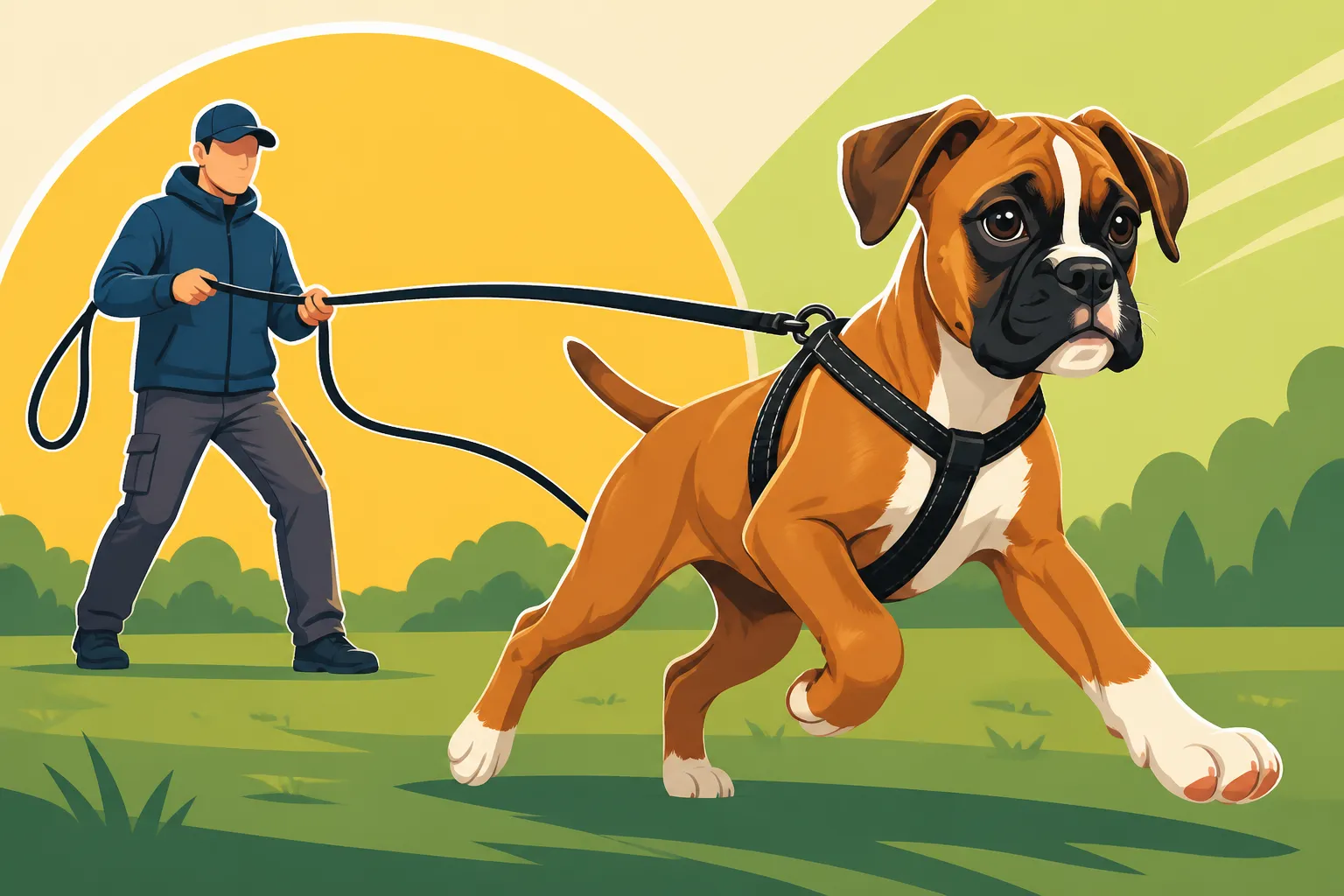
Instead, opt for a well-fitting harness that distributes pressure across their chest and shoulders. A Y-front harness is ideal as it doesn't restrict shoulder movement or put pressure on the throat. Look for one that fits snugly but allows full range of motion. This way, if they do reach the end of the line unexpectedly, the impact is absorbed more safely across their body. You might also consider a harness with a front clip, which can help with A Boxer That Pulls Hard on Walks even on a long line, gently redirecting their momentum. Absolutely avoid retractable leashes for any kind of training; they teach constant tension and offer no real control at a distance.
Starting Your Long Line Training Journey
Embarking on long line training should be a positive and progressive experience for your Boxer. The goal is to build confidence and reinforce good habits, not to create fear or frustration.
The First Few Sessions
Begin in a quiet, low-distraction environment. A fenced-in yard, an empty park early in the morning, or a large, quiet field are perfect starting points. Attach the long line to your Boxer's harness and let them simply explore. Don't immediately start giving commands or constantly reeling them in. Allow them to get used to the feeling of the line trailing behind them. Observe how they move, how they interact with the extra length.
During these initial sessions, focus on positive reinforcement. When your Boxer naturally turns to look at you, offer a verbal "yes!" and a tasty treat. If they venture out to the end of the line, just let them go and explore. Only intervene if they try to chew the line or move towards something unsafe. Casually walk around, allowing the line to drag behind them. Periodically, call their name, and when they look, reward them. Start practicing simple "come" cues when they are relatively close to you. When they respond, make it a huge celebration with high-value treats and praise. For inspiration on what really motivates your furry friend, check out Rewards a Boxer Will Work Hard For.
Practicing Recall and "Oops" Moments
The real power of the long line comes into play when practicing recall. Once your Boxer is comfortable with the line, start practicing your "come" command.
- Give the cue: Use a clear, consistent "Come!" or "Here!"
- Encourage: If they hesitate, gently reel in the line while continuing to call them cheerfully. Avoid yanking. The line is there to guide, not punish.
- Reward: The instant they reach you, lavish them with praise and high-value treats. Make it the best decision they ever made. You want them to associate coming back to you with incredible rewards.
- Release: After the reward, give them a release cue like "Okay!" and let them go back to exploring. This teaches them that coming to you doesn't mean the fun ends.
The long line acts as your safety net during these "oops" moments when your Boxer might be too distracted to respond. Instead of them learning that they can ignore you, the line ensures that they do come back, reinforcing the command every time. This consistency is vital for a breed like the Boxer, who can sometimes test boundaries.
Graduating to More Distracting Environments
Once your Boxer consistently responds to recall on the long line in a low-distraction area, it's time to gradually introduce more challenging environments.
- Step 1: Increase distractions gradually. Move to a park where there might be other people walking, but perhaps no other dogs initially.
- Step 2: Practice short, successful recalls. Start by calling your Boxer when they are only a short distance away, ensuring a high rate of success before increasing the distance.
- Step 3: Introduce new stimuli. If you're ready to tackle busier areas, consider practicing near a walking path or in a field where other dogs might be present at a distance. Always be aware of your surroundings and be prepared to reel your Boxer in if necessary. For deeper insights on maintaining focus, refer to Getting a Boxer's Attention Outdoors. Consistency and patience are key here. Remember that every successful recall, even on the line, builds confidence in both you and your Boxer. If you're unsure about specific techniques or want a structured program, investing in an online puppy school, such as BAXTER & Bella, can provide invaluable support and tailored guidance.
Common Challenges and Troubleshooting
Long line training, while incredibly beneficial, isn't without its quirks. You might encounter a few common issues, but with the right approach, they can all be overcome.
Managing Line Tangles and Tripping Hazards
A long line, by its very nature, can get tangled. It can wrap around your Boxer's legs, around trees, or worse, around your own.
- Handling Technique: Always keep a loop of the line in your hand, allowing it to pay out or be gathered as needed. Avoid wrapping the line around your hand or wrist, as a sudden pull from a strong Boxer can cause serious injury.
- Situational Awareness: Constantly scan your environment for potential snagging points like bushes, rocks, or other people. Move to open areas whenever possible.
- Coiling: When not in use, learn to coil your long line properly. A simple figure-eight coil helps prevent knots and tangles, making it easier to deploy next time.
- Line Drags: Allow the line to drag behind your Boxer. You only need to pick it up when you want to give a cue or prevent them from getting into trouble.
When Your Boxer Treats the Line as a Toy
Some Boxers, especially young puppies in their extended puppyhood phase, might decide the long line is a fantastic new chew toy. This can be frustrating and counterproductive to training.
- Intervention: If your Boxer starts to mouth or chew the line, immediately interrupt them with a firm "No!" or a verbal marker, and redirect them to an appropriate chew toy. Reward them for chewing on the right item.
- Material Choice: If chewing is a persistent problem, a Biothane line might be more resistant to chewing than nylon, or at least less satisfying to gnaw on.
- Bitter Sprays: For persistent chewers, a pet-safe bitter spray applied to the last few feet of the line closest to your Boxer can deter them.
- Consistent Practice: The more they are engaged in positive training and exploration, the less likely they are to resort to chewing out of boredom.
The Boxer That Still Pulls
While a long line offers freedom, it's not a magic fix for a Boxer who pulls on a regular leash. If your Boxer is still prone to dragging you, long line training can actually exacerbate this if not handled correctly.
- Reinforce Loose Leash Walking: Use the long line to practice loose leash walking at a distance. When your Boxer walks nicely with slack in the line, reward them. If they start to pull, simply stop moving. Wait for the line to slacken before you start walking again. This teaches them that pulling gets them nowhere.
- Change Direction: Another effective technique is to change direction abruptly when your Boxer pulls. They will have to pay attention to where you are going to avoid being pulled off balance, which encourages them to keep an eye on you. For comprehensive tips on this challenge, our article Harnesses That Hold a Pulling Boxer offers excellent advice on gear that can help manage pulling. For deeper guidance, online resources like BAXTER & Bella offer excellent programs and virtual consultations that can guide you through specific training hurdles.
Remember, long line work is about controlled freedom and building a stronger bond with your Boxer. It takes patience and consistency, but the rewards of a well-trained, happy, and safely exercised companion are immeasurable.
| Long Line Material | Pros | Cons | Ideal For |
|---|---|---|---|
| Nylon | Affordable, lightweight, easy to store | Absorbs water/mud, potential for rope burn, can tangle easily | Budget-conscious, occasional use in dry areas, learning phase |
| Biothane | Waterproof, odor-proof, very durable, easy to clean, comfortable grip | More expensive, can be heavier, less compact | Frequent use, all weather conditions, strong pullers, long-term investment |
Disclaimer
This article is for general informational purposes only and does not constitute professional advice. Laws, prices and regulations vary by location and change over time. Consult a qualified professional for guidance on your specific situation.