A Boxer That Fixates on the Cat
Few things are more stressful in a multi-pet household than watching your spirited Boxer fixate on your feline friend. It’s a common scenario: you want your pets to coexist peacefully, but your Boxer's enthusiastic, sometimes clumsy, attention is making your cat miserable, turning your home into a high-stress zone for everyone involved. This guide will delve into why your Boxer might be fixating on your cat and, more importantly, equip you with practical strategies to manage this behavior, creating a calmer, more harmonious environment for both your beloved Boxer and your often-misunderstood kitty.
Understanding the Boxer's Instincts and the Cat's Perspective
It's easy to misinterpret a Boxer's intense focus on a cat. To us, it might look like playful curiosity, but to the cat, it often feels like a threat. Bridging this gap in understanding is the first step to resolving the tension.
The Boxer's High Prey Drive and Play Style
Boxers, with their history as working dogs, often possess a strong prey drive. While they've evolved into affectionate family companions, those instincts are still very much a part of their genetic makeup. This isn't necessarily about wanting to harm the cat, but rather an intense desire to chase, interact, and engage in what they perceive as play. Imagine a rambunctious toddler trying to "play" with a delicate antique. Their intentions might be pure, but the outcome could be disastrous.
Their signature "boxing" behavior, where they bat with their front paws, can be particularly alarming to a cat. What's a playful invitation to another dog can easily look like an attack to a smaller, more cautious creature. Your Boxer might just be trying to get the cat to "play back" in its own boisterous way. Their high energy levels, coupled with this intense play style, mean they don't always understand subtlety. They thrive on action, and a darting cat provides instant, irresistible action. It’s why Boxers are often described as having an endless puppyhood; their zest for life and boundless energy means they're constantly looking for an outlet. Many owners find themselves asking Why a Boxer Boxes With Its Front Paws and grappling with Boxer Play Style With Other Dogs in general.
Why Cats React the Way They Do
From a cat's perspective, a large, energetic dog lunging and pawing at them is terrifying. Cats are creatures of subtlety and self-preservation. Their natural instinct when faced with a perceived threat is either "flight" (to run and hide) or "fight" (to hiss, swat, and make themselves appear larger and more dangerous). When your Boxer fixates, chasing the cat across the room, the cat isn't seeing a playful friend; it's seeing a predator.
The cat's reaction then often fuels the Boxer's fixation. A cat that runs triggers the Boxer's chase drive. A cat that hisses or swats can either make the Boxer more excited (because now the cat is "playing back" in a way the Boxer understands, however incorrectly) or, in some cases, can make the Boxer more determined to "catch" it. This creates a vicious cycle where the Boxer’s energy escalates the cat’s fear, which in turn escalates the Boxer’s pursuit. It’s crucial to understand that your cat isn’t being "dramatic"; it's reacting exactly as evolution has programmed it to.
Setting Up for Success: Management and Environment
Successfully integrating a Boxer and a cat isn't just about training the dog; it's about strategically managing their environment to prevent problems before they start.
Creating Safe Spaces for Your Cat
One of the most important things you can do is give your cat control over its interactions with the Boxer. This means providing plenty of vertical space and escape routes where the cat can feel safe and unthreatened. Think of it as creating "Boxer-free zones."
High shelves, tall cat trees, or even the tops of bookshelves can become sanctuaries. These elevated positions allow your cat to observe the household without feeling vulnerable. Consider installing cat shelves or "cat superhighways" along your walls. These not only provide escape routes but also enrich your cat's environment. Beyond vertical space, ensure your cat has easy access to rooms the Boxer cannot enter. Baby gates are your best friend here. A gate that allows the cat to slip underneath or jump over, but keeps the Boxer out, can be a game-changer. These secure areas are essential for your cat's mental well-being, giving them peace of mind that they can always retreat from an overly enthusiastic Boxer. For example, if your Boxer is crate-trained, ensure their crate is Crates Big Enough for a Grown Boxer to provide comfort, but that your cat has its own, separate, undisturbed sleeping and eating areas.
Structured Introductions and Supervision
Simply letting your Boxer and cat "work it out" is rarely effective and often leads to increased stress and potentially dangerous situations. Structured, controlled introductions are paramount, especially in the early stages or if you’re trying to reset a strained relationship.
Always begin with separation, allowing them to smell each other under a door before visual contact. When you do allow visual contact, keep your Boxer on a leash and reinforce calm behavior with treats. This isn't just about restraining your Boxer; it's about teaching them that the cat's presence can predict good things (treats!) if they remain calm. Never, and I mean never, leave them unsupervised until you are 100% confident in their ability to coexist peacefully. Even then, short periods are best to start. Use a sturdy crate purchased from a retailer like Amazon to give your Boxer a safe, contained space when you can't actively supervise. This prevents them from practicing unwanted behaviors. When you do allow them in the same room, actively engage your Boxer with commands and reward systems to keep their attention on you, not the cat.
Training Strategies to Manage Boxer Fixation
Training is absolutely non-negotiable when dealing with Boxer-cat fixation. You need to equip your Boxer with the skills to control its impulses.
Teaching Impulse Control and Redirection
The cornerstone of managing fixation is teaching your Boxer strong impulse control. Commands like "sit," "stay," "leave it," and a rock-solid "come" are your superpowers. Practice these commands diligently, starting in a quiet environment and gradually introducing distractions. The goal is for your Boxer to be able to respond to these cues even when the cat is in sight.
When your Boxer starts to focus on the cat, immediately interrupt that focus with a known command, like "sit" or "down." As soon as they comply, reward them heavily with a high-value treat or a favorite toy. This teaches them that ignoring the cat and focusing on you brings a better reward. Redirection is also key. Have a variety of engaging toys available that your Boxer loves. When you see the fixation begin, redirect their attention to a game of fetch with their favorite squeaky toy or a stimulating puzzle feeder. Boxers are incredibly smart but can get bored easily, so Puzzle Feeders That Hold a Boxer's Attention can be invaluable. This teaches them that there are appropriate, alternative outlets for their energy that don't involve the cat. Understand what motivates your Boxer – some are wildly food-driven, others love a vigorous game of tug – because Whether a Boxer Trains Better for Food or Play will influence your strategy.
Desensitization and Counter-Conditioning
This is a more advanced but highly effective training method designed to change your Boxer's emotional response to the cat from excitement/fixation to calm indifference. It involves gradually exposing your Boxer to the cat in a controlled, positive way.
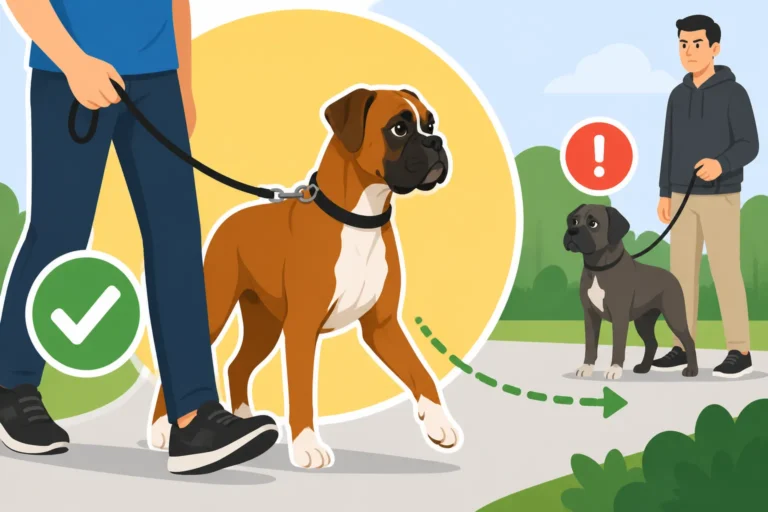
Start at a distance where your Boxer notices the cat but doesn't react with intense fixation. The moment your Boxer looks at the cat calmly, reward them with a treat. If they start to get excited, increase the distance. The idea is to keep them under their threshold for reaction. Over many, many sessions, you'll slowly decrease the distance. The critical element here is consistency and patience. You are literally rewiring your Boxer's brain to associate the cat's presence with positive rewards from you, rather than the thrill of the chase. You're trying to create a scenario where seeing the cat means "treats!" rather than "game on!". For those looking for structured guidance, online platforms like BAXTER & Bella offer comprehensive training programs that include step-by-step instructions for managing multi-pet households and behavior modification.
A common application of this is "watch me" or "look at me" commands. When your Boxer starts to stare at the cat, say "watch me" and hold a treat to your nose. The moment they make eye contact, reward them. Repeat this until they automatically look at you when the cat is present. This builds a strong alternative behavior to fixation. This is also where a solid "leave it" command comes in handy; Teaching a Boxer to Drop It can be extended to teaching them to "leave" the cat alone.
Long-Term Harmony and Common Pitfalls
Achieving a peaceful co-existence isn't a one-time fix; it's an ongoing commitment that requires consistent effort and realistic expectations.
Maintaining Boundaries and Consistency
The biggest pitfall in managing Boxer-cat relationships is inconsistency. Every member of the household must be on the same page regarding rules and boundaries. If one person allows the Boxer to chase the cat, all the hard work done by another person is undermined. Boxers thrive on routine and clear expectations. If the rule is "no chasing the cat," it must always be the rule, applied consistently by everyone, all the time.
Continue to provide those safe spaces for your cat, even if interactions seem to be improving. Your cat needs to know it always has an escape route and a place of refuge. Don't assume that because things are going well for a few weeks, you can suddenly relax all supervision. Boxers have a lot of energy and can become destructive if it's not managed properly, so Why a Boxer Wrecks Things When Under-Exercised is a real concern that can spill over into bothering the cat. Remember that The Energy New Boxer Owners Underestimate is a lifelong trait, not just a puppy phase. Daily exercise is crucial; a tired Boxer is a well-behaved Boxer. Think structured walks, games of fetch, or even agility work if your Boxer enjoys it. A Boxer that's had its physical and mental needs met is far less likely to seek out the cat for stimulation.
When to Seek Professional Help
Sometimes, despite your best efforts, the fixation persists or escalates. There are situations where professional intervention is not just helpful but necessary.
If you observe any signs of actual aggression from either animal (e.g., your Boxer showing a hard stare, growling, lunging with intent to harm, or your cat inflicting serious scratches/bites from fear), it's time to call in a professional. A certified professional dog trainer, especially one experienced in multi-pet households, can assess the specific dynamics in your home and provide tailored strategies. In more severe cases, or if there's any actual aggression, a veterinary behaviorist might be the best course of action. They can rule out underlying medical issues and, if appropriate, discuss behavioral medications to help manage extreme anxiety or prey drive. Remember, your goal is not just to stop the fixation but to ensure the well-being and safety of both your Boxer and your cat. Don’t hesitate to get help if you feel overwhelmed or progress stalls. Understanding how many Hours a Boxer Can Manage Alone without becoming bored or destructive is also a key factor in prevention. Adequate mental and physical stimulation, especially considering Boxer Exercise Needs and the Heat That Limits Them, is paramount to preventing unwanted behaviors like cat fixation.
Dos and Don'ts for Managing Boxer-Cat Interactions
Here's a quick reference to help you navigate the journey toward peaceful coexistence:
| Action | Do | Don't |
|---|---|---|
| Supervision | Always supervise interactions, especially initially. | Leave them unsupervised until you are 100% confident in their safety. |
| Safe Spaces | Provide high perches and Boxer-free rooms for your cat. | Force interactions or remove the cat's escape routes. |
| Training | Practice "sit," "stay," "leave it," and "come" consistently. | Allow your Boxer to chase, lunge, or paw at the cat without intervention. |
| Redirection | Redirect your Boxer's attention to toys or training exercises. | Assume your Boxer will stop fixating on its own. |
| Rewards | Heavily reward calm behavior when the cat is present. | Punish your Boxer for showing interest, as this can create negative associations. |
| Exercise | Ensure your Boxer gets plenty of physical and mental exercise daily. | Under-exercise your Boxer, leading to pent-up energy that targets the cat. |
| Consistency | Ensure all household members apply rules and boundaries consistently. | Allow inconsistent behavior or different rules for different people. |
| Professional Help | Seek a trainer or veterinary behaviorist if aggression or lack of progress occurs. | Wait until an incident happens before seeking expert advice. |
| Patience | Understand this is a long process that requires time and effort. | Get frustrated or give up quickly; progress often comes in small steps. |
| Positive Reinforcement | Focus on rewarding desired behaviors rather than punishing unwanted ones. | Yell or use harsh corrections, which can create fear and inhibit learning. |
Disclaimer
This article is for general informational purposes only and does not constitute professional advice. Laws, prices and regulations vary by location and change over time. Consult a qualified professional for guidance on your specific situation.