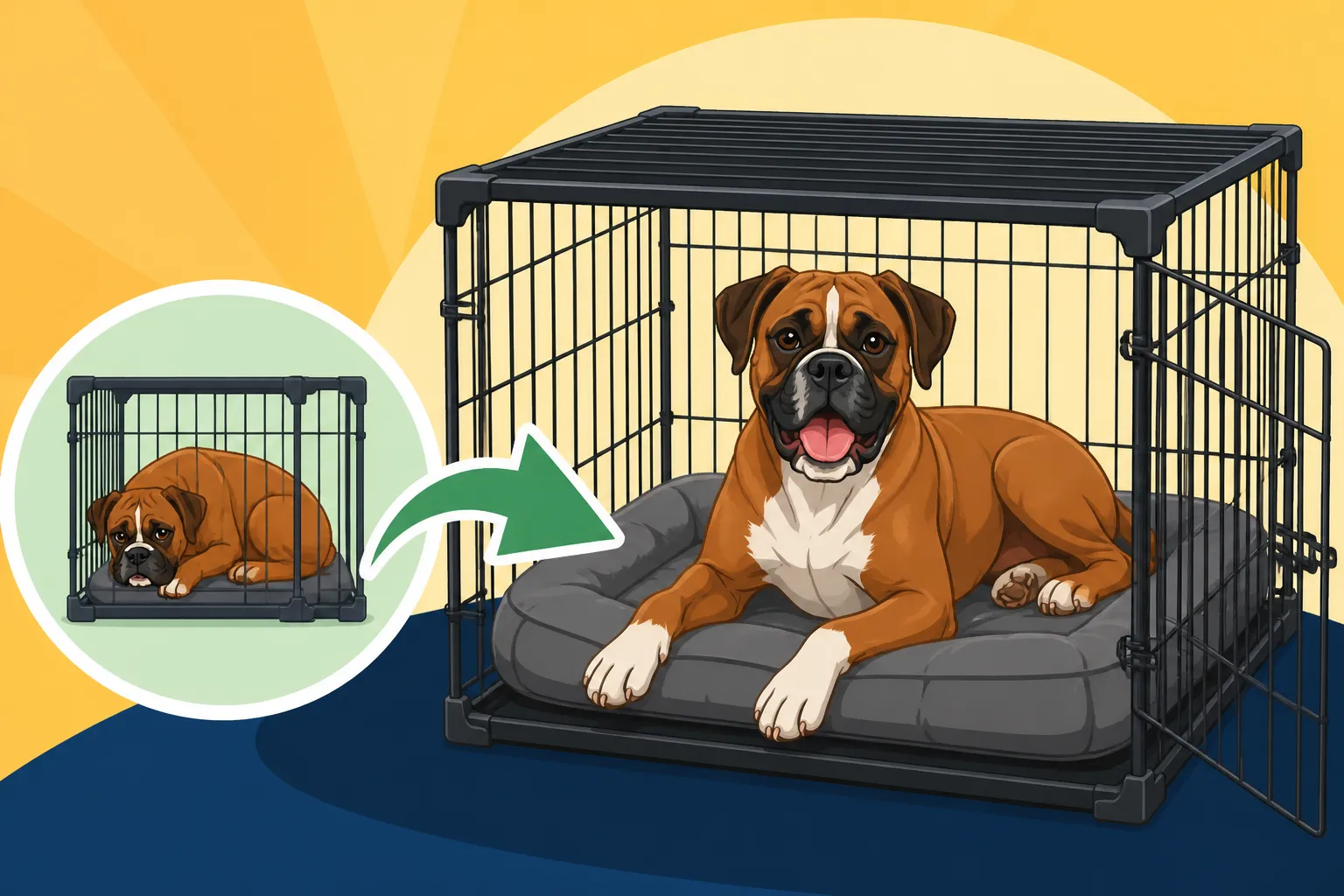
Crates Big Enough for a Grown Boxer
One of the first challenges you face when bringing a Boxer into your home, whether it's a rambunctious puppy or a rehomed adult, is finding a crate that truly fits. It's not just about getting a crate; it's about getting one that's big enough to accommodate their muscular, sometimes sprawling, physique comfortably and safely. A poorly sized crate can turn a potentially valuable training tool and safe haven into a source of stress and even injury for your beloved companion. This guide will walk you through everything you need to know to pick out the perfect spacious den for your grown Boxer.
Why the Right Crate Size is Non-Negotiable for Your Adult Boxer
Crates often get a bad rap, sometimes seen as cages, but for a Boxer, a properly sized crate is actually a secure, personal space – a den where they can feel safe and unwind. This isn't just about convenience for you; it's about their physical and mental well-being. Getting the size wrong, however, can completely undermine all these benefits.
Comfort and Well-being
Imagine trying to sleep in a bed that's too short for you, where your feet dangle off the end, or you can't stretch out without hitting the wall. That's precisely what a Boxer experiences in a crate that's too small. Boxers are powerful, energetic dogs, even when they're curled up for a snooze. They need to be able to stand up without hitting their head on the top, turn around a full 360 degrees without scraping their body on the sides, and lie down comfortably in various positions, including stretching out on their side with their legs extended.
A cramped crate can lead to muscle stiffness, joint discomfort, and even skin abrasions if they're constantly rubbing against the wire or plastic. It's a recipe for a stressed-out dog who views their crate not as a haven but as a punishment. This is especially true after a long walk or play session where they've used their bodies extensively, and they need a comfortable place to truly relax and recover. When you consider Boxer Exercise Needs and the Heat That Limits Them, they often need a cool, spacious place to recover indoors after activity.
Safety and Security
Beyond comfort, an appropriately sized crate is a matter of safety. If a crate is too small, your Boxer might become tangled or stuck, especially if they try to move or adjust themselves in a confined space. This can lead to panic, potential injury, or exacerbating existing anxieties. Conversely, a crate that’s too large can also pose issues, particularly during house training. If there's enough room for your Boxer to relieve themselves in one corner and still keep a clean sleeping area in another, it completely defeats the purpose of using the crate to reinforce bladder and bowel control. The whole idea behind crating is to tap into a dog's natural instinct not to soil their sleeping area.
For a powerful breed like the Boxer, a flimsy or ill-fitting crate also presents a security risk. A Boxer determined to get out of a crate that isn't robust enough or doesn't feel right could bend wires, break latches, or even harm themselves in the process. This isn't just about property damage; it's about preventing potential self-inflicted injuries. When you're dealing with a breed that can be so playful and at times, a bit clumsy, ensuring their confined space is secure is paramount.
Behavioral Management and Training
The crate is an invaluable tool for behavioral management and training, from puppyhood right through to adulthood. For puppies, it's essential for house training and teaching them to be comfortable alone. For adult Boxers, it serves as a safe space during alone time, prevents destructive chewing when unsupervised, and can even be a calming retreat during stressful events like thunderstorms or noisy gatherings. The correct size plays a crucial role in these functions. The Boxer Puppyhood That Lasts Three Years often involves extended crate training to manage their energy and enforce boundaries.
A crate that's too small will make your Boxer resent the space, leading to barking, whining, or even frantic escape attempts – behaviors you want to avoid. If your Boxer is protesting loudly, you might find yourself with A Boxer That Screams in the Crate, which is a difficult habit to break. On the other hand, if it's too large, it might not provide the snug, den-like feeling that many dogs find comforting. The ideal crate size leverages their natural instinct for a cozy, secure den, turning it into a positive place they willingly enter. This positive association is key to a happy, well-adjusted Boxer who uses their crate effectively.
How to Accurately Measure and Choose a Crate for a Grown Boxer
Determining the right crate size isn't just a guessing game; it requires a bit of measurement and consideration of your Boxer's unique build and habits. After all, a "large" crate for one breed might be a tight squeeze for another.
The "Stand Up, Turn Around, Lie Down" Rule
This is the golden rule for crate sizing. To apply it, you'll need two key measurements from your adult Boxer:
- Length: Measure your Boxer from the tip of their nose to the base of their tail (not including the tail itself). Then, add 2-4 inches to this measurement. This extra space allows them to stretch out comfortably and move around without feeling confined.
- Height: Measure your Boxer from the top of their head (or the tip of their ears if they stand erect, like a cropped Boxer) to the ground. Add 2-4 inches to this measurement. This ensures they can stand up fully without their head brushing against the top of the crate.
For example, if your male Boxer measures 32 inches from nose to tail base and 25 inches tall, you'd be looking for a crate that is at least 34-36 inches long and 27-29 inches high. Given their sturdy build, many Boxers typically need a 42-inch or even a 48-inch crate to truly meet these dimensions comfortably. Remember, these are minimums; a little extra room is usually appreciated, especially if your Boxer loves to sprawl. It takes a little guesswork out of Sizing a Crate for a Boxer That Will Hit Seventy.
Standard Crate Sizes and What They Mean for a Boxer
Crates typically come in standard sizes, often measured by their longest dimension (e.g., 24-inch, 30-inch, 36-inch, 42-inch, 48-inch). For most adult Boxers, you'll likely be looking at the larger end of this spectrum:
- 42-inch crates: These are often suitable for larger female Boxers or smaller males. They typically measure around 42"L x 28"W x 30"H.
- 48-inch crates: This size is more commonly recommended for most adult male Boxers and larger females, especially if they are particularly tall or long. These usually measure approximately 48"L x 30"W x 33"H.
It's crucial to check the actual internal dimensions of any crate you're considering, as measurements can vary slightly between manufacturers. Don't just go by the "large" or "X-large" label; always refer to the specific length, width, and height. Remember, Boxers are generally lean, but they are substantial dogs, and they take up more space than you might think when fully grown. When looking for Crates, Beds and Gear Sized for a Boxer, always prioritize those detailed measurements.
Wire vs. Plastic vs. Soft-Sided: Choosing the Right Material
The material of the crate impacts its suitability for a Boxer. Each type has its pros and cons:
- Wire Crates: These are the most common and often the best choice for Boxers.
- Pros: Excellent ventilation (crucial for brachycephalic Boxers who can overheat easily), good visibility, foldable for portability, and generally very durable. They often come with dividers, which are perfect for puppies, allowing you to expand the space as your Boxer grows. You can find a wide range of strong wire crates on retailers like Chewy.
- Cons: Some Boxers might feel less "den-like" without a cover, and strong chewers can sometimes damage thinner wires, though heavy-gauge wire models are very robust.
- Plastic/Vari-Kennel Style Crates: These enclosed crates are often preferred for travel and offer a more den-like feel.
- Pros: Very secure, good for dogs who feel safer in enclosed spaces, and meet airline travel requirements. They're also usually quite sturdy.
- Cons: Ventilation can be limited compared to wire crates, which is a significant concern for Boxers, especially in warmer climates or during extended stays. They are also bulkier and not as easy to collapse.
- Soft-Sided Crates: These are lightweight and highly portable.
- Pros: Excellent for short trips, shows, or as a temporary relaxation spot. They are comfortable and easy to carry.
- Cons: Not recommended for unsupervised Boxers, especially puppies or those prone to chewing or escape attempts. They offer minimal security and durability against a determined Boxer and are easily damaged. They are best reserved for already crate-trained, non-destructive Boxers in supervised situations.
Essential Features for a Boxer-Proof Crate
Once you've nailed down the size and material, it's time to consider the specific features that will make the crate truly "Boxer-proof" and comfortable for your companion. Boxers aren't delicate, and their crate needs to stand up to their strength and energy.
Durability and Construction
A Boxer is a powerful dog, and their crate needs to reflect that. You can't just pick up any wire crate and expect it to hold up. Look for:
- Heavy Gauge Wire: For wire crates, the thicker the wire, the better. This prevents your Boxer from bending or breaking bars, which can lead to escape or injury. Some manufacturers specify the gauge of wire used; aim for a lower gauge number (which means thicker wire).
- Reinforced Corners and Welds: These areas are often stress points. A well-constructed crate will have strong, secure welds and possibly reinforced corners to prevent them from separating under pressure.
- Secure Latches: Boxers are smart and can be surprisingly adept with their paws and noses. Look for multiple, sturdy latches that require a deliberate action to open. Single-point latches are often easier for intelligent dogs to figure out. Some of the more robust crates available on Chewy often feature double-latching systems for added security. Choosing a Crate a Boxer Cannot Wreck often comes down to these details.
Don't underestimate a Boxer's determination. If they don't want to be in a crate, or if the crate feels insecure, they will test its limits. Investing in a high-quality, durable crate upfront will save you money and headaches (and potentially vet bills) in the long run.
Ventilation and Climate Control
This is a critical factor for Boxers due to their brachycephalic (flat-faced) physiology. Boxers are prone to overheating because their shorter muzzles make it harder for them to efficiently cool themselves through panting.
- Ample Airflow: Wire crates naturally excel here. For plastic crates, ensure there are plenty of ventilation holes on all sides, not just the front and back. Cross-ventilation is key.
- Avoid Direct Sun: No matter the crate type, never place it in direct sunlight, especially if indoors near a window. Even with good ventilation, a Boxer can quickly become dangerously overheated.
- Cooling Accessories: Consider adding a crate fan, particularly if you live in a warm climate or if your Boxer spends significant time in their crate. Cooling mats, while not appropriate for chewers, can also offer relief in wire crates. Always be mindful of The Degrees at Which a Boxer Struggles and provide adequate cooling solutions inside and outside the crate.
Good ventilation isn't just about comfort; it's a health imperative for your Boxer. Always monitor them, especially during warmer months, to ensure they are not struggling with the heat inside their crate.
Portability and Ease of Cleaning
While durability is key, practical considerations like portability and ease of cleaning also matter for busy Boxer owners.
- Foldable Designs: Many wire crates are designed to fold flat, making them convenient for travel, moving, or simply stashing away when not in use. This is a huge bonus if you occasionally take your Boxer on trips or need to transport the crate.
- Removable Trays: Accidents happen, especially during house training or with an upset stomach. A crate with a removable plastic or metal pan at the bottom makes cleanup infinitely easier. You can simply slide it out, wash it, and put it back in. This feature is standard on most wire crates and highly recommended.
- Assembly: Consider how easy the crate is to assemble and disassemble. You don't want to wrestle with complex parts every time you need to move it or clean it thoroughly. Simple, intuitive designs are always a winner.
A crate that's easy to maintain will encourage you to keep it clean and hygienic, which is important for your Boxer's health and the overall pleasantness of your home environment.
| Crate Type | Durability (Boxer Specific) | Ventilation (Boxer Specific) | Portability | Ease of Cleaning | Ideal Use Case for Boxers |
|---|---|---|---|---|---|
| Wire Crate | High (with heavy gauge) | Excellent | High | High | General home use, house training, moderate travel |
| Plastic Crate | High | Moderate (check air holes) | Moderate | High | Airline travel, den-like feel, less visibility |
| Soft-Sided | Low (not chew-proof) | Good | Very High | Moderate | Short-term, supervised use; well-trained, non-chewing Boxers only |
Making the Crate a Haven: Tips for Boxer Owners
Even with the perfect crate, its effectiveness hinges on how you introduce it and integrate it into your Boxer's life. The goal is to make it a positive, comfortable space, not a place of banishment.
Creating a Comfortable Den
Think of the crate as your Boxer's personal bedroom. What makes a bedroom comfortable? A soft bed, some personal items, and a sense of coziness.
- Bedding: A comfortable bed or blanket is essential. For chewers, look for chew-proof bedding options. Heavy-duty canvas or orthopedic pads designed to resist chewing are great investments. Many online retailers like Chewy offer a good selection of durable bedding. Even if your Boxer isn't a known chewer, anything that can be easily washed or replaced is a good idea. Chew-Proof Bedding for a Boxer That Digs is definitely a topic to research further if you have an active Boxer.
- Toys and Chews: Always provide safe, durable toys or chews inside the crate. This gives your Boxer something positive to do and helps alleviate boredom or anxiety. Think Kongs filled with peanut butter (check ingredients for xylitol!), bully sticks, or Nylabones.
- Covering the Crate: For many Boxers, covering a wire crate with a blanket or a purpose-made crate cover can enhance the den-like feel, reducing visual stimulation and promoting relaxation. Just ensure the cover doesn't impede critical airflow, especially for a Boxer who needs good ventilation.
The more comfortable and inviting the crate is, the more likely your Boxer will choose to go in there on their own, transforming it from a "cage" into their private retreat.
Gradual Introduction and Positive Association
The key to successful crate training is positive association. Never, ever use the crate as punishment. This will create negative feelings and make your Boxer resent the space.
- Start Slow: Introduce the crate gradually. Leave the door open and let your Boxer explore it on their own terms. Toss treats inside, play a game where the toy lands in the crate, and make it a fun place.
- Meals in the Crate: Feeding your Boxer their meals inside the crate with the door open, and then eventually closed for short periods, is a fantastic way to build positive associations. Brands like Ollie offer high-quality fresh food that your Boxer will eagerly gobble down, making the crate a place of delicious rewards.
- Short, Incremental Stays: Begin with very short periods, just a few minutes, while you're still in the room. Gradually increase the duration and your distance from the crate. Always praise and reward calm behavior.
- Never Force It: If your Boxer is distressed, take a step back. Pushing too hard too fast can create a negative experience that's hard to undo. Consistency and patience are your best friends here.
A well-crate-trained Boxer will often go into their crate voluntarily for naps or when they need a quiet moment, demonstrating that it has truly become their safe space.
Managing Time in the Crate
Even the most comfortable and well-loved crate isn't meant for indefinite stays. Boxers are social, active dogs, and they need plenty of interaction, exercise, and potty breaks.
- Potty Breaks are Paramount: A Boxer puppy needs frequent potty breaks – every few hours, and immediately after waking, eating, or playing. Adult Boxers can hold it longer, but no dog should be expected to hold their bladder for an entire workday. If you're out of the house for extended periods, consider hiring a dog walker or arranging for someone to let your Boxer out. Otherwise, you're setting them up for failure and a soiled crate.
- Exercise Before Crating: A tired Boxer is a good Boxer. Before putting your Boxer in their crate for any significant period, ensure they've had ample exercise and a good potty break. This helps them settle down and relax, rather than pacing with pent-up energy. Hours a Boxer Can Manage Alone are significantly impacted by how much exercise they get before being crated.
- Consistency: Try to maintain a consistent schedule for crating, potty breaks, and exercise. Dogs thrive on routine, and a predictable schedule can reduce anxiety.
- Recognize Limits: While some Boxers can tolerate being crated for a few hours, exceeding 4-6 hours for an adult (and much less for puppies) without a break is generally too long. This is where options like doggy daycare or a trusted pet sitter become invaluable if you have a demanding work schedule. Remember that even with a perfect setup, prolonged crating can lead to behavioral issues and physical discomfort for your active companion.
When integrating a Boxer into your home, be mindful of their health needs. While crating, remember that unexpected health issues can arise, sometimes linked to stress or previous conditions. Having pet insurance from a provider like Healthy Paws can provide peace of mind, covering eligible vet bills for accidents and illnesses, so you can focus on your Boxer's well-being without added financial worry. Always ensure you're providing a rich and stimulating environment outside of crate time, including regular walks, play, and mental enrichment.
Disclaimer
This article is for general informational purposes only and does not constitute professional advice. Laws, prices and regulations vary by location and change over time. Consult a qualified professional for guidance on your specific situation.