Chews for a Teething Boxer Puppy
Oh, the joys of a Boxer puppy! There's nothing quite like that adorable, goofy face, those big paws, and the boundless energy. But let's be real, those sharp little puppy teeth can turn your beloved companion into a tiny, four-legged wrecking ball. If you've ever stared at a shredded shoe or a chewed-up chair leg, you know the frustration. This guide is all about navigating that challenging teething period and finding the perfect chews to satisfy your Boxer puppy's urge to chomp, keeping both your furniture and their pearly whites safe.
Understanding Boxer Puppy Teething: The Urge to Chew
When your Boxer puppy is teething, it's not just a cute phase; it's a fundamental biological process that can be incredibly uncomfortable for them. Just like human babies, puppies experience soreness and irritation as their baby teeth fall out and their strong adult teeth push through. This discomfort drives an almost insatiable urge to chew, and if you don't provide appropriate outlets, your puppy will absolutely find their own — often at the expense of your belongings!
The Timeline of Teething in Boxer Puppies
Knowing when to expect the worst of the teething can help you prepare. Boxer puppies, like most breeds, start losing their tiny, needle-sharp deciduous teeth around 3 to 4 months of age. By the time they're about 6 to 7 months old, most will have a full set of adult teeth. This means you have a solid few months of intense chewing ahead of you. It's a critical window for training and redirection, as their mouths are undergoing significant changes.
During this time, you might notice small drops of blood on their toys or even find a tiny tooth on the floor. Don't panic! This is completely normal. What's not normal is if they refuse to eat, show extreme pain, or have gums that are very red and swollen beyond typical teething inflammation. A quick check with your vet can always offer peace of mind. Remember, this chewing phase is crucial for alleviating their discomfort, strengthening their jaw muscles, and exploring their world.
Why Boxers Are Such Mouthy Puppies
Boxers, by nature, are a rather mouthy breed, and this often extends beyond the typical puppy teething period. Their playful "boxing" with front paws often involves their mouths too. Combine this natural inclination with the physical discomfort of teething, and you have a recipe for some serious chewing. They use their mouths to interact with the world, to play, and to test boundaries.
This means that for a Boxer, finding appropriate chew toys isn't just a temporary teething solution; it's a lifelong management strategy. From puppyhood, you're laying the groundwork for acceptable chewing habits. If you don't teach them what's okay to chew and what isn't, they'll make their own decisions, and those decisions usually don't align with your preferences for intact furniture. Providing a variety of enticing, safe chews is your best defense against destructive habits forming early on. For more on this, you might find Boxer Puppy Biting That Does Not Stop helpful.
Choosing the Right Chews: What Works for a Boxer
The sheer number of chew toys available can be overwhelming, but not all chews are created equal, especially for a powerful chewer like a Boxer. Your goal is to find durable, safe, and appealing options that can stand up to their strong jaws while providing relief.
Durable Rubber and Nylon Chews
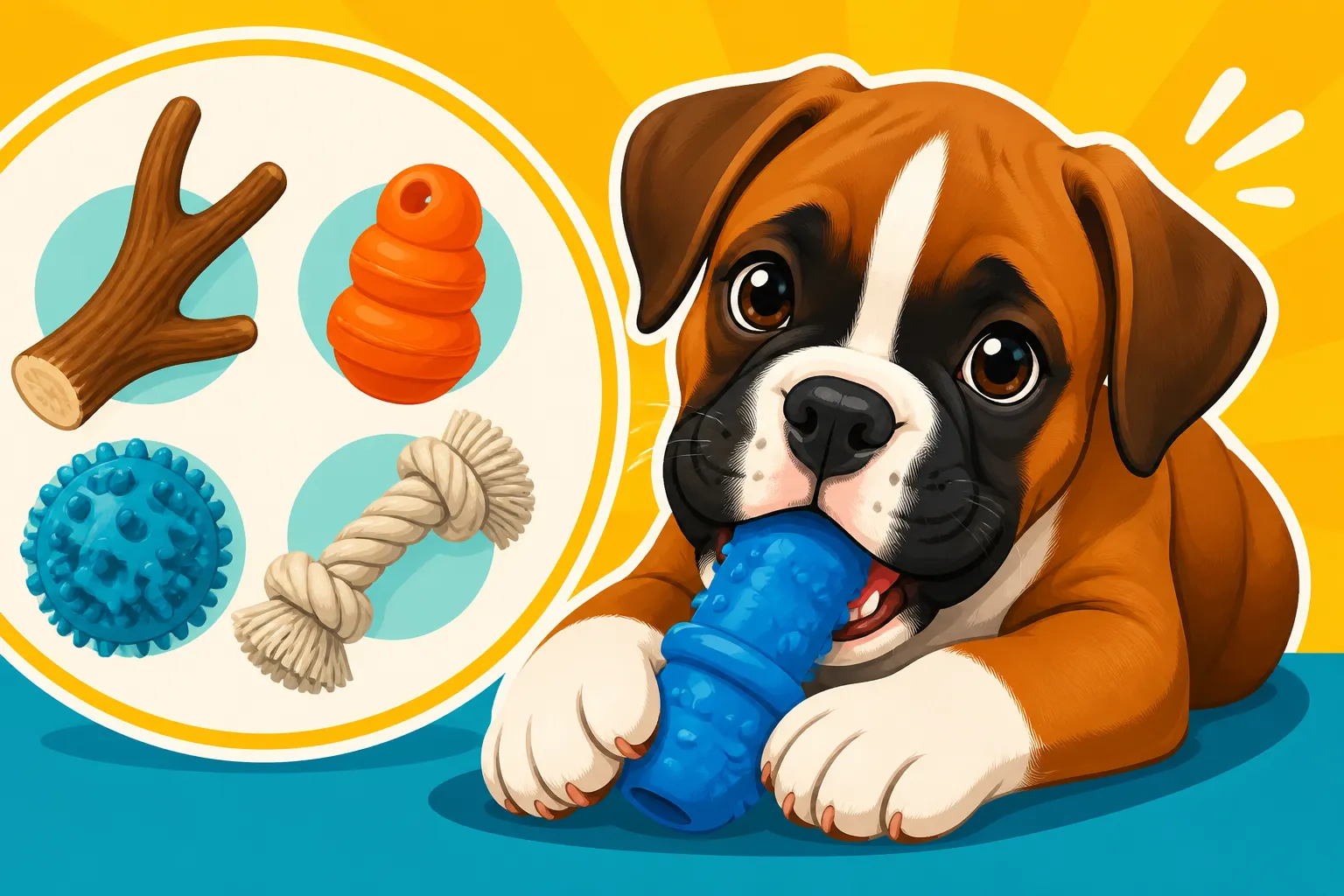
When it comes to durability, rubber and nylon chews are often top contenders. Brands like Kong offer classic rubber toys that can be stuffed with treats, providing both a chewing outlet and a mental challenge. The erratic bounce of a Kong can also make playtime more engaging for a high-energy Boxer. Just be sure to select the "extreme" or "heavy duty" versions, as regular rubber toys might not last long against a determined Boxer puppy.
Nylon chews, such as those from Nylabone, are also very popular. They are designed to be extremely tough and are often flavored to keep puppies interested. These chews don't get consumed quickly, but rather fray into small, bristle-like pieces that are generally considered safe for ingestion in small amounts. Always size up; a chew that's too small can become a choking hazard. Make sure the nylon chew is appropriate for their age and chewing intensity, as some are specifically designed for puppies with softer teething gums.
Edible Chews and Bones: Proceed with Caution
Edible chews can be a fantastic way to satisfy your Boxer's chewing instinct, but they come with a significant caveat: safety. Rawhides, while traditional, can pose choking and digestive obstruction risks, especially if your Boxer puppy tries to swallow large pieces. If you choose rawhide, opt for high-quality, digestible options and always supervise your puppy. Bully sticks, made from beef pizzle, are generally safer and highly palatable, though they can be quite expensive and still require supervision as they get smaller.
Natural bones also warrant careful consideration. Cooked bones are an absolute no-go, as they can splinter and cause severe internal damage. Raw recreational bones (like beef femurs or knuckles) can be given, but always under strict supervision. They are great for dental health but can also be too hard and potentially chip teeth, or in some cases, your Boxer might consume too much, leading to digestive upset. Frozen carrots or even a frozen washcloth can provide a softer, soothing chew for sore gums without the same risks. Remember, the goal is relief and redirection, not just destruction.
Here’s a quick overview of popular chew types and their characteristics:
| Chew Type | Durability | Boxer Suitability | Pros | Cons |
|---|---|---|---|---|
| Rubber (e.g., Kong) | High (specific types) | Excellent | Mentally stimulating, durable, teeth-friendly | Can be expensive, needs refills |
| Nylon (e.g., Nylabone) | Very High | Good | Long-lasting, available in flavors | Can be too hard for some puppies, not consumable |
| Bully Sticks | Moderate-High | Excellent | Highly palatable, digestible, good for teeth | Expensive, can become small/choking hazard |
| Rawhide (pressed) | Variable | Moderate (with care) | Satisfies urge to chew | Choking risk, digestibility concerns |
| Frozen Carrots | Low | Excellent | Soothing for gums, healthy treat | Not long-lasting |
| Antlers | Very High | Caution | Extremely durable, long-lasting | Can be too hard, risk of tooth fracture |
Considering Brands for Your Boxer's Chews
When you're shopping for chews, looking at established brands can give you a better sense of quality and safety standards. For robust rubber and nylon options, Kong and Nylabone are perennial favorites among Boxer owners for a reason; their products are designed with powerful chewers in mind. For bully sticks and other natural, digestible chews, you can often find a good selection on platforms like Chewy or Amazon, which carry various reputable brands specializing in all-natural pet products. Always read reviews specific to powerful chewers and check the ingredient list carefully for anything that might upset your Boxer's sensitive stomach.
Safety First: Preventing Accidents with Chews
Providing chews is essential, but ensuring they are safe is paramount. A great chew can quickly become a hazard if not used correctly or if it's the wrong type for your particular puppy. Boxers are strong, determined dogs, and they can be incredibly efficient at destroying things, sometimes with dangerous consequences.
Supervising Chew Sessions
This is probably the single most important rule when giving any chew to your Boxer puppy, especially edible ones. Never leave your puppy unsupervised with a new chew, or even an old favorite, if there's a risk it could break into smaller pieces or be entirely consumed. What starts as a perfect outlet can turn into a choking hazard in minutes. If a chew toy is small enough to be swallowed whole, or a piece breaks off that is, it's time to replace it.
Imagine your Boxer puppy enthusiastically gnawing on a bully stick. As it gets shorter, the risk of them trying to swallow the last inch or two increases dramatically. If this happens, it could get lodged in their throat or digestive tract. Being there to intervene and take away the last piece ensures their safety. This vigilance also applies to softer toys that can be ripped apart, where stuffing or fabric could be ingested. You want to redirect, not create a veterinary emergency. You might be interested in Chew-Proof Bedding for a Boxer That Digs for more on durability.
Avoiding Choking Hazards and Digestive Issues
Beyond direct supervision, actively choose chews that are appropriately sized and constructed for a Boxer puppy. A toy meant for a Chihuahua simply won't cut it. Look for chews that are too large to be swallowed whole and are designed to wear down slowly, or to be indigestible yet safe to pass if small pieces are consumed. Avoid chews with small, detachable parts that could easily break off.
Digestive upset is another common issue, especially with edible chews. Introducing a new chew too quickly, or giving too many edible chews, can lead to diarrhea or vomiting. Always introduce new treats gradually, and observe your puppy's stool for any changes. If you notice persistent loose stools or signs of discomfort, stop the chew and consult your vet. Some Boxers have more sensitive stomachs than others, and learning what works for your pup is a process of trial and error. Diet Changes for a Boxer With Colitis touches on sensitive stomachs.
When to Discard a Chew
Knowing when to say goodbye to a favorite chew is tough, but necessary. For nylon or hard rubber chews, if they become severely worn, jagged, or have sharp edges that could injure your Boxer's mouth, it's time for them to go. A jagged edge could cut their gums or tongue, creating a painful problem.
For edible chews, discard them once they become small enough to be swallowed whole. Don't take chances. Also, if a chew smells rancid, shows mold, or has been left out for too long, it should be thrown away immediately to prevent bacterial contamination. Regular inspection of all your Boxer's chews is a crucial part of responsible pet ownership.
Making Chews Appealing and Integrating Them into Daily Life
Having the right chews is only half the battle; getting your Boxer puppy to actually use them instead of your sofa is the other. Boxers are intelligent and can be a bit stubborn, so making those designated chews the most exciting thing in the room is key.
Enrichment Chews and Puzzle Toys
Boxers thrive on mental stimulation as much as physical exercise. Chews that double as puzzle toys are a fantastic way to engage their brains and keep them occupied, especially when you need a moment of peace. Stuffable rubber toys like a Kong, filled with a mix of kibble, peanut butter (xylitol-free!), or plain yogurt and then frozen, can keep a Boxer puppy happily busy for a good chunk of time. The freezing makes the challenge last even longer, providing extended relief for those sore gums.
Rotating chews can also maintain interest. Don't leave all the chews out all the time. Offer one or two at a time, and swap them out every few days. This novelty can make the "old" chew seem exciting again when it reappears. This strategy ensures your puppy doesn't get bored of their designated chew toys and is less likely to seek out alternative, less appropriate chewing opportunities.
Redirection and Training
When you catch your Boxer puppy chewing on something they shouldn't (like your favorite shoe!), the key is redirection, not punishment. A sharp "no!" or scolding often doesn't teach them what they should chew, only what they shouldn't, and can damage your bond. Instead, calmly interrupt the unwanted chewing, take the inappropriate item away, and immediately offer an approved chew toy. When they take the approved toy, lavish them with praise. This teaches them that chewing on this item gets a positive reaction.
Consistency is vital. Everyone in the household needs to be on the same page. If one person allows chewing on an old sock but another doesn't, your Boxer will be confused. Puppy classes and consistent training at home, especially focusing on "leave it" and "drop it" commands, will greatly help manage their mouthiness. For more on managing mouthing, see Teaching a Boxer Puppy to Soften Its Grip and Boxer Puppy Teeth on Hands and Clothes.
The Long-Term Chewing Plan
Even after your Boxer puppy has all their adult teeth, the urge to chew doesn't magically disappear. For a Boxer, chewing is a natural, stress-relieving activity that continues throughout their lives. Therefore, maintaining a supply of appropriate, safe chews is a permanent fixture in a Boxer-owning household. Think of it as an ongoing investment in their happiness and your home's integrity.
As your Boxer grows into an adult, their chewing power will increase dramatically. You'll need to upgrade from puppy-specific chews to those designed for adult, strong chewers. This might involve moving to even tougher rubber or nylon chews, or carefully selected natural options. Always consider their age, chewing style, and any dental health concerns when selecting chews. Integrating regular dental care, like brushing and appropriate dental chews, will also contribute to their overall oral health in the long run.
Disclaimer
This article is for general informational purposes only and does not constitute professional advice. Laws, prices and regulations vary by location and change over time. Consult a qualified professional for guidance on your specific situation.