The Degrees at Which a Boxer Struggles
It can be incredibly frustrating to know your beloved Boxer wants to play and exercise, but you're constantly second-guessing whether the temperature is safe. You see them panting a little heavily, even when it doesn't feel that hot to you, and worry about pushing them too far. This guide aims to clear up the confusion around a Boxer's unique temperature sensitivities, offering practical advice and clear warning signs so you can keep your best friend safe and comfortable, no matter the season.
Understanding Your Boxer's Unique Temperature Sensitivities
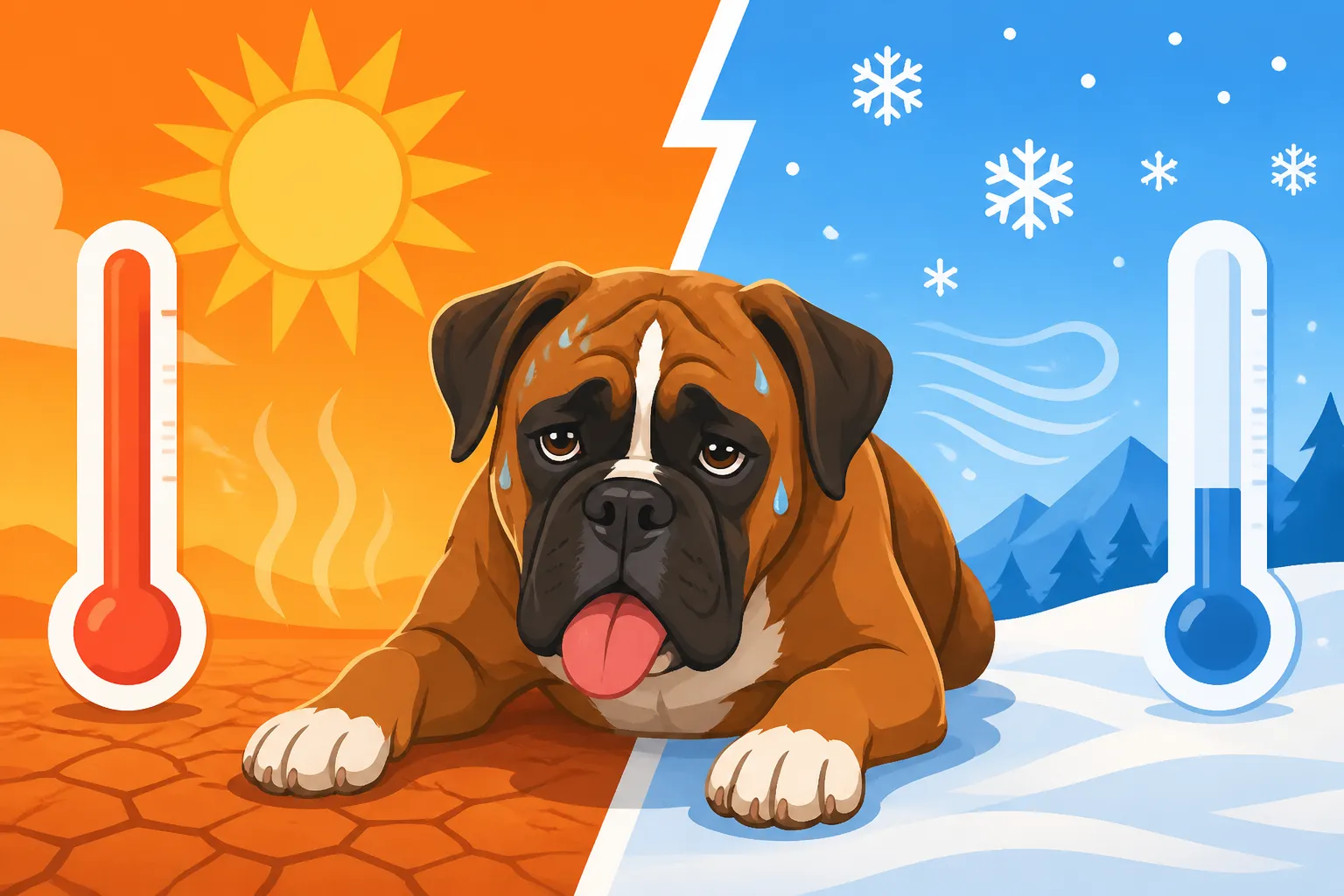
Boxers are wonderful dogs, full of life and boundless energy, but they come with a few built-in characteristics that make them particularly susceptible to temperature extremes. It's not just about them feeling a bit warm or chilly; their physiology means they can struggle significantly more than many other breeds. Understanding why they are this way is the first step in providing them with the best care.
Why Boxers Get Hot So Easily
One of the most defining features of a Boxer is their brachycephalic, or "flat-faced," skull structure. While undeniably charming, this short muzzle comes with a major downside: it drastically impacts their ability to cool themselves down. Dogs primarily regulate their body temperature through panting. With a shorter snout and often narrower airways, Boxers can't take in and expel air as efficiently as a long-nosed breed. This means their internal cooling system just isn't as effective, making them prone to overheating much faster. Imagine trying to breathe through a straw during a workout – that's a bit like what a Boxer experiences on a warm day.
Beyond their unique facial structure, Boxers also have a short, single coat. While it might seem like a thin coat would keep them cooler, it actually offers very little insulation against both heat and cold. It doesn't trap a layer of air to protect them from the sun's rays in summer, nor does it provide much warmth when temperatures drop. Couple this with their naturally high energy levels – they are perpetually ready to go, go, go – and you have a dog that generates a lot of internal heat during activity. This combination of inefficient cooling and a lack of protective coat means they are constantly fighting an uphill battle against ambient temperatures. It's why How Fast a Flat-Faced Boxer Overheats is such a critical topic for every Boxer owner.
The Dangers of Overheating and Hypothermia
The consequences of misjudging the temperature for a Boxer can be severe. Overheating, or heatstroke, is a true medical emergency. When a Boxer's body temperature rises too high, it can lead to organ damage, neurological issues, and even death. Signs can include excessive, frantic panting, bright red or purple gums, a glazed look in their eyes, weakness, staggering, vomiting, and diarrhea. If you ever see these signs, especially after any exposure to warmth or exercise, immediate veterinary attention is crucial.
On the flip side, while less talked about, hypothermia is also a risk, particularly for Boxers in colder climates. Their short coat offers minimal protection, and without proper care, they can get dangerously cold. Hypothermia occurs when their body temperature drops below normal, affecting their metabolic processes and circulation. Symptoms typically involve shivering, lethargy, a hunched posture, cold ears and paws, and a general reluctance to move. It's vital to recognize that Boxers aren't built for prolonged exposure to cold any more than they are for extreme heat. Both ends of the temperature spectrum present significant dangers that we, as their caregivers, must actively prevent.
Specific Temperature Ranges and What They Mean for Your Boxer
Knowing your Boxer's inherent vulnerabilities is one thing, but translating that into daily decisions about walks, play, and general care can still be tricky. What feels comfortable to you might already be pushing your Boxer's limits. Let's break down typical temperature ranges and what they mean for your energetic companion.
Mild Weather: The Comfortable Zone (60-75°F / 15-24°C)
This temperature range is generally considered the sweet spot for most Boxers. In these conditions, they can usually enjoy their outdoor activities without excessive risk of overheating or getting too cold. You'll likely see them trotting happily, engaging in their signature "Boxer bounces," and enjoying longer walks or playtime in the yard. However, even within this comfortable zone, a few caveats apply. If the humidity is high, the "feels like" temperature can be significantly warmer, making cooling more difficult. Similarly, intense, sustained exercise, like a long run or a strenuous game of fetch, can still cause a Boxer to overheat, especially on the upper end of this range.
Always observe your individual dog. Some Boxers might be more heat-sensitive than others, perhaps due to age, underlying health conditions like Subaortic Stenosis in a Boxer Puppy or Boxer Cardiomyopathy and the Holter Monitor, or simply their personal tolerance. Even on a 75°F day, a Boxer tearing around a sunny dog park for an hour could be in trouble. Think of this range as generally safe, but still requiring common sense and monitoring. Provide plenty of fresh water and opportunities for rest in the shade, just in case.
Moderate Risk: When Caution Is Needed (75-85°F / 24-29°C)
Once the temperature creeps into this moderate risk zone, caution becomes paramount. This is where many Boxer owners might feel comfortable, but their dogs are already starting to struggle. Long walks or vigorous play should be significantly shortened, and you should aim for the very coolest parts of the day – early morning or late evening. Midday outdoor activity is generally not advisable. Concrete and asphalt can get incredibly hot in this range, easily burning paw pads, so stick to grassy areas or walk during times when surfaces have cooled down.
This is also the temperature range where cooling aids become invaluable. Consider investing in a cooling vest, a cooling mat, or even offering a shallow kiddie pool for your Boxer to splash in. Indoor exercise, such as puzzle feeders, training sessions, or gentle play, should become the primary form of activity. You might not feel hot, but your Boxer's brachycephalic airway is already working harder, and their short coat isn't doing them any favors. It's a fine line between a happy outing and a dangerous situation, and it's always better to err on the side of caution. Many owners have found relief using specific products found on sites like Chewy or Amazon to help manage their Boxer's comfort in this range. For more detailed solutions, check out Cooling Vests and Fans for a Boxer.
High Risk: Danger Zone (Above 85°F / 29°C and Below 30°F / -1°C)
When temperatures soar above 85°F (29°C), or plummet below 30°F (-1°C), your Boxer is in the danger zone. Outdoor exercise, beyond very quick potty breaks, should be completely off-limits in the heat. Even short periods outside can lead to heatstroke very rapidly. Air conditioning is not a luxury for a Boxer in this heat; it's an absolute necessity. If your home doesn't have AC, consider finding a cool, air-conditioned place for your Boxer during the hottest parts of the day, such as a pet-friendly store or a friend's house. Car rides, even with AC, should be minimized, as car interiors can heat up astonishingly fast. This is why you should always refer to The Temperature a Boxer Should Stop Walking At.
In cold weather, below 30°F, your Boxer is also at significant risk. Their thin coat offers very little protection, and they can develop hypothermia or frostbite on their ears, paws, and tail extremely quickly. Short, brisk walks for potty breaks are fine, but prolonged exposure should be avoided. A well-fitting dog coat or sweater is essential for any time spent outdoors. Their paws are also susceptible to ice, snow, and de-icing chemicals, so paw protection like booties or protective balm is highly recommended. Just as you wouldn't send a child out in a blizzard without proper gear, your Boxer needs protection in freezing temperatures. Consider the advice in Keeping a Short-Coated Boxer Warm in Winter.
Practical Strategies for Managing Your Boxer in Extreme Temperatures
Living with a Boxer means being prepared for all sorts of weather, especially since their boundless energy doesn't always align with the mercury. Having a solid plan for managing them in both heat and cold is key to their health and happiness. It’s about creating an environment where they can thrive, regardless of the outside conditions.
Keeping Your Boxer Cool When the Heat is On
First and foremost, hydration is non-negotiable. Always have fresh, cool water available, both inside and outside. Consider adding ice cubes to their bowl or using a portable water bottle and collapsible bowl during walks. For dogs who love to drink, a pet fountain can encourage more intake.
Next, embrace cooling products. A good quality cooling vest can make a huge difference, actively drawing heat away from their body as they move. Cooling mats, especially those gel-filled varieties, offer a comfortable spot for them to lie down and cool off indoors. Many Boxers also adore a shallow kiddie pool or sprinkler play in the shade – supervised, of course! You can find a vast array of these products at pet supply retailers like Chewy or through online marketplaces like Amazon, making it easy to equip your home for summer.
When it comes to exercise, timing is everything. Restrict outdoor walks to the coolest parts of the day – dawn or dusk. Avoid the midday sun entirely. If it's truly scorching, shift to Indoor Exercise for a Boxer in a Heatwave. This could be a game of hide-and-seek with treats, working on new tricks, or even mental stimulation games with puzzle toys. Remember, a tired mind can be just as satisfying as a tired body for a clever Boxer. Most importantly, air conditioning and fans are your best friends. If you don't have AC, consider a window unit for the room your Boxer spends most of their time in, or at least a powerful fan directed at their favorite resting spot.
Protecting Your Boxer in Cold Weather
Just as they need help staying cool, Boxers need assistance staying warm. For any outdoor excursions, a well-fitting coat or sweater is essential. Look for options that cover their chest and belly, as these areas are particularly vulnerable to cold. Their short fur simply isn't enough to provide adequate insulation.
Paw protection is equally important. Winter conditions often mean ice, snow, and harsh de-icing salts on the pavement, which can cause painful cracks, chemical burns, or even frostbite. Dog booties offer the best protection, but if your Boxer absolutely refuses them, a protective paw wax can provide a barrier. Limiting outdoor time to just necessary potty breaks is also wise.
Indoors, ensure your Boxer has warm, comfortable bedding away from drafts. A raised bed can help keep them off cold floors, and a thick, soft blanket or a cozy dog bed will encourage them to snuggle up and conserve body heat. While it’s not strictly for warmth, feeding a good quality, nutrient-dense food, like that offered by Ollie, helps support their overall health, which in turn aids their body in regulating temperature more effectively. Sometimes, gently warming their fresh food can even be a nice treat on a chilly day.
Recognizing the Early Warning Signs of Temperature Distress
Your Boxer can't tell you in words that they're too hot or too cold, so it's up to us, their devoted owners, to read their body language and recognize the subtle (and not-so-subtle) cues they give us. Quick recognition and action can literally be the difference between a mild discomfort and a life-threatening emergency.
Heat-Related Distress Signals
The most common and immediate sign of heat distress in a Boxer is excessive panting that seems out of proportion to their activity level, or panting that doesn't subside quickly with rest. It might be loud, ragged, or accompanied by an unusual amount of drooling – remember, Boxers already drool, but this will be noticeably more. Their gums might appear a brighter red than usual, or even a deep purple-red in severe cases. Their eyes might look glazed, and they may seem disoriented or less responsive than normal.
As heatstroke progresses, you might observe weakness, staggering, or an inability to stand. They could start vomiting or have diarrhea. Some Boxers might even collapse or have seizures. If you see any of these signs, especially the more severe ones, you need to act immediately. Get your Boxer into a cooler environment, apply cool (not ice cold) water to their body, especially their belly, armpits, and groin, and contact your veterinarian on the way to the clinic. Every second counts in a heatstroke situation. Understanding Signs a Boxer Is Overheating is crucial for all owners.
Cold-Related Distress Signals
While less dramatic than heatstroke, cold-related distress can also be serious. The first and most obvious sign is shivering. Your Boxer might also appear hunched over, trying to make themselves smaller to conserve heat, or be reluctant to move. They might whine or cry, especially if their paws are cold or sensitive to snow and ice. You might notice them lifting their paws off the ground repeatedly, trying to avoid cold surfaces.
Their ears, paws, and tail might feel noticeably cold to the touch. In more severe cases of hypothermia, your Boxer could become lethargic, sluggish, or appear confused. Their breathing might become shallow, and their heart rate could slow. If you suspect your Boxer is too cold, bring them indoors immediately to a warm, dry environment. Wrap them in warm blankets (you can even gently warm them in a dryer first), and offer warm, not hot, water to drink. Monitor them closely, and if their condition doesn't improve rapidly or seems severe, contact your vet for guidance.
Boxer Temperature Guideline Summary
Here's a quick reference table to help you gauge safe activity levels for your Boxer across different temperatures:
| Temperature Range | General Recommendation | Activity Level | Key Precautions |
|---|---|---|---|
| Below 30°F (-1°C) | High Risk: Danger Zone | Minimal | Short potty breaks only, full winter gear (coat, booties), warm indoor resting |
| 30-60°F (-1 – 15°C) | Caution: Monitor | Moderate | Regular walks with coat, avoid standing still for too long, paw protection |
| 60-75°F (15-24°C) | Generally Safe | Normal | Ample water, shade for breaks, monitor for individual sensitivity |
| 75-85°F (24-29°C) | Moderate Risk: Increased Caution | Limited | Short, early morning/late evening walks, cooling vests, indoor play, AC required |
| Above 85°F (29°C) | High Risk: Danger Zone | Extremely Minimal | AC essential, no outdoor exercise, frequent water, active cooling measures |
Disclaimer
This article is for general informational purposes only and does not constitute professional advice. Laws, prices and regulations vary by location and change over time. Consult a qualified professional for guidance on your specific situation.