Harnesses That Hold a Pulling Boxer
There’s nothing quite like the boundless energy of a Boxer, but when that enthusiasm translates into pulling like a freight train on walks, it can turn a pleasant stroll into an exhausting tug-of-war. Many Boxer owners know the frustration of feeling their arm being yanked out of its socket, struggling to maintain control, and even fearing for their dog's safety or their own. This guide is here to walk you through understanding why your Boxer pulls and, more importantly, how to choose and use the right harness to make your walks enjoyable again.
Why Your Boxer Becomes a Leash Monster
It's easy to feel like your Boxer is just being stubborn or deliberately mischievous when they pull, but the truth is often much simpler and rooted in their instincts and breed characteristics. Understanding why they pull is the first step toward finding a solution that actually works.
The Boxer's Natural Drive and Build
Boxers are powerful, athletic dogs bred for guarding and working. They have a strong, muscular build, and a low center of gravity. This combination makes them incredibly adept at pulling, even if they're not trying to pull you specifically. To them, pulling against a leash might just feel like using their natural strength to get where they want to go, faster. They have a high drive and often an intense focus on their environment, whether it's the tantalizing smell of a squirrel, the sight of another dog, or just the sheer excitement of being outside.
Imagine your Boxer seeing a bird flutter across the path. Their instinct kicks in: chase! They aren't thinking about the leash or your comfort; they're responding to a primal urge. This is especially true for young Boxers, whose puppyhood seems to last an eternity in terms of energy and exuberance. The Boxer Puppyhood That Lasts Three Years really emphasizes how long that energetic phase can be. They often haven't learned the polite way to walk on a leash, and every walk is an adventure begging to be explored at full throttle.
Lack of Leash Training and Reinforcement
Often, pulling is an unintentional habit that gets reinforced over time. If your Boxer pulls and eventually gets to sniff that interesting bush or greet that person, they've learned that pulling works. Every time they surge forward and achieve their goal, even if it's just getting a few feet closer to something exciting, they're being rewarded for the pulling behavior.
It's not about them being "bad"; it's about them being efficient. Why walk politely when pulling gets them to their destination faster? Many owners, out of sheer exhaustion or a desire to get the walk over with, inadvertently allow this to happen. This creates a cycle that can be incredibly difficult to break without the right tools and consistent training. Changing this habit requires patience and a clear strategy, which often involves the right equipment to help manage the behavior while you're training. Loose Leash Work With an Excited Boxer delves deeper into training techniques that can help.
Navigating the World of Harnesses for a Pulling Boxer
Choosing a harness can feel overwhelming with all the options available. Not all harnesses are created equal, especially when you're dealing with a strong, determined puller like a Boxer. Understanding the different types and how they influence pulling behavior is crucial.
Back-Clip Harnesses
These are the most common type of harness, featuring a D-ring or attachment point on your dog's back, usually between their shoulder blades.
- How They Work: When your Boxer pulls, the pressure is distributed across their chest and back. This can be comfortable for dogs that don't pull, as it takes pressure off their neck and throat compared to a collar.
- Why They Might Not Work for Pullers: For a Boxer that pulls, a back-clip harness can actually encourage pulling. Think about sled dogs – their harnesses are designed with a back clip to maximize their pulling power. When your Boxer lunges forward, a back-clip harness essentially turns them into a miniature sled dog, allowing them to lean into the harness and pull even harder with their strong chest and shoulders. While they prevent choking, they don't deter pulling.
- Best Use Case: These are generally suitable for Boxers who already walk nicely on a leash or as a secondary harness for specific activities where you want them to pull (like canicross, if appropriate for a Boxer's build and health).
Front-Clip Harnesses (No-Pull Harnesses)
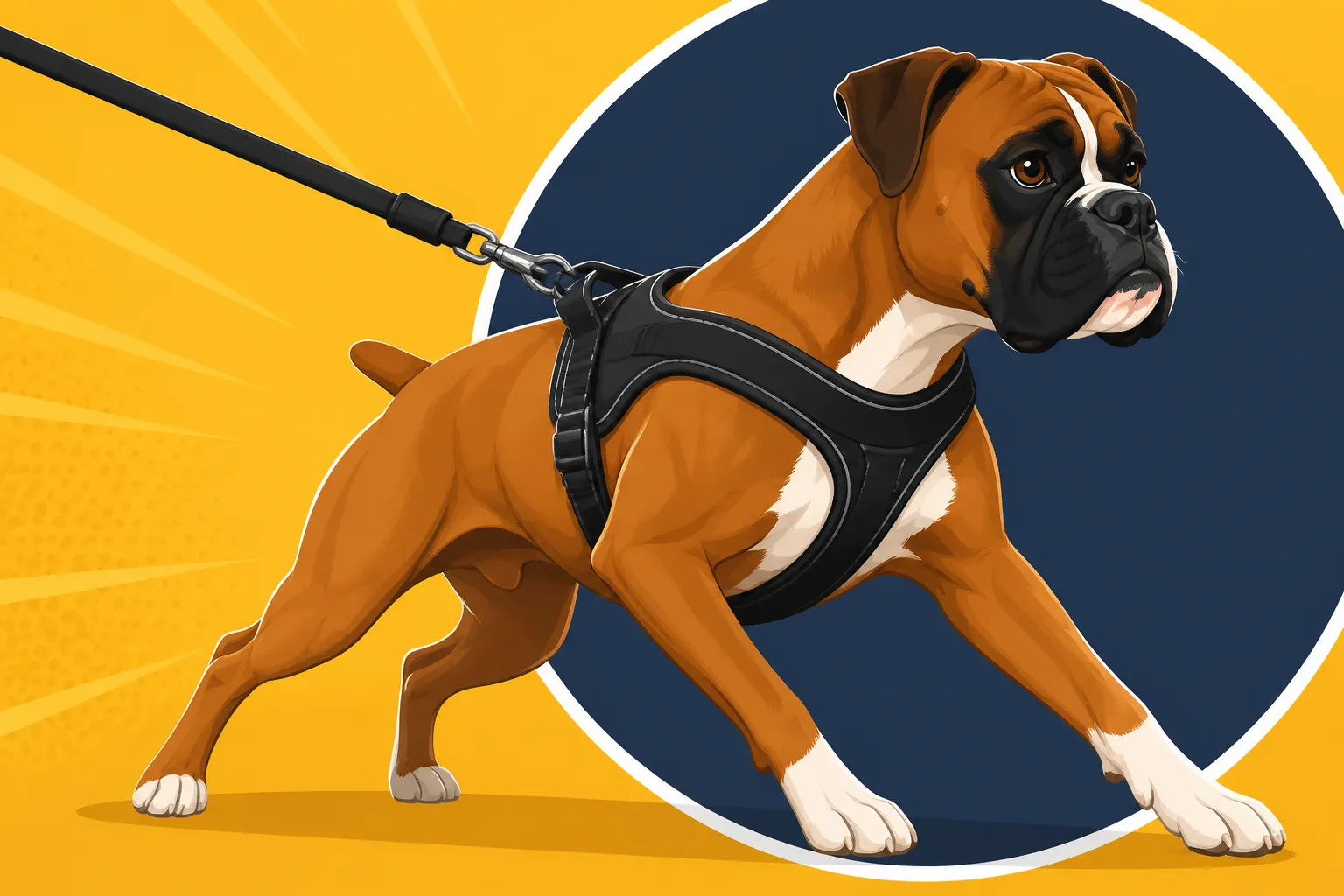
These harnesses have the leash attachment point on the front of your Boxer's chest, usually near the sternum. This design is often recommended for dogs that pull.
- How They Work: When your Boxer pulls forward, the leash attachment on their chest redirects their momentum to the side. Instead of surging straight ahead, they are gently turned toward you. This makes it very difficult for them to generate the same pulling power. It's a subtle but effective way to interrupt the pulling motion without causing discomfort.
- Why They're Great for Boxers: For strong breeds like Boxers, front-clip harnesses can be a game-changer. They offer more control than a back-clip harness and a regular collar, making walks much more manageable while you work on training. Brands like Easy Walk and Sense-ation are popular examples you might find on Amazon. Harnesses That Hold a Pulling Boxer refers to this type of harness specifically.
- Considerations: Ensure proper fit to prevent chafing under the armpits. Some dogs might initially find the turning motion unusual, but most adapt quickly. The leash can sometimes get tangled under their front legs if not held correctly, but this is usually a minor adjustment for the handler.
Dual-Clip Harnesses
Some harnesses offer both a front and a back clip. This gives you flexibility and can be a fantastic tool for training.
- How They Work: You can use just the front clip for maximum no-pull effect, just the back clip for more relaxed walks, or both simultaneously with a double-ended leash. When using both, one end of the leash attaches to the front, and the other to the back, allowing you to fine-tune your control.
- Why They Offer Versatility: This type of harness is excellent for transitioning a pulling Boxer to better leash manners. You can start with the front clip to establish the habit of not pulling, and as their loose-leash skills improve, you can gradually rely more on the back clip or the double-ended leash for more nuanced guidance. It offers a spectrum of control, adapting as your Boxer progresses.
Head Halters (Halti, Gentle Leader)
While technically not a body harness, head halters are often grouped with no-pull solutions and are worth mentioning. They fit over your Boxer's muzzle and around their neck, similar to a horse halter.
- How They Work: The leash attaches under the chin. When your Boxer pulls, their head is gently guided to the side or downwards, interrupting their forward momentum and focus. This gives you incredible control over their head, and where the head goes, the body often follows.
- Why They Can Be Effective: For extremely strong pullers or Boxers with high prey drive, a head halter can offer immediate, effective control. It makes it almost impossible for them to pull hard, and it also allows you to easily redirect their attention away from distractions. Whether a Boxer Should Wear a Head Halter discusses these in more detail.
- Considerations: Many dogs initially resist head halters, trying to rub them off. It's crucial to introduce them very gradually and positively, using lots of treats and praise, making it a comfortable experience. Never yank on a head halter, as it can injure your dog's neck. They should always be used with a degree of gentleness.
Here's a quick comparison of the most common types:
| Harness Type | Leash Attachment | Primary Effect on Pulling | Boxer Suitability for Pulling | Key Considerations |
|---|---|---|---|---|
| Back-Clip | Back | Allows dog to lean in and pull, distributes pressure. | Low | Comfortable for non-pullers, can worsen pulling. |
| Front-Clip | Chest | Redirects forward motion sideways, reduces pulling power. | High | Excellent for training, requires proper fit to prevent chafing. |
| Dual-Clip | Front & Back | Versatile; can use front for no-pull, back for relaxed. | High | Adapts to training progress, good for graduated control. |
| Head Halter | Muzzle (under chin) | Redirects head, making pulling difficult, offers max control. | High (for strong pullers) | Requires positive introduction, not a body harness, gives head control. |
Choosing the Right Harness for Your Boxer
Once you understand the types, selecting the best one for your individual Boxer requires a little thought. It's not just about stopping the pulling, but also about comfort, safety, and long-term training goals.
Prioritizing Comfort and Fit
Regardless of the type, fit is king. A poorly fitting harness can chafe, restrict movement, or even allow your Boxer to slip out.
- Measure Correctly: Always measure your Boxer's chest girth (the widest part behind their front legs) and sometimes their neck circumference. Compare these measurements to the manufacturer's sizing chart. Don't guess.
- Check for Room: You should be able to comfortably slide two fingers under all straps of the harness. It should be snug, but not tight. Pay special attention to the areas behind the front legs; chafing here is common if the harness is too loose or the wrong style.
- Freedom of Movement: Ensure the harness doesn't restrict your Boxer's shoulder movement. Boxers are powerful, and their gait should not be impeded by a harness that's too bulky or sits incorrectly on their chest. Watch them walk and run in it before committing. A good harness should feel like a second skin, allowing natural motion.
Considering Your Boxer's Temperament and Strength
Your Boxer's personality plays a role in which harness will be most effective.
- The Power Puller: For the Boxer who consistently pulls with all their might, a front-clip harness or even a head halter might be your best starting point. These offer the most immediate control and can help you regain some sanity on walks. Some owners find brands available on Amazon offer a wide range of sizes and styles to experiment with.
- The Reactive Boxer: If your Boxer pulls and lunges due to reactivity towards other dogs or people, the immediate redirection offered by a front-clip harness or head halter can be invaluable. It allows you to quickly turn their attention away from the trigger and back to you. A Boxer That Lunges at Passing Dogs provides more context on managing reactivity.
- The Occasional Puller: If your Boxer generally walks well but gets excited by certain triggers, a dual-clip harness might be perfect. You can use the back clip for most of the walk and switch to the front clip (or use a double-ended leash) when you anticipate encountering a distraction.
Durability and Material
Boxers are strong dogs, and their equipment needs to stand up to their power.
- Sturdy Construction: Look for harnesses made with strong nylon webbing, reinforced stitching, and durable hardware (buckles, D-rings). Cheap plastic buckles might not withstand a Boxer's sudden lunge.
- Comfortable Materials: Padded straps, especially in the chest and armpit areas, can greatly increase your Boxer's comfort and reduce the risk of chafing. Some harnesses use breathable mesh or soft neoprene for added comfort.
- Reflective Strips: For evening or early morning walks, reflective elements are a huge safety bonus, making your Boxer more visible to drivers.
Introducing and Using the Harness Effectively
Getting the right harness is only half the battle. How you introduce it and integrate it into your training regimen is just as important.
Positive Introduction is Key
Never just strap on a new harness and head out the door, especially if your Boxer has never worn one, or has had a bad experience.
- Make it Fun: Let your Boxer sniff and investigate the harness. Offer treats when they show interest. Gently place it on them for a few seconds, then remove it and reward them heavily. Repeat this several times over short sessions.
- Gradual Wear: Once they're comfortable with it on for short periods, try leaving it on for a few minutes while they're distracted with a meal or a favorite chew toy. Gradually increase the duration.
- Associate with Good Things: Always pair the harness with positive experiences. Putting it on means treats, playtime, or a walk. Take it off when the fun is over. You could even look at resources like BAXTER & Bella, who often have training modules that focus on positive association for new gear. This kind of consistent positive reinforcement is crucial for a Training a Boxer that gets bored fast.
Consistent Training with the Harness
The harness is a tool, not a magic bullet. It helps manage the pulling, but you still need to teach your Boxer how to walk politely.
- Reward Loose Leash: Every single step your Boxer takes with a loose leash, mark it with a verbal cue ("yes!" or a clicker) and reward with a high-value treat. This is called positive reinforcement and it teaches them what you want them to do.
- Change Direction: If your Boxer starts to pull, stop walking immediately. Don't say anything, just become a tree. Once the leash loosens, even for a second, reward them and start walking again. Another technique is to abruptly change direction whenever they pull. This constantly disorients them and makes pulling unproductive.
- Short, Frequent Sessions: Instead of one long, frustrating walk, try several short, focused training sessions throughout the day. This keeps your Boxer engaged and prevents them from getting overtired or frustrated. Remember, Why Short Sessions Suit a Boxer's Attention Span.
- Practice in Low-Distraction Areas First: Don't start trying to tackle busy sidewalks with a new harness and new training. Begin in your quiet backyard or a very calm park, gradually increasing distractions as your Boxer improves.
- Seek Professional Help: If you're struggling, a certified professional dog trainer can provide invaluable guidance and personalized techniques. They can help you fine-tune your use of the harness and your training methods. Group Class Against Private Work for a Boxer offers different avenues for this.
When to Consider a Different Approach
While harnesses are fantastic, they might not be the sole answer for every Boxer in every situation.
- Underlying Issues: If your Boxer is pulling excessively due to extreme anxiety, fear, or over-arousal, a harness will help manage the physical act of pulling but won't address the root emotional cause. In these cases, consult with a veterinary behaviorist or a certified professional dog trainer who specializes in behavior modification.
- Energy Management: Sometimes, excessive pulling is simply a symptom of unmet exercise needs. Boxers are high-energy dogs. Ensuring they get adequate physical and mental stimulation before a walk can make a huge difference in their leash manners. Sixty to Ninety Minutes a Day With a Boxer outlines their exercise requirements. A tired Boxer is often a better-behaved Boxer.
- Consistency is Crucial: If you use a harness inconsistently, or only sometimes apply training methods, your Boxer will get mixed signals. Everyone in the household who walks the dog needs to be on the same page regarding harness use and training protocols.
By understanding the types of harnesses, fitting them correctly, and using them as a part of a consistent positive reinforcement training plan, you can transform your walks with your pulling Boxer from a chore into a joy.
Disclaimer
This article is for general informational purposes only and does not constitute professional advice. Laws, prices and regulations vary by location and change over time. Consult a qualified professional for guidance on your specific situation.