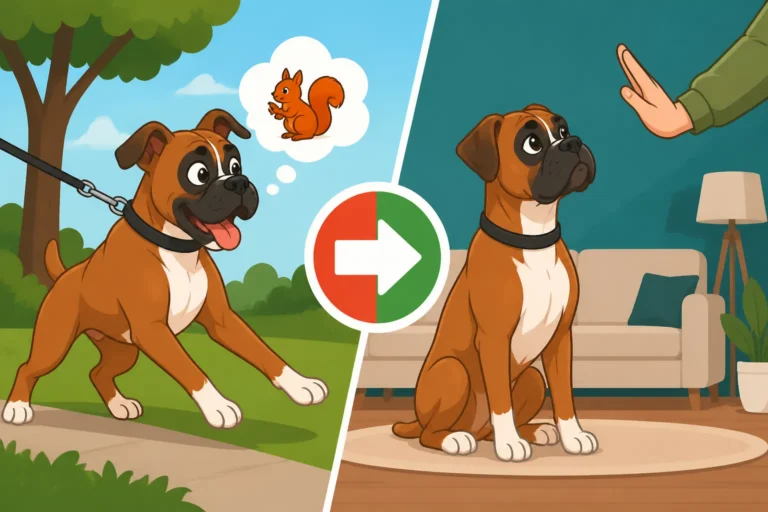
Group Class Against Private Work for a Boxer
One of the biggest dilemmas Boxer owners face when embarking on their training journey is deciding between group classes and private, one-on-one sessions. It’s a common frustration to feel like you’re throwing money at a problem without seeing results, or worrying that you’re not giving your energetic, often goofy Boxer the specific guidance they need. This guide will walk you through the distinct advantages and disadvantages of each training method, helping you determine which approach, or combination of approaches, will best set your Boxer up for success.
Understanding the Boxer Learner: Why They're Different
Boxers are wonderfully unique dogs, full of personality and boundless energy, but their distinct traits also mean they learn a little differently than some other breeds. Understanding these characteristics is crucial when deciding on the best training environment for your furry friend. It's not about them being "difficult," but rather about tailoring the approach to their inherent nature.
The Boxer's "Forever Puppy" Mentality
It's a common saying among Boxer enthusiasts that they never truly grow up, often retaining their exuberant, puppy-like behavior well into their "teenage" years, which for Boxers can stretch up to three years old. This isn't just a cute quirk; it means their attention spans can be shorter, their impulses stronger, and their desire for play often outweighs their immediate focus on formal commands. You might find your 18-month-old Boxer still trying to mouth your hands like they did at 12 weeks, or zooming around the yard with the same wild abandon as a young pup. This extended period of adolescence can make consistent training a marathon, not a sprint. Knowing this helps you manage your expectations and select a training style that accommodates their prolonged puppyhood rather than fighting against it. For more on this, check out The Boxer Puppyhood That Lasts Three Years.
High Energy, Short Attention Span
Boxers are athletes at heart, built for strength and speed. This means they come with a significant amount of energy that needs to be channeled constructively. A bored Boxer is often a destructive Boxer. However, paradoxically, their high energy can sometimes be coupled with a surprisingly short attention span when it comes to repetitive tasks. They thrive on novelty and engaging activities, but prolonged, monotonous drills can lead to them "shutting down" or finding their own, less desirable, forms of entertainment. Think of it like a bright, active child who quickly loses interest in a dry lecture but excels in hands-on learning. Finding ways to make training fun and dynamic, incorporating play and movement, is key to keeping their minds engaged. You might find yourself constantly needing to figure out Keeping Boxer Training Sessions Interesting.
Sensitivity to Tone and Force
Despite their robust appearance, Boxers are remarkably sensitive dogs. They respond best to positive reinforcement, clear communication, and a gentle, encouraging tone. Yelling, harsh corrections, or physical punishment can be incredibly counterproductive, often causing a Boxer to become anxious, withdrawn, or even more stubborn. They're intelligent enough to understand what you want, but they'll often dig their heels in if they feel unfairly treated or overwhelmed. Building trust and a strong bond through positive methods is paramount. If you've ever tried to be stern with your Boxer and watched them visibly deflate, you know exactly what I mean. Understanding Why a Boxer Shuts Down When You Get Loud is vital for effective training.
The Benefits and Drawbacks of Group Training for Boxers
Group classes are often the first port of call for new puppy owners or those looking to brush up on their dog's manners. They can be a fantastic resource, but it's important to weigh their pros and cons specifically for a Boxer's temperament.
Socialization Opportunities and Distractions
One of the biggest selling points of group classes is the built-in socialization. Your Boxer will be exposed to other dogs of various breeds, sizes, and temperaments, as well as different people, sights, and sounds, all in a somewhat controlled environment. This is invaluable, especially for a young Boxer puppy. Socializing a Boxer Puppy Before Sixteen Weeks is critical for their development, and a good group class can provide a safe space for these early experiences. This exposure helps prevent fear, reactivity, or over-excitement around other dogs later in life.
However, this very benefit can also be a significant challenge for a high-energy, easily distracted Boxer. The presence of other dogs and people means a constant stream of novel stimuli. For a Boxer, this can often lead to over-arousal. They might be so excited by the other dogs that they struggle to focus on you, pulling on the leash, barking, or just generally being a "clown." This means that while they are getting exposure, they might not be learning manners around those distractions initially. An instructor might need to help you manage your Boxer's intense desire to play and interact. It’s not uncommon for a Boxer to spend the first few classes trying to get every other dog to play with them, rather than paying attention to the "sit" command.
Cost-Effectiveness and Instructor Support
Generally, group classes are more affordable than private training. You're sharing the instructor's time with several other students, which brings the individual cost down considerably. This can make professional training accessible for many families. Plus, you get the benefit of observing how other dogs and handlers are progressing, learning from their successes and challenges, and feeling part of a community.
You also get a knowledgeable instructor to guide you. A good instructor can help you troubleshoot common Boxer behaviors, offer advice on managing their energy, and provide instant feedback on your technique. They can spot when your Boxer is about to jump on a visitor in class or start pulling hard on the leash, offering strategies in the moment. This can be incredibly empowering, especially for first-time Boxer owners who might feel overwhelmed by their dog's boundless enthusiasm. Many group classes also offer structured curriculum, which can be helpful for new owners.
When Group Classes Might Not Be the Best Fit
While group classes are great, they aren't a magic bullet for every Boxer. If your Boxer already exhibits significant behavioral issues, such as severe leash reactivity (lunging and barking at other dogs), aggression towards people or dogs, or extreme anxiety, a group setting might be too overwhelming and could even exacerbate the problem. The stress of being in a close proximity to other dogs could push them over their threshold, making actual learning impossible. Similarly, if your Boxer is extremely timid or easily frightened, a busy class environment might overwhelm them rather than build confidence.
Another drawback is the pace. Group classes move at a general pace designed for the average dog and handler. If your Boxer is a super-fast learner in some areas but struggles significantly in others, or if you yourself need more personalized guidance, the class pace might feel too slow or too fast. You might also find that the general curriculum doesn't address your specific concerns, like your Boxer's tendency to A Boxer That Jumps on Every Visitor at home, or their particular brand of puppy nipping that doesn't seem to be improving.
The Benefits and Drawbacks of Private Training for Boxers
Private training offers a completely different approach, bringing a dedicated trainer directly to you and your Boxer. This can be a game-changer for many owners, especially those dealing with specific challenges.
Tailored Focus and Individualized Pace
The most significant advantage of private training is the customized experience. The trainer can observe your Boxer in their home environment, identifying specific triggers and behaviors that might not manifest in a classroom setting. The training plan is then built entirely around your Boxer's unique personality, your family's lifestyle, and your specific goals. If your Boxer needs extra time on impulse control or has a hard time focusing on Why Repetition Loses a Boxer, the trainer can adapt the session on the fly.
This means every minute of the session is dedicated to your Boxer's progress. There are no other dogs to distract, no other owners to share the trainer's attention with. This intensive focus can lead to faster progress on specific issues. If you're struggling with a Boxer that pulls like a freight train on walks, a private trainer can spend the entire hour working on A Boxer That Pulls Hard on Walks right on your street, using the real-world distractions you encounter daily. They can teach you techniques that are effective for your particular dog, rather than a one-size-fits-all approach.
Addressing Specific Behavioral Challenges
When your Boxer develops a particular "quirk" that's more than just a lack of basic manners – maybe they're guarding their toys, showing mild reactivity on walks, or struggling with separation anxiety – private training truly shines. These complex issues often require a deep dive into the underlying causes and a nuanced, consistent approach that is difficult to achieve in a group setting. A private trainer can develop specific protocols, provide hands-on demonstrations, and guide you through the process of modifying challenging behaviors.
For instance, if your Boxer is showing signs of anxiety when left alone, a private trainer can observe their behavior, help you set up appropriate management strategies, and implement desensitization and counter-conditioning protocols in the environment where the problem occurs. They can help you understand your Boxer's body language and anticipate potential problems before they escalate. This specialized attention is often crucial for turning around more ingrained or problematic behaviors.
The Investment and Time Commitment
The primary drawback of private training is typically the cost. You are paying for an instructor's undivided attention and expertise, which naturally comes at a higher hourly or package rate than group classes. This can be a significant financial investment, and it's something every owner needs to budget for. However, many owners find the accelerated progress and the ability to solve specific, frustrating issues make the cost worthwhile in the long run.
Beyond the financial aspect, private training also demands a significant time commitment from you. While the trainer provides the expertise during the session, the real work happens between sessions when you consistently practice what you've learned. This means dedicating time daily to reinforce commands, manage your Boxer's environment, and practice new skills. It's an active partnership between you and the trainer, and success hinges on your willingness and ability to follow through. Some owners, while well-intentioned, struggle to find the consistent time required, which can slow progress. This is where tools like online resources, such as those from BAXTER & Bella, can supplement private sessions, offering continuous support and exercises you can do at home. You can also find many helpful training tools like long lines, treat pouches, and durable chews on Amazon to support your at-home practice.
Deciding What's Best for Your Boxer and Your Lifestyle
Ultimately, there's no single "right" answer when choosing between group and private training. The best approach often depends on a combination of your Boxer's individual personality, their current training level, your specific goals, and your own lifestyle.
Assessing Your Boxer's Temperament and Needs
Start by taking an honest look at your Boxer. Are they generally confident and outgoing, unfazed by new environments and other dogs? Or are they easily overwhelmed, shy, or prone to extreme excitement?
- For a young, generally confident Boxer puppy: A good quality group class focused on socialization and basic manners can be an excellent starting point. The exposure is invaluable, and you can learn foundational skills. Just be prepared to manage their excitement and keep the sessions fun and engaging. You'll still need to put in a lot of individual practice at home, working on Getting a Boxer's Attention Outdoors.
- For a Boxer with specific behavioral issues: If your Boxer has a history of reactivity, fear, resource guarding, or significant leash pulling that isn't just puppy exuberance, private training is likely the more effective first step. It allows for a safe, controlled environment to address the root cause of the behavior without overwhelming your dog. Once these issues are managed, they might then be able to integrate into a controlled group setting, if desired.
- For an easily distracted Boxer: If your Boxer struggles immensely with focus in distracting environments, private training can help build a strong foundation of attention and responsiveness before introducing the chaos of a group class. This way, when they do enter a group setting, they have a better chance of succeeding. Even intelligent Boxers can be quite "stubborn" when distracted, which is sometimes mistaken for a lack of intelligence. Whether a Boxer Is Smart or Just Stubborn often comes down to their environment and motivation.
Considering Your Own Experience and Goals
Your experience level as a dog owner and your personal goals for your Boxer also play a huge role.
- First-time Boxer owners: You might benefit greatly from the direct guidance of a private trainer, especially in the early stages. They can help you navigate the Boxer's unique energy, sensitivity, and strong will, preventing common pitfalls. However, group classes can also be wonderful for building your confidence and seeing how other dogs learn.
- Specific skill goals: If you have very specific goals, like preparing your Boxer for a therapy dog certification or advanced obedience competition, private lessons with a specialist in that area would likely be more effective. If your goal is simply a well-mannered family pet, both options can work, depending on your Boxer.
- Schedule and budget: Your own schedule and budget are practical considerations. Group classes typically have fixed schedules, which can be hard to fit into a busy life. Private training often offers more flexibility. The cost difference is also significant, and it's essential to factor this into your long-term commitment to your Boxer's training.
Blending Approaches for Comprehensive Training
Often, the most effective training plan for a Boxer involves a blend of both group and private work. You might start with private sessions to address foundational skills or specific challenges in a distraction-free environment. Once your Boxer has a solid grasp of basic commands and has made progress on their unique issues, they might then transition to a group class to practice those skills with real-world distractions and for continued socialization. This hybrid approach leverages the strengths of both methods.
For example, you might work one-on-one with a trainer to teach your Boxer not to mouth so hard or to walk politely on a leash in your neighborhood. Once those skills are strong, enrolling in an intermediate group obedience class can help solidify those behaviors around other dogs and people, adding a layer of proofing to their training. This gives your Boxer the best of both worlds: personalized attention for their specific needs and valuable experience in a social setting.
| Feature | Group Training | Private Training |
|---|---|---|
| Cost | Generally lower per session | Generally higher per session |
| Socialization | Excellent opportunity for exposure to other dogs/people | Limited, separate socialization efforts needed |
| Distractions | High, can be overwhelming for some Boxers | Low, controlled environment allows focus |
| Pace | Set by the class, may be too fast or slow | Tailored to your Boxer's individual learning speed |
| Focus | General obedience, basic manners | Specific behavioral issues, individualized skill building |
| Environment | Classroom/training facility | Your home, neighborhood, or other real-world settings |
| Instructor Feedback | Shared among class participants | Dedicated, one-on-one attention and feedback |
| Flexibility | Fixed schedules | Often more flexible scheduling |
| Best For | Confident puppies, basic manners, continued socialization | Specific behavioral problems, shy/reactive dogs, advanced skills |
Ultimately, investing in your Boxer's training is an investment in your relationship and their quality of life. Whether you choose group classes, private sessions, or a combination, consistency, patience, and positive reinforcement will be your most powerful tools in shaping your energetic, loving Boxer into a well-mannered companion.
Disclaimer
This article is for general informational purposes only and does not constitute professional advice. Laws, prices and regulations vary by location and change over time. Consult a qualified professional for guidance on your specific situation.