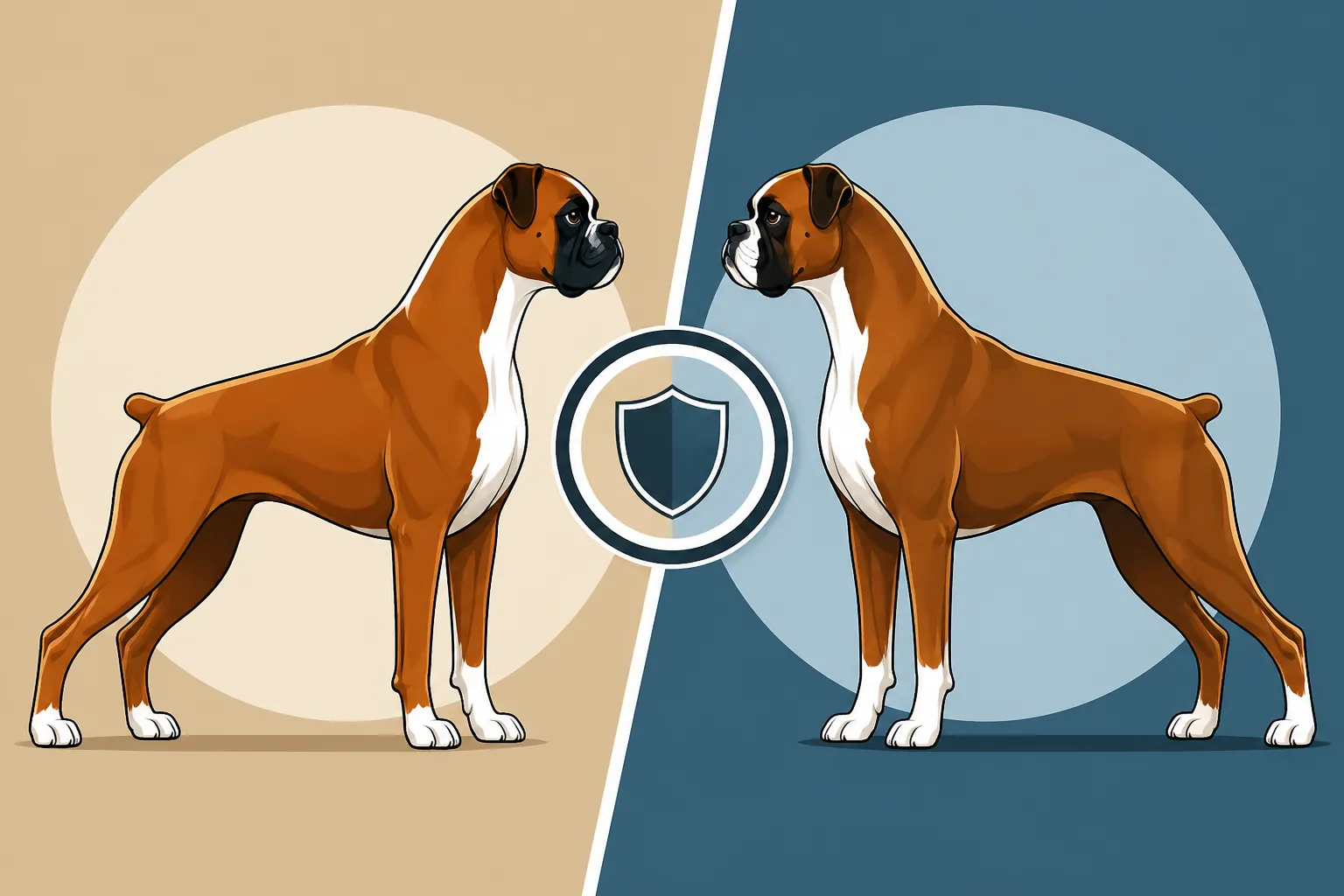
How Little the Boxer Standard Has Changed
It’s easy to assume that dog breeds, like everything else, have undergone significant transformations over the decades, changing dramatically with trends or breeding fads. But for anyone who has loved a Boxer, it's a wonderfully comforting surprise to discover just how steadfastly consistent their breed standard has remained, ensuring that the Boxer you cherish today is remarkably similar to the Boxers bred over a century ago. This guide explores the incredible stability of the Boxer breed standard and why that consistency is a testament to the dedication of its early fanciers.
The Enduring Blueprint: Establishing the Boxer Standard
The story of the Boxer's unwavering standard really begins with its very inception in Germany. Unlike some breeds that evolved organically over centuries, the Boxer was intentionally developed in the late 19th century, with its foundational breeders having a very clear vision in mind. They weren't just creating a new dog; they were crafting a specific type, designed for particular tasks, and they wanted to ensure that type was preserved for generations.
The first official breed standard was drawn up in 1902 by the Deutscher Boxer Club (German Boxer Club), a group of dedicated fanciers who laid out a meticulous blueprint for everything a Boxer should be, from its physical appearance to its inherent temperament. This wasn't some loosely worded suggestion; it was a detailed document specifying everything from head shape to tail set, and perhaps most importantly, outlining the desired character. The foresight and thoroughness of these early breeders were truly remarkable. They didn't just describe what the Boxer was; they defined what it should always be. This early commitment to a precise standard is the bedrock upon which the breed's incredible consistency rests. It meant that every subsequent generation of breeders had a clear, detailed guide to work towards, minimizing drift and maintaining the core essence of the Boxer. You can really get a sense of this dedication when you look at The German Origins of the Boxer.
Physical Traits: A Glimpse into the Past, Present, and Future
One of the most striking aspects of the Boxer's consistent standard is how little its physical description has changed. If you were to show a Boxer from a 1920s dog show to a modern Boxer enthusiast, they would instantly recognize the breed.
The Distinctive Boxer Head
The Boxer's head, with its unique undershot jaw and characteristic muzzle, is perhaps its most defining feature, and it has remained virtually unaltered in the breed standard. The standard specifically calls for a head that is in proportion to the body, with a strong, deep muzzle. The slight upturn of the muzzle, often described as having a "turned-up" quality, has always been a hallmark. This isn't just an aesthetic choice; it’s rooted in the breed's working history. The original Bullenbeisser, the Boxer's ancestor, needed a broad, strong jaw to grip game, and while the modern Boxer is a family companion, that powerful jaw and distinctive head shape have been meticulously preserved. Why a Boxer's Muzzle Turns Up delves deeper into this fascinating aspect.
The standard details the specific proportions of the skull to the muzzle, the stop, and even the set of the eyes, ensuring that the unique "Boxer expression" is maintained. It dictates the preferred depth of the jowls and the placement of the teeth in that iconic undershot bite. This precision leaves little room for interpretation, guiding breeders to produce dogs that consistently embody the ideal. Looking for toys on Chewy for a strong chewer like a Boxer means finding options that can stand up to that powerful, historically important jaw!
Body and Build: Athletic and Elegant
Beyond the head, the Boxer's overall conformation – its strong, muscular build, elegant outline, and powerful gait – has also seen very little deviation. The standard describes a dog that is square in build, meaning its body length from breastbone to rear is roughly equal to its height at the shoulder. It calls for strong, straight legs, well-developed chest, and a level back.
The emphasis is on an athletic yet refined appearance, a dog that is both powerful and agile. This balance is crucial, as the Boxer was originally bred for various roles requiring strength, speed, and endurance. Even today, a well-bred Boxer moves with a characteristic elastic gait, reflecting its powerful hindquarters and supple back. This consistent physical blueprint means that whether you're watching a Boxer compete in the show ring or just observing your own romp in the yard, you're seeing a dog whose form truly mirrors its historical function. You can learn more about these physical ideals in The Boxer the Breed Standard Describes.
Coat Color and Markings
While there can sometimes be debate or preference for certain shades, the range of acceptable Boxer coat colors has also remained remarkably stable: fawn and brindle, with white markings. The standard clearly defines what is permissible and what constitutes a disqualifying fault, such as excessive white or a solid black coat.
Even the discussion around white Boxers, which some might assume is a modern controversy, has historical roots. While white Boxers are born from fawn and brindle parents and are genetically purebred Boxers, the standard has always considered them undesirable for exhibition due to their lack of pigmentation. This strict adherence to color, dictated from the early days, highlights the commitment to a very specific aesthetic and genetic profile. You can explore this further in Boxer Colors and the White Question. For a long time, white Boxers were often culled, but thankfully, that practice is largely gone, and they make wonderful pets, even if they can't compete in conformation shows.
Character and Temperament: The Enduring Boxer Spirit
Perhaps even more important than the physical traits is the Boxer's temperament, which the breed standard has consistently emphasized as a cornerstone of the breed. From the very beginning, the Boxer was intended to be more than just a working dog; it was meant to be a loyal, courageous, and companionable animal.
The Fearless and Devoted Companion
The standard describes the Boxer as having "great character," being "loyal and attached to its master and household, watchful and fearless." This blend of unwavering loyalty and inherent bravery has been a consistent trait for over a century. They're often called the "eternal puppy" or "clown of the dog world" due to their playful antics, but this spirited nature is underpinned by a deep devotion to their families. They are naturally protective without being inherently aggressive, a crucial distinction that breeders have worked hard to maintain. What the Standard Says About Boxer Character elaborates on this vital aspect.
This consistency in temperament means that when you bring a Boxer into your home, you can generally expect a dog that is intelligent, eager to please (though often with a stubborn streak!), and profoundly affectionate. They thrive on human companionship and are known for their strong bonds with children. This predictability in temperament, thanks to the unchanging standard, is one of the breed's greatest strengths, allowing potential owners to confidently choose a Boxer knowing they are likely to get that classic, loving personality. This is why you'll find so many fun, durable toys on Chewy that are perfect for a playful, energetic Boxer, encouraging their good-natured spirit.
Alertness and Watchdog Instincts
The standard also highlights the Boxer's alertness and its ability to be a vigilant watchdog. While not typically a guard dog in the aggressive sense, they are quick to notice anything out of the ordinary and will alert their family with their characteristic "woof-woof" bark. This keen awareness, combined with their confident demeanor, makes them excellent family protectors. This protective instinct, present from the earliest days of the breed, continues to be a cherished trait. Whether a Boxer Is Naturally Protective provides a deeper look into this aspect of their personality.
The Role of Breed Clubs in Preserving the Standard
The remarkable stability of the Boxer standard isn't an accident; it's the result of continuous, dedicated effort by breed clubs and individual fanciers. From the Deutscher Boxer Club in Germany to the American Boxer Club in the United States, these organizations have been the custodians of the breed standard.
They hold conformation shows where Boxers are judged not on current fads, but on how closely they conform to this detailed, historic blueprint. Judges are trained to interpret the standard precisely, rewarding dogs that exemplify the ideal and faulting those that deviate. This rigorous system ensures that breeders continue to strive for the original vision, resisting pressures to alter the breed's appearance or temperament for fleeting trends.
The AKC, for instance, adopted the German standard with only minor clarifications, demonstrating the international consensus on what a Boxer should be. This collective commitment, spanning continents and generations, has been instrumental in preserving the Boxer as we know it. When selecting food or supplies for your Boxer, remember that reputable brands, often found on platforms like Chewy, understand these breed-specific needs and characteristics.
Conclusion: A Living Legacy
In a world where change is constant, the Boxer stands as a testament to the power of a well-defined and rigorously maintained breed standard. The Boxers of today are, in essence, living replicas of their ancestors from the turn of the 20th century. Their distinctive looks, athletic build, and joyful, devoted temperament are not accidental; they are the result of a deliberate, unchanging blueprint laid down by visionary breeders and faithfully upheld by generations of enthusiasts. This incredible consistency provides a comforting predictability for those of us who love this remarkable breed, ensuring that the unique "Boxer magic" endures.
| Trait Category | Original Standard (Early 1900s) | Modern Standard (Today) | Consistency Level |
|---|---|---|---|
| Head Shape | Strong, deep muzzle, distinct stop, undershot jaw, dark eyes | Strong, deep muzzle, distinct stop, undershot jaw, dark eyes | High |
| Body Type | Square, muscular, athletic, deep chest, level back | Square, muscular, athletic, deep chest, level back | High |
| Coat Color | Fawn, brindle, limited white markings | Fawn, brindle, limited white markings | High |
| Temperament | Loyal, courageous, intelligent, playful, watchful | Loyal, courageous, intelligent, playful, watchful | High |
| Gait/Movement | Free, powerful, elastic, covering ground with reach and drive | Free, powerful, elastic, covering ground with reach and drive | High |
| Ear Cropping/Tail Docking | Common practice, described in standard | Optional, practice varies by region and owner choice | Moderate (standard still describes, but practice is variable) |
Disclaimer
This article is for general informational purposes only and does not constitute professional advice. Laws, prices and regulations vary by location and change over time. Consult a qualified professional for guidance on your specific situation.