What the First Boxer Standard Said in 1902
Understanding the origins of any breed can feel a bit like sifting through ancient scrolls, especially when you're trying to figure out why your beloved Boxer acts the way he does, or why he looks a certain way. But for Boxer owners, delving into the first written standard from 1902 isn't just an academic exercise; it's a peek into the very blueprint that shaped the amazing dogs we share our lives with today. This guide will walk you through that pivotal document, showing you how the foundational ideas still echo in your Boxer's temperament and appearance.
The Foundation: Why a Breed Standard Matters
Back in the late 19th and early 20th centuries, as dog breeds began to formalize, there was a real need to define what each breed should be. Without a clear standard, you'd have a vast array of dogs all called "Boxers" but looking and behaving wildly differently, making it impossible to breed for specific traits or predict offspring. This lack of consistency was a huge headache for dedicated breeders who had a vision for the future of their dogs.
Imagine trying to select breeding stock when every dog looks a little different, and there's no common agreement on what constitutes "correct." You'd end up with a hodgepodge rather than a distinct breed. The initial Boxer standard was an attempt to bring order to this exciting but sometimes chaotic landscape of emerging dog types. It wasn't about stifling variety entirely, but about channeling it towards a specific, recognizable, and desirable ideal.
Early Boxers and the Call for Consistency
Before a formal standard, the ancestors of the Boxer were working dogs, often called Bullenbeissers, used for hunting large game and as butcher's dogs. These dogs were bred for functionality – a strong grip, tenacity, and courage – rather than a uniform appearance. However, as dog shows gained popularity and people started taking a more scientific approach to breeding, enthusiasts recognized the need to consolidate these varying types into a coherent breed. They wanted a dog that not only performed its job but also looked the part, with specific physical characteristics that set it apart.
The early Boxer breeders were passionate individuals who saw immense potential in these powerful, athletic dogs. They weren observed a range of sizes, head shapes, and temperaments within what they loosely called "Boxers." To progress, they realized they needed a common goal, a written description that would serve as a guide for selection, breeding, and judging. This document would become the touchstone for ensuring that the Boxer breed developed with purpose and predictability, preventing it from fragmenting into endless variations.
The Birth of the Deutscher Boxer Club
This pressing need for definition led to the formation of the Deutscher Boxer Club (German Boxer Club) in 1895. This dedicated group of Boxer pioneers understood that to truly establish the breed, they couldn't just rely on individual opinions or regional preferences. They needed a unified vision, a consensus on what made a Boxer, well, a Boxer. This club became the driving force behind creating that definitive standard.
The Deutscher Boxer Club's mission was clear: to protect and promote the Boxer breed according to a clearly defined set of characteristics. It wasn't just about creating a pretty picture; it was about preserving the working capabilities, the robust health, and the distinctive personality that these breeders cherished. They meticulously discussed, debated, and finally documented every aspect of the ideal Boxer, culminating in the publication of the first official breed standard in 1902. This document, published by the very club responsible for its creation, was a landmark moment, providing a shared understanding and a roadmap for all future Boxer enthusiasts. The German Origins of the Boxer tells more about these early days.
Decoding the 1902 Standard: Appearance and Temperament
The 1902 Boxer standard was surprisingly detailed for its time, laying out a comprehensive description that still forms the backbone of how we perceive Boxers today. It covered everything from their overall impression to the minute details of their teeth and coat. For anyone who loves the breed, looking at this initial blueprint is like seeing the very foundation of their furry family member.
The Ideal Boxer Physique and Movement
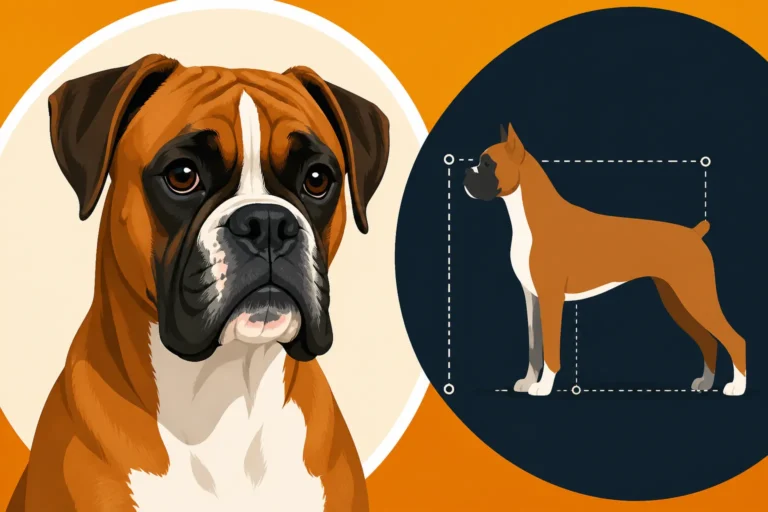
The standard described the Boxer as a "medium-sized, sturdy, short-haired dog of stocky build," emphasizing strength, agility, and nobility. It wasn't just about muscle; it was about a harmonious balance that allowed the dog to move with power and grace. The body was to be square, meaning the length from the point of the shoulder to the point of the buttock should be equal to the height at the withers. This "squareness" is a hallmark of the breed, contributing to their athletic, compact look.
Furthermore, the standard detailed the importance of a deep chest, well-sprung ribs, and a strong, straight back that flowed into a powerful hindquarter. These physical attributes were crucial not only for aesthetic appeal in the show ring but also for the Boxer's original working capabilities. A dog with this build could be agile enough to course game and strong enough to hold it. The movement described was free, firm, and ground-covering, indicating a dog capable of sustained activity, without any clumsiness or restricted gait.
The Distinctive Boxer Head and Muzzle
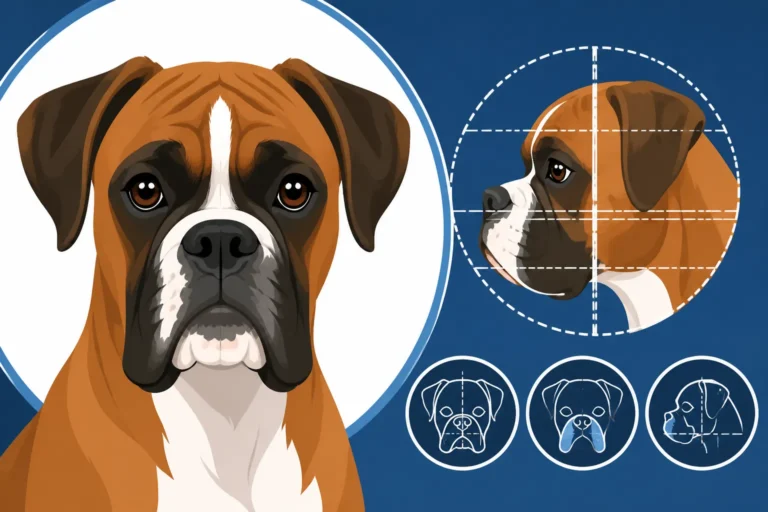
Perhaps the most defining characteristic, and one that received considerable attention in the 1902 standard, was the Boxer's head. It had to be "clean and without wrinkles," broad, and proportioned to the body. Crucially, the standard called for a muzzle that was "as broad as possible and powerful," describing a distinct turn-up of the lower jaw. This "undershot" bite, where the lower jaw extends beyond the upper jaw, was not merely a cosmetic quirk; it was an essential functional trait. Why the Boxer Was Given a Turned-Up Muzzle goes into more detail.
The teeth were to be "strong and healthy," and the lower incisors were expected to project in front of the upper ones. The lips were specifically described as meeting at the corners, with the upper lip resting on the lower. The standard also emphasized the importance of dark eyes and a black nose, contributing to the breed's alert and intelligent expression. This detailed description of the head, particularly the jaw and muzzle, set the Boxer apart from other breeds and underscored its heritage as a gripping dog. The Boxer Chin, Muzzle and Bite and What an Undershot Boxer Bite Means provide further context on these unique features. Even today, when you're picking up new dental chews from Chewy, you're subconsciously considering how they'll fit that distinctive Boxer jaw.
Accepted Colors, Coat, and the White Debate
The 1902 standard recognized two primary colors: fawn and brindle. Fawn could range from a light yellow to a deep red, while brindle was defined as fawn with dark, clearly defined stripes running parallel to the ribs. White markings were permitted, but there were strict limitations on their extent, with specific mention that more than one-third white would be considered a fault. This was a crucial point, as white Boxers, while genetically present, were not then considered the ideal for the breed standard.
The coat itself was described as "short, hard, glossy, and lying close to the body." This short, sleek coat is characteristic of the Boxer and contributes to its clean-lined appearance. It's easy to maintain, which is a bonus for busy owners trying to keep up with daily life while also looking for great deals on high-quality food or durable toys on Chewy. The careful delineation of acceptable colors and markings in the original standard highlights the early breeders' desire for a uniform and recognizable look across the breed. Boxer Colors and the White Question delves into the historical context and ongoing discussions about white Boxers.
Character: Fearless Guardian and Playful Companion
Beyond physical attributes, the 1902 standard provided a robust description of the Boxer's character, which, perhaps more than anything else, truly captures the essence of the breed that has endured. It called for a dog that was "calm and self-assured, fearless and courageous," but also "good-natured and playful." This combination perfectly encapsulates the Boxer's dual nature: a loyal protector with an undeniable sense of humor.
The standard emphasized their faithfulness to their family and their suspicion towards strangers, without being overly aggressive. This balanced temperament was highly valued, making the Boxer an ideal family guardian who could also be a joyous companion. Even today, Boxer owners will tell you that their dogs are goofy, energetic, and endlessly affectionate with their loved ones, while maintaining a watchful eye on their surroundings. It's a testament to the foresight of those early breeders that this fundamental character description remains so true to the Boxers we know and love. Boxer Temperament in the Standard and in Life offers more insights into this beloved trait.
Practicalities and Peculiarities of the Early Standard
Reading a historical breed standard isn't just about understanding physical traits; it also offers a window into the cultural norms and practical considerations of the time. The 1902 Boxer standard is no exception, containing elements that highlight past practices which have evolved significantly in modern dog ownership.
Ear Cropping and Tail Docking as Expected Practice
One of the most striking aspects of the 1902 standard, for a modern reader, is the implicit acceptance and even expectation of ear cropping and tail docking. While the standard didn't explicitly detail how these procedures should be done, it described the ideal appearance of a Boxer with cropped ears and a docked tail. The ears were to be "cut to a point and carried erect," and the tail was "short and carried upwards." At the time, these practices were commonplace across many working breeds, believed to enhance the dog's working ability (e.g., preventing ear injuries) and contribute to a sharper, more alert appearance.
For the early Boxer breeders, these modifications were integral to the breed's aesthetic and functional identity. They were not seen as controversial, but rather as standard procedure to achieve the desired "type." This stands in stark contrast to today, where ear cropping is banned or heavily restricted in many parts of the world, and tail docking is increasingly viewed with ethical scrutiny. The evolution of these practices reflects changing societal attitudes towards animal welfare and cosmetic surgeries. It's a reminder that what was once a given for a Boxer's appearance, as seen in the original standard, is now a complex ethical discussion for owners and breeders. Boxer Ear Cropping and Tail Docking provides a contemporary view of these practices.
Breed Specific Health Considerations Implicit in the Standard
While the 1902 standard didn't use modern veterinary terminology, some of its descriptions subtly hint at breed-specific health characteristics that Boxer owners contend with even today. The emphasis on a short muzzle and an undershot jaw, while defining for the breed, inherently describes a brachycephalic (flat-faced) dog. This physical structure, as we now understand, comes with certain respiratory challenges, especially in heat or during strenuous exercise. Early breeders valued the functionality of this head structure for gripping, perhaps without fully realizing the long-term respiratory implications.
Similarly, the muscular, square build, while ideal for power and agility, also puts particular stresses on joints and the cardiovascular system over a dog's lifetime. Although the standard focused on desirable traits, the very definitions laid down in 1902 created the genetic predisposition for some of the health issues we now associate with Boxers, such as certain heart conditions or joint problems. Understanding these foundational descriptions helps us appreciate why modern Boxer breeders and owners are so focused on health screenings and responsible care, often sourcing specialized diets and supplements from places like Chewy to support their Boxer's unique needs.
The Enduring Legacy for Today's Boxers
It's truly remarkable how a document penned over a century ago continues to influence the Boxer breed across the globe. The 1902 standard wasn't just a fleeting description; it was the genesis of a vision that has been carefully nurtured and adapted, yet never fundamentally abandoned.
How the 1902 Standard Shaped Modern Breed Guidelines
The 1902 standard served as the essential blueprint from which all subsequent Boxer breed standards, whether from the American Kennel Club, the Kennel Club (UK), or other international organizations, have evolved. While minor revisions have occurred over the decades to clarify language, reflect new understandings, or adapt to changing practicalities (like the debate over cropping and docking), the core essence remains. The emphasis on the square body, the distinctive head with its undershot jaw, the muscular physique, and the noble yet playful temperament—these are all direct inheritances from that foundational document. How Little the Boxer Standard Has Changed highlights this remarkable consistency.
For example, when judges evaluate Boxers in the show ring today, they are still looking for many of the same proportional balances and characteristic features outlined in 1902. The very terms used to describe an ideal Boxer's conformation, such as "clean lines" or "strong drive," find their roots in the initial German descriptions. This continuity ensures that despite geographical separation and individual breeding programs, Boxers worldwide share a recognizable "type" that is deeply connected to their historical origins. This consistent vision helps maintain the integrity of the breed and guides breeders in their efforts to produce healthy, well-tempered Boxers.
Connecting the Past to Your Boxer's Present
For current Boxer owners, understanding the 1902 standard provides invaluable context for appreciating their dog's unique traits. When your Boxer does his signature "wiggle butt" greeting, or paws playfully at your arm, you're seeing manifestations of that "good-natured and playful" character enshrined over a century ago. When you marvel at their muscular build and athletic prowess, you're witnessing the legacy of a dog bred for strength and agility.
Even the challenges we face as Boxer owners, such as managing their brachycephalic needs in hot weather or being vigilant about certain health predispositions, can be traced back to the physical characteristics deemed ideal in that original standard. Knowing this history helps us approach our Boxers with a deeper understanding and empathy, recognizing that their quirks and needs are part of a rich and carefully cultivated heritage. It's a beautiful connection to the past, reminding us that our Boxers are living, breathing embodiments of a vision that began in Germany all those years ago. When you're stocking up on cooling vests or puzzle toys for your energetic Boxer on Chewy, you're continuing a tradition of caring for a dog whose fundamental design has been revered for generations. The Boxer the Breed Standard Describes offers a look at the current standard, which is heavily influenced by this original document.
| Feature | 1902 Standard Description | Modern Significance for Owners |
|---|---|---|
| General Build | Medium-sized, sturdy, short-haired, stocky; square body. | Strong, athletic appearance; needs good exercise; watch for joint health. |
| Head/Muzzle | Broad, clean, no wrinkles; broad, powerful, turned-up muzzle; undershot bite. | Distinctive "Boxer look"; potential for brachycephalic issues (snoring, heat sensitivity); dental care important. |
| Coat/Color | Short, hard, glossy, close-lying; Fawn (light yellow to dark red) & Brindle; limited white. | Easy grooming; sheds more than expected; understand historical color standards. |
| Temperament | Calm, self-assured, fearless, courageous; good-natured, playful, faithful; suspicious of strangers. | Loyal family dog; high energy, needs training; excellent watchdog potential; "clown" personality. |
| Ears/Tail | Cropped to a point, carried erect; short, carried upwards (docked). | Historically significant; now a controversial practice, often natural in many regions. |
Disclaimer
This article is for general informational purposes only and does not constitute professional advice. Laws, prices and regulations vary by location and change over time. Consult a qualified professional for guidance on your specific situation.