Needle Biopsy on a Boxer Lump
A fine needle aspiration uses a thin sterile needle and suction to collect cellular samples from a Boxer lump.

A fine needle aspiration uses a thin sterile needle and suction to collect cellular samples from a Boxer lump.
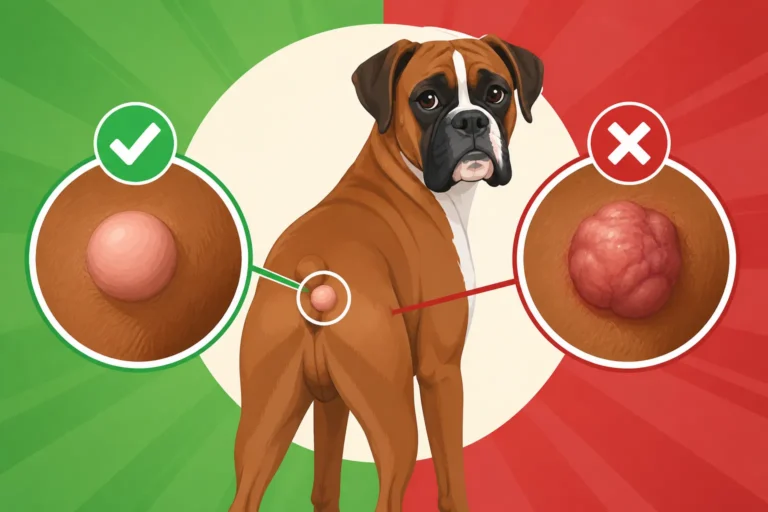
Boxer lump identification explains physical differences between benign lipomas and tumors to help owners spot warning signs.

Boxer warts and viral papillomas explained, detailing when benign skin growths require veterinary removal or monitoring.

Weekly lump checks on a Boxer, a breed prone to mast cell tumors, lymphoma and skin growths, where early detection improves the odds of successful treatment.

Boxer cancer risk stems from inherited polygenic traits and genetic CDKN2A mutations that impair natural tumor suppressor defenses.

Boxer cancer diagnoses typically spike between five and eight years old, while mast cell tumors often appear around four to six years.

Boxer dog cancer types, including lymphoma and mast cell tumors, explained with signs, internal risks, and swollen lymph nodes.

Boxer dog lifespans, typically ten to twelve years, face challenges from genetic health issues like cancer and cardiomyopathy.

Boxer dog lifespans typically range from nine to ten years due to genetic predispositions and breed-specific health challenges.

The typical Boxer lifespan is ten to twelve years, while cancer remains the leading cause of death for this breed.