Teaching a Boxer to Keep Its Paws Down
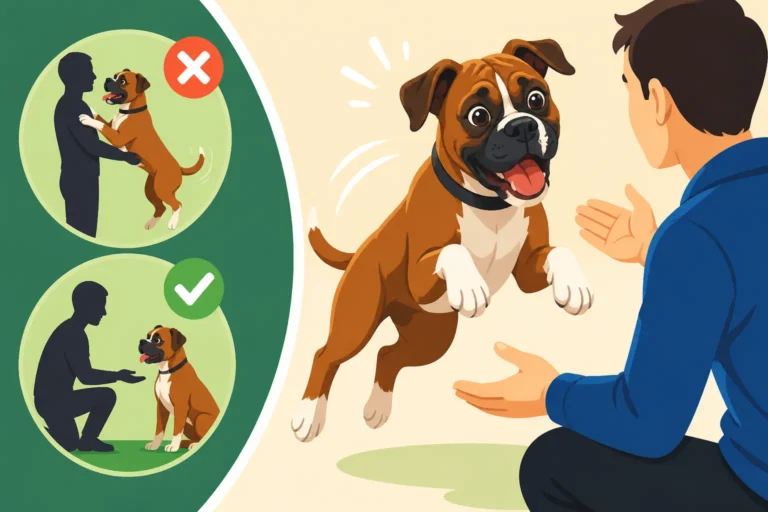
It’s a classic Boxer move, isn't it? One minute you’re enjoying a quiet moment, the next your seventy-pound bundle of joy is launching himself at you, front paws flailing, or pawing relentlessly for attention. This isn't just annoying; it can be downright dangerous, especially for children or older guests. This guide will walk you through practical, empathetic strategies to teach your Boxer to keep all four paws on the ground, creating a calmer, safer home for everyone.
Understanding Why Your Boxer Jumps and Paws
Before we can effectively teach our Boxers polite greetings and manners, we really need to understand why they engage in this seemingly rude behavior. It’s rarely out of malice; it’s usually rooted deeply in their instincts, their breed characteristics, and their desire to communicate with us. Boxers are incredibly affectionate, high-energy, and often very tactile dogs, and their natural exuberance often manifests in ways that aren't ideal for human interaction.
The Boxer's Natural Exuberance and Affection
Let’s face it, Boxers are called "clowns of the canine world" for a reason. They have a boundless, puppy-like enthusiasm that often extends well into their adult years. Why a Boxer Acts Like a Puppy Until Three describes this perfectly. When your Boxer jumps on you, it's often an attempt to get closer, to greet you face-to-face, or to express extreme happiness. They see you as part of their pack, and in their world, a direct, physical greeting at face level might be perfectly natural. They’re not trying to be dominant; they're just being very friendly. This over-the-top display of affection can be startling, but it comes from a place of love. They just haven't learned the human-preferred way to show it yet.
Consider the scenario: you walk through the door after a long day. Your Boxer has been waiting for you, building up all that anticipation. The moment the door opens, you're met with a furry rocket, front paws already airborne. From their perspective, this is the most effective way to get your attention and return your presence. They associate jumping with your return, and often, without realizing it, we reinforce this by giving them any attention – even negative attention like pushing them away or telling them "no." To a Boxer craving interaction, any attention is good attention.
Seeking Attention and Play
Another major driver behind jumping and pawing is the desire for attention. Boxers are intelligent and social creatures who thrive on interaction with their humans. If your Boxer is feeling bored, under-exercised, or just wants a game, jumping or pawing can be a highly effective way to initiate that contact. Imagine your Boxer nudging you with a paw while you're trying to read. If that gets you to look up, even just to gently push them away, they've succeeded in getting a reaction. They quickly learn that "paws up" often leads to "eyes on me." This isn't just about walks; it's about mental engagement too.
Sometimes, the pawing is an invitation to play, a characteristic often observed in Where the Boxer's Pawing Habit Comes From. They might "box" with their front paws as a form of play with other dogs, and they extend that behavior to us. If a game of tug or fetch often follows a paw to the leg, your Boxer will quickly connect the two. It's a learned behavior, reinforced by our reactions, however subtle they may be. Our job is to help them learn alternative ways to ask for attention that are more acceptable.
Foundational Training: Setting the Stage for "Four on the Floor"
Effective training for any behavior, especially one as ingrained as jumping in a Boxer, requires a solid foundation. This isn't just about teaching a single "no jump" command; it's about managing their environment, understanding their energy levels, and consistently rewarding the right behaviors. Consistency is the real key when dealing with these energetic, intelligent dogs.
Managing Energy Levels and Environment
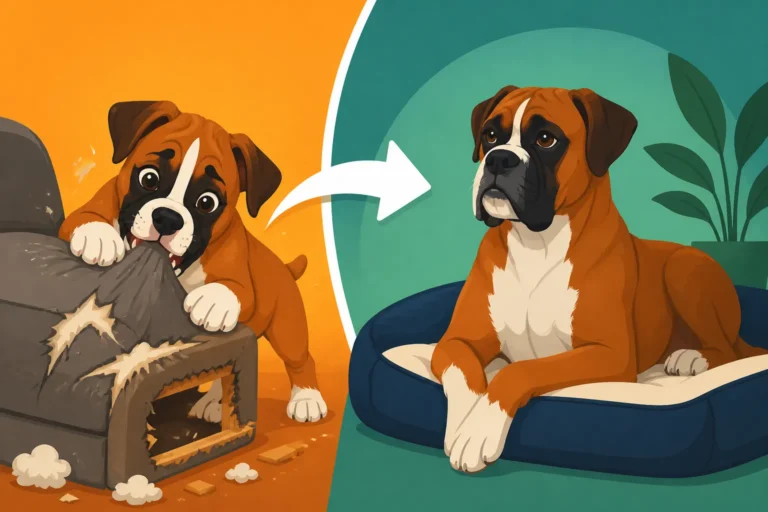
A tired Boxer is a well-behaved Boxer, or at least, a less excitable one. This breed has significant exercise needs, and if those aren't met, they will find their own ways to release pent-up energy, often through unwanted behaviors like jumping, destructive chewing, or excessive pawing. Aim for at least 60-90 minutes of vigorous exercise daily, split into multiple sessions. This might include brisk walks, games of fetch, or structured play. Sixty to Ninety Minutes a Day With a Boxer delves deeper into these requirements. On Amazon, you can find various durable fetch toys and puzzle feeders that can help drain some of that physical and mental energy.
Beyond physical exercise, mental stimulation is crucial. Boxers are smart and get bored quickly. Engage their minds with training sessions, puzzle toys, and scent work. If your Boxer is jumping on guests, consider placing a baby gate or using a tether when people first arrive, giving them a chance to settle before direct interaction. This proactive management prevents the unwanted behavior from happening in the first place, stopping your Boxer from practicing the wrong thing.
Teaching an Alternative Behavior: "Sit" and "Stay"
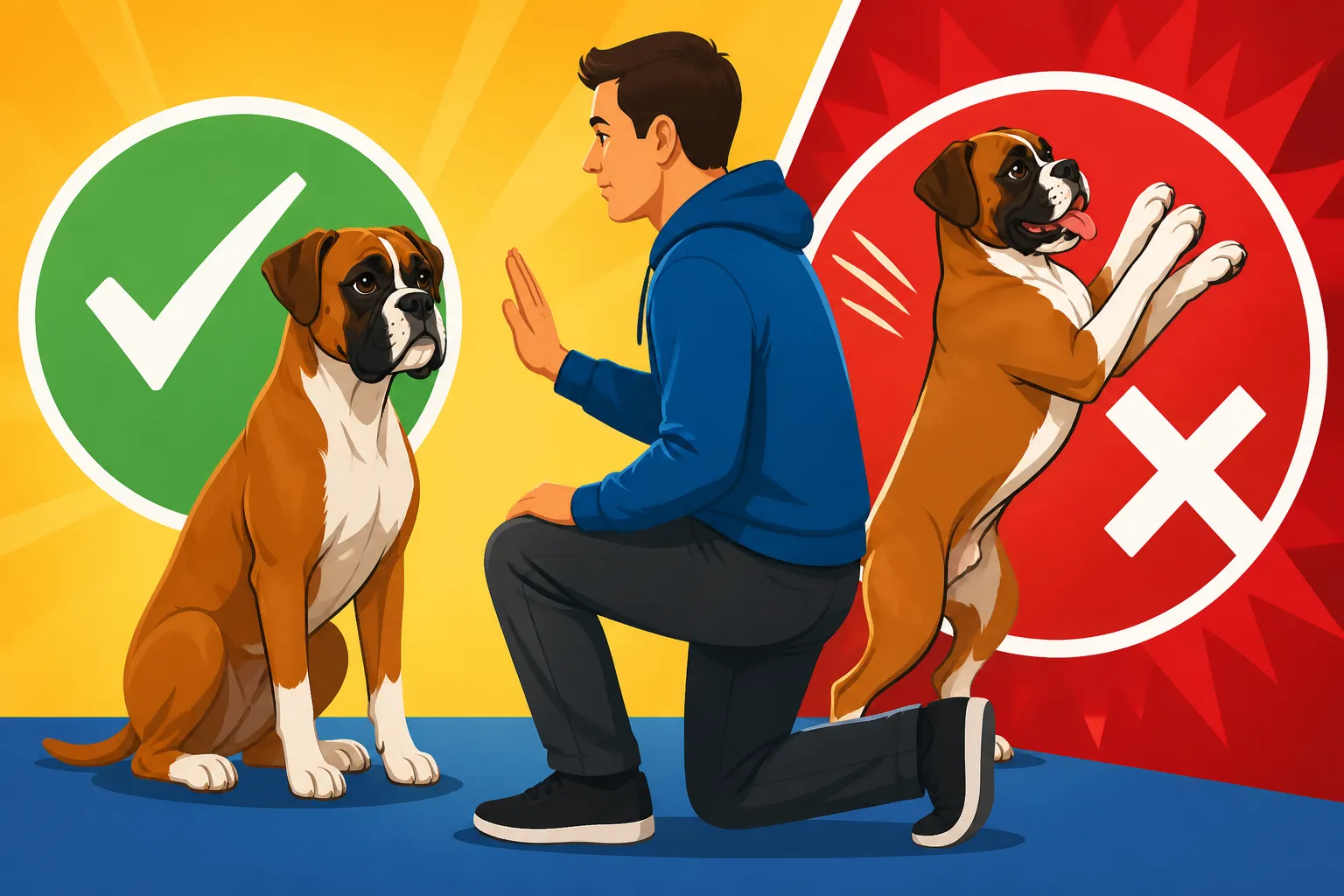
The most effective way to stop an unwanted behavior isn't just to say "no"; it's to teach an alternative, acceptable behavior that your Boxer can offer instead. "Sit" is your absolute best friend here. When your Boxer approaches you, or when a guest enters, cue them to "sit." Reward them lavishly with praise, a small treat, or a gentle scratch behind the ears while their rear is firmly on the ground. The moment their paws come up, the reward disappears, and you calmly turn away.
Practice this hundreds of times a day in various situations. Start in a calm environment with just you, then gradually introduce distractions like another family member, then a quiet guest. BAXTER & Bella offers excellent online programs that guide you through these foundational commands, breaking them down into manageable steps suitable for Boxers. The goal is for your Boxer to instinctively offer a "sit" when they want attention or when someone approaches, because they've learned that "sit" gets them what they want, and jumping does not.
Practical Strategies for Managing Jumping and Pawing
Now that we understand the "why" and have a foundation, let's get into the nitty-gritty of what to do in the moment. These strategies require consistency, quick timing, and a united front from everyone who interacts with your Boxer.
The "No Paws Up" Rule: Turning Away and Ignoring
This is perhaps the most fundamental and effective strategy. The moment your Boxer’s paws come off the ground and touch you (or someone else), immediately and calmly turn your back, cross your arms, and completely ignore them. No eye contact, no speaking, no touching. Become a tree. Wait until all four paws are back on the floor, and they've settled for a moment. Then, turn around and give them a calm greeting or a "good sit!" if they offer it.
The key is timing and absolute consistency. Every single time your Boxer jumps, this response must occur. If you sometimes allow it, even for a second, you’re teaching them that jumping sometimes works. This method works because Boxers crave your attention. By removing it the instant they jump, you’re telling them in no uncertain terms: "Jumping makes me go away. Four on the floor makes me come back." It's a clear, consistent boundary that, over time, they will understand. This technique is particularly important when dealing with A Boxer That Jumps on Every Visitor.
Using Leash Control and Boundary Training
For Boxers who are particularly persistent jumpers, especially during greetings or when guests arrive, a leash can be a valuable tool for management and training. Keep your Boxer on a light leash when expecting visitors. As soon as a guest approaches, cue your Boxer to "sit." If they start to launch themselves, gently guide them back down with the leash and your "sit" command. Reward them for staying down. This gives you immediate, physical control to prevent the jump.
You can also incorporate boundary training. Teach your Boxer to go to a designated "place" (like their bed or mat) when the doorbell rings or when someone enters. Reward them for staying on their place until you release them. This gives them a job to do during exciting times. For example, BAXTER & Bella's online courses often cover "place" training, which is excellent for high-energy dogs. You might also find gate systems on Amazon that allow you to create temporary safe zones or control access during greeting periods, which can be very helpful in the early stages of training.
Redirection and Rewarding Calmness
Instead of only reacting to jumping, proactively redirect your Boxer's attention to an appropriate activity. If they're pawing for attention, immediately offer them a suitable chew toy or a game of fetch. This teaches them: "When you want attention, go get your toy," rather than "When you want attention, paw me." For this, a selection of durable chew toys, easily found on Amazon, can be a lifesaver.
Always look for opportunities to reward calmness. Catch your Boxer when all four paws are down, even if they're not explicitly asked to sit. A quiet "good boy" or a gentle stroke when they are relaxing on the floor reinforces the behavior you want to see. This is often overlooked but incredibly powerful. We tend to only pay attention when things go wrong, but rewarding the right behavior helps build positive habits. Think about Rewards a Boxer Will Work Hard For – it's not always food; sometimes it's just your calm, appreciative attention.
Consistency and Patience: The Long Game with Your Boxer
Teaching a Boxer to keep its paws down isn't a quick fix. It's a journey that requires unwavering consistency, immense patience, and understanding that your Boxer is always learning, even when you don't realize it.
Everyone Must Be On Board
This is non-negotiable. Every single person who interacts with your Boxer—family members, friends, even the dog walker—must follow the "no paws up" rule consistently. If one person allows jumping, even occasionally, your Boxer will become confused and the training will be severely undermined. They learn that rules are flexible. Hold a quick family meeting to ensure everyone understands the chosen method and commits to applying it uniformly. If visitors are frequent, consider a polite sign on the door or a brief explanation: "Please ignore Buster if he jumps, and only greet him when he has all four paws down." This might feel awkward at first, but it's crucial for your Boxer's success. This unified approach prevents the confusion that can delay progress.
Dealing with Setbacks and Frustrations
You will have setbacks. Your Boxer might jump on you even after weeks of perfect behavior, especially if they're particularly excited or if there's been a lapse in consistency. Don't get discouraged, and absolutely do not punish them. Punishment can damage your bond and make them fearful, rather than teaching them what to do. Instead, calmly return to your "no paws up" strategy. If you find yourself getting frustrated, take a deep breath, walk away for a moment, and remember that training is a marathon, not a sprint. Boxers are eager to please, but their exuberance can sometimes get the better of them, especially when young. The Age a Boxer Is Mentally Grown Up is quite late compared to some breeds, meaning you'll be working on these manners for a good while.
Long-Term Maintenance and Continued Reinforcement
Even once your Boxer is reliably keeping its paws down, the training isn't over. This is a behavior that requires ongoing reinforcement. Continue to praise and reward your Boxer for calm greetings. Periodically practice your "sit" and "stay" commands in various exciting situations. The goal is to make "four on the floor" a deeply ingrained habit, a default behavior rather than something they have to consciously think about. This consistent reinforcement ensures that even as your Boxer ages and their energy levels naturally mellow, the polite greeting habit remains strong. It’s a lifelong commitment to clear communication and positive reinforcement that builds a well-mannered and cherished companion.
| Strategy | Best For | Key Action | Pros | Cons |
|---|---|---|---|---|
| Ignore & Turn Away | General jumping, attention-seeking | No eye contact, turn back, wait for 4 paws | Highly effective, no force, Boxer learns cause & effect | Requires absolute consistency from everyone, can be slow initially |
| "Sit" Command | Polite greetings, controlled interactions | Ask for a sit, reward while seated | Proactive, gives Boxer an alternative, builds impulse control | Needs to be practiced frequently, may be challenging in high excitement |
| Leash Control | High-excitement situations, initial training | Gently guide down with leash, reward calmness | Provides immediate physical control, prevents rehearsal of jumping | Requires a leash on the Boxer, can feel restrictive |
| Redirection | Pawing for attention, boredom | Offer appropriate toy/activity | Positive outlet for energy, teaches alternative ways to seek interaction | Needs a variety of engaging toys, owner must be quick to redirect |
| Boundary Training | Doorbell triggers, guest arrivals | Send to "place," reward for staying | Creates a calm routine for exciting events, structured management | Requires teaching "place" first, may need physical barriers |
Disclaimer
This article is for general informational purposes only and does not constitute professional advice. Laws, prices and regulations vary by location and change over time. Consult a qualified professional for guidance on your specific situation.