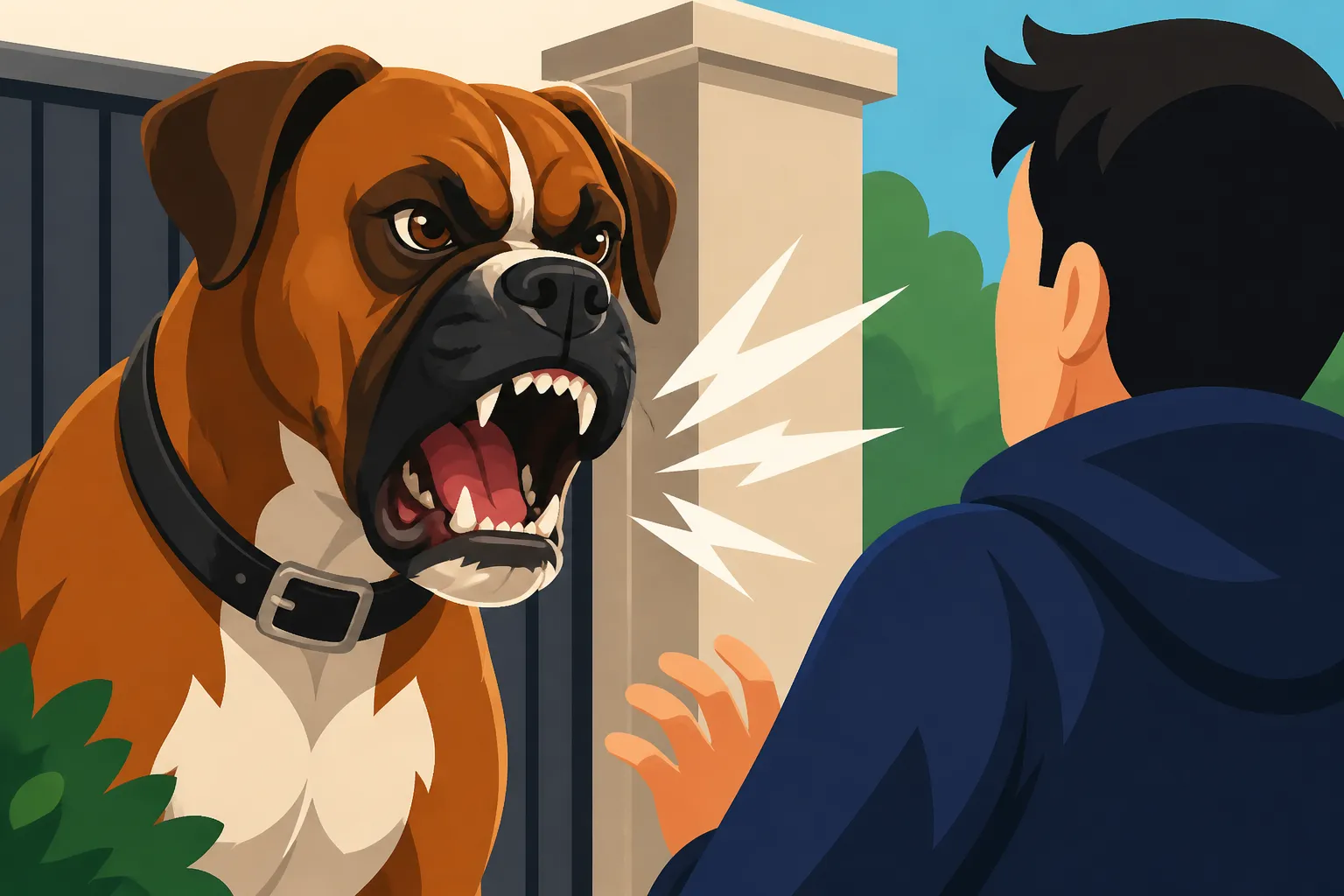
A Boxer That Growls at Visitors
It’s utterly deflating, isn’t it? You love your Boxer, you know they’re a big softy underneath, but the moment the doorbell rings, they transform into a growling, barking guard dog. This can be embarrassing, stressful, and even concerning, making you dread having anyone over. This guide is here to walk you through understanding why your beloved Boxer might be growling at visitors and, more importantly, what you can actually do to manage and change this behavior, turning those tense greetings into calm, welcoming moments.
Understanding Why Your Boxer Growls at Visitors
When your Boxer starts to growl at someone coming into your home, it’s not always a sign of aggression, though it certainly can feel that way. It's crucial to understand the underlying reasons for this behavior, as the solution often depends on identifying the root cause. Boxers are complex creatures with a mix of protective instincts, high energy, and often, deep sensitivity.
The Boxer's Natural Protective Instincts
Let’s be real, Boxers were bred to be working dogs, and part of that heritage includes a natural protectiveness. They were historically used to guard and drive cattle, and later became formidable police and military dogs. This means they often have an innate sense of responsibility for their territory and their "pack" — which is you and your family. When someone new steps into their perceived domain, their instinct might kick in. They’re not necessarily trying to harm anyone, but rather to alert you, or to tell the perceived intruder, "Hey, this is our space!"
However, it's a fine line between a vigilant watchdog and a dog whose protective instincts have gone into overdrive. If a Boxer hasn't learned appropriate boundaries, that natural protectiveness can manifest as growling, barking, or even lunging. It's their way of communicating discomfort or a perceived threat. You might find that your Boxer exhibits Boxer Watchdog Instinct Without Aggression in other situations but struggles when it comes to actual visitors. It's our job as owners to help them understand that not every visitor is a threat and that we, the humans, have things under control.
Lack of Proper Socialization
This is a big one, especially for Boxers, who stay puppy-like in mind and body for a good long while. The Boxer Puppyhood That Lasts Three Years is a real thing! If your Boxer wasn't adequately exposed to a wide variety of people, sights, sounds, and experiences during their critical socialization period (roughly between 3 and 16 weeks of age), they might develop anxieties or fears later in life. Imagine being a young Boxer puppy, and only ever seeing the same few faces. Then, suddenly, a new person with a booming laugh and a floppy hat walks in. It can be genuinely terrifying for a dog that hasn't learned to generalize that "new people are generally safe."
Even if they had some exposure, it might not have been varied enough or positive enough. Maybe they had a scary experience with a particular type of person, or they simply weren't taught how to interact politely. Boxers are incredibly perceptive, and if they sense your anxiety about visitors, it can exacerbate their own. A lack of proper socialization, or what we sometimes call "social exposure," can lead to a dog that growls out of uncertainty or fear, rather than outright aggression.
Fear or Anxiety as the Root Cause
It’s easy to label a growling Boxer as "aggressive," but very often, the behavior is rooted in fear or anxiety. A fearful dog might growl as a warning, trying to make the scary thing go away. Think about it: if you were afraid, wouldn't you want to put up a front to keep something intimidating at bay? For a Boxer, that front often includes a deep growl, bared teeth, or stiff posture.
Triggers can be incredibly varied. Perhaps a guest makes direct eye contact, which can be perceived as confrontational by a dog. Maybe they lean over the dog, invading its personal space. Or maybe it’s a specific trait: someone wearing a hat, carrying a bag, or walking with a limp. A dog that is generally A Nervous Boxer That Backs Away might also be prone to growling if they feel cornered or threatened. Sometimes, a dog learns that growling works to create distance, and so the behavior becomes a learned coping mechanism. Identifying these subtle triggers is key to addressing the underlying fear or anxiety.
Identifying the Type of Growl and Its Triggers
Not all growls are created equal, and understanding the nuances of your Boxer’s communication is paramount. It’s like listening to different tones of voice in humans – they convey different meanings. Observing your dog’s entire body language is crucial to interpreting what they're trying to tell you.
Body Language Cues Accompanying the Growl
A growl is rarely an isolated event. Your Boxer is likely broadcasting a whole host of signals with their body before, during, and after the vocalization. Here’s a quick guide to what you might see:
| Body Part | Worried/Fearful Growl | Warning/Territorial Growl | Play Growl (Rare at visitors) |
|---|---|---|---|
| Tail | Tucked, still, low wag | Stiff, held high or mid-level, slight slow wag | Relaxed, high, loose wag |
| Ears | Pinned back, flattened | Forward, alert, sometimes slightly back | Relaxed, sometimes perked |
| Body | Cowered, tense, leaning away, trembling | Stiff, forward-leaning, hackles raised | Loose, bouncy, playful bow |
| Mouth | Lip pulled back, showing front teeth, panting | Lip curled, showing teeth, often closed | Open, relaxed, "smiling" |
| Eyes | Wide, darting, "whale eye" (white visible) | Hard stare, focused, narrowed | Soft, relaxed, often squinting |
| Stance | Trying to make themselves small, backing up | Erect, stiff, potentially trying to look larger | Wiggling, low front, raised rear |
If your Boxer’s growl is accompanied by a stiff body, direct stare, and perhaps raised hackles, they are likely giving a clear warning. If they are cowering, looking away, or their tail is tucked, it's more likely a growl of fear. Understanding these cues is the first step in deciding how to respond. A fearful growl requires a different approach than a territorial one.
Pinpointing Specific Triggers
This might sound obvious, but many owners miss the subtle triggers because they're focused on the growl itself. Grab a notepad (or use your phone) and become a detective. What exactly happens right before your Boxer growls?
- Is it the sound of the doorbell or a knock? A Boxer That Barks at Every Noise might be feeling overwhelmed.
- Is it when someone crosses a specific threshold, like the entryway or into the living room?
- Does it only happen with certain types of people – men, children, people wearing hats, or those with deep voices?
- Is it when a visitor makes eye contact, reaches out to pet them, or moves too quickly?
- Does your Boxer have a particular toy, bed, or even spot on the couch they are guarding? This could indicate resource guarding.
- Does it happen when you greet the visitor? Sometimes Boxers pick up on our own tension.
Pay close attention to these patterns. For instance, if your Boxer only growls when someone tries to pet them, the issue might be an aversion to being touched by strangers, rather than a general fear of people. This focused observation will help you develop targeted strategies.
Resource Guarding and Territoriality
Sometimes, the growl isn't just about the person but about what the person represents or where they are. Boxers can be quite possessive of their things or their space.
- Resource Guarding: This means your Boxer might growl if a visitor gets too close to their food bowl, a favorite chew toy, their bed, or even you! If your Boxer sees you as their resource, they might growl at anyone who tries to get "between" you two. This is a common issue that often requires consistent training to help your dog understand that resources are not scarce and do not need to be defended from others.
- Territoriality: This is more about the space itself. The front door, the living room, the yard – these are all areas your Boxer might consider their domain. A growl can be a very effective way to say "keep out" or "you're too close." This ties back to their protective instincts, but when it extends to unwarranted growling at welcome guests, it needs to be addressed for the safety and comfort of everyone.
Understanding these distinctions helps tailor your training plan. If it's resource guarding, you'll work on teaching your Boxer that guests bring good things, rather than take them away. If it's territoriality, you'll focus on demonstrating that you, the leader, welcome these people into your shared space.
Practical Strategies for Managing Visitor Growling
Addressing growling at visitors requires a combination of smart management and consistent training. It’s not just about stopping the growl, but changing the emotional response behind it.
Management vs. Training: Knowing the Difference
It’s vital to distinguish between management and training, both of which are critical components of solving this problem.
- Management is about preventing the behavior from happening in the first place. It involves setting up your environment and interactions so your Boxer isn't put in a position where they feel the need to growl. This could mean putting your dog in a separate room or their crate when guests arrive. It's a temporary fix that ensures safety and prevents the behavior from being practiced and reinforced. You're not teaching your dog not to growl, you're simply preventing the opportunity for it.
- Training is about changing your Boxer's underlying emotional response and teaching them a new, appropriate behavior. This is the long-term solution. It involves teaching your dog that visitors are a positive experience and that they don't need to feel anxious or protective.
For example, when the doorbell rings, you could immediately lead your Boxer to their crate in another room with a high-value chew. This is management. While they're happily chewing, you can greet your guests. Once things are calm, you can then begin training by doing controlled introductions. Both are necessary, especially in the beginning, to keep everyone safe and set your Boxer up for success.
Controlled Introductions and Positive Associations
This is where the real work happens. The goal is to change your Boxer's perception of visitors from something to be growled at to something that brings good things.
- Prep Your Guests: Ask your visitors to cooperate. No rushing, no direct eye contact, no reaching out to pet the dog initially. They should ignore your Boxer until your Boxer is calm and ready to approach.
- Leash Up: For initial introductions, keep your Boxer on a leash. This gives you control and prevents them from rushing or rehearsing unwanted behaviors. You might use a front-clip harness to help manage a pulling Boxer.
- The "Place" Command: Teach your Boxer a "place" command, sending them to a designated spot (like a dog bed or mat) when guests arrive. Reward them for staying there.
- High-Value Rewards: When a visitor arrives, have them toss a high-value treat (small pieces of cooked chicken, cheese, etc.) towards your Boxer, but not directly at them. The idea is for your Boxer to associate the arrival of the guest with delicious food. The guest shouldn't even acknowledge the dog at first, just drop the treats.
- Gradual Exposure: Start with very short, calm interactions. If your Boxer remains quiet, allow them to sniff the guest from a distance. If any growling starts, calmly interrupt, and either reset or retreat.
- "Go Say Hello": Only when your Boxer is consistently calm and showing positive body language (loose tail, soft eyes, perhaps a The Boxer Wiggle and What It Signals) should you allow them to approach the guest for a calm greeting. Still, have the guest offer a treat from an open palm, avoiding direct eye contact.
You can find excellent step-by-step guidance on programs like BAXTER & Bella’s online courses, which often provide structured approaches to teaching good manners around visitors, breaking down the process into manageable steps. The key is to go at your Boxer's pace, making every interaction with a visitor a positive one.
Desensitization and Counter-Conditioning
This is a more technical approach often used for fear-based growling.
- Desensitization involves gradually exposing your Boxer to the triggers that cause them to growl, but at a low intensity, so they don't react.
- Counter-conditioning involves changing your Boxer's emotional response to that trigger, from negative (fear, anxiety) to positive.
Here's how it might work for a Boxer that growls at the doorbell:
- Record the Trigger: Record the sound of your doorbell or a knock.
- Low Volume Playback: Play the recording at such a low volume that your Boxer barely notices it, or doesn't react negatively.
- Pair with Rewards: Immediately after the sound, give your Boxer a fantastic treat or engage in a quick game of fetch. The goal is for them to think, "Ding-dong! Yay! Good things happen!"
- Gradual Increase: Slowly, over many sessions and days, increase the volume of the doorbell sound. Continue pairing it with positive experiences.
- Real-Life Practice: Once your Boxer is calm with the recorded sound at a normal volume, practice with a friend outside ringing the actual doorbell. Start with your Boxer far away, gradually bringing them closer as they remain calm.
You can even find doorbell sounds or recordings of various voices online, perhaps on Amazon, to practice this desensitization and counter-conditioning without actual visitors. This method works well for any specific trigger you've identified, be it a certain visual cue or a particular sound. Remember, the goal is to keep your Boxer under their threshold for growling, so they can learn a new association.
Seeking Professional Help and Long-Term Solutions
While the strategies above can make a huge difference, sometimes you need to bring in the big guns. Dealing with a growling Boxer, especially if the growling is intense or escalates, can be stressful and overwhelming.
When to Call a Professional Trainer or Behaviorist
Knowing when to seek professional help is critical. Don't feel like you've failed if you need to call in an expert – it's a responsible choice for your dog and your household. Here are clear signs it's time:
- Escalation of Behavior: If the growling is escalating to snapping, lunging, or biting, even if it hasn't broken skin.
- Fear for Safety: If you or your guests feel unsafe around your Boxer.
- Lack of Progress: If you've been diligently working on the strategies above for a few weeks or months and haven't seen significant improvement.
- Uncertainty about Root Cause: If you're struggling to identify the specific triggers or type of growl.
- General Anxiety: If your Boxer seems generally anxious or stressed, not just around visitors.
- Intense Resource Guarding: If the resource guarding is severe and involves aggression.
A qualified professional dog trainer or a certified veterinary behaviorist (often an animal behaviorist with a veterinary degree) can provide an individualized assessment and develop a tailored training plan. They can also rule out any underlying medical conditions that might be contributing to the behavior. When choosing a trainer, look for one who uses positive reinforcement methods and has experience with Group Class Against Private Work for a Boxer for dogs exhibiting guarding or fear-based behaviors. Avoid anyone who suggests punitive methods, as these can often worsen fear and aggression in Boxers.
Consistency and Patience: The Boxer Owner's Mantra
Let me be frank: changing ingrained behavior in a Boxer takes time, effort, and an abundance of patience. Boxers, despite their intelligence, can be stubborn and have The Energy New Boxer Owners Underestimate. You won’t see results overnight.
- Everyone on Board: Ensure everyone in the household is consistent with the training methods and rules. Inconsistency can confuse your Boxer and undermine progress.
- Small Steps, Big Wins: Celebrate small victories. Maybe today your Boxer only gave a soft grumble instead of a full-blown growl. That's progress!
- No Free Lunch: Continue to reinforce good behavior. Don’t just stop training once you see improvement. Maintenance is key. Always reward calm greetings, even if it's just a quiet "good dog" and a little scratch.
- It's a Journey: Understand that this is a long-term journey. There might be setbacks, especially in new situations or with unexpected visitors. Don't get discouraged. Revert to management strategies if necessary, and then continue with training.
Your Boxer is looking to you for guidance and reassurance. Your calm, consistent leadership will be far more effective than frustration or anger.
Creating a Safe and Predictable Environment
Finally, creating a stable and predictable environment goes a long way in reducing stress for your Boxer, which in turn can reduce growling.
- Routine: Dogs thrive on routine. Predictable feeding times, walks, and training sessions help your Boxer feel secure and less anxious.
- Safe Spaces: Ensure your Boxer has a designated "safe space" where they can retreat when feeling overwhelmed, like their crate or a quiet room. Make sure visitors know not to bother them when they are in this space.
- Clear Rules: Establish clear rules for interactions with visitors. For example, your Boxer should never be allowed to jump on guests (which is a common Boxer issue addressed in Teaching a Boxer to Keep Its Paws Down), and guests should respect your dog's space.
- Exercise and Mental Stimulation: A tired Boxer is a well-behaved Boxer. Ensure your dog gets plenty of appropriate exercise for their age and health, along with mental stimulation through puzzle toys, training games, and sniffing opportunities. A bored Boxer with pent-up energy is more likely to react negatively to new stimuli.
By proactively managing situations, consistently training with positive reinforcement, and knowing when to seek professional help, you can transform your Boxer's reactions to visitors from growls to greetings, making your home a more relaxed and welcoming place for everyone.
Disclaimer
This article is for general informational purposes only and does not constitute professional advice. Laws, prices and regulations vary by location and change over time. Consult a qualified professional for guidance on your specific situation.