What a Boxer Puppy Eats at Each Stage
Bringing a new Boxer puppy home is an exhilarating time, but it often comes with a heap of questions, especially when it comes to what, when, and how much to feed your energetic little land shark. Many new owners feel overwhelmed trying to navigate conflicting advice about puppy nutrition, worrying they might stunt growth or set their dog up for future health issues. This guide will walk you through the distinct dietary needs of your Boxer puppy at each stage of their development, from their first weeks home right up to adulthood, ensuring they get the best start possible.
The First Weeks Home: Eight to Twelve Weeks
Those first few weeks with your eight to twelve-week-old Boxer puppy are a whirlwind of potty training, zoomies, and endless naps. One of the most critical aspects during this period is establishing a healthy feeding routine. Your puppy is in a vulnerable stage, transitioning from its mother and littermates to your home, and consistent nutrition is key to minimizing stress and tummy upsets.
Starting with the Breeder's Food
It's common for breeders to send puppies home with a small supply of the food they've been eating. This isn't just a kind gesture; it's a vital step in ensuring a smooth transition. Your puppy's digestive system is still developing, and any sudden change in diet can lead to an upset stomach, diarrhea, and a lot of extra clean-up for you. Imagine moving to a new country and suddenly having to eat completely different food — it takes adjustment!
When you first bring your puppy home, stick with the breeder's recommended food for at least a week, or even longer if your puppy seems particularly sensitive. This allows them to settle into their new environment without the added stress of a dietary change. If you plan to switch to a different brand, this initial period on familiar food provides a stable baseline. Don't feel rushed to change immediately, even if you have a different food lined up. A week or two of consistency can make a huge difference in your puppy's comfort and digestive health.
Gradually Transitioning Kibble
Once your puppy is settled and you're ready to switch foods, the key word is "gradually." This isn't a one-day affair; it's a process that usually takes seven to ten days, sometimes even longer for very sensitive puppies. The goal is to slowly introduce the new food while phasing out the old, giving your puppy's digestive system time to adapt.
Start by mixing about 25% new food with 75% old food for a couple of days. If all goes well (no vomiting, diarrhea, or excessive gas), move to a 50/50 mix for another two to three days. Then, progress to 75% new food and 25% old food for a similar period. Finally, if everything remains stable, you can offer 100% new food. Pay close attention to your puppy's stools throughout this process; any signs of digestive upset mean you should slow down, perhaps even going back to the previous ratio for a few extra days. Many owners find it helpful to purchase the new food through a reliable online retailer like Chewy, making sure they have enough on hand for the transition.
Feeding Frequency and Portion Sizes
During these early weeks, your Boxer puppy has a tiny stomach but huge energy requirements for growth and play. This means frequent, smaller meals are essential. Typically, an eight to twelve-week-old Boxer puppy will need to eat three to four times a day. Think of it like a human baby needing multiple small feedings rather than three large adult meals.
The actual portion size will depend heavily on the specific food you're using (as caloric density varies greatly), your puppy's individual metabolism, and how active they are. Always refer to the feeding guidelines on the puppy food bag as a starting point. These charts usually provide a daily total amount, which you then divide by the number of meals. For example, if the bag recommends 3 cups a day, you'd feed 1 cup three times a day, or 3/4 cup four times a day. Meals a Day for a Boxer Under Six Months offers a deeper dive into structuring these early meal times. Remember to check your puppy's body condition regularly – you should be able to feel their ribs easily, but not see them protruding. Adjust portions slightly up or down based on their condition and energy levels.
Navigating Rapid Growth: Three to Six Months
The period between three and six months is often when Boxer puppies experience their most significant growth spurts. They're not just getting taller; their bone structure is developing rapidly, and their muscles are starting to fill out. This intense growth phase demands a high-quality, calorie-dense diet to support their developing bodies.
Upping the Calories for Energy
As your Boxer puppy grows, so does their caloric requirement. They're burning through a tremendous amount of energy building bone, muscle, and tissue, plus all the energy expended on puppy antics! You'll notice they're becoming stronger, more coordinated, and often more boisterous. This increased activity directly translates to a need for more fuel.
While the number of meals might remain around three times a day for many puppies during this stage, the amount of food per meal will likely increase. Again, rely on the feeding guide on your puppy food bag, but also trust your eyes and hands. If your puppy seems constantly hungry, is looking a bit thin, or lacks energy (which is rare for a Boxer!), it might be time to slightly increase their portions. Conversely, if they're leaving food or looking a little pudgy, a small reduction might be in order. The key is to find that sweet spot that supports healthy, steady growth without promoting excessive weight gain, which can be detrimental to developing joints.
Importance of Large Breed Puppy Formulas
Boxers are a large breed, and this classification isn't just about their adult size; it's crucial for their puppy nutrition too. Large breed puppy formulas are specifically formulated with a controlled growth curve in mind. What does this mean? They typically have slightly lower calorie density and, critically, carefully balanced calcium and phosphorus levels.
Why is this important? Rapid growth in large breed puppies can put undue stress on developing joints and bones, potentially contributing to orthopedic issues later in life, such as hip or elbow dysplasia. Generic puppy foods, designed for smaller breeds, can sometimes promote too fast growth in a Boxer, leading to problems. Look for foods explicitly labeled "large breed puppy" or "large breed growth." These formulas help ensure that your Boxer puppy grows at a healthy, steady pace, allowing their skeletal system to mature properly. Growth Limits on a Boxer Puppy's Joints elaborates further on this crucial aspect of development.
Monitoring Weight and Body Condition
Regularly monitoring your Boxer puppy's weight and body condition is perhaps the most important thing you can do to ensure they are being fed correctly. It's easy to assume a hungry puppy needs more food, but growth spurts can sometimes mask underlying issues or lead to overfeeding if not managed.
You should be able to feel your puppy's ribs easily, without having to press hard. When looking down at them from above, you should see a discernible waistline behind their ribs, and their belly should tuck up slightly when viewed from the side. If you can see their ribs prominently, they might be too thin; if you can't feel them at all, they might be getting a little chunky. A quick, weekly check by feeling their sides and observing their shape will tell you more than any feeding chart alone. Keep a consistent record of their weight if you have a scale that can accommodate them, or ask your vet to weigh them at appointments.
The Teenage Boxer: Six to Twelve Months
This phase marks the transition from puppyhood to young adulthood. Your Boxer will continue to fill out and mature, but the frantic pace of early growth begins to slow down. It's a time when you start to think about moving them onto an adult diet, but timing is everything.
Transitioning to Adult or All-Life-Stages Food
Deciding when to transition your Boxer from puppy food to adult food can feel a bit like a guessing game. While some sources suggest switching at six months, for Boxers, who mature slower, waiting until closer to twelve months, or even a bit later for very large individuals, is generally a safer bet. They are still developing muscle mass and bone density, and puppy food provides the necessary calories and nutrients for this continued, albeit slower, development.
When you do make the switch, opt for a high-quality adult formula designed for active, medium to large breeds, or an "all-life-stages" food. All-life-stages foods are formulated to meet the nutritional needs of dogs at all phases of life, from puppy to senior, adhering to the most stringent nutrient profiles. Just like with the initial puppy food transition, introduce the new adult food gradually over seven to ten days to prevent digestive upset. Moving a Boxer Puppy to Adult Food provides more detailed guidance on this important dietary shift.
Managing Growth Plates and Joint Health
Even though your Boxer might look like an adult by six months, their growth plates (the areas of new bone growth) are often not fully closed until twelve to eighteen months of age. This means their joints are still vulnerable. Continuing with a large breed puppy food or a thoughtfully chosen all-life-stages food helps support this ongoing skeletal maturation.
Beyond diet, managing their exercise during this "teenage" phase is crucial. Avoid excessive high-impact activities like jumping off high objects, long-distance running on hard surfaces, or intense, repetitive fetching sessions that put undue strain on their still-developing joints. While Boxers are naturally energetic, a balanced approach to exercise, combining mental stimulation with moderate physical activity, is best for their joint health at this age.
When to Adjust Feeding Times
As your Boxer puppy moves through the six to twelve-month mark, their feeding frequency can often be reduced from three meals a day to two. Their stomachs are larger, and their metabolism, while still high, isn't quite as frenetic as it was in the younger months. Most adult Boxers thrive on two meals a day, which helps maintain stable energy levels and can be a good routine to prevent bloat later in life.
You might start by gradually widening the time between meals, perhaps pushing the midday meal later until it merges with the evening one. Again, watch your puppy for signs of hunger or discomfort. Some Boxers handle the transition to two meals easily, while others might benefit from a slower shift over a few weeks. Consistency in timing also helps with house training, as you can predict when they'll need a potty break after eating.
Beyond Puppyhood: Twelve Months and Up
Once your Boxer reaches around twelve months of age, they are generally considered to be in their adult phase, at least nutritionally. While they might continue to "fill out" for another year or so, gaining more muscle and depth to their chest, their primary growth period is over. This is when their adult feeding routine should be firmly established.
Solidifying Adult Feeding Routines
By twelve months, your Boxer should be comfortably on two meals a day of a high-quality adult dog food. Sticking to a consistent feeding schedule is incredibly beneficial. Not only does it help regulate their digestive system, but it also creates predictability in their day, which many dogs appreciate. A common schedule might be breakfast in the morning and dinner in the late afternoon or early evening.
The exact amount of food will continue to be dictated by the specific brand, your Boxer's activity level, and their individual metabolism. A very active Boxer might need more calories than a more sedate couch potato, even if they are the same weight. It's worth remembering that Boxers, with their deep chests, are prone to bloat, a life-threatening condition. Feeding two smaller meals rather than one large one can help reduce the risk. Whether a Boxer Should Rest After Meals offers crucial information on managing this risk.
Addressing Specific Boxer Dietary Needs
Boxers are known for a few common health quirks that can influence their diet. Their sensitive digestive systems can sometimes lead to issues like colitis, and their brachycephalic (flat) faces can affect how they eat.
- Sensitive Stomachs: Many Boxers do best on a consistent, high-quality kibble with a moderate protein content. Sudden changes in food or an overly rich diet can sometimes trigger loose stools or gas. If your Boxer frequently experiences digestive upset, you might discuss novel protein diets or specialized sensitive stomach formulas with your vet. Diet Changes for a Boxer With Colitis can provide further insights if you suspect a more serious issue.
- Brachycephalic Challenges: Their unique jaw structure can sometimes make it harder for them to pick up smaller kibble pieces efficiently. Some Boxer owners find that larger kibble or bowls designed for brachycephalic breeds can make mealtime easier and less messy. They also tend to gulp air while eating due to their facial structure, which can contribute to gas. Slow feeder bowls (readily available from retailers like Amazon) can help them eat more slowly and ingest less air.
Treats and Supplemental Feeding
Treats are an important part of training and bonding, but they should always be given in moderation. Too many treats, especially high-calorie ones, can quickly lead to weight gain, which is detrimental to a Boxer's joints and overall health. Aim for treats to make up no more than 10% of their daily caloric intake.
Consider using low-calorie options like plain cooked green beans, carrot sticks, or small pieces of lean cooked meat. Puzzle toys filled with a portion of their regular kibble can also be a great way to provide mental stimulation without adding extra calories. For supplements, always consult your veterinarian. While many companies market joint supplements or fish oil, your vet can advise whether these are necessary for your individual Boxer, especially if they are already on a high-quality, balanced diet.
Common Puppy Feeding Challenges and Solutions
Even with the best intentions, feeding a Boxer puppy isn't always smooth sailing. From picky eaters to upset tummies, various challenges can arise. Understanding these common issues and how to address them can save you a lot of worry and vet visits.
Picky Eaters and Food Refusal
It might seem impossible for an energetic Boxer puppy to be a picky eater, but it happens! If your puppy suddenly turns their nose up at their food, the first step is always to rule out illness. A sudden loss of appetite could signal anything from a minor tummy bug to a more serious health concern, so a vet visit is warranted if it persists for more than a meal or two, or if accompanied by other symptoms like lethargy or vomiting.
If your vet gives a clean bill of health, then you might have a picky eater on your hands. Avoid falling into the trap of constantly changing foods or adding enticing (but unhealthy) toppers, as this can reinforce the pickiness. Try sticking to a strict feeding schedule: put the food down for 15-20 minutes, then pick it up, even if it's untouched. Don't offer anything else until the next scheduled meal. Healthy dogs will not starve themselves, and this approach often teaches them to eat when food is available. Sometimes warming the food slightly or adding a little low-sodium chicken broth can make it more appealing. For some Boxers, exploring fresh food options like Ollie, with guidance from your vet, might be a solution, but always proceed carefully.
Managing Loose Stools and Sensitive Stomachs
Boxers are notorious for having sensitive stomachs, and loose stools are a common complaint among puppy owners. While occasional soft stools can be normal (especially during times of stress or dietary change), persistent or severe diarrhea requires prompt veterinary attention, as puppies can dehydrate quickly. Why a Boxer Puppy's Stools Never Firm Up delves into this common Boxer puppy issue.
Once serious issues are ruled out, managing a sensitive stomach often involves a consistent, high-quality diet. Avoid frequent food changes, table scraps, and overly rich treats. Probiotics can sometimes help support a healthy gut microbiome, but again, consult your vet before adding any supplements. Sometimes, a bland diet of plain boiled chicken and rice for a few days can help reset a troubled tummy, followed by a very gradual reintroduction of their regular food. Fiber, in the right amounts, can also help firm up stools for some Boxers, so discussing specific fiber-rich food options with your vet might be beneficial.
Avoiding Overfeeding and Underfeeding
Finding the perfect balance between overfeeding and underfeeding can be tricky. Overfeeding, especially with large breed puppies, can lead to excessively rapid growth and puts unnecessary strain on developing joints, increasing the risk of orthopedic problems later in life. Underfeeding, on the other hand, can result in stunted growth, lack of energy, and nutrient deficiencies.
The best way to avoid both extremes is through consistent monitoring of your puppy's body condition score, as discussed earlier. Feel their ribs, check for a waistline, and pay attention to their energy levels. Regularly calibrated portion control is also vital. Use a measuring cup every time you feed them, rather than just "eyeballing" it. Remember that the feeding guidelines on the bag are just that — guidelines. Your Boxer puppy is an individual, and their needs will fluctuate based on activity, genetics, and environment. Don't hesitate to adjust portions by a quarter or half a cup up or down based on what you observe, always consulting your vet if you have concerns about their weight or growth.
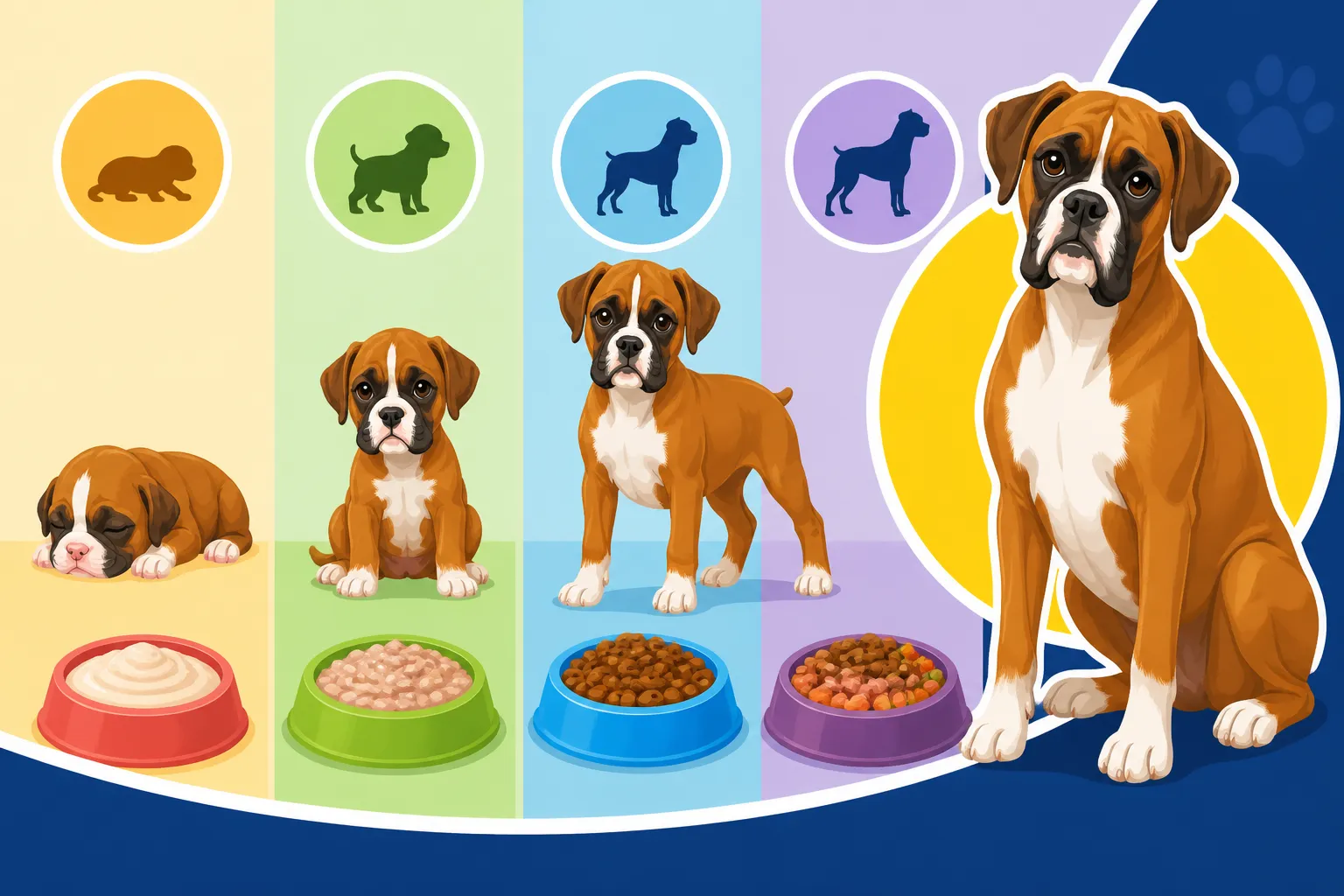
Here's a general guide to help you structure your Boxer puppy's feeding schedule:
| Age of Boxer Puppy | Meals Per Day | General Daily Portion (Cups) * | Key Nutritional Focus | Notes |
|---|---|---|---|---|
| 8-12 Weeks | 3-4 | 1.5 – 3 cups | High caloric density, easily digestible nutrients, immunity | Stick to breeder's food initially, gradual transition. Frequent small meals. |
| 3-6 Months | 3 | 2.5 – 4 cups | Large breed puppy formula, controlled growth, calcium/phosphorus balance | Rapid growth phase. Monitor body condition closely. |
| 6-12 Months | 2-3 | 3 – 5 cups | Continued growth, joint support, preparing for adult diet | Growth plates still open. Consider transition to adult food around 10-12 months. |
| 12 Months + (Adult) | 2 | 3 – 4 cups (adjust for activity) | Balanced adult formula, lean body mass, energy | Transition complete. Consistency is key. Monitor for bloat risk. |
- Note: These are general estimates. Always follow the specific feeding guidelines on your chosen large breed puppy or adult dog food and consult your veterinarian for personalized advice.
Disclaimer
This article is for general informational purposes only and does not constitute professional advice. Laws, prices and regulations vary by location and change over time. Consult a qualified professional for guidance on your specific situation.