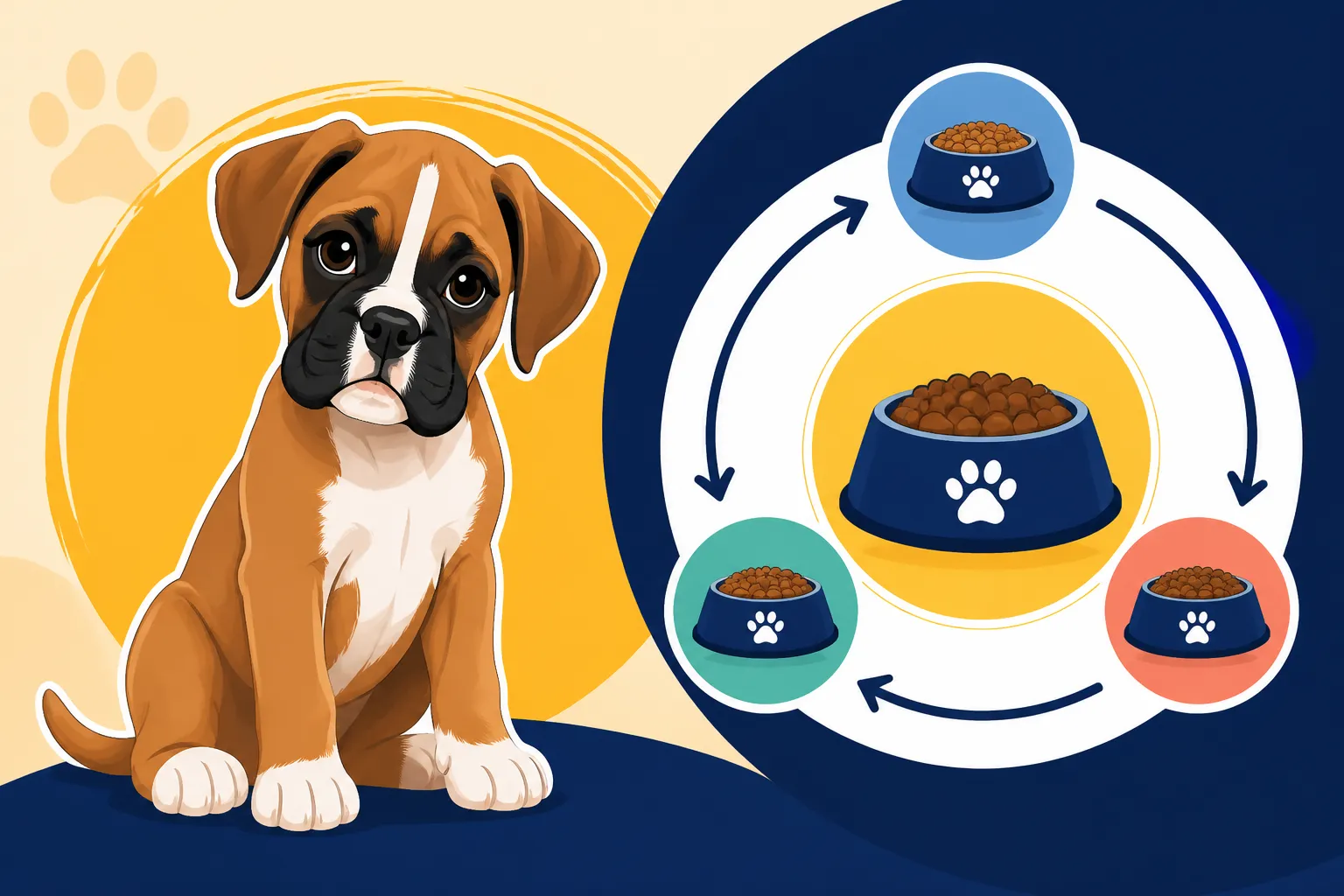
Meals a Day for a Boxer Under Six Months
Bringing home a Boxer puppy is an absolute joy, but it can also feel like a whirlwind of questions, especially when it comes to their diet. Many new owners find themselves wondering if they're feeding their tiny, energetic furball often enough, particularly with how quickly Boxers grow and how much energy they burn. This guide is here to walk you through the essential feeding schedule for your Boxer puppy during their crucial first six months, ensuring they get the right nutrition at the right times to thrive.
Why Frequent, Smaller Meals Are Crucial for Your Boxer Puppy
It’s tempting to just put a big bowl of food down for your Boxer puppy and let them graze, especially when they seem to have a bottomless pit for a stomach. However, for young puppies, particularly a rapidly growing, active breed like the Boxer, frequent, smaller meals are absolutely non-negotiable. This isn't just about satisfying their hunger; it's about supporting their delicate digestive system, maintaining stable blood sugar, and fueling their incredible growth without putting undue strain on their tiny bodies.
Supporting a Puppy's Developing Digestive System
Think about a newborn human baby; they eat little and often. Puppy digestive systems are much the same in their early stages. Their stomachs are small, and their intestines are still maturing, making them less efficient at processing large quantities of food at once. If you give a Boxer puppy too much food in one sitting, they might not digest it properly, which can lead to uncomfortable issues like diarrhea, gas, and even vomiting. Smaller, more frequent meals allow their system to work through the food more efficiently, absorbing all those vital nutrients without getting overwhelmed. It also helps prevent sudden spikes and drops in blood sugar, which can be particularly problematic for very young puppies and could even lead to lethargy or weakness.
Moreover, Boxers are a breed known for their susceptibility to bloat (gastric dilatation-volvulus) later in life. While puppyhood isn't the primary risk period for bloat, establishing good eating habits early on, such as smaller, more frequent meals and eating in a calm environment, can lay a good foundation. We often talk about Boxer Colitis and the Young Dogs It Hits, and proper feeding management is a key part of avoiding tummy upsets.
Fueling Rapid Growth and High Energy Levels
Boxer puppies grow at an astonishing rate. They transform from tiny bundles of wrinkles and energy into substantial, muscular adolescents in what feels like the blink of an eye. This rapid development, especially of bones, muscles, and organs, demands a constant supply of energy and nutrients. Their metabolism is incredibly high, almost like a miniature furnace burning fuel non-stop. If they go too long between meals, their blood sugar can drop, leading to lethargy, grumpiness, or even developmental slowdowns.
Imagine a construction site that only gets material deliveries once a day – progress would be slow and uneven. Your Boxer puppy's body is a construction site, constantly building and repairing. Frequent meals ensure a steady stream of "building blocks" (proteins, fats, vitamins, minerals) to support this intense period of growth. It also helps manage their boundless energy. A well-fed puppy is a happy puppy, less prone to destructive behaviors born of hunger or low blood sugar, although they'll certainly still find plenty of other ways to keep you on your toes! For more on this, check out A Month of Food for a Seventy-Pound Boxer and consider how much your little one is working towards that adult size.
The Ideal Feeding Schedule for Boxer Puppies Under Six Months
Now that we understand the 'why,' let's get into the practical 'how many' and 'when.' The number of meals per day will naturally decrease as your Boxer puppy matures, reflecting the development of their digestive system and their changing metabolic needs. However, in these early months, consistency is key.
Eight to Twelve Weeks: Four Meals a Day
When you first bring your Boxer puppy home, typically around eight weeks old, they should be eating four meals a day. This is the most crucial period for frequent feeding. Their little bodies are working overtime, and they need that consistent fuel.
Example Schedule:
- 7:00 AM: Breakfast
- 12:00 PM: Lunch
- 5:00 PM: Dinner
- 9:00 PM: Supper (a smaller portion to tide them over until morning)
This schedule helps maintain stable blood sugar levels, prevents excessive hunger pangs, and reduces the likelihood of digestive upset. It also helps with potty training, as what goes in must come out! You'll quickly learn your puppy's routine, which is invaluable for successful house-training. These early weeks are also when you'll be giving them their Boxer Puppy's Vaccine Course Costs, and good nutrition supports their immune system through this.
It's a good idea to feed your puppy in a quiet, designated spot away from household hustle and bustle. This helps them focus on eating and can reduce anxiety around meal times. Some puppies, especially Boxers with their expressive snouts, can be messy eaters, so a mat under their bowl might be your new best friend! You can find durable puppy bowls and mats on sites like Chewy or Amazon that make cleanup a breeze.
Three to Six Months: Three Meals a Day
As your Boxer puppy approaches three months old and beyond, you can gradually transition them to three meals a day. Their digestive system is a little more robust, and they can handle slightly larger portions at each meal. This transition shouldn't be rushed; do it slowly over a week or so by slightly increasing the portion size of the remaining three meals as you phase out the fourth.
Example Schedule:
- 7:00 AM: Breakfast
- 1:00 PM – 2:00 PM: Lunch
- 7:00 PM – 8:00 PM: Dinner
This schedule still provides plenty of fuel for their continued growth and endless puppy energy, but gives their system a little more time between meals. It's still vital to avoid strenuous exercise immediately before or after meals, a habit that is particularly important for Boxers to reduce the risk of bloat as they get older. If you're wondering Whether a Boxer Should Rest After Meals, the answer is a resounding yes! A good rule of thumb is at least 30 minutes before and an hour after.
Remember that every puppy is an individual. Some might do perfectly fine on this schedule, while others might still benefit from smaller, more frequent meals if they have a sensitive stomach or are prone to getting hungry quickly. Always observe your puppy's behavior, energy levels, and stool quality to gauge if the feeding schedule is working for them.
Here's a quick reference table for feeding frequency:
| Age Range | Recommended Meals Per Day | Key Considerations |
|---|---|---|
| 8-12 Weeks | 4 | Small stomach, rapid growth, stable blood sugar |
| 3-6 Months | 3 | Developing digestive system, continued high energy |
| 6 Months to Adult | 2 | Maturing system, bloat prevention (for Boxers) |
Choosing the Right Food and Managing Portions
Beyond when to feed, what and how much you feed are equally important for your Boxer puppy's health and development. High-quality nutrition is paramount, especially for a breed with specific needs like the Boxer.
Selecting a High-Quality Puppy Food
Not all dog foods are created equal, and for a Boxer puppy, quality really matters. You want a commercial puppy food that is specifically formulated for large breeds, or at least for all life stages, and contains high-quality protein sources as its first ingredients. Look for foods that have been evaluated by veterinary nutritionists and meet AAFCO standards.
Avoid generic "all breed" puppy foods if possible, as they might not have the correct calcium-to-phosphorus ratio or energy density for a fast-growing, large breed like a Boxer. Improper nutrition during this critical growth phase can contribute to orthopedic issues down the line. Many reputable brands offer specific large breed puppy formulas. Brands like Orijen, Blue Buffalo, or even fresh food options like Ollie, often provide excellent nutrition tailored to growth. If you are ever Cooking for a Boxer That Reacts to Kibble, knowing how to balance a homemade diet is even more crucial, so always consult with your vet.
Understanding Portion Sizes and Caloric Needs
This is where many owners get tripped up. The feeding guides on dog food bags are just that – guides. They provide a starting point based on age and anticipated adult weight, but your individual Boxer puppy might need more or less. Their caloric needs fluctuate based on their activity level, metabolism, and even the weather! A particularly active Boxer puppy might burn through calories faster than a more laid-back sibling.
Instead of strictly adhering to the bag, focus on your puppy's body condition. You should be able to feel their ribs easily without seeing them overtly, and they should have a discernible waist when viewed from above. Regularly checking your Boxer puppy's weight is important, but a good vet will also assess their body condition score at each visit. For more on this, read up on Measuring a Boxer's Ration Against the Bag Chart.
A good practice is to start with the lower end of the recommended range on the food bag and adjust based on your puppy's condition. If they seem too thin, increase the portion slightly; if they're getting chunky, reduce it. It’s always better to keep them lean during puppyhood to protect their developing joints. Remember that treats also contribute to their daily caloric intake, so factor those in, especially during intense training sessions.
Managing Eating Habits: Slow Feeders and Mealtime Environment
Boxers, by nature, can be enthusiastic eaters. Sometimes, a little too enthusiastic. Gorging food can lead to digestive upset, excessive gas, and even increase the risk of bloat in predisposed breeds. This is where tools like slow feeder bowls or puzzle feeders come in handy. These bowls have ridges or obstacles that force your puppy to eat more slowly, making them chew their food properly and ingest less air. You can find many options for Bowls That Stop a Boxer Swallowing Air at your local pet store or through online retailers.
Creating a calm, consistent mealtime environment is also vital. Avoid feeding your puppy immediately after a vigorous play session or walk. Let them settle down first. And as mentioned, ensure they have a quiet place to eat where they won't be bothered by other pets or children. This makes mealtime a positive experience and supports better digestion.
Transitioning to Fewer Meals and Beyond Six Months
As your Boxer puppy grows past six months, you’ll naturally start thinking about further reducing their meal frequency. This transition is another important milestone in their dietary management.
Moving Towards a Two-Meal-a-Day Schedule
Around six to eight months of age, most Boxer puppies are ready to transition to two meals a day. Their digestive systems are largely mature, and their growth rate, while still significant, is starting to slow down slightly compared to their earlier months. This is typically the feeding schedule they will maintain throughout their adult life.
Again, this transition should be gradual. Over the course of a week or two, you can combine the lunch portion into the breakfast and dinner meals, ensuring the total daily caloric intake remains appropriate for their size and activity level. This is also a good time to re-evaluate their food type, potentially moving from a specific "large breed puppy" formula to a "large breed adult" formula, or an "all life stages" food, depending on the brand. For details on how a Boxer's needs change, you might find Moving a Boxer Puppy to Adult Food helpful.
The Lifelong Importance of Meal Timing for Boxers
Even as adults, the principle of timed, consistent meals remains crucial for Boxers. Their deep chests make them more susceptible to bloat, a life-threatening condition where the stomach twists. While the exact causes are complex, eating too quickly, eating one large meal a day, and vigorous exercise around meal times are often cited as risk factors.
By establishing good habits during puppyhood – eating smaller, more frequent meals (two a day as an adult), using slow feeders, and ensuring a rest period before and after eating – you are doing everything you can to mitigate these risks for your beloved Boxer. This commitment to proper feeding extends throughout their entire life.
Remember, raising a Boxer puppy is a journey filled with love, laughter, and a fair share of slobber. Paying close attention to their nutritional needs, especially in those formative first six months, sets them up for a healthy, vibrant life by your side.
Disclaimer
This article is for general informational purposes only and does not constitute professional advice. Laws, prices and regulations vary by location and change over time. Consult a qualified professional for guidance on your specific situation.