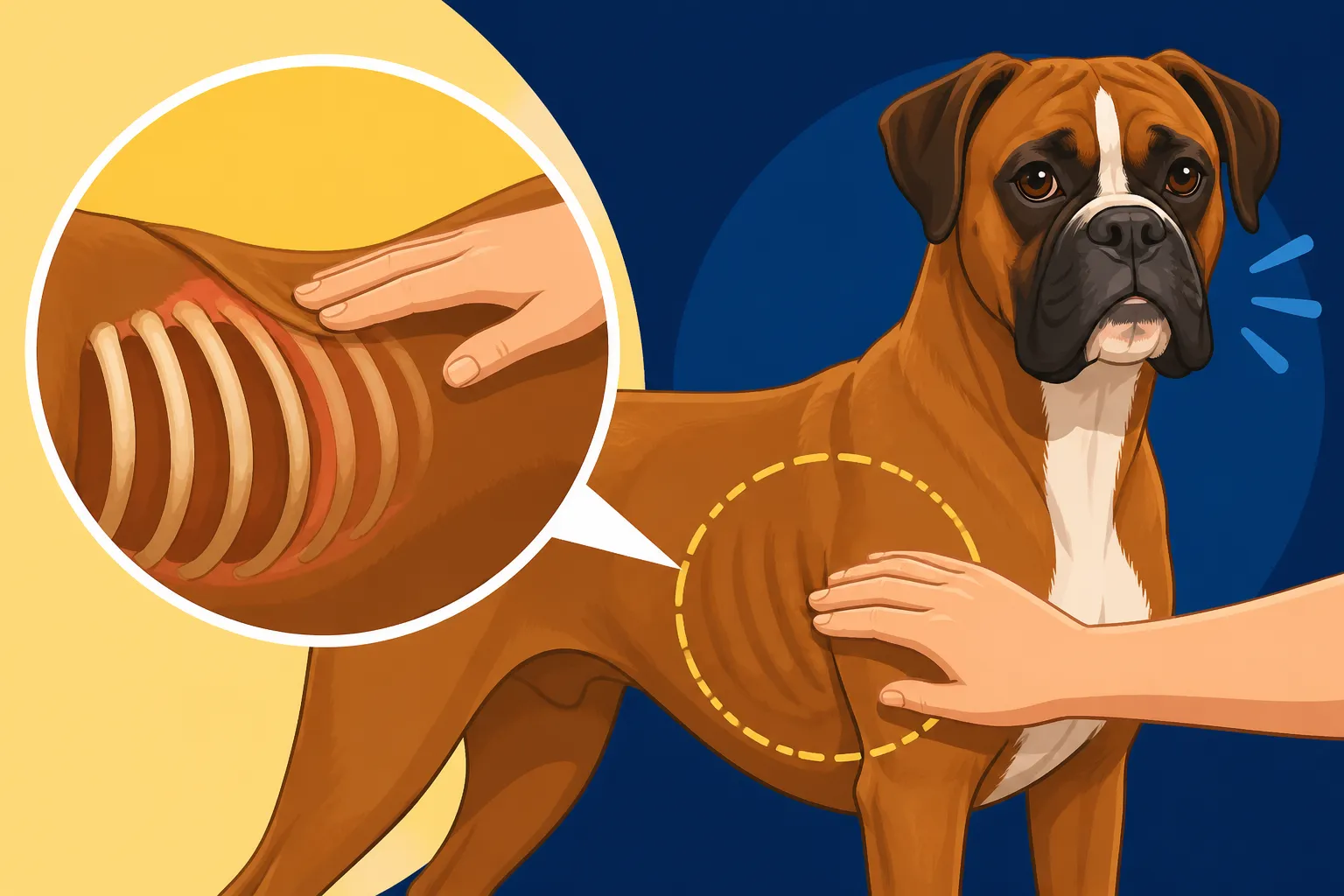
Feeling a Boxer’s Ribs Through Muscle
It can be surprisingly tricky to gauge your Boxer's body condition accurately, especially with their naturally deep chests and athletic builds. You might look at your dog and wonder if they're a healthy weight, too thin, or perhaps carrying a little extra padding, all while feeling confused because their musculature makes it hard to tell. This guide will walk you through the simple, hands-on method for feeling your Boxer's ribs, helping you confidently assess their ideal body condition.
The Boxer's Unique Physique: Why Weight Assessment Can Be Tricky
Boxers are magnificent, powerful dogs, known for their strong, muscular bodies and deep chests. This athletic build is part of their charm, but it can also make it a bit challenging to tell if your dog is at a healthy weight just by looking. Unlike some other breeds that might show their ribs more readily when lean, a Boxer's musculature can sometimes obscure what's happening underneath.
Musculature vs. Fat: A Common Confusion
Many Boxer owners, especially those new to the breed, often mistake a well-conditioned, muscular Boxer for one that might be slightly underweight. Their naturally lean physique and prominent muscle definition, particularly across the shoulders and hindquarters, can sometimes give the impression of boniness. Conversely, a Boxer carrying a bit too much weight might not look overtly "fat" because their broad chest and compact frame distribute the weight differently. You might just see them looking a bit "thicker" or less defined, rather than obviously round. This is why a hands-on approach is so crucial for accurate assessment.
The Deep Chest and Short Coat Factor
Boxers have a distinctive, deep brisket that can sometimes hide a little extra weight around the belly, while their short, tight coat offers no furry camouflage. Every ripple of muscle, or indeed, every subtle layer of fat, is visible. This means while you can see a lot, discerning what's muscle and what's fat just by eye can still be tough. A healthy Boxer should have a noticeable tuck-up at the waist when viewed from the side, but even this can vary slightly based on individual build. Reading a Boxer's Ribs and Waist can offer more visual cues.
The "Rib Test": How to Properly Feel Your Boxer's Ribs
The most reliable way to check your Boxer's body condition is by using your hands. This simple "rib test" gives you direct feedback on how much, or how little, padding is over their ribcage. It's a quick, non-invasive method that you can do weekly to monitor any changes.
Step-by-Step Guide to Feeling the Ribs
To perform the rib test, you'll want to get your Boxer in a relaxed standing position. A happy distraction, like a favorite treat or a gentle ear rub, can help.
- Position Yourself: Stand beside your Boxer, ideally on their left side, facing their tail. This allows you to use your right hand for a natural feel.
- Locate the Ribcage: Place the flat of your hand gently on their side, just behind their front leg and shoulder blade. You'll feel the curve of their ribcage there.
- Apply Gentle Pressure: With your fingers together and flat, slide your hand backward over their ribs, moving towards their waist. Apply very light pressure, much like you would if you were gently stroking their side. You shouldn't be pressing hard enough to cause any discomfort. The goal is to feel for the ribs, not to poke them.
- Feel for Definition: As you move your hand, pay attention to the sensation under your fingertips. Are the ribs easily discernible? Do you have to push to feel them? Or do they feel sharp and distinct without any pressure at all?
- Repeat on Both Sides: For a comprehensive check, repeat the process on the other side of your Boxer's body. Sometimes, one side might feel slightly different, though generally, they should be consistent.
Making this a regular part of your grooming or petting routine, perhaps during The Weekly Skin Check Every Boxer Needs, means you'll become very familiar with what a healthy ribcage feels like on your dog.
What You're Looking For and Feeling For
When you're performing the rib test, you're looking for a very specific sensation. Imagine feeling the knuckles on your own hand. When your hand is open and relaxed, you can feel the knuckles, but they aren't sharply protruding. When you clench your fist, they become much more pronounced. This analogy helps illustrate the difference between ideal ribs and those that are too prominent or too hidden.
Your fingers are trying to detect the subtle, individual contours of each rib bone, and the layer of tissue (muscle and a thin layer of fat) covering them. It's not just about finding the bones, but about the ease with which you can feel them and the amount of covering they have.
Interpreting What You Feel: Ideal, Too Thin, or Too Heavy
Once you've felt your Boxer's ribs, the next step is to interpret what that sensation means for their overall body condition. This is where understanding the nuances of the "rib test" really comes in handy.
The Ideal Boxer Ribs
When your Boxer is at their ideal weight, you should be able to feel their ribs quite easily when you run your hand along their side with light pressure. You should feel each rib individually, almost like running your fingers over a Venetian blind. However, they shouldn't feel sharp, bony, or easily visible without touching. There should be a thin, consistent layer of muscle and a minimal amount of fat covering them.
This "thin covering" is crucial. It means your Boxer has enough insulation and energy reserves without carrying excess weight that can strain their joints and heart. If you can feel the ribs distinctively but they don't look like they're protruding, you're likely right on target. This level of leanness also typically correlates with good muscle definition, a visible waist tuck-up, and energetic movement. Feeding a Boxer to Stay Lean and Muscled is all about maintaining this perfect balance.
When Ribs Are Too Prominent (Too Thin)
If your Boxer's ribs feel very sharp, distinct, and easily visible without even touching them, or if you can see them clearly from a distance, your dog is likely too thin. You might feel very little to no padding over the bones, and they might feel almost like the sharply defined knuckles of a clenched fist.
Other signs of a Boxer being too thin include:
- Pronounced Hip Bones and Spine: Beyond the ribs, you might easily feel or even see their hip bones and individual vertebrae along their spine.
- Lack of Muscle Mass: Their muscles might look wasted or less defined than they should be.
- Low Energy (sometimes): While Boxers are naturally energetic, a severely underweight dog might show signs of lethargy.
- Concave Abdomen: An exaggerated "tuck-up" where the abdomen appears very hollow.
If you suspect your Boxer is too thin, consult your vet to rule out underlying health issues. Sometimes, it's a simple matter of increasing their calorie intake with a high-quality food, perhaps a different formula available from a retailer like Chewy, or exploring options from providers like Ollie that offer nutrient-dense, fresh food plans. Getting Weight Onto a Skinny Boxer provides more detail on how to approach this.
When Ribs Are Difficult to Feel (Too Heavy)
If you have to press firmly to feel your Boxer's ribs, or if they feel like they're hidden under a noticeable cushion of flesh, your dog is carrying too much weight. The ribs might feel rounded and indistinct, more like the back of your open, relaxed hand where the knuckles are present but not individually prominent.
Signs your Boxer might be too heavy include:
- No Palpable Ribs: You simply cannot feel the individual ribs without significant effort, or at all.
- Lack of Waist: When viewed from above, their waistline might be straight or even bulge out, rather than tapering in. From the side, the abdominal tuck-up will be absent or minimal.
- Fat Deposits: You might notice extra padding around the base of their tail, over their hips, or even a thicker neck.
- Reduced Stamina: They might tire more quickly during walks or play.
- Difficulty Breathing: Excess weight can exacerbate breathing issues, especially in brachycephalic breeds like Boxers.
Carrying extra weight can lead to a host of health problems for Boxers, including joint issues, heart strain, and an increased risk of certain cancers. Why Extra Weight Hurts a Boxer's Heart highlights these serious concerns. If your Boxer is overweight, a controlled diet and appropriate exercise are essential. Discuss a weight loss plan with your vet, focusing on reduced calories and safe, consistent activity. Many online retailers, including Amazon, offer scales and portion control tools to help you manage their intake.
Here’s a quick summary table to help you assess:
| Body Condition | Visual Cues (General) | Rib Test Sensation | Action Needed |
|---|---|---|---|
| Underweight | Ribs, spine, hip bones visible; minimal muscle | Ribs sharp, easily visible, no padding | Consult vet, consider calorie increase, rule out illness. |
| Ideal Weight | Ribs not visible but easily felt; clear waist | Ribs easily felt with light pressure, thin covering | Maintain current diet and exercise. Monitor regularly. |
| Overweight | No waist tuck-up, thick appearance, fat pads | Ribs hard to feel, require firm pressure, thick padding | Consult vet, implement controlled diet, increase exercise. |
Beyond the Ribs: Other Indicators of a Healthy Boxer Weight
While the "rib test" is a fantastic starting point, a holistic assessment of your Boxer's body condition involves looking at other key areas. These additional indicators provide a more complete picture of their overall health and fitness.
The Waist and Abdominal Tuck-Up
After checking the ribs, take a step back and observe your Boxer's overall silhouette.
- From Above: Look down at your Boxer while they are standing. A healthy Boxer should have a distinct waist, where their body tapers in slightly after their ribcage, before flaring out again at the hips. If they look like a straight block from neck to tail, or if their sides bulge outwards, they are likely overweight.
- From the Side: Observe their profile. A fit Boxer should have an "abdominal tuck-up," meaning their belly line rises up from their ribcage to their hind legs, rather than hanging low or running straight back. An absent or very slight tuck-up is a strong indicator of excess weight.
These visual cues, combined with the rib test, offer a strong assessment of their current condition. You can find more detailed guidance on Reading a Boxer's Ribs and Waist.
Energy Levels and Activity Endurance
A Boxer at a healthy weight typically has boundless energy and enthusiasm for life. They should be eager to play, go for walks, and participate in family activities. If you notice your Boxer becoming winded easily, lagging behind on walks that used to be a breeze, or showing less interest in play, it could be a sign they are carrying too much weight. Overweight dogs often have reduced stamina and can struggle with activities that were once effortless. Of course, age plays a role, and What Changes in a Boxer After Seven covers shifts in energy and mobility.
Conversely, a Boxer who is too thin might also have reduced energy, though this is less common for their breed unless there's an underlying health issue. Always consider your Boxer's typical activity levels and consult your vet if there's a significant, unexplained change. Boxer Exercise Needs and the Heat That Limits Them provides important context for their activity.
Muscle Definition and Tone
Boxers are naturally muscular dogs. When they are at a healthy weight, you should be able to see good muscle definition, especially in their hindquarters and over their shoulders. Feel their thigh muscles – they should feel firm and well-toned. If these areas feel soft or saggy, or if the muscle definition seems diminished, it could indicate a lack of muscle mass (possibly due to being underweight or under-exercised) or it could be hidden by a layer of fat. Regular exercise, appropriate for their age and health, is key to maintaining this musculature.
Maintaining ideal muscle tone and a healthy weight is crucial for your Boxer's long-term well-being. By regularly performing the rib test and observing these other indicators, you'll be well-equipped to keep your beloved Boxer in prime condition.
Disclaimer
This article is for general informational purposes only and does not constitute professional advice. Laws, prices and regulations vary by location and change over time. Consult a qualified professional for guidance on your specific situation.