Fat Levels for an Athletic Boxer
It's a common dilemma for Boxer owners: you want your energetic, muscled companion to be at their absolute peak, but navigating the world of canine nutrition, especially when it comes to fat, can feel like walking a tightrope. You're trying to figure out if you're feeding enough to fuel those zoomies and intense play sessions without packing on unwanted pounds that could impact their long-term health. This guide will dive deep into understanding the optimal fat levels for an athletic Boxer, helping you fine-tune their diet for vitality, performance, and a healthy lifespan.
Understanding Your Boxer's Unique Athletic Needs
Your Boxer isn't just a pet; they're an athlete in a furry suit, often brimming with boundless energy and a powerful, muscular build. This breed was originally developed for working tasks, and even today's companion Boxers retain that inherent drive and physical capability. They're built for bursts of speed, agile movements, and a playful intensity that can surprise anyone who hasn't lived with one. This isn't a couch potato breed, at least not for long, and their dietary needs reflect that active lifestyle.
Why "Athletic" Isn't Just for Show Dogs
When we talk about an "athletic Boxer," it doesn't necessarily mean a dog competing in Schutzhund or agility trials (though many Boxers excel in those!). It simply refers to their natural physiology and activity level. Even a Boxer who primarily enjoys vigorous walks, regular romps at the dog park, and endless games of fetch in the backyard qualifies as athletic. They have a higher metabolic rate than many less active breeds, and their muscular frame requires consistent fuel to maintain. Overlooking this inherent athleticism can lead to a diet that either leaves them under-fueled and lethargic, or over-fueled and prone to weight gain, which nobody wants for their beloved companion. It’s about recognizing that spirited energy and building their diet around it.
It's a mistake to treat all dogs the same when it comes to nutrition. A Boxer's short coat and compact, powerful body suggest a need for a certain kind of fuel. You might notice your Boxer looking a bit ribby if they're particularly active and not getting enough calories, or conversely, if they're slowing down a touch with age or a medical condition, those extra calories can quickly turn into unwanted fat. Checking your Daily Calories for a Seventy-Pound Boxer is a great starting point, but the type of calories matters just as much.
The Metabolism of a High-Energy Boxer
Boxers are known for their playful, sometimes goofy, nature, but beneath that clownish exterior lies a powerhouse metabolism. They burn through calories more efficiently during exercise than some other breeds, especially when engaged in high-intensity activities like sprinting or wrestling with other dogs. This means their diet needs to provide readily available energy to support these efforts and help them recover afterward. If their energy demands aren't met, you might notice a dip in their usual enthusiasm, or they might seem to "run out of gas" quicker than usual during playtime.
Their metabolism also has a flip side: if their high energy output isn't matched by their caloric intake, or if their activity drops significantly without a corresponding diet adjustment, they can gain weight relatively easily. This is particularly important as Boxers mature, or if they have to reduce their activity due to health issues like Boxer Cardiomyopathy and the Holter Monitor. Understanding their unique metabolic engine is key to optimizing their fat intake.
The Role of Dietary Fat in a Boxer's Performance and Health
Fat often gets a bad rap in human diets, but for dogs, especially active ones like Boxers, it’s a crucial macronutrient. It’s not just about adding flavor to their food; fat is a concentrated source of energy, provides essential fatty acids, and plays a vital role in nutrient absorption and overall health. For a Boxer, the right kind and amount of fat can mean the difference between thriving and just getting by.
Essential Fatty Acids and Their Benefits
Beyond just calories, dietary fat provides essential fatty acids (EFAs), which your Boxer cannot produce on their own and must get from their food. The most commonly recognized are Omega-3 and Omega-6 fatty acids. These aren't just buzzwords on dog food bags; they are fundamental to numerous bodily functions.
Omega-3s, found abundantly in fish oil, are fantastic for reducing inflammation, supporting brain health, and promoting a healthy coat and skin. For an athletic Boxer, reducing inflammation can be particularly beneficial for joint health after strenuous exercise. You'll often see supplements touting "joint support" and many of them revolve around Omega-3s. A glossy coat isn't just for aesthetics; it’s a sign of good internal health. If your Boxer is experiencing dry, flaky skin or a dull coat, increasing their intake of high-quality Omega-3s, perhaps through a fish oil supplement found on Chewy or Amazon, could make a noticeable difference.
Omega-6s are also essential, playing a role in skin barrier function, immune response, and normal growth. The key is often the balance between Omega-3 and Omega-6. While both are necessary, too much Omega-6 relative to Omega-3 can sometimes promote inflammation, which is the opposite of what you want for an active dog. A balanced diet aims for a healthy ratio to support overall wellness. Always check the ingredients list on your dog food, and consider talking to your vet about specific Fish Oil for a Boxer's Skin and Heart dosages.
Balancing Energy and Digestibility
Fat is incredibly energy-dense. It provides more than twice the calories per gram compared to protein or carbohydrates. This makes it an ideal fuel source for Boxers who need sustained energy for longer periods or intense bursts. For example, a Boxer spending an hour at the dog park, sprinting and wrestling, will utilize fat stores more efficiently than a dog taking a leisurely stroll.
However, it's not just about packing in as much fat as possible. The type of fat matters, and digestibility is crucial. High-quality animal fats are typically easier for dogs to digest and utilize than low-quality, rendered fats. If a food has too much of the wrong kind of fat, or simply an overwhelming amount, your Boxer might experience digestive upset, like loose stools or even pancreatitis, especially if they have a sensitive stomach. This is why paying attention to the overall ingredient quality in your dog’s food is so important. Brands like Ollie, which focus on fresh, human-grade ingredients, often have carefully balanced fat sources that are highly digestible.
When you're looking at food, consider the source of the fat. Chicken fat, beef fat, and various fish oils are common and generally well-tolerated. Avoid foods with vague "animal fat" listed without further specification, as these can be of lower quality. The goal is to provide sufficient energy without overwhelming their digestive system or leading to excessive weight gain.
How Much Fat Is Really Optimal for an Athletic Boxer?
This is the million-dollar question, and the answer isn't a one-size-fits-all number. It depends on several factors: your Boxer's age, their actual activity level, their individual metabolism, and any underlying health conditions. However, we can look at general guidelines and how to interpret dog food labels to make informed decisions.
Decoding Dog Food Labels
Dog food labels list guaranteed analysis percentages for crude protein, fat, fiber, and moisture. For adult dogs, most reputable dog foods designed for active breeds will have a fat content ranging from 12% to 20% on a dry matter basis.
Let's break that down:
- 12-15% Crude Fat: This might be suitable for a moderately active Boxer, perhaps one who gets a couple of brisk walks a day and some indoor play. It provides adequate energy without being overly rich.
- 16-20%+ Crude Fat: For truly athletic Boxers – those regularly engaging in high-intensity exercise, working dogs, or those with very high metabolisms – a fat percentage in this range or slightly higher might be necessary. This provides the dense energy required to sustain their performance.
Remember that these are crude fat percentages and refer to the minimum amount. The "dry matter basis" is important because wet foods have high moisture content, which dilutes the percentages. To compare wet and dry foods accurately, you need to convert to dry matter basis.
Here's a quick reference table to illustrate typical ranges:
| Boxer Activity Level | Recommended Crude Fat (Dry Matter Basis) | Example Food Type |
|---|---|---|
| Moderately Active | 12-15% | Adult Maintenance, Moderate Energy |
| Highly Active | 16-20% | Active Breed, Performance, High Energy |
| Working/Extreme | 20%+ | Sport Dog, High-Performance |
| Senior/Less Active | 10-14% (often lower protein too) | Senior, Weight Management |
When you're looking at the bag, don't just stop at the percentage. Look at the ingredient list. The first few ingredients should be identifiable meat sources, and fat sources should be clearly named (e.g., "chicken fat," "salmon oil"), not vague "animal fat." If you're comparing options on a site like Chewy, you can often filter by these specifications.
Adjusting Fat for Different Activity Levels and Ages
Your Boxer's fat needs aren't static. They will change throughout their life and with variations in their routine.
Growing Puppies: Boxer puppies, especially during their intense growth phase, need higher fat levels than adult dogs. Puppy foods are typically formulated with higher fat and protein to support rapid development. However, it's crucial that puppy food for large breeds like Boxers is also carefully balanced to support controlled growth, preventing issues like Boxer Hip Dysplasia and Spondylosis.
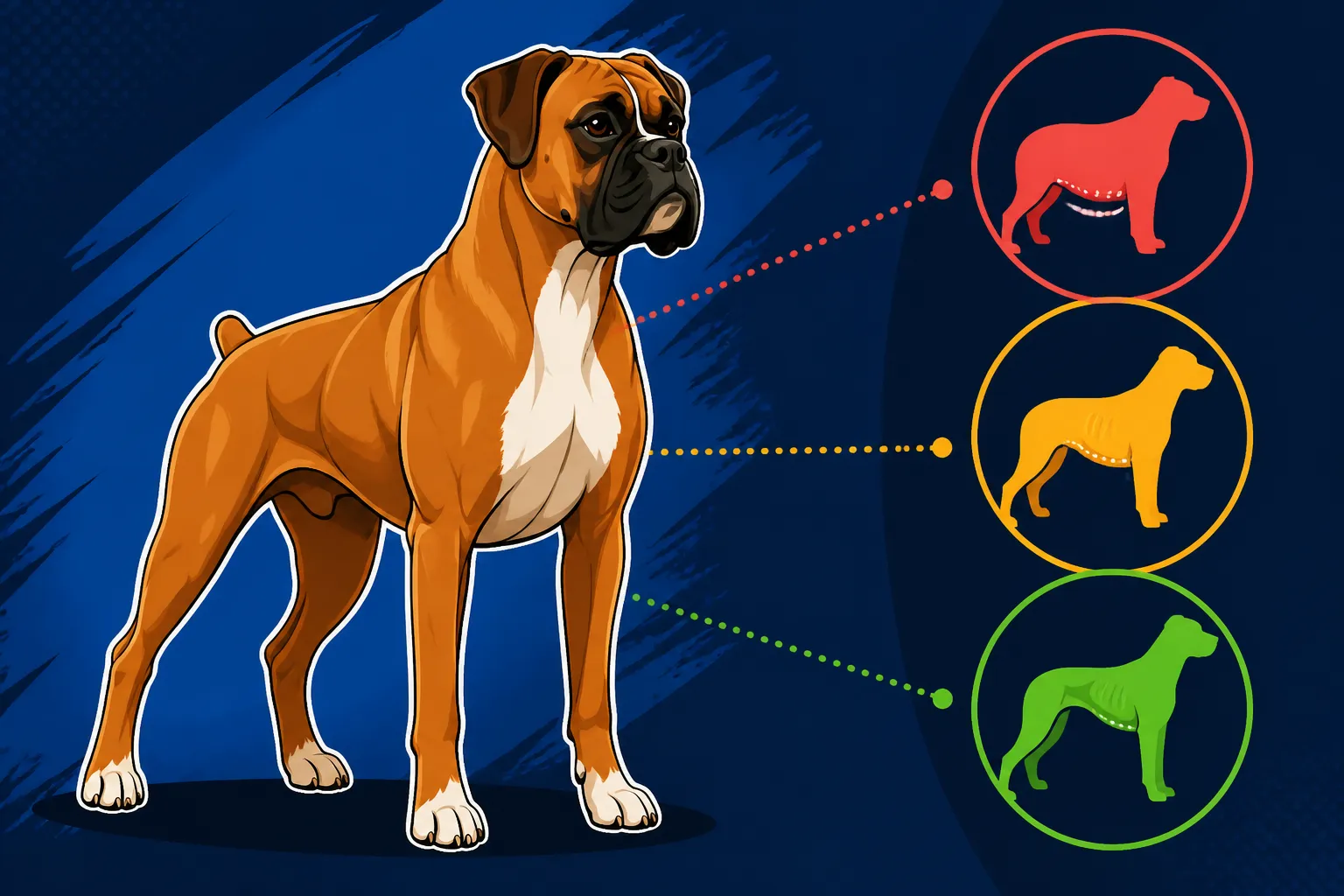
Peak Athleticism (1-6 years): This is often when Boxers are at their most energetic. If your Boxer is consistently zooming, playing hard, and maintaining a lean, muscular physique, they'll likely thrive on a diet with a higher fat content, perhaps in the 16-20% range. Regularly feel their ribs – you should be able to feel them easily but not see them prominently. If you can see them clearly, they might need more fuel; if you can't feel them without pressing, it might be time to Taking Weight Off a Boxer Without Losing Muscle.
Seniors (7+ years): As Boxers age, their metabolism often slows down, and their activity levels naturally decrease. While some older Boxers remain quite active, many will need a reduction in caloric intake, including fat. Excess fat in senior dogs can contribute to obesity, putting strain on joints and organs. Senior-specific dog foods typically have slightly lower fat and calorie counts. For an aging Boxer, managing their weight is key to their comfort and longevity, especially with conditions like Arthritis in an Older Boxer. If your Boxer has Degenerative Myelopathy in an Older Boxer, their activity might be severely limited, requiring a significant dietary adjustment.
Seasonal Adjustments: Consider the seasons. In colder months, a Boxer spending more time outdoors might burn slightly more calories to maintain body temperature. Conversely, in hot summer months, their exercise might be restricted to avoid overheating (as How Fast a Flat-Faced Boxer Overheats), necessitating a slight reduction in food to prevent weight gain.
Health Status: Certain health conditions might require specific dietary adjustments. For instance, a Boxer recovering from surgery or illness might need more energy for healing, while one with a sensitive digestive system might do better on a lower-fat, highly digestible diet. Always consult your vet if your Boxer has health issues that might impact their nutritional needs.
Common Pitfalls and How to Avoid Them
Even with the best intentions, it's easy to fall into common traps when feeding an athletic Boxer. Knowing what to look out for can help you maintain their health and performance.
Too Little Fat: Signs and Solutions
Under-feeding fat can have noticeable consequences for your active Boxer. It's not just about looking skinny; it impacts their overall well-being.
Signs of Too Little Fat:
- Low Energy/Lethargy: Your usually exuberant Boxer might seem unusually tired, less enthusiastic about play, or tire quickly during exercise. They might seem sluggish and not have the "oomph" you expect.
- Dull, Dry Coat and Skin Issues: A lack of essential fatty acids often shows up first in the coat. You might see a dull, brittle coat, excessive shedding, or dry, flaky skin. They might also be prone to hot spots or other dermatological problems.
- Difficulty Gaining/Maintaining Weight: If your Boxer is eating what seems like a normal amount but struggles to put on or keep weight, despite being highly active, inadequate fat intake could be the culprit. You might be able to clearly see their ribs and hip bones when looking at them, even when they are not in motion. Why Some Boxers Look Ribby and Are Fine but it’s crucial to know the difference between lean and underweight.
- Poor Recovery After Exercise: An under-fueled Boxer might take longer to recover after a strenuous play session, seeming more stiff or tired than usual.
Solutions for Too Little Fat:
- Increase Fat Percentage in Food: Look for a high-quality dog food with a slightly higher crude fat percentage (e.g., moving from 14% to 18%). Many "performance" or "active breed" formulations are specifically designed for this. You can find these at pet specialty stores or online retailers like Chewy.
- Add Healthy Fat Supplements: Incorporate sources like fish oil (for Omega-3s) or even a small amount of coconut oil (which provides medium-chain triglycerides for quick energy) to their meals. Start with small amounts and gradually increase to avoid digestive upset. Again, Amazon is a good source for a variety of these supplements.
- Ensure Adequate Overall Calories: Sometimes it's not just the fat, but overall caloric intake. Ensure you're feeding enough total food to meet their energy demands. Refer back to charts and adjust based on observation.
Too Much Fat: The Risks and How to Scale Back
While fat is essential, too much of a good thing can lead to significant health problems for your Boxer.
Signs of Too Much Fat:
- Weight Gain/Obesity: This is the most obvious sign. You might notice your Boxer filling out, losing their waistline, or having trouble distinguishing their ribs. They might look "thickened" or "slowed down" as they carry extra weight. Obesity is a major concern because it can exacerbate conditions like Why Extra Weight Hurts a Boxer's Heart or make other issues worse.
- Digestive Upset: Diets excessively high in fat can cause gastrointestinal issues, including diarrhea, vomiting, or even more serious conditions like pancreatitis (inflammation of the pancreas), which can be quite painful and dangerous. This is especially true if the fat source is of low quality.
- Lethargy (paradoxically): While too little fat causes lethargy, so can obesity. An overweight Boxer will have less stamina and might be less inclined to play or exercise, creating a vicious cycle.
How to Scale Back Fat Intake:
- Choose a Lower Fat Food: Transition to a dog food with a lower crude fat percentage (e.g., 12-15% range). Look for "light," "weight management," or "senior" formulas, but always ensure they still meet protein needs for muscle maintenance.
- Reduce High-Fat Treats and Table Scraps: This is often a significant hidden source of excess fat. Many human foods, even in small amounts, are much richer than dog food. Be mindful of fatty cuts of meat, cheese, and even some dog treats that are very calorie-dense.
- Measure Food Accurately: It's easy to eyeball portions, but even a small overestimation each day adds up. Use a measuring cup for precise portions.
- Increase Exercise (if appropriate): If your Boxer is healthy enough, gradually increasing their exercise can help them burn off excess calories. Consult your vet before significantly increasing activity, especially for an overweight dog, to ensure their joints and heart can handle it. Exercise Limits for a Boxer With Stenosis or Cutting a Boxer's Exercise After a Heart Diagnosis would necessitate diet changes rather than increased exercise.
- Consult Your Vet: If you're struggling to manage your Boxer's weight or they have recurring digestive issues, a vet can help rule out underlying medical conditions and provide a tailored nutritional plan. They might recommend specific therapeutic diets or help you calculate their precise caloric needs.
Finding the sweet spot for fat levels in your athletic Boxer's diet is a journey, not a destination. It requires regular observation, a bit of label decoding, and a willingness to adjust as your dog's needs change. By understanding the role of fat and knowing what signs to look for, you can help your Boxer maintain that incredible energy, a healthy weight, and a vibrant life.
Disclaimer
This article is for general informational purposes only and does not constitute professional advice. Laws, prices and regulations vary by location and change over time. Consult a qualified professional for guidance on your specific situation.