Whether a Boxer Can Eat Bones
One of the most common questions I hear from fellow Boxer owners, especially those new to the breed, revolves around bones. It’s natural to think a dog should be able to handle a bone, but the reality is that giving bones to our beloved Boxers can range from a benign activity to a trip to the emergency vet. This guide is going to walk you through the nuances of feeding bones, the significant risks involved, and, most importantly, safer alternatives that will satisfy your Boxer's natural urge to chew without putting their health at risk.
Understanding the Bone Debate for Boxers
The idea of a dog chewing on a bone feels inherently "dog-like," a primal image ingrained in our minds. For Boxers, with their powerful jaws and immense chewing drive, it's particularly tempting to offer them something they can really sink their teeth into. However, not all bones are created equal, and the very act of chewing them carries a surprising number of hazards that many owners aren't fully aware of.
The Allure and the Alarm Bells
Boxers are renowned for their strength, their boundless energy, and their strong desire to mouth and chew. Whether it's a puppy exploring the world with its teeth or an adult looking for an outlet for boredom, chewing is a fundamental behavior. A bone seems like the perfect solution: natural, long-lasting, and presumably good for their teeth. The allure is strong, promising hours of quiet entertainment and perhaps even some dental benefits.
However, behind that tempting picture lie significant dangers. Veterinarians often caution against feeding bones, and for good reason. The potential for fractured teeth, internal perforations, blockages, and choking is very real, and these aren't just minor inconveniences; they can be life-threatening emergencies that require immediate, expensive intervention. As owners, our job is to discern which urges are healthy to indulge and which pose an unacceptable risk to our furry family members.
The Fundamental Divide: Raw vs. Cooked
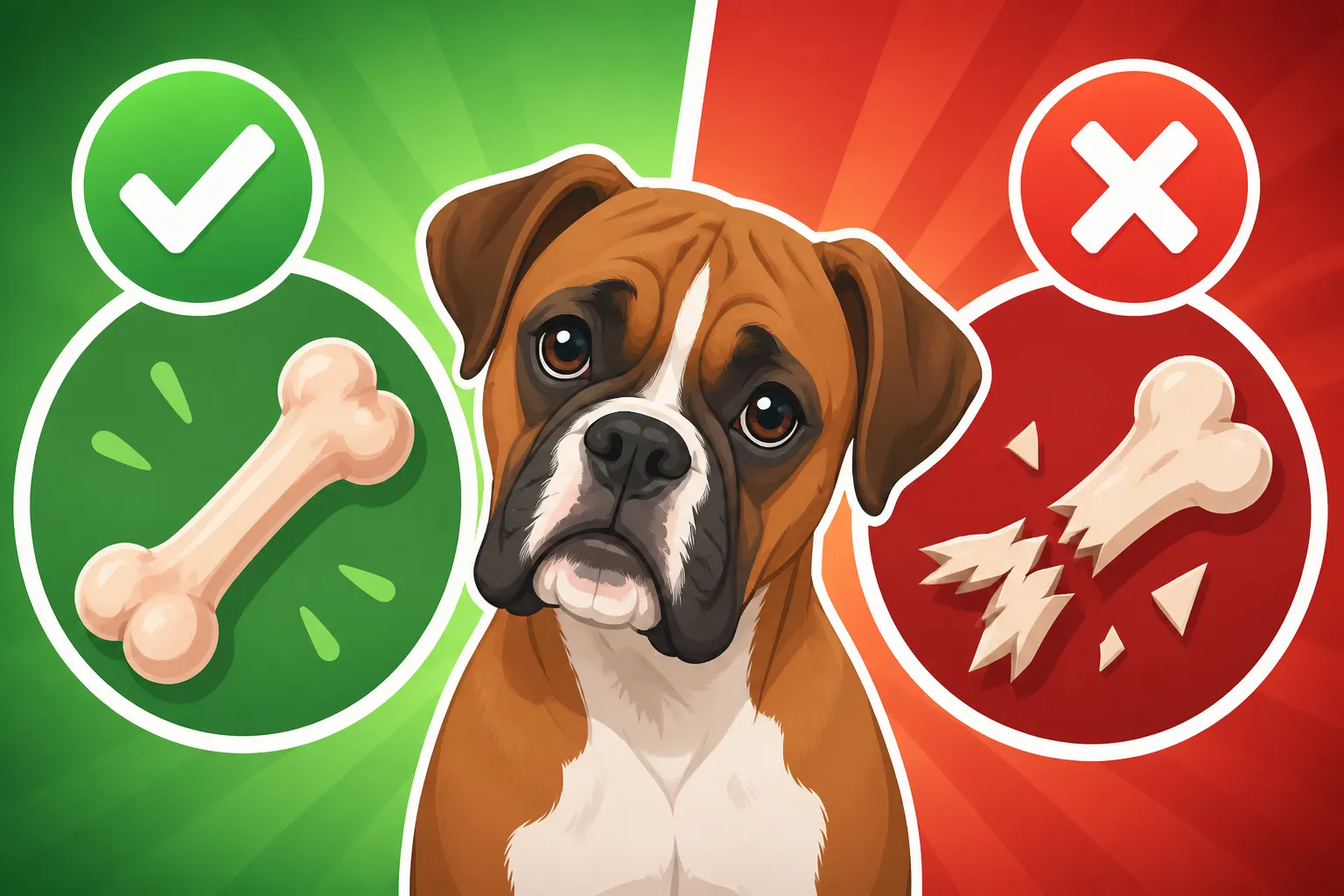
The most critical distinction to understand when discussing bones for dogs is the difference between raw and cooked. This isn't just a preference; it's a matter of safety.
Cooked Bones: An Absolute No-Go
Cooked bones, regardless of whether they're from chicken, beef, pork, or any other animal, are universally considered dangerous. The cooking process changes the bone's structure, making it brittle and prone to splintering into sharp, jagged fragments. Imagine shards of glass inside your Boxer's digestive tract. These fragments can:
- Puncture organs: As they pass through the esophagus, stomach, or intestines, sharp bone pieces can pierce the delicate walls, leading to peritonitis – a severe, often fatal infection.
- Cause blockages: Larger pieces, even if not sharp, can get stuck in the throat, stomach, or intestines, leading to a complete obstruction. This is an emergency that almost always requires surgery.
- Break teeth: While raw bones can also break teeth, the altered texture of cooked bones can contribute to fractures, especially on molars.
- Lead to severe constipation: Bone fragments can compact in the colon, making it incredibly difficult and painful for your Boxer to pass stool, sometimes requiring veterinary assistance to remove.
So, if you've had a family meal and are tempted to give your Boxer the leftover T-bone, please resist. It's simply not worth the risk.
Raw Bones: A Nuanced Discussion
Raw bones are a more complex topic. Proponents of raw feeding often include raw bones as part of a "Biologically Appropriate Raw Food" (BARF) diet, arguing that they are natural, digestible, and provide dental benefits. These are typically divided into two categories:
- Recreational Bones: These are large, non-weight-bearing bones that are too big for your Boxer to swallow whole, like beef knuckles or femurs. The idea is that the dog chews off bits of meat, cartilage, and soft bone, getting dental stimulation without consuming the entire bone.
- Edible Bones: These are smaller, softer bones that a dog can safely chew up and swallow, like chicken necks or wings, or lamb ribs. These are meant to be fully consumed and contribute to the dog's nutrition.
Even with raw bones, however, there are still significant risks, especially for Boxers. Their powerful jaws can easily break off large chunks of even "recreational" raw bones, leading to choking or internal blockages. And while edible bones are theoretically soft enough to be consumed, a Boxer's enthusiasm can mean they swallow pieces that are too large, again posing a choking or blockage risk. Furthermore, raw bones carry the risk of bacterial contamination (like Salmonella or E. coli) for both your dog and your family.
The Serious Risks of Feeding Bones to Your Boxer
Despite the best intentions, the risks associated with bones often outweigh any perceived benefits for Boxers. We love our Boxers for their goofy personalities and zest for life, but that same enthusiasm can put them in harm's way when it comes to bones.
Gastrointestinal Nightmares
One of the most common and dangerous outcomes of bone chewing is damage to the gastrointestinal tract. A Boxer's digestive system is robust, but it's not invincible.
- Obstructions: Even small pieces of bone can act like pebbles in a pipe, blocking the passage of food and waste. This is particularly true if your Boxer gulps down large, undigested chunks. Symptoms include repeated vomiting, abdominal pain, loss of appetite, and lethargy. An intestinal obstruction is a medical emergency requiring immediate veterinary attention, often involving surgery. It’s an agonizing situation for both dog and owner. Emergency Bloat Surgery on a Boxer can give you a sense of the kind of urgent care these issues demand.
- Perforations: Sharp bone fragments can tear through the walls of the esophagus, stomach, or intestines. This allows bacteria and digestive contents to leak into the abdominal cavity, causing a severe infection called peritonitis. This condition is extremely painful, rapidly progressive, and often fatal if not treated promptly and aggressively. Imagine the sheer terror of realizing your dog is in such pain, all from something you thought was a treat.
- Severe Constipation: Bone fragments, especially if small and numerous, can form a hard, concrete-like mass in the colon. This makes defecation incredibly difficult and painful, leading to straining, crying, and sometimes bloody stool. Your vet may need to perform an enema or manually remove the impacted bone material, which is distressing for everyone involved.
Dental Disasters
While some argue bones clean teeth, they are a double-edged sword when it comes to dental health. For Boxers, whose strong jaws and eagerness to chew are legendary, the risk of dental injury is particularly high.
- Fractured Teeth: This is perhaps the most common bone-related injury. A Boxer’s powerful bite can easily crack or chip molars and premolars, especially when chewing on dense, hard bones. A fractured tooth is not just painful; it exposes the pulp cavity to bacteria, leading to infection, abscesses, and potentially systemic illness. Treating a fractured tooth often requires a root canal or extraction, which are costly and invasive procedures.
- Gum Injuries: Sharp edges or splinters from bones can cut into your Boxer's gums, leading to bleeding, pain, and infection. These injuries can be minor or severe, sometimes requiring sutures.
- Abnormal Wear: Even if teeth don't fracture, constant grinding on very hard bones can lead to excessive wear, flattening the tooth surface and exposing the sensitive dentin or even the pulp over time. This can cause chronic pain and sensitivity.
Considering the unique challenges of Boxer Dental Care and the Undershot Bite, adding hard bones into the mix can compound existing issues.
Choking Hazards and Internal Blockages
The immediate, terrifying risk of choking is always present when giving a Boxer a bone. Boxers, with their brachycephalic (flat) faces, can be more prone to respiratory issues and may not handle choking as effectively as other breeds.
- Choking: A piece of bone, swallowed too quickly or broken off in an awkward shape, can get lodged in your Boxer's throat or windpipe. This is an immediate, life-threatening emergency. Your dog will struggle to breathe, gasp for air, and may collapse. Without immediate intervention, which many owners are not equipped to perform, choking can be fatal.
- Esophageal Obstruction: Even if a bone passes the throat, it can get stuck in the esophagus, causing extreme distress, regurgitation, and potential damage to the esophageal lining. This also requires urgent veterinary care.
- Foreign Body Ingestion: Beyond choking, the mere ingestion of a large or indigestible piece of bone means it becomes a "foreign body" inside your Boxer. This foreign body then travels through the digestive tract, posing a constant risk of obstruction or perforation until it either passes or is surgically removed.
When Bones Might Seem Okay (and Why They Often Aren't)
You might hear conflicting advice from different sources about bones. Some dog owners swear by them, while others are vehemently against. It’s important to understand the different perspectives and why, for Boxers, a cautious approach is usually the wisest.
The "Recreational" Bone Myth
The concept of a "recreational bone" often refers to large, dense raw bones like beef femurs or knuckles, given with the intention that the dog will only chew off the soft tissues, cartilage, and perhaps small, digestible bits of bone. The idea is that these bones are too big to be swallowed whole and provide excellent dental stimulation.
However, the reality for a strong-jawed breed like a Boxer can be quite different. Boxers have immense chewing power and determination. What starts as a gentle gnaw can quickly turn into an aggressive effort to break off large chunks. These chunks, even from a raw bone, can be dense enough to cause tooth fractures or large enough to be swallowed and create internal obstructions. There's no guarantee your Boxer will only chew "safely." They live in the moment, and that moment might involve trying to devour the entire bone.
Furthermore, these large bones, if they persist for too long, can also harbor bacteria, potentially leading to gastrointestinal upset. It’s hard to judge exactly how much "recreational" chewing is enough without crossing into dangerous territory.
Nutritional Bones: A Raw Diet Consideration
For Boxers on a carefully formulated raw diet, small, soft, raw edible bones (like chicken necks, backs, or wings) are sometimes included as a source of calcium and phosphorus. The key here is "small, soft, and edible," meaning they are meant to be entirely consumed and digested without splintering or causing blockages.
If you are considering a raw diet that includes bones, it is absolutely essential to work with a qualified veterinary nutritionist. They can help you source appropriate bones, ensure they are correctly sized for your Boxer, and guide you on safe handling to minimize bacterial risks. This isn't something to experiment with based on internet advice. The type, size, and quantity of bone must be carefully balanced to prevent nutritional deficiencies or dangerous excesses, and to ensure they are actually digestible. Companies like Ollie, for example, offer fresh, balanced meal plans that typically avoid whole bones, offering safer, complete nutrition.
Even under expert guidance, however, a risk still remains. A Boxer might get overly enthusiastic and swallow a piece of edible bone that's too big, leading to a choking or blockage incident. Their eager nature can sometimes override caution. So, even in controlled raw feeding scenarios, constant supervision is crucial.
Safer Alternatives for Your Boxer's Chewing Instincts
The good news is that you don't have to put your Boxer at risk to satisfy their need to chew. There are plenty of fantastic, safe alternatives available that offer mental stimulation, dental benefits, and pure enjoyment without the dangers of real bones.
Dental Chews and Edible Options
Instead of natural bones, consider purpose-made dental chews and highly digestible edible options. These products are designed with canine safety and health in mind.
- Veterinary Dental Chews: Many brands, often recommended by vets, create chews specifically formulated to reduce plaque and tartar buildup. These typically have a texture that scrapes the tooth surface without being so hard as to cause fractures. They are also usually fully digestible. Brands available through retailers like Chewy often carry a wide selection of these. Look for products that have been awarded the Veterinary Oral Health Council (VOHC) seal, which indicates they meet certain standards for plaque and tartar control.
- Edible Chews (Non-Rawhide): There's a huge market for edible chews made from various proteins like yak cheese, collagen, or even sweet potato. These are generally softer and designed to be broken down and digested safely. Always choose appropriate sizes for your Boxer and supervise them, especially with new types of chews. Be mindful of calorie content if your Boxer is on a strict diet, and remember that even digestible chews can cause upset stomachs in sensitive dogs. If your Boxer has a history of Boxer Colitis and the Young Dogs It Hits or other digestive sensitivities, introduce new chews slowly.
- Natural, Soft Chews: Some natural products like dried bully sticks or certain jerky treats can provide a satisfying chew. Ensure they are free from artificial additives and preservatives. Again, supervision is key, as even these can pose choking hazards if a large piece is broken off and swallowed whole.
Durable Non-Edible Chews
For Boxers who are power chewers and go through edible treats quickly, durable non-edible chews are a godsend. These provide an outlet for their chewing drive without any risk of ingestion.
- Rubber Chew Toys: High-quality, durable rubber toys are fantastic. Brands like KONG offer various shapes and densities, many of which can be stuffed with treats or peanut butter to extend engagement. The extreme rubber KONGs are often a good match for a Boxer’s strong jaws. These are excellent for mental stimulation and safe chewing.
- Nylon Chews: For serious chewers, nylon chews can be very long-lasting. Look for brands that are known for durability and safety. While generally safe, some Boxers can still be aggressive enough to break off small pieces, so always inspect these toys regularly for damage and discard them if they become small enough to swallow or develop sharp edges. Many options are available on platforms like Amazon.
- Dental Chew Toys: Some rubber or nylon toys are designed with nubs and textures that help clean teeth as your Boxer chews. While not as effective as professional dental cleaning or VOHC-approved chews, they can contribute to overall oral hygiene.
When selecting any non-edible chew, ensure it’s appropriately sized for your Boxer – too small, and it becomes a choking hazard. Too large, and it might be unwieldy. The general rule is that it should be too big to swallow whole.
Enrichment Toys and Puzzle Feeders
Sometimes, the desire to chew stems from boredom or a need for mental stimulation. Puzzle feeders and other enrichment toys can address this underlying need, redirecting your Boxer's energy away from destructive chewing or risky bone consumption.
- Stuffed KONGs: As mentioned, a KONG stuffed with wet food, yogurt, peanut butter, or even a specialized paste and then frozen can keep a Boxer occupied for a significant amount of time. It requires problem-solving and focused licking/chewing, which is mentally tiring and satisfying.
- Puzzle Feeders: These toys dispense kibble or treats as your Boxer manipulates them. They turn mealtime into a game, slowing down eating and providing mental exercise. There are various difficulty levels, so you can start with easier ones and progress as your Boxer gets smarter. These are also great for slowing down fast eaters, which can be a concern for Boxers and their predisposition to bloat. Whether a Boxer Should Rest After Meals is crucial, and puzzle feeders can help extend that mealtime.
- Snuffle Mats: These fabric mats have various pockets and hiding places where you can scatter kibble or treats. Your Boxer has to sniff them out, engaging their natural foraging instincts. This is a low-impact, mentally stimulating activity that can reduce boredom and the urge to chew inappropriately.
Always supervise your Boxer with new toys or chews to ensure they are using them safely and not breaking off pieces that could be swallowed. Every Boxer is an individual, and what works for one might not work for another. The goal is to provide safe, satisfying outlets for their powerful chewing instincts, keeping them happy and healthy for years to come.
Here's a quick comparison of bone types and alternatives:
| Item Type | Example | Risks | Benefits | Recommendation |
|---|---|---|---|---|
| Cooked Bones | T-bone, chicken bones | Splintering, choking, internal perforations, blockages, tooth fractures | None (Dangerous) | Absolutely AVOID for Boxers and all dogs. |
| Raw Recreational Bones | Beef knuckle, femur | Tooth fractures, choking, large chunk ingestion, bacterial contamination | Dental stimulation (potential), mental engagement | Use with extreme caution and constant supervision, or better yet, AVOID. |
| Raw Edible Bones | Chicken neck/wing | Choking, partial blockages if swallowed too fast, bacterial contamination | Source of calcium/phosphorus (if part of raw diet) | Only under strict veterinary nutritionist guidance for raw feeders, with supervision. |
| Veterinary Dental Chews | Greenies, dental sticks | Caloric intake (monitor), potential for digestive upset if sensitive | Plaque/tartar reduction (VOHC seal), digestible | HIGHLY RECOMMENDED for dental health and safe chewing. |
| Durable Rubber Toys | KONG (Extreme) | None if appropriately sized | Mental stimulation, safe chewing, treat dispensing | HIGHLY RECOMMENDED for power chewers and enrichment. |
| Nylon Chews | Nylabone | Tooth abrasion (rare), small pieces can break off | Long-lasting chewing satisfaction | Use with supervision, discard if damaged or small. Consider softer alternatives first. |
| Puzzle Feeders | Slow feeder bowls, treat balls | None if appropriately sized and used | Mental stimulation, slows eating, reduces boredom | HIGHLY RECOMMENDED for enrichment and to prevent fast eating. |
Disclaimer
This article is for general informational purposes only and does not constitute professional advice. Laws, prices and regulations vary by location and change over time. Consult a qualified professional for guidance on your specific situation.