Paw Pad Care for a Boxer on Hot Pavement
One of the most heartbreaking things you can encounter as a Boxer owner is realizing you've accidentally hurt your beloved companion, especially when it comes to something as fundamental as their paws. That searing guilt when you discover blistered or raw paw pads after a seemingly innocent walk on a warm day is a pain many of us have felt. You want to give your Boxer the exercise they need, but the urban landscape, with its concrete and asphalt, can become a real hazard. This guide is here to walk you through everything you need to know about protecting your Boxer's paw pads from hot pavement, offering practical advice, preventive measures, and what to do if an accident does happen, so you can both enjoy those walks safely and confidently.
The Harsh Reality of Hot Pavement for Boxers
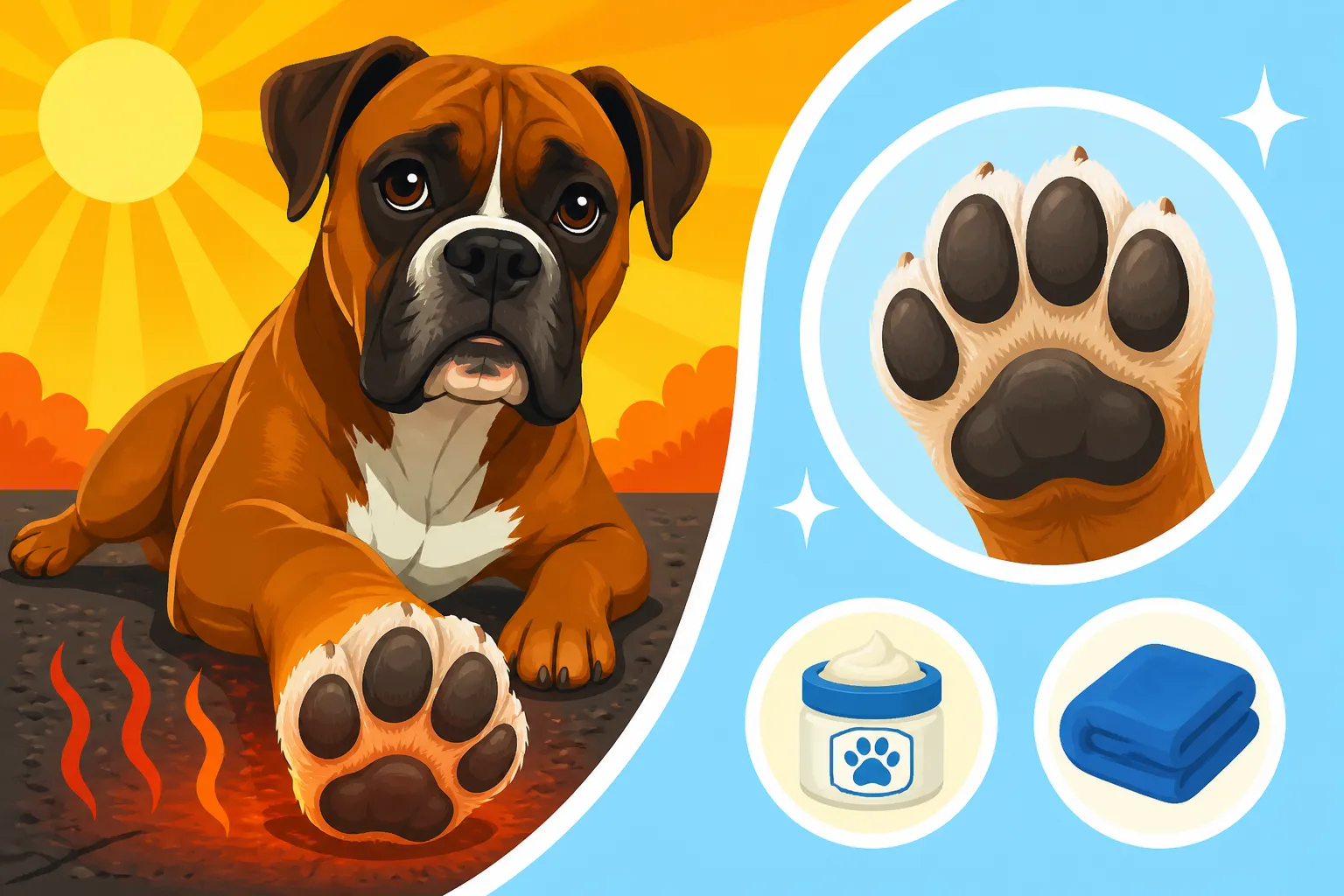
It's easy to forget just how hot surfaces can get in the sun. We wear shoes, so our feet are protected from the scorching ground, but our Boxers don't have that luxury. Their paw pads, while tough, are not invincible, and hot pavement can cause serious burns in a surprisingly short amount of time. Understanding this vulnerability is the first step in ensuring their safety.
Why Boxer Paws are Vulnerable
Boxer paw pads are designed for gripping and absorbing shock, not for insulating against extreme temperatures. They are made of a thick layer of skin, fat, and connective tissue, which provides a cushion and traction. However, this natural protection has its limits. Think of your own bare feet on a hot summer day; you can tolerate a quick dash across hot concrete, but standing on it for more than a few seconds becomes unbearable. Your Boxer's experience is very similar, if not worse, because they can't simply choose to put their "shoes" on.
What makes it even more challenging for Boxers is their enthusiasm. They are high-energy dogs, often eager to play and explore, which means they might not show immediate discomfort or try to stop a walk, even if their paws are beginning to burn. They push through the pain because they're so dedicated to being with you, which can mask the severity of the situation until it's too late. It’s a sad reality that their stoicism can work against them when it comes to something like paw pad burns. Plus, with their short coats and brachycephalic (flat) faces, Boxers are already prone to overheating in warm weather, making them more likely to be out during dangerous temperatures. You might want to review How Fast a Flat-Faced Boxer Overheats for more on this specific breed trait.
Recognizing the Danger Signs of Hot Pavement
Knowing when a surface is too hot for your Boxer's paws is absolutely critical. The simplest and most commonly recommended test is the "seven-second rule." Place the back of your hand flat on the pavement. If you cannot comfortably hold it there for seven full seconds, it's too hot for your Boxer's paws. Period. This isn't just a suggestion; it's a non-negotiable safety check. If you can't do it, your dog can't either.
Beyond the seven-second rule, be observant of your surroundings. Asphalt can get significantly hotter than concrete, and dark surfaces absorb more heat than lighter ones. Sunny spots will be hotter than shaded areas, and midday sun, even on a moderately warm day, can make pavement dangerously hot. Remember, the air temperature doesn't always reflect the surface temperature. A 77°F (25°C) ambient temperature can result in asphalt reaching a scorching 125°F (52°C) – hot enough to cause damage in just a minute. At 87°F (30°C) air temperature, the asphalt can hit 143°F (62°C), causing burns in mere seconds. If you're wondering about general exercise limits, you might find The Temperature a Boxer Should Stop Walking At to be a helpful read.
Here’s a quick guide to pavement temperatures:
| Air Temperature (Fahrenheit/Celsius) | Pavement Temperature (Approx. F/C) | Risk Level | Time to Burn |
|---|---|---|---|
| 77°F (25°C) | 125°F (52°C) | Moderate | ~60 seconds |
| 87°F (30°C) | 143°F (62°C) | High | ~30 seconds |
| 90°F (32°C) | 150°F (65°C) | Extreme | ~5 seconds |
| 100°F (38°C) | 160°F (71°C) | Extreme | ~1 second |
Always err on the side of caution. If you have any doubt, assume the pavement is too hot and opt for grass, dirt trails, or postpone your walk until cooler parts of the day.
Immediate First Aid for Burned Boxer Paws
Despite our best intentions and precautions, accidents can still happen. Perhaps you underestimated the midday sun, or your Boxer decided to dash across a hot patch of sidewalk unexpectedly. The moment you suspect a paw pad burn, swift and correct action can make a huge difference in minimizing pain and preventing further complications.
What to Do Right After Exposure
If you realize your Boxer has walked on hot pavement and is showing signs of discomfort – limping, licking their paws excessively, or refusing to walk – your immediate priority is to get them off the hot surface and cool their paws. Find the nearest patch of grass or shade and gently guide them there. Don't lift them unless absolutely necessary, as it can cause further stress or injury if they're struggling.
Once in a safe, cool spot, immediately cool their paw pads with cool (not ice cold) water. You can use a bottle of water you might carry, or even a damp cloth. Gently rinse or soak their paws for 10-15 minutes. This helps to stop the burning process and provides some pain relief. Avoid using ice or extremely cold water, as this can cause vasoconstriction, constricting blood vessels and potentially causing more tissue damage or frostbite. While you're doing this, check their overall condition for other signs of overheating, which Boxers are prone to. If they appear distressed or are panting heavily, you might want to consider the advice in Signs a Boxer Is Overheating.
When to Seek Veterinary Care
After the initial cooling, examine your Boxer's paw pads carefully. Look for redness, blisters, peeling skin, or any open wounds. Even if the damage seems minor, it's always best to contact your veterinarian. Paw pad burns can be deceptive; what looks like a minor redness can sometimes hide deeper tissue damage. Burns are also highly susceptible to infection, which can lead to a much more serious problem if not treated promptly.
Your vet will be able to properly assess the extent of the burn, clean the wound, and prescribe pain medication or antibiotics if necessary. They may also apply a protective bandage to keep the area clean and aid healing. Don't try to apply ointments or bandages yourself unless specifically instructed by your vet, as some products can hinder healing or make the burn worse. A vet visit is crucial for a correct diagnosis and to set up a proper treatment plan to ensure your Boxer's paws heal completely and without long-term issues.
Preventive Strategies for Protecting Boxer Paws
The best treatment for paw pad burns is to prevent them from happening in the first place. With a little planning and the right tools, you can significantly reduce the risk and ensure your Boxer's paws remain healthy and happy, even during warmer months.
Timing Walks and Choosing Routes Wisely
The simplest and most effective way to protect your Boxer's paws from hot pavement is to adjust your walking schedule. Avoid walking during the hottest parts of the day, typically between 10 AM and 4 PM. Instead, aim for early mornings or late evenings when the sun has gone down and surfaces have had a chance to cool. This is also generally better for your Boxer's overall health, as they are susceptible to heat exhaustion. Boxer Exercise Needs and the Heat That Limits Them delves deeper into managing their activity levels in high temperatures.
When you do venture out, choose your route with care. Prioritize walking on natural surfaces like grass, dirt trails, or shaded park paths whenever possible. If you must walk on pavement, stick to the shaded side of the street. Even a small strip of grass along the sidewalk can offer a welcome respite for sensitive paws. Be mindful of parking lots, especially black asphalt ones, which can become death traps for paws on sunny days. It might even be worth considering Whether a Boxer Should Be Outside at All in July for a broader perspective on summer safety.
Protective Gear and Products for Paws
Sometimes, avoiding hot surfaces entirely isn't feasible, or you live in an area where warm weather persists for much of the year. In these situations, protective gear can be a lifesaver. Dog boots or booties are an excellent solution, providing a physical barrier between your Boxer's paws and the hot ground. It takes some time and patience to get your Boxer used to wearing them, so start with short sessions indoors and offer plenty of positive reinforcement and treats. Many reputable pet supply stores, like Chewy or Amazon, offer a wide range of sizes and styles suitable for a Boxer's paw shape. Look for boots with good ventilation and a non-slip sole for maximum comfort and safety.
Another option for less extreme heat, or as an added layer of protection, are paw balms and waxes. Products like Musher's Secret or other paw protective waxes create a breathable barrier that helps moisturize and protect the pads from harsh elements, including minor heat and rough surfaces. While they won't provide full protection on scorching pavement, they can certainly help maintain healthy pads, which are more resilient to minor stresses. These are also readily available from online retailers like Amazon and Chewy, making it easy to keep your Boxer's paw care routine stocked.
Building Paw Pad Toughness Naturally
While you can't make your Boxer's paws immune to hot pavement, you can help them develop stronger, more resilient pads over time. Regular, moderate exercise on varied, non-extreme surfaces is key. Think about how human hands develop calluses from manual labor; a dog's paws can do the same to a degree. Walking on varied terrain like grass, dirt, gravel, and even cool, damp pavement can help thicken the pads naturally.
However, it's crucial to understand the difference between toughening pads and exposing them to damage. You're aiming for gradual conditioning, not immediate challenge. Always prioritize safety, especially when your Boxer is young. A young Boxer's pads are softer, and they need time to develop. Avoid overly abrasive surfaces and monitor for any signs of discomfort. Good paw hygiene also contributes to toughness. Keeping nails trimmed and checking paw pads regularly for any cuts, cracks, or foreign objects, as part of your Weekly Lump Checks on a Boxer routine, ensures they remain in top condition to handle everyday wear and tear.
Long-Term Paw Health and Maintenance
Paw care isn't just about preventing burns; it's an ongoing commitment to your Boxer's overall well-being. Healthy paws are essential for their mobility, comfort, and quality of life. Integrating paw maintenance into your regular routine will pay dividends in the long run.
Daily Care for Resilient Pads
Consistent daily or weekly paw care goes a long way in keeping your Boxer's pads strong and healthy. This includes regular inspections. Take a moment each day, especially after walks, to gently check between their toes and on the pads themselves. Look for any debris, small cuts, cracks, tenderness, or unusual changes in color or texture. Catching issues early can prevent them from escalating into more serious problems.
Moisturizing your Boxer's paw pads can also be beneficial, particularly in dry climates or if you notice their pads becoming rough or cracked. Look for pet-safe paw balms or moisturizers (many brands are available, even some with natural ingredients that can be found on sites like Ollie or Chewy, focusing on holistic pet health). Gently massage a small amount into their pads, allowing it to absorb. This helps to keep the pads supple and less prone to cracking, which can be entry points for bacteria and make them more susceptible to injury. Keep their nails trimmed, too. Long nails can alter their gait, putting uneven pressure on the paw pads and making them more prone to injury.
Recognizing and Addressing Chronic Issues
Sometimes, paw pad issues can be indicative of underlying health problems. If your Boxer frequently has cracked, dry, or excessively tender paws, or if they develop persistent infections, it's worth a trip to the vet to rule out systemic issues. Conditions like allergies, autoimmune diseases, or even nutritional deficiencies can manifest through paw health. For instance, some Boxers might have sensitivities to certain foods or environmental allergens that cause paw irritation and licking.
Always keep an eye out for changes that might seem minor but could signal something more. Excessive licking or chewing of paws, for example, could be a sign of pain, irritation, allergies, or even anxiety. While it's easy to assume it's just a habit, it's always best to investigate the root cause. Your veterinarian can perform tests to diagnose any underlying conditions and recommend appropriate treatments, ensuring your Boxer's paws, and indeed their whole body, remain in the best possible health. They rely on us to be their first line of defense, so paying close attention to their paws is a loving and responsible part of being a Boxer parent.
Disclaimer
This article is for general informational purposes only and does not constitute professional advice. Laws, prices and regulations vary by location and change over time. Consult a qualified professional for guidance on your specific situation.