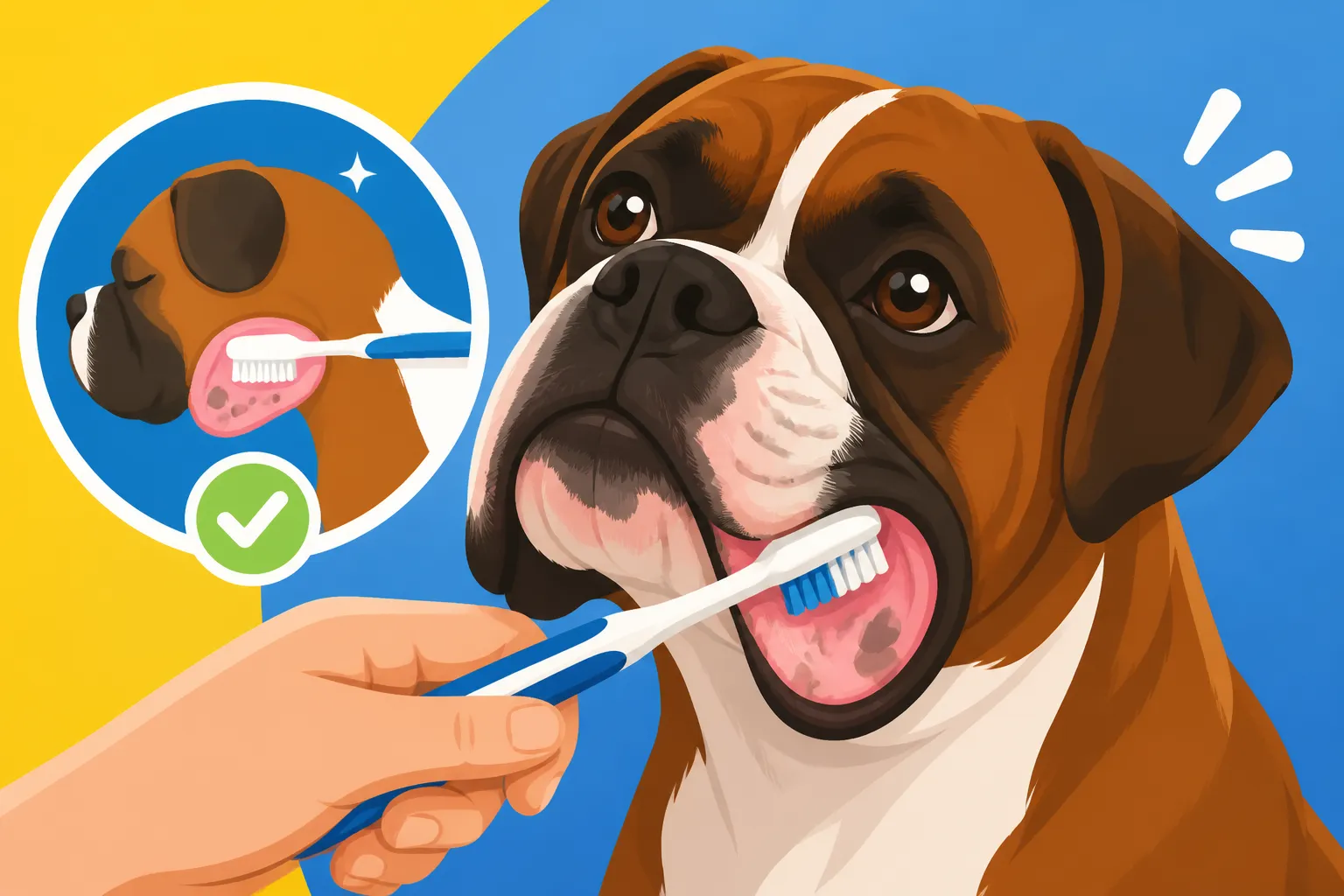
Getting a Toothbrush Behind a Boxer’s Jowls
If you're a Boxer owner, you know their boundless energy, their goofy expressions, and their incredibly expressive faces. But those charming, droopy jowls and distinctive undershot jaws, while undeniably cute, can turn routine dental care into a wrestling match. Trying to get a toothbrush into all the nooks and crannies, especially behind those fleshy jowls, is a common frustration, and this guide is here to help you navigate those challenges and keep your Boxer's smile healthy.
Why Boxer Dental Health is Such a Big Deal (and a Big Challenge)
It's easy to overlook dental care when you're caught up in the daily joys and demands of owning a Boxer. They have so many needs, from rigorous exercise to managing their sometimes-stubborn training phases, that something as seemingly minor as brushing their teeth can slip down the priority list. However, for Boxers specifically, their unique oral anatomy makes regular dental hygiene not just important, but absolutely critical for their long-term health. It's a battle many of us fight, but one that is absolutely worth winning.
The Boxer's Unique Mouth Anatomy
Let's be honest, your Boxer's face is part of their charm. That short, broad muzzle and the distinctive undershot jaw are hallmarks of the breed. But while they give your Boxer that endearing "tough guy with a soft heart" look, they also create some significant dental hurdles. The undershot jaw means their lower teeth protrude slightly, and their upper teeth often don't meet them perfectly, creating irregular contact points. This misalignment can lead to food particles getting easily trapped in spaces that don't exist in dogs with more traditionally aligned jaws.
Furthermore, those wonderful, prominent jowls that flap when they run or droop when they're resting? They can actually create warm, moist pockets around the gum line where bacteria love to multiply. These folds of skin can make it incredibly difficult to see what's happening underneath and even harder to maneuver a toothbrush effectively. It's not like brushing a retriever's teeth, where you have a relatively straight shot. With a Boxer, you're navigating a labyrinth, and without proper attention, these hidden areas become prime breeding grounds for plaque and tartar. Neglecting these areas, even accidentally, can lead to a host of problems. Boxer Dental Care and the Undershot Bite provides even more insight into these specific challenges.
The Health Risks of Neglecting Boxer Teeth
If you think neglecting your Boxer's dental hygiene just means a bit of bad breath, it's time for a reality check. The truth is, poor oral health in Boxers can cascade into serious, painful, and even life-threatening conditions. The accumulation of plaque, which hardens into tartar, creates a rough surface for more bacteria to cling to. This leads to gingivitis, an inflammation of the gums that causes redness and bleeding. If left unchecked, gingivitis progresses to periodontal disease, where the inflammation spreads below the gum line, attacking the supporting structures of the teeth. This can be excruciatingly painful for your dog, even if they don't show obvious signs of discomfort until it's very advanced.
Advanced periodontal disease leads to the destruction of bone and tissue around the teeth, resulting in loose teeth, abscesses, and even tooth loss. Imagine living with constant toothache or infected gums – that's what many dogs silently endure. But the problems don't stop in the mouth. The bacteria from severe dental infections can enter the bloodstream and travel to other organs, impacting the heart, kidneys, and liver. This is a significant concern for Boxers, who are already prone to certain health conditions. So, while you might feel like you're fighting a losing battle trying to brush their teeth, remember that you're protecting them from a cascade of much more serious health issues down the line. It's an investment in their overall well-being, not just their pearly whites.
Gearing Up for Battle: Choosing the Right Tools
Alright, we've established why it's so important, despite the challenges. Now, let's talk about the how. You wouldn't try to change a tire with a butter knife, and you shouldn't try to brush a Boxer's teeth with just any old brush. Having the right arsenal of tools makes all the difference, transforming a frustrating chore into a manageable (and perhaps even enjoyable!) part of your routine. The right gear can help you navigate those tricky jowls and ensure you're actually cleaning where it counts.
Finding the Perfect Toothbrush for a Boxer
This is where many owners get stuck. A standard human toothbrush is often too large, too stiff, and simply not designed to maneuver around a Boxer's unique oral landscape. For Boxers, you need a brush that can tackle tight spaces and reach those back molars effectively. Consider a few options:
- Finger Brushes: These are great for getting puppies or very sensitive Boxers used to the idea of brushing. You slip them over your finger, and the soft bristles allow you to feel exactly where you're brushing. They're good for the front teeth and massaging gums, but they can be challenging to reach deep into the back of the mouth or truly get under those jowls.
- Long-Handled Pet Toothbrushes: These typically have a smaller head and a longer handle than human brushes, making them better for reaching back teeth. Look for ones with an angled head or a dual-ended design (one large head, one small head) to provide versatility. The smaller head can be surprisingly effective for getting into those tight spots near the molars, behind the jowls, where plaque loves to hide.
- Multi-Headed Toothbrushes: Some innovative designs feature heads that wrap around the tooth, cleaning multiple surfaces at once. While they sound great in theory, their bulk can sometimes make them difficult to position accurately in a Boxer's compact mouth, especially if your dog isn't thrilled about opening wide.
- Electric or Ultrasonic Brushes: These can be very effective, but they require a very tolerant dog and a significant financial investment. The vibration or sound can be off-putting for some Boxers, making the acclimation process even longer.
For most Boxers, a good quality, dual-headed or small-headed pet toothbrush is often the best compromise. You can find excellent options on platforms like Chewy or Amazon, often in dental care kits. The key is finding one that allows you to comfortably reach the gum line of the molars and incisors without struggling against the jowls.
Toothpaste Your Boxer Will Actually Like
This is non-negotiable: never use human toothpaste on your Boxer. It contains fluoride and other ingredients that are toxic if swallowed, and trust me, your Boxer will swallow it. Dog toothpaste is specially formulated to be safe for ingestion and comes in flavors that are appealing to dogs, like poultry, beef, or even peanut butter. The enzymatic action in many dog toothpastes helps break down plaque even with minimal brushing, though physical brushing is still paramount.
Making brushing a positive experience often starts with the flavor of the toothpaste. Experiment with a few different kinds. Some dogs go wild for the poultry flavor, while others prefer the more unusual mint or vanilla varieties. Think of it as a treat, not a punishment. Applying a tiny bit to your finger and letting your Boxer lick it off before you even introduce the brush can build a positive association. Companies like Ollie, which focus on fresh dog food, also often recommend specific dental care products or treats that support oral health, so it’s worth checking their offerings for compatible toothpaste.
Essential Extras for a Boxer's Dental Routine
While brushing is the gold standard, there are other tools that can support your Boxer's oral hygiene, especially on days when a full brushing session just isn't happening. These extras are complements, not replacements, but they can definitely help:
- Dental Wipes: These textured wipes are soaked in dental cleaning solution and can be used to wipe the visible surfaces of teeth and gums. They're excellent for daily maintenance or for getting a quick clean when you're short on time. They won't reach all the hidden spots, but they can remove surface plaque and freshen breath.
- Water Additives: These are liquids you add to your dog's drinking water, designed to reduce plaque and freshen breath. They work continuously throughout the day, but their effectiveness can vary, and they certainly don't replace the mechanical action of brushing.
- Dental Chews: High-quality dental chews can help scrape plaque off teeth as your Boxer chews. However, not all dental chews are created equal. Look for ones that are veterinary dental health approved and appropriate for your Boxer's chewing style. Some Boxers are power chewers and can quickly demolish a chew, so monitor them. Remember, these are snacks, and should be factored into your Boxer's daily calorie intake to avoid Taking Weight Off a Boxer Without Losing Muscle. For more on choosing safe chews, see Chews That Suit a Boxer's Jaw.
Here's a quick comparison of common toothbrush types for Boxers:
| Toothbrush Type | Pros | Cons | Best for Boxer Jowls/Jaw |
|---|---|---|---|
| Finger Brush | Gentle, good for acclimation, direct feel | Hard to reach back teeth, less effective scrubbing | Front teeth, gum massage, getting accustomed to handling |
| Long-Handled (Small Head) | Reaches back teeth well, good leverage, ergonomic | Can still be tricky to angle perfectly | Molars, premolars, getting behind jowls with careful angling |
| Multi-Headed | Cleans multiple surfaces simultaneously | Can be bulky, hard to maneuver in a compact Boxer mouth | May be too large for deep reach in some Boxers, depends on dog's cooperation |
| Electric/Ultrasonic | Highly effective, less manual effort once accepted | Expensive, noise/vibration can scare sensitive dogs, requires training | If dog tolerates it, excellent for overall cleaning |
The Art of the Boxer Toothbrushing Session: A Step-by-Step Guide
Now that you've got your tools, it's time to put them to use. Don't expect perfection on day one, or even week one. Boxers are smart, but they can also be incredibly stubborn, and having something poked into their mouth is not usually high on their list of fun activities. The key here is patience, positive reinforcement, and consistency. Think of it as a mini-training session where the reward is a healthier mouth (and maybe a tasty treat!).
Gentle Introduction and Acclimation
This is perhaps the most crucial stage, especially for a Boxer who is new to dental care or resistant to it. You want to build a positive association with mouth handling, not create a traumatic experience.
- Start Slow and Sweet: Begin by simply touching your Boxer's muzzle and lips gently. Praise them calmly. Gradually, introduce a finger with a tiny dab of dog toothpaste (let them lick it off). Do this daily for a few days, always making it a positive, low-pressure interaction. This helps them associate the taste of the toothpaste with a pleasant experience.
- Finger Brush First: Once your Boxer is comfortable with your finger in their mouth, try the finger brush. Again, a small amount of toothpaste. Focus on the front teeth first, as these are usually the easiest to access. Just a few seconds, then lots of praise and a special treat. The goal isn't a deep clean yet, but rather building tolerance.
- Introduce the Actual Toothbrush: Once the finger brush is accepted, introduce the long-handled toothbrush. Let your Boxer sniff it, lick the toothpaste off it. Don't even put it in their mouth initially. Just let them get used to its presence. Over several days, gradually work up to briefly touching their teeth with the brush, then a quick brush of a front tooth or two. The sessions should be very short – literally 10-20 seconds – and always end on a high note with praise and a high-value treat. Remember, your goal is to make it a pleasant routine, and this early foundation of trust is paramount.
Mastering the Jowls and Back Teeth
This is where the real "art" comes in with a Boxer. Their jowls, while cute, are also the biggest obstacle to getting to those critical back teeth where plaque and tartar often accumulate the most.
- Lift the Lip, Don't Pry the Jaw: Instead of trying to force your Boxer's mouth open wide (which they will resist), focus on lifting their jowl with one hand to expose the outer surfaces of their teeth and gums. This gives you a much better angle for the toothbrush. Most of the cleaning happens on the outside surfaces of the teeth anyway, where the jowls are the biggest impediment.
- Angle and Focus on the Gum Line: Angle the bristles of the toothbrush at a 45-degree angle to the gum line. This allows the bristles to clean both the tooth surface and just under the gum line, where bacteria tend to hide. Use gentle circular motions. Don't scrub aggressively; you're not trying to strip paint, just dislodge plaque.
- Target the Back Molars: These are often the most challenging but also the most crucial. Gently pull back the jowl, and slide the toothbrush head towards the back of the mouth. You might need to use the smaller end of a dual-ended brush here. Spend extra time on these back teeth, as they do most of the chewing and accumulate more tartar. Work on one side, then the other.
- Don't Forget the Canines and Incisors: While the back teeth are a priority, don't neglect the fangs (canines) and little front teeth (incisors). These are usually easier to reach, and a quick brush will help prevent tartar buildup.
- Be Patient, Be Persistent: Some days will be easier than others. If your Boxer is really not having it, do a quick pass on a few teeth and try again later or the next day. A consistent, even if brief, effort is far better than sporadic, stressful sessions. Building up to a full minute or two per side takes time, but it's achievable.
Making it a Routine (and Fun!)
Consistency is the absolute key to successful Boxer dental hygiene. It needs to become as normal as their meal times or their daily walk.
- Pick a Time and Stick to It: Try to brush at the same time every day. After their last meal, or before bed, can work well. Dogs thrive on routine, and knowing what to expect can reduce their anxiety about the process.
- The Power of Positive Reinforcement: Always, always, always follow brushing with praise, affection, and a fantastic treat or a short play session. Make it the highlight of their day, if possible. If they associate brushing with something wonderful, they'll be far more cooperative. This is similar to how you build positive associations in general training, as discussed in Keeping Boxer Training Sessions Interesting.
- Be Patient with Setbacks: There will be days when your Boxer just isn't in the mood. Don't get frustrated or angry. If you do, you'll undo all the positive associations you've built. Just do what you can, or skip it and try again the next day with renewed patience. Remember that Boxers often act like puppies until they're three years old, so long-term patience is a must in all training and care. Why Boxer Owners Say the Puppy Stage Never Ends is a testament to this fact.
- Monitor Progress: Over time, you should notice less plaque buildup and healthier-looking gums. This is your reward for your persistence!
Beyond the Brush: Comprehensive Boxer Dental Care
While daily brushing is the cornerstone of excellent dental hygiene for your Boxer, it's part of a larger picture. Their diet plays a role, and there are times when even the most diligent brushing isn't enough, and professional intervention becomes necessary. Thinking holistically about your Boxer's dental care ensures you're covering all your bases.
The Role of Diet in Dental Health
What your Boxer eats can significantly impact their dental health. It's not just about cleaning their teeth, but also about providing nutrition that supports strong teeth and healthy gums.
- Crunchy Kibble vs. Soft Food: Many assume that crunchy kibble naturally scrapes teeth clean. While some specialized dental diets are designed to do this effectively, most standard kibbles offer minimal abrasive action. In fact, some low-quality kibbles can leave behind starchy residues that contribute to plaque. Wet food, while often more palatable, offers no abrasive action at all and can sometimes get stuck between teeth. If your Boxer has a history of dental issues, a high-quality dental-specific kibble can be a beneficial supplement to brushing.
- Diet for Specific Conditions: If your Boxer suffers from conditions like Boxer Colitis and the Young Dogs It Hits, their diet might already be specialized. Always consult your vet to ensure any dental chews or dietary changes won't exacerbate other health issues. Sometimes, the best diet for overall health might not be the absolute best for dental abrasion, necessitating even more diligent brushing.
- Treats and Chews: As mentioned earlier, smart treat choices matter. While some treats are purely for enjoyment, others, like specific dental chews, can offer a beneficial scrubbing action. However, avoid anything overly hard that could fracture a tooth, especially with a strong chewer like a Boxer. Always ensure treats are given in moderation to avoid unnecessary weight gain, which can lead to other health problems for your Boxer. Feeding a Boxer to Stay Lean and Muscled emphasizes the importance of managing their diet carefully.
Professional Dental Cleanings
Even with diligent home care, most Boxers will eventually need a professional dental cleaning under anesthesia. This is not a failure on your part; it's a necessary step in comprehensive oral health. Think of it like your own visits to the dentist for scaling and polishing – sometimes, you need the pros to get to what you can't.
- What Professional Cleanings Involve: During a professional cleaning, your veterinarian will thoroughly examine your Boxer's mouth, scale away all plaque and tartar from above and below the gum line (which requires general anesthesia for safety and thoroughness), and then polish the teeth to smooth the surfaces, making them less hospitable for new plaque to attach. They can also identify and address issues like Tartar on a Boxer's Undershot Jaw, fractured teeth, or deep pockets that home brushing simply cannot fix. In some cases, extractions might be necessary if a tooth is too diseased to save. Pulling Teeth From a Boxer's Undershot Jaw is a common procedure when dental disease is severe.
- When It's Time for a Professional Clean: Your vet will be the best guide. During your Boxer's annual wellness exams, they'll check their teeth and gums and let you know if a cleaning is recommended. Signs you might need one sooner include significant bad breath, visible tartar buildup (especially on the back molars), red or bleeding gums, difficulty eating, or pawing at the mouth. Whether a Boxer Needs Yearly Dental Cleaning is a question many owners ask, and the answer often depends on individual genetics, diet, and home care.
- Cost Considerations: Professional dental cleanings, especially those involving anesthesia, can be a significant expense. It’s part of The Yearly Bill for a Seventy-Pound Boxer and definitely contributes to How Boxer Costs Climb After Seven. It's wise to budget for this, or explore pet insurance options if you haven't already. While insurance policies vary, some may cover a portion of professional dental care, particularly if it's deemed medically necessary due to disease. For more detailed cost breakdowns, you might want to review Dental Cleaning Prices for a Boxer.
By combining regular home brushing, smart dietary choices, and periodic professional cleanings, you're giving your beloved Boxer the best chance at a healthy, comfortable mouth for their entire life. It might be a bit of a challenge to get behind those jowls, but the effort is genuinely repaid in their comfort and longevity.
Disclaimer
This article is for general informational purposes only and does not constitute professional advice. Laws, prices and regulations vary by location and change over time. Consult a qualified professional for guidance on your specific situation.