Why Brindle Stripes Vary So Much on a Boxer
If you're a Boxer owner, or perhaps you're simply captivated by this magnificent breed, you've likely noticed the incredible diversity within their brindle coats. It's not uncommon to see one Boxer with faint, delicate stripes, while another looks almost entirely black, making you wonder what makes these patterns so unique. This guide will dive deep into the fascinating genetics and other factors that cause such a wide variation in brindle stripes on a Boxer.
Understanding the Genetics of Brindle in Boxers
The beautiful brindle pattern in Boxers isn't just a random occurrence; it's a carefully orchestrated display of genetics at work. To truly appreciate why one Boxer might have dark, dense stripes and another much lighter ones, we need to peel back the layers and understand the specific genes responsible for this striking coat.
The K Locus and Brindle Expression
At the heart of brindle lies a specific location on a dog's chromosome known as the K locus. This locus has a few different "versions" or alleles, but for brindle, one is particularly important: kbr. This kbr allele is what introduces the brindle pattern. Think of it like a switch that turns on the stripes. If a Boxer inherits at least one kbr allele, it has the genetic potential to be brindle.
However, it's not quite that simple. The kbr allele is dominant over the non-brindle ky allele, but recessive to the solid black K allele (which usually isn't present in Boxers in a way that creates a solid black dog, adding to the confusion about "black Boxers"). So, a Boxer needs to have at least one kbr to show brindle. The density and visibility of those stripes, though, are influenced by other genetic factors, almost like adjusting the contrast and brightness on a photograph. This is why you can have two brindle Boxers, both with the kbr allele, looking wildly different. One might have very pronounced, almost tiger-like stripes, while another's brindle pattern is so subtle you have to look closely in the right light to spot it.
The A Locus and Fawn Base Colors
While the K locus dictates whether a Boxer will be brindle, the A locus (also known as the agouti series) determines the base color upon which those brindle stripes are laid. For Boxers, this base color is always some shade of fawn. The A locus has alleles like ay (for fawn/sable) and at (for black and tan), but Boxers are primarily fixed for the ay allele, which is why their base color is fawn.
The fawn itself isn't just one color; it ranges from a very pale, almost creamy beige to a rich, deep reddish-gold. This variation in the fawn base color plays a huge role in how the brindle stripes appear. Imagine painting black stripes on a very light canvas versus painting them on a dark, reddish-brown canvas. On the lighter fawn, the black stripes will pop and be incredibly distinct. On a darker, richer fawn, the contrast is naturally less, making the stripes appear softer, sometimes almost blending into the background. This is a common reason for the perceived difference in brindle intensity. A Boxer with a deep red fawn base and brindle stripes might look quite different from one with a pale fawn base, even if the actual genetic density of their stripes is similar. Understanding these foundational genetic elements helps demystify why the brindle pattern is so wonderfully diverse within the breed. For more on the basic colors, check out The Two Colors a Boxer Is Allowed.
Factors Influencing Brindle Stripe Appearance
Beyond the fundamental genetic blueprint, several other factors contribute to the unique appearance of each brindle Boxer's coat. It’s a dynamic interplay that results in the incredible variety we see.
Stripe Density and Distribution
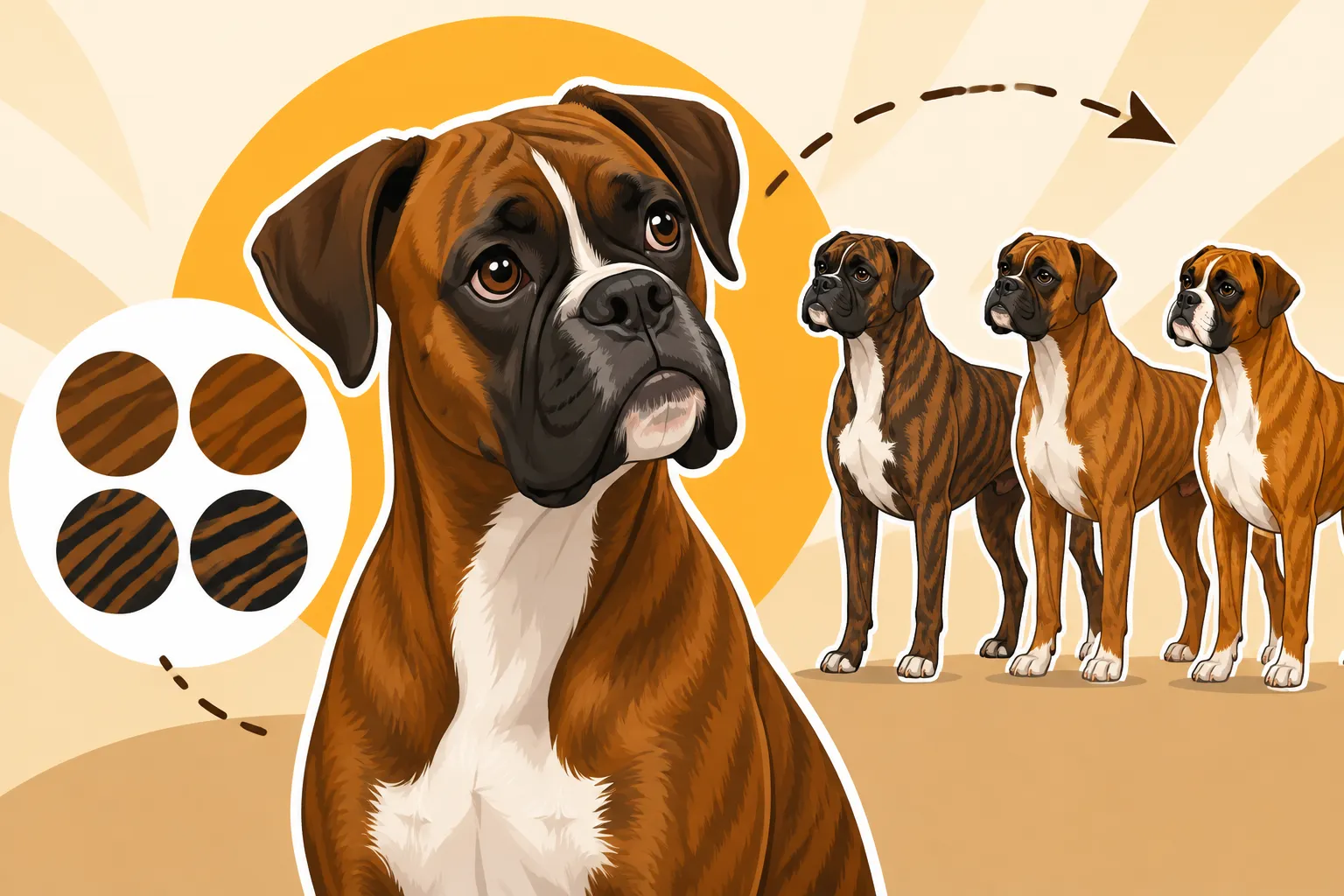
One of the most visually striking differences you’ll notice in brindle Boxers is the density and distribution of their stripes. Some Boxers have relatively few, widely spaced black stripes that are clearly defined against their fawn background. These might be described as "light brindle." You can easily count the stripes and see plenty of the fawn underneath. On the other end of the spectrum, you have Boxers with an abundance of stripes that are incredibly close together, often merging into one another. This gives the appearance of a much darker dog, sometimes even leading people to believe they are looking at a "black Boxer."
This variation in density is still genetically controlled, but it's not a simple on/off switch. Think of it more like a dimmer switch for the brindle pattern. Some Boxers might have genes that encourage a sparse stripe pattern, while others have modifiers that pack those stripes in tight. This genetic predisposition dictates how much fawn versus black is visible on the coat. It’s quite mesmerizing to see how these patterns express themselves, creating a natural work of art on each individual dog.
Pigmentation Intensity and Stripe Contrast
The actual color and intensity of the black pigment in the stripes, as well as the underlying fawn, also significantly impact the overall look of a brindle Boxer. The black stripes themselves can vary in their depth of color; some are a true, deep ebony, while others might appear more charcoal or brownish-black. This, combined with the shade of the fawn base, creates the level of contrast that defines the pattern.
If you have a Boxer with very intense, dark black stripes on a pale fawn base, the contrast will be incredibly high, making the stripes stand out boldly. This is often the classic "tiger stripe" look many people envision for a brindle. However, if the Boxer has a darker, richer red fawn base and slightly less intense black stripes, the contrast is reduced. The stripes might seem softer, more blended, and less distinct. Furthermore, factors like sunlight exposure can temporarily affect the perceived intensity, as black pigments can sometimes "rust" or lighten with prolonged sun exposure, making the stripes appear less stark. When you're feeding your Boxer, providing a high-quality, balanced diet, perhaps found on reputable sites like Chewy, can also help maintain a healthy coat and vibrant pigmentation.
The Illusion of "Black" Boxers
This is perhaps the biggest source of confusion and a topic that comes up often in Boxer circles. Many people encounter Boxers that appear to be solid black and naturally assume they are a "black Boxer." However, true solid black is not a recognized color in the Boxer breed standard. What these individuals are almost always seeing is a Boxer with an extreme expression of the brindle pattern, commonly referred to as "reverse brindle" or "heavy brindle."
In these cases, the black stripes are so dense and so numerous that they cover almost all of the underlying fawn coat. The fawn is still there, but it's reduced to mere slivers, often only visible in specific lighting conditions or on very close inspection, perhaps around the muzzle, toes, or underbelly. It creates the optical illusion of a black dog. It’s important for prospective owners to understand that despite the visual appearance, these dogs are genetically brindle. Any breeder claiming to have "rare black Boxers" is either misinformed or attempting to capitalize on a misunderstanding of Boxer genetics. The standard recognizes fawn and brindle as the primary colors, with varying degrees of white markings. For more clarity on this, you might read Whether a Black Boxer Exists.
Common Brindle Variations and Their Characteristics
Within the broad category of "brindle," there's a spectrum of appearances, each with its own charm. Understanding these common variations can help you appreciate the subtle (and not-so-subtle) differences in Boxer coats.
Light Brindle vs. Heavy Brindle
The terms "light brindle" and "heavy brindle" aren't formal genetic classifications, but rather descriptive terms used by breeders and owners to differentiate the visual appearance of a Boxer's coat.
A light brindle Boxer will typically display a clear, prominent fawn base color with distinct, relatively sparse black or dark brown stripes. You can easily see the fawn coat between the stripes, and the overall impression is of a fawn dog with stripes rather than a dark dog. The contrast between the fawn and the stripes is usually quite sharp. These Boxers often have beautiful, delicate patterns that highlight their musculature and structure. They are undeniably brindle, with the fawn being the dominant visual element of their pattern. This variation is equally beautiful and sought after by many who appreciate the classic fawn Boxer look complemented by elegant stripes.
Conversely, a heavy brindle Boxer presents with a much higher density of black stripes. In these dogs, the stripes are much closer together, often appearing wider, and can even merge in places, reducing the visible areas of the fawn base coat. The overall impression is of a darker dog, sometimes appearing almost black, with hints of fawn peeking through. The contrast might be less stark if the fawn base is also a darker, richer shade. These Boxers possess a dramatic, powerful look that many find incredibly striking. This "heaviness" is what can lead to the "reverse brindle" phenomenon, where the fawn is so minimal it becomes the "stripe" against a black background. Knowing that these are just different points on the same genetic spectrum of brindle helps avoid confusion.
Reverse Brindle: An Extreme Expression
The term "reverse brindle" is perhaps the most captivating and often misunderstood brindle variation. It describes a Boxer where the black or dark brindle stripes are so densely packed and widespread that they completely dominate the fawn base color. What you see, at first glance, is a dog that appears almost entirely black. The fawn color, which is genetically still the base, is reduced to very thin, faint lines or small patches, often described as "stripes" of fawn on a black background – hence, "reverse" brindle.
It’s crucial to understand that a reverse brindle Boxer is not a black Boxer. Genetically, it's still a brindle dog with a fawn base. If you look closely at a reverse brindle Boxer, especially in bright sunlight or at angles, you can usually discern the subtle fawn markings. These might be visible on the chest, legs, or face, giving a ghosting effect of the underlying fawn. Sometimes, the muzzle or underbelly might reveal more of the fawn. This extreme expression of brindle is perfectly within the Boxer breed standard and is considered a normal, albeit visually unique, variation. However, unscrupulous breeders might try to market "black Boxers" as rare, attempting to charge a premium. A truly knowledgeable owner understands that such claims are misleading. This understanding is key to making informed decisions, whether you're choosing a puppy or simply appreciating the beauty of the breed. You can learn more about acceptable markings in What Makes a Boxer Brindle or Reverse Brindle.
| Feature | Light Brindle Boxer | Reverse Brindle Boxer |
|---|---|---|
| Dominant Color | Fawn (light tan to red-gold) | Black/Dark Brown (appears nearly solid black) |
| Stripe Density | Sparse, distinct, widely spaced black stripes | Dense, heavily packed black stripes, often merging |
| Fawn Visibility | Clearly visible, forms the majority of the coat | Minimal, appears as thin "stripes" or hints, often only visible upon close inspection |
| Overall Impression | Fawn dog with black stripes | Black dog with fawn "stripes" or markings |
| Genetic Basis | Brindle gene (kbr) present with moderate expression |
Brindle gene (kbr) present with extreme expression, fawn still the base |
| Common Misconception | Sometimes mistaken for a "fawn" if stripes are very light | Often mistaken for a "black Boxer" |
Breeder Practices and Ethical Considerations Regarding Brindle
For those committed to the health and integrity of the Boxer breed, understanding brindle variations goes hand-in-hand with ethical breeding practices. It's not just about what looks appealing, but about perpetuating healthy, well-tempered dogs.
Breeding for Desired Brindle Patterns
Responsible Boxer breeders have a deep understanding of genetics, not just for health but also for coat colors and patterns. While a beautiful brindle pattern is certainly desirable, it's never the primary focus when making breeding decisions. Health, temperament, and adherence to the overall breed standard always take precedence. Breeders aiming for specific brindle looks, such as a more distinct light brindle or a striking reverse brindle, will carefully study the pedigrees of potential parent dogs. They look at the brindle patterns of the sire, dam, and their ancestors to predict what kind of brindle expression their puppies might carry.
However, it's not an exact science. Even with careful planning, genetic variation means there can be surprises in a litter. A litter from two parents with moderate brindle might produce puppies ranging from very light brindle to heavy reverse brindle. This is part of the joy and unpredictability of genetics. What's most important is that breeders prioritize genetic health screenings for conditions common in Boxers, like cardiac issues (ARVC) and degenerative myelopathy, rather than making breeding choices solely based on cosmetic traits. The true mark of a good breeder is their commitment to the overall well-being of the puppies, ensuring they are sound in body and mind. It's something you should always check into, as detailed in The Health Screening a Boxer Breeder Owes You.
Avoiding Misinformation: The "Black Boxer" Myth
As we've explored, the idea of a "black Boxer" is a persistent myth, stemming from the extreme expression of the reverse brindle pattern. Ethical breeders are always transparent about this. They will never market a reverse brindle Boxer as a "rare black Boxer" or charge extra for it. Such claims are a red flag, indicating either a lack of genetic understanding or, worse, an attempt to deceive potential buyers for financial gain.
If you encounter a breeder advertising "black Boxers," it's vital to ask questions and scrutinize their practices. A responsible breeder will educate prospective owners on Boxer genetics, explaining why a truly solid black Boxer is not possible within the breed standard and that what they are seeing is a very heavily striped brindle. They will focus on the health certifications of the parents, ensuring hip and elbow scores, cardiac evaluations, and DNA tests for relevant genetic conditions are all in order. They’ll also be eager to discuss the temperament of their lines and how they socialize their puppies. Always look for a breeder who is passionate about the health and temperament of their dogs above all else, ensuring you bring home a healthy, happy Boxer, regardless of the precise shade of their beautiful brindle coat. For more information on what to look for, consider reading What a Serious Boxer Breeder Does Differently.
Disclaimer
This article is for general informational purposes only and does not constitute professional advice. Laws, prices and regulations vary by location and change over time. Consult a qualified professional for guidance on your specific situation.