Whether a Black Boxer Exists
It's a common and totally understandable question that pops up when you're admiring the striking good looks of a Boxer: "Do black Boxers exist?" Many people believe they've seen one, or perhaps they're hoping to find that elusive, sleek, dark companion. This guide is here to unravel the mystery, diving deep into the genetics and official breed standards to explain why a truly black Boxer isn't what it seems, and what you might be seeing instead.
Understanding the Official Boxer Breed Standard Colors
When we talk about whether a certain color exists in a purebred dog, we really need to look at the official breed standard. This document, put together by the national breed club and recognized by organizations like the American Kennel Club (AKC), defines what a Boxer should look like, from nose to tail. It covers everything from temperament and structure to, yes, accepted coat colors.
The Boxer standard is very clear about color, and it’s actually quite limited compared to some other breeds. The accepted colors for a purebred Boxer are fawn and brindle. That’s it! Within these two broad categories, there's a lovely spectrum of shades and patterns, but the base colors remain consistent. If a dog doesn't fit into one of these two color classifications, it's not considered a standard-colored Boxer, regardless of how much it looks like one. This isn't just an arbitrary rule; it's rooted in the breed's genetic makeup, which we'll explore shortly. It helps to understand The Boxer the Breed Standard Describes when thinking about these kinds of specific characteristics.
Fawn and Brindle: The True Boxer Palette
Let's break down these two official colors, because they are more diverse than you might think at first glance.
-
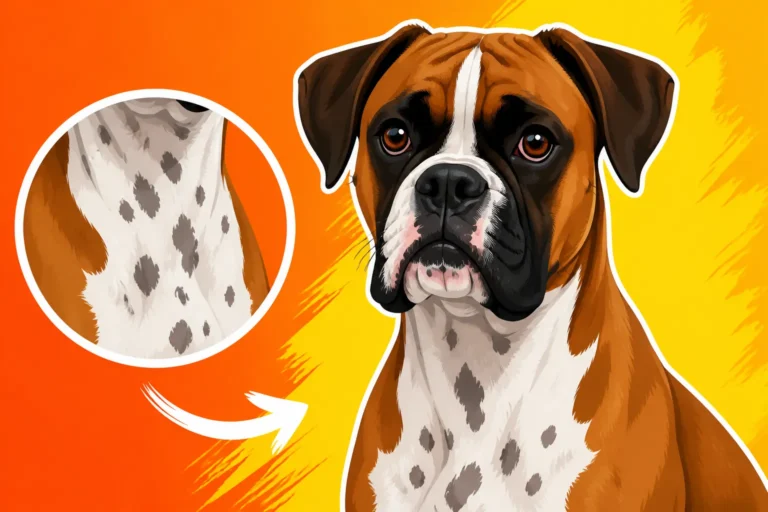
Fawn: This color ranges from a very pale, almost yellow shade (often called "light fawn") all the way to a deep, rich mahogany or red. Think of all the warm, earthy tones, and you're in the right ballpark. A fawn Boxer might have a black mask on its muzzle, adding a striking contrast, and many will also have white markings on their chest, paws, and face. The depth of the fawn can vary significantly even within the same litter, leading to a wonderful array of individual looks.
-
Brindle: This is where the confusion about "black Boxers" often comes in. Brindle Boxers have a fawn base coat with black stripes. These stripes can vary in intensity and thickness. Some brindles have very sparse, thin stripes, making them appear mostly fawn with just a hint of striation. Others, however, have such heavy, dense black striping that the fawn background is almost entirely obscured. This extremely dark brindle is often referred to as "reverse brindle" or "black brindle" by many owners and breeders, precisely because it looks predominantly black. In these cases, the fawn may only be visible in tiny slivers between the black stripes, giving the impression of a solid black coat. This is one of the most common reasons people mistakenly believe they've seen a black Boxer. It’s also important to note What Makes a Boxer Brindle or Reverse Brindle.
Both fawn and brindle Boxers can also carry white markings, known as "flashy" markings. These are distinct from white Boxers, which have more than the allowed percentage of white on their bodies and are another topic entirely, as detailed in Boxer Colors and the White Question.
The Genetics That Prevent a Purebred Black Boxer
To truly understand why a solid black Boxer simply doesn't exist within the purebred Boxer lineage, we need to take a quick peek into canine genetics. Don't worry, we won't get too technical, but understanding a few basic principles helps clear up a lot of misconceptions.
Dog coat color is determined by a complex interplay of different genes, but for Boxers, the key players are the "A locus" and the "K locus."
The A Locus and Fawn/Brindle Expression
The "A locus" (Agouti series) primarily controls whether a dog will be fawn/sable or black and tan/tricolor. In Boxers, due to selective breeding over generations, only the allele for fawn (Ay) or sable is present in the breed in a dominant form that expresses fawn. This is why you see fawn as the base color for both fawn and brindle Boxers. They carry the genetic information for producing yellow/red pigment (pheomelanin) as their primary background color.
The K Locus and Brindle Pattern
The "K locus" (Dominant Black series) is where brindle enters the picture. Boxers carry the allele for brindle (kbr). When a Boxer inherits this kbr gene, it overlays black stripes (eumelanin) onto the fawn background provided by the A locus. If a Boxer doesn't have the kbr gene, it will simply be fawn.
Crucially, Boxers do not carry the gene for dominant black (KB) at the K locus, which would result in a solid black dog if present. This dominant black gene is what gives breeds like Labrador Retrievers, Poodles, or even some Rottweilers their solid black coats. Without the KB gene, a Boxer cannot be solid black. The closest they can get is the heavily striped "reverse brindle" where the black stripes are so wide and close together that they overpower the fawn. This genetic bottleneck is a fundamental reason why the standard only recognizes fawn and brindle.
A Look at Boxer Coat Color Genetics
To illustrate, here's a simplified breakdown of the genetic possibilities for Boxer coat colors:
| Gene Locus | Present in Boxers? | Function | Result |
|---|---|---|---|
| A Locus | Yes (Ay/Ay or Ay/a) | Determines base pigment as fawn/sable. Boxers only carry fawn alleles. | Fawn base always present. |
| K Locus | Yes (kbr/kbr or kbr/ky) | Controls presence of brindle pattern. Boxers carry the brindle allele. Does NOT carry KB (dominant black). | kbr creates brindle stripes on fawn. Without kbr, the dog is fawn. Since KB is absent, a solid black Boxer is genetically impossible. |
| E Locus | Yes (E/E or E/e) | Controls expression of black pigment. Boxers can carry 'e' for fawn (no black mask) or 'E' for black pigment (black mask). | Influences whether fawn Boxers have a black mask or are "clear fawn." |
| S Locus | Yes (S/S, S/si, si/si, si/sw) | Controls white spotting. Boxers carry alleles for varying degrees of white markings. | Determines extent of white markings (flashy vs. white Boxers). |
This table clearly shows that the combination of genes only allows for fawn and brindle as the primary colors. There is no genetic pathway for a purebred Boxer to be solid black. This is part of the breed's heritage, tracing back to The German Origins of the Boxer and the deliberate selection for specific traits and appearances.
Why You Might See a "Black Boxer"
If the genetics are so clear, why do so many people confidently state they've seen a black Boxer? There are a few very good, very understandable reasons for this, and it often boils down to mistaken identity or misinterpretation.
Very Dark Brindle or "Reverse Brindle" Boxers
This is, by far, the most common reason for the perception of a black Boxer. As mentioned earlier, a Boxer with extremely dense brindle markings can appear almost entirely black. The fawn stripes might be so thin or minimal that they are only visible upon close inspection, perhaps in bright sunlight, or in specific areas like the insides of the legs. From a distance, or in certain lighting conditions, these dogs look undeniably black.
Imagine seeing a "reverse brindle" Boxer at a dog park, bouncing around with that characteristic Boxer Wiggle and What It Signals. Their dark, sleek coat catches your eye, and your brain registers "black dog." It's a natural conclusion to jump to, especially if you're not deeply familiar with the nuances of Boxer coat genetics. These dogs are beautiful and definitely stand out, but genetically, they are still brindle.
Boxer Mixes
Another significant factor is the popularity of Boxer mixes. Boxers are often bred with other breeds, and many of these other breeds do carry the dominant black gene. For example, a Boxer crossed with a Labrador Retriever, a Rottweiler, or even a mixed-breed dog that carries the black gene, could easily produce black puppies. These puppies might inherit many of the Boxer's physical characteristics – the strong build, the distinctive head shape, the playful personality – but get their solid black coat color from the non-Boxer parent.
When someone encounters such a mix, they might see a dog that strongly resembles a Boxer in every way except color, and assume it's a "rare" black Boxer. This is particularly common in rescue situations, where a dog's exact parentage isn't always known. A rescue might advertise a "Boxer mix" or even just a "Boxer" if the resemblance is strong, leading people to believe purebred black Boxers exist.
Other Breeds Mistaken for Boxers
Some other breeds share certain physical traits with Boxers and can be solid black, leading to confusion.
- Black Mouth Cur: These dogs can have a similar athletic build and short coat, and they do come in black.
- Mountain Cur: Again, a similar body type and can be black.
- Certain Bully Breeds/Pit Bull Types: Some of these breeds have a sturdy, muscular build and can be solid black, and their head shape can sometimes be confused with a Boxer's, particularly by the untrained eye. For example, Telling a Boxer From an American Bulldog can be tricky for some, and American Bulldogs come in black.
- Labrador Retriever Mixes: As mentioned, a black Lab mix with a Boxer can easily be confused.
It's easy to make an honest mistake when you see a dog that has some Boxer-like qualities but is black. People often focus on the broad head, the muscular body, or the cheerful demeanor, and overlook the fine details that distinguish a purebred Boxer's appearance.
Unscrupulous Breeders and Marketing
Sadly, there's also the element of dishonest marketing. Occasionally, you might encounter breeders or individuals trying to sell "rare black Boxer puppies" at inflated prices. This is a huge red flag. A reputable breeder who adheres to the breed standard and understands canine genetics would never make such a claim about a purebred Boxer. These individuals are usually either misinformed, intentionally misleading buyers, or are selling Boxer mixes under false pretenses. This is why thorough research into a breeder is paramount, including inquiring about The Health Screening a Boxer Breeder Owes You.
If you ever see an advertisement for a "black Boxer," proceed with extreme caution. It's almost certainly not a purebred Boxer, or it's a very dark brindle being misrepresented. Always ask to see the parents, their pedigrees, and health clearances. A truly black dog cannot be registered as a purebred Boxer by major kennel clubs like the AKC.
The Allure of Unique Colors and Responsible Ownership
It's completely natural to be drawn to unique or "rare" colors in any dog breed. There's an undeniable appeal to something different, and the idea of a striking black Boxer is certainly captivating. However, it's really important for prospective Boxer owners to prioritize health, temperament, and adherence to the breed standard when choosing a puppy or adopting a dog.
Focusing too heavily on a non-standard color can unfortunately lead people down paths that might support unethical breeding practices. Breeders who deliberately breed for "rare" or "unusual" colors, particularly those outside the established genetic possibilities of a breed, often prioritize appearance over health and temperament. This can result in dogs with hidden health issues, poor genetic diversity, or behavioral problems that don't align with the loving, clownish Boxer nature we cherish.
Responsible Boxer ownership means understanding and appreciating the breed for its established traits. A fawn or brindle Boxer, with or without flashy white markings, embodies the true spirit and appearance of the breed. Their coats are beautiful, easy to care for, and showcase their muscular physique. You can find everything from nourishing food to durable toys for these magnificent dogs at places like Chewy, ensuring they stay healthy and happy.
If you are set on a black dog, but love the Boxer personality, exploring Boxer mixes or other black breeds that share some characteristics might be a more responsible and realistic approach. You might find your perfect companion in a Boxer-Lab mix, for example, getting some of that energetic, loyal Boxer spirit in a sleek black coat.
Appreciating the Boxer's True Beauty
The Boxer breed standard didn't just appear out of thin air; it was developed over many decades by dedicated fanciers who sought to preserve the unique characteristics and robust health of these dogs. The colors specified in the standard—fawn and brindle—are integral to the breed's identity and genetic heritage. While the term "black Boxer" often evokes an image of a sleek, powerful dog, it's usually either a misunderstanding of a very dark brindle pattern or a dog that isn't a purebred Boxer.
Instead of chasing after a color that doesn't exist in the purebred realm, let's celebrate the incredible range and beauty within the fawn and brindle spectrum. Whether it's a vibrant red fawn or a deep, dark reverse brindle that almost tricks the eye, every Boxer is a testament to their spirited personality, loyalty, and undeniable charm. These dogs, in their true colors, bring so much joy and laughter into our homes.
| Boxer Color Term | Description | Purebred Boxer Status |
|---|---|---|
| Fawn | Shades from light tan to mahogany red. Can have a black mask. | Standard |
| Brindle | Fawn base with black stripes. Stripe density varies. | Standard |
| Reverse Brindle | Very dense black stripes, making the dog appear predominantly black. | Standard |
| White | More than 1/3 white on the body. | Non-Standard |
| Black Boxer | Solid black coat. | Does Not Exist |
Understanding these distinctions not only helps us appreciate the breed better but also guides us towards making informed choices as responsible dog owners. The true beauty of a Boxer shines through its personality and health, not just its coat color, no matter how striking.
Disclaimer
This article is for general informational purposes only and does not constitute professional advice. Laws, prices and regulations vary by location and change over time. Consult a qualified professional for guidance on your specific situation.