Whether a Boxer Is Too Strong for a Child
Many parents find themselves absolutely captivated by the Boxer breed – their stunning looks, boundless energy, and undeniable loyalty are a huge draw. But a common, very real concern often pops up: is a Boxer just too strong, too boisterous, too much dog for a household with children? It's a valid worry, and this guide is here to walk you through the nuances of a Boxer's strength, temperament, and how to create a safe, joyful environment for both your kids and your beloved Boxer.
Understanding the Boxer's Physicality and Play Style
It’s no secret that Boxers are powerful dogs. They are bred to be athletic, muscular, and full of vigor, often weighing in at a solid 60 to 80 pounds, sometimes even more. This isn't a dainty lap dog; this is a robust, well-built animal with a lot of kinetic energy, especially when they're excited. Their natural enthusiasm is part of their charm, but it also means their physical presence needs to be understood and managed, particularly around smaller, more fragile family members.
The "Forever Puppy" Energy and Unintentional Impacts
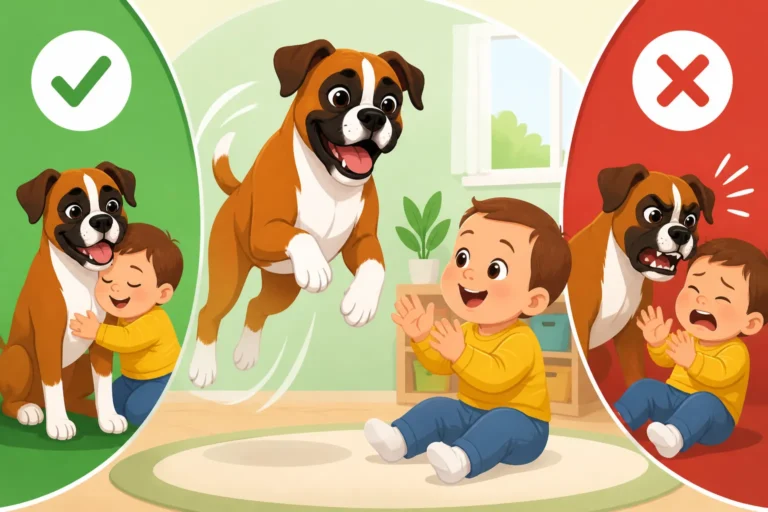
One of the most endearing, yet sometimes challenging, traits of a Boxer is their extended puppyhood. Unlike some breeds that settle down quickly, Boxers often retain their youthful exuberance and high energy levels well into their second or even third year. This "forever puppy" energy translates into a lot of joyful bouncing, wiggling, and sudden bursts of speed. Imagine a seventy-pound dog, convinced it's still a tiny lap dog, suddenly deciding to zoom through the living room or launch itself onto the sofa next to your toddler. Their intentions are always pure – they just want to be close, to play, to be part of the action – but their sheer mass and speed can lead to accidental bumps, knocks, or even tumbles for a small child.
It's not about aggression; it's simply physics. A happy, excited Boxer turning sharply can inadvertently send a child sprawling. A vigorous tail wag, powerful enough to clear a coffee table, can be quite the force if it connects with a child's face. These aren't intentional acts of malice, but rather the consequence of a large, high-energy dog operating without full awareness of its size and strength relative to a small human. This is why understanding Why a Boxer Acts Like a Puppy Until Three is so crucial for any family considering the breed.
The Boxer's Natural "Boxing" and Body Slamming
The breed name "Boxer" isn't just for show – these dogs famously use their front paws in a playful, almost boxing-like manner. When they're excited, they might bat at the air, or even at people, with their soft but powerful paws. While often gentle and playful, a seventy-pound dog "boxing" at a five-year-old can still feel overwhelming or startling, even if no harm is intended. This characteristic play behavior, often accompanied by the famous "Boxer wiggle," can be misinterpreted by children or lead to unintended roughhousing.
Beyond the pawing, Boxers love to lean, jump, and "body slam" during play. They are physically demonstrative dogs, and their idea of a good time often involves robust, full-body contact. When two Boxers play, it’s a magnificent sight of controlled chaos, but when that same play style is directed at a human child, even in jest, it can easily cross the line from fun to frightening or even dangerous. Teaching a Boxer Stopping a Seventy-Pound Boxer From Jumping is one of the foundational lessons for any Boxer owner, doubly so when kids are in the picture.
Managing a Growing Boxer's Strength
From the moment you bring home a tiny, wobbly Boxer puppy, you're on a fast track to managing a robust adult. That little bundle of wrinkles and paws will quickly grow into a strong, athletic dog. This means that managing their strength isn't just about an adult dog, but about the critical growth period. Puppy mouthing, while normal, needs to be consistently redirected, especially if tiny hands are involved. A Boxer puppy's bite inhibition needs to be taught diligently from day one, so they understand the appropriate pressure to use. If you're struggling with puppy nipping, topics like Boxer Mouthing From Puppy to Adult can be incredibly helpful.
Imagine trying to walk a full-grown Boxer that hasn't learned leash manners, and it suddenly sees a squirrel across the street with a small child holding the other end of the leash. The outcome could be disastrous. Consistent, positive reinforcement training is paramount. Building a strong foundation from puppyhood not only ensures a well-behaved adult dog but also instills confidence in your Boxer, making them less likely to react impulsively or unpredictably. A physical dog needs an owner who can physically and mentally guide them.
The Boxer Temperament: A Gentle Giant with Exuberance
Despite their impressive musculature and boundless energy, Boxers are renowned for their loving, gentle, and patient temperaments, especially with their families. They are often described as "nanny dogs" due to their historical reputation for being excellent with children. However, their enthusiasm can sometimes overshadow their gentle nature, making it a balancing act for parents.
Boxer Affection and Patience with Children
Boxers are incredibly affectionate dogs. They thrive on human companionship and are known for forming deep, strong bonds with their family members, including children. Many Boxer owners will attest that their Boxer has an almost uncanny patience with kids, enduring pokes, prods, and even clumsy hugs with remarkable grace. They often seem to understand that children are different, treating them with a certain degree of gentleness that they might not extend to adult family members during play.
Their inherent desire to be near their people means they often want to be involved in whatever the children are doing. If your kids are playing on the floor, don't be surprised to find your Boxer sprawling out right in the middle of the action, sometimes even nudging toys with their nose. This close involvement, coupled with their patient nature, makes them wonderful companions, provided they are managed correctly. For more insights on this aspect, exploring Boxers in Families With Small Children can offer additional perspectives.
Protective Instincts Versus Playfulness
Boxers do possess a natural protective instinct, which is part of their working dog heritage. They are vigilant and will often alert their families to strangers or unusual sounds. This protective nature can be a comfort, knowing your dog is watching over your children. However, it's a fine line between healthy watchfulness and overly possessive or reactive behavior. Properly socialized Boxers learn to discern true threats from harmless visitors or everyday occurrences.
Their playfulness generally overrides any aggression, but boundaries are still essential. A Boxer needs to learn that not all excited screams from children indicate distress, and that not every new face is an intruder. Early socialization, exposing your Boxer puppy to a variety of people, sounds, and environments, is key to developing a well-adjusted dog who understands the world around them. This helps channel their protective instincts into appropriate, rather than over-the-top, responses.
The Importance of Socialization and Early Experiences
A Boxer's temperament around children isn't solely inherent; it's also heavily shaped by their early experiences and ongoing socialization. A puppy that is exposed positively to children of different ages, sizes, and energy levels from a young age is far more likely to develop into a confident, gentle adult around kids. This means careful, supervised interactions are vital. It's not enough to simply have children in the house; the interactions need to be guided and positive.
If a Boxer puppy primarily encounters rough play or fearful reactions from children, they might learn to either escalate their own rough play or become wary. Conversely, a Boxer that learns that children are sources of gentle pats, quiet presence, and shared moments will develop a more harmonious relationship. This foundational work during puppyhood lays the groundwork for a lifetime of positive interactions. You can read more about this crucial period in Socializing a Boxer Puppy Before Sixteen Weeks.
Strategies for Safe and Harmonious Coexistence
Successfully integrating a Boxer into a family with children requires a proactive approach. It's not about hoping for the best; it's about setting up both the dog and the children for success through consistent training, supervision, and establishing clear boundaries.
Training Both Dog and Child
This is perhaps the most critical element. It's a two-way street: your Boxer needs to learn appropriate behavior around children, and your children need to learn how to interact respectfully and safely with the dog.
For the Boxer:
- Obedience Training: Basic obedience commands like "sit," "stay," "down," "leave it," and a solid "off" or "four on the floor" are non-negotiable. These commands provide you with control and help manage your Boxer's exuberance. Imagine being able to tell your excited Boxer to "down" when a child runs past, preventing an accidental collision.
- Impulse Control: Boxers are intelligent but can be impulsive. Training exercises that build impulse control, such as waiting for food, waiting at the door, or practicing "leave it" with tempting items, are invaluable. This helps them learn to pause and think before reacting.
- Gentle Interaction: Actively teach your Boxer to be gentle. When giving treats, ask them to take it softly. Reward calm interactions with children. This can involve having them lie down quietly while children are nearby, or rewarding them for not jumping up when children approach. Teaching a Boxer to Be Gentle With Children offers specific guidance on this.
For the Child:
- Respectful Interaction: Teach children how to approach, pet, and play with the dog respectfully. No pulling ears, tail, or fur. No riding the dog. No disturbing the dog when it's eating, sleeping, or in its crate.
- Understanding Dog Signals: Educate children on basic dog body language. Teach them to recognize signs that a dog might be uncomfortable or needs space, such as lip licking, yawning, turning away, or growling (which is a warning, not an attack).
- Boundary Respect: Emphasize that certain areas (like the dog's crate or bed) are the dog's personal space and should be left alone. Children need to understand that not all dogs like rough play, and a dog's "no" should always be respected.
Consider enrolling in a local dog training class, even with an adult Boxer. A good trainer can provide invaluable guidance. Boxer Training Class and Trainer Costs can give you an idea of what to expect.
Constant Supervision and Controlled Environments
No amount of training can replace vigilant supervision, especially with very young children. Until both your Boxer and your children are reliably trained and mature, all interactions should be supervised. This means an adult should be actively present and engaged, ready to intervene if necessary.
Supervision Best Practices:
- Active Presence: Don't just be in the same room; be present. Watch for signs of over-excitement in your Boxer or inappropriate behavior from your child.
- Separate Spaces: When direct supervision isn't possible (e.g., when you need to answer the phone, cook dinner, or step out of the room), it's best to separate the dog and children. A sturdy crate (like those you might find on Chewy or at a local pet store), a baby gate, or a separate room can provide a safe space for everyone.
- Safe Play Areas: Designate specific areas for play that are safe for both dog and child. For instance, rougher play with the Boxer might be best done outdoors in a fenced yard, away from delicate toys or furniture, and separate from where small children are playing.
Essential Gear and Tools for Management
Having the right tools can make a significant difference in managing a Boxer's strength and ensuring safety.
- Leashes and Harnesses: A good quality, sturdy leash and a well-fitting harness are crucial for walks. A front-clip harness can provide better control for a strong pulling Boxer, making walks more manageable for adults and preventing accidental yanks on a child if they were ever to hold the leash (under supervision, of course!).
- Durable Toys: Boxers love to play and chew. Providing plenty of appropriate, durable toys (again, Chewy has a vast selection!) can redirect their energy and prevent them from mouthing or playing too roughly with children. Puzzle toys can also help Training a Boxer That Gets Bored Fast and keep their minds engaged.
- Crates and Gates: As mentioned, crates and baby gates are invaluable management tools. A crate provides a secure den for your Boxer, a place where they can retreat and relax undisturbed. Gates allow you to safely separate areas of the house.
- Physical Exercise Outlets: Remember, a tired Boxer is a well-behaved Boxer. Providing ample physical activity is essential. This might include long walks, fetch sessions, or dog sports like agility. Always be mindful of Boxer Exercise Needs and the Heat That Limits Them, as Boxers are prone to overheating. A Boxer who is under-exercised will have pent-up energy that can easily spill over into boisterous and potentially overwhelming behavior, especially around children. The Energy New Boxer Owners Underestimate is a must-read for anyone considering the breed.
| Factor | Boxer Strength & Energy | Boxer Temperament & Child Safety | Management Strategy |
|---|---|---|---|
| Physical Size | 60-80+ lbs of muscle | Gentle, but capable of accidental bumps | Training commands, constant supervision, separate spaces |
| "Puppy" Phase Duration | Up to 2-3 years of high energy | Endearing, but requires patience from adults | Consistent training, socialization, energy outlets |
| Play Style | Pawing, jumping, body slamming | Can be overwhelming or startling for small kids | "Four on the floor" training, redirection to toys |
| Protective Instinct | Alert and watchful | Can be a comfort, but needs controlled expression | Early socialization, positive reinforcement |
| Children's Age | Higher risk with toddlers & infants | Requires more diligent supervision | Never leave unsupervised, teach child dog etiquette |
| Enrichment Needs | High for both physical and mental stimulation | Prevents destructive or attention-seeking behaviors | Ample exercise, puzzle toys, regular training |
Bringing a Boxer into a family with children can be an incredibly rewarding experience. Their loyalty, affection, and joyful spirit can enrich family life immensely. However, it's not a decision to take lightly. A Boxer is a strong, energetic dog, and while their temperament is generally stellar with children, their physicality requires thoughtful management, consistent training, and unwavering supervision. By investing time in proper socialization, obedience training for your dog, and educating your children on respectful interaction, you can foster a truly harmonious and loving home for everyone.
Disclaimer
This article is for general informational purposes only and does not constitute professional advice. Laws, prices and regulations vary by location and change over time. Consult a qualified professional for guidance on your specific situation.