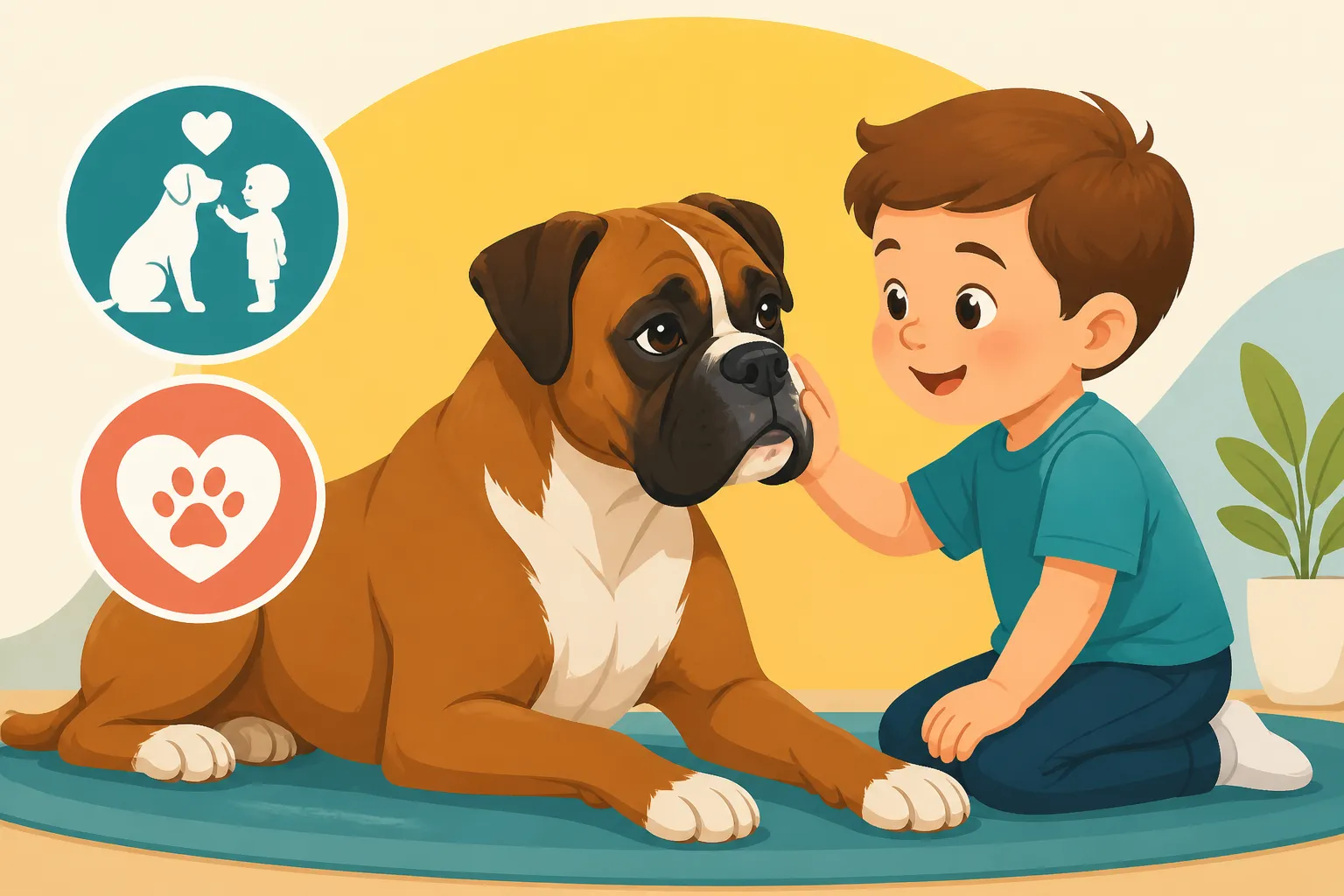
Teaching a Boxer to Be Gentle With Children
The sheer exuberance and boundless energy of a Boxer can be an absolute joy, but when you mix that with the delicate (and sometimes unpredictable) nature of children, it can become a source of real anxiety for owners. You love your Boxer, you love your kids, but the thought of a seventy-pound bundle of muscle accidentally knocking over a toddler or play-biting a little hand can be a constant worry. This guide is all about giving you the tools and understanding to teach your beloved Boxer to be gentle and respectful around the littlest members of your family, ensuring safety and harmony for everyone.
Understanding Your Boxer's Natural Instincts Around Children
Before we can even begin to teach gentleness, we need to truly understand where our Boxers are coming from. These aren't malicious dogs; their "misbehavior" around children almost always stems from their natural breed characteristics. Knowing these traits helps us manage expectations and develop more effective training strategies.
The "Forever Puppy" Mentality
It's a common saying among Boxer owners: "They're puppies until they're three!" And it's so true. Boxers have a famously long adolescence. While other breeds might settle down by a year or two, your Boxer can still be full of goofy, uncoordinated, high-energy antics well past their second birthday, sometimes even closer to three. This isn't a flaw; it's just part of their charm and what makes them such lovable clowns.
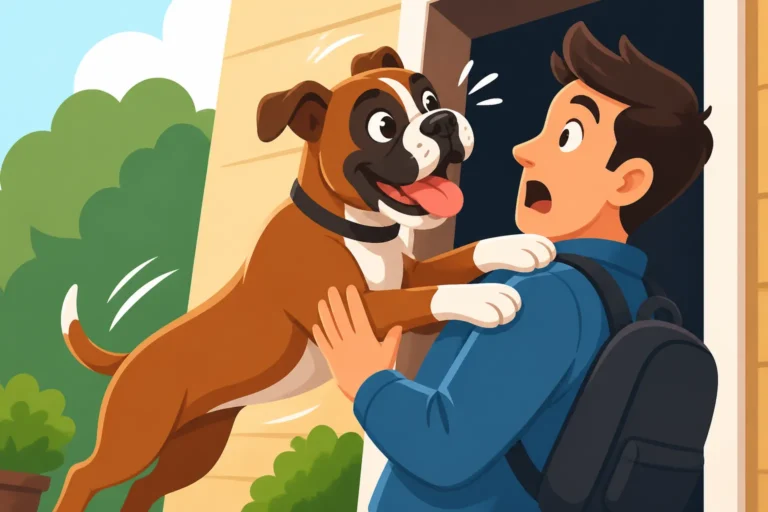
However, this extended puppyhood means they often lack a full awareness of their size and strength, especially when excited. A "zoomie" session or an enthusiastic greeting can quickly turn into a collision course with a small child. They might genuinely not realize that a playful shove or a bouncy jump, which another adult dog would easily tolerate, could send a child sprawling. We dive deeper into this developmental stage in Why a Boxer Acts Like a Puppy Until Three. This isn't about blaming the dog, but recognizing that their default mode is "joyful bulldozer," and we need to gently guide them towards a more refined approach when little humans are nearby.
Play Style and Body Language
Boxers are unique in their play. The breed name itself is said to come from their tendency to "box" with their front paws. They'll bat, swat, and playfully punch at each other, and sometimes at us, when they're excited. This isn't aggression; it's a deeply ingrained part of their play repertoire. They also love to body-slam, mouth, and engage in boisterous, often vocal, wrestling matches. For another large, robust dog, this is perfectly normal and acceptable play.
But when this high-impact, physical play is directed at a small child, it becomes problematic. A child's delicate bones and less stable balance are no match for a Boxer's enthusiastic "boxing" or a full-body-wiggle greeting. Their play bows are cute, but if they're launching into one at top speed right in front of a child, it's a hazard. Understanding that this is their natural way of engaging, explored further in Why a Boxer Boxes With Its Front Paws, allows us to teach them what else to do instead, rather than just punishing them for being a Boxer.
Exuberance vs. Aggression
It's incredibly important for any Boxer owner to differentiate between their dog's natural exuberance and any genuine signs of aggression or fear. With Boxers, 99% of the time, concerns about them being "too much" for children stem from their sheer enthusiasm, clumsiness, and lack of self-control. They simply want to be part of the action, play, and show affection, but their methods can be overpowering.
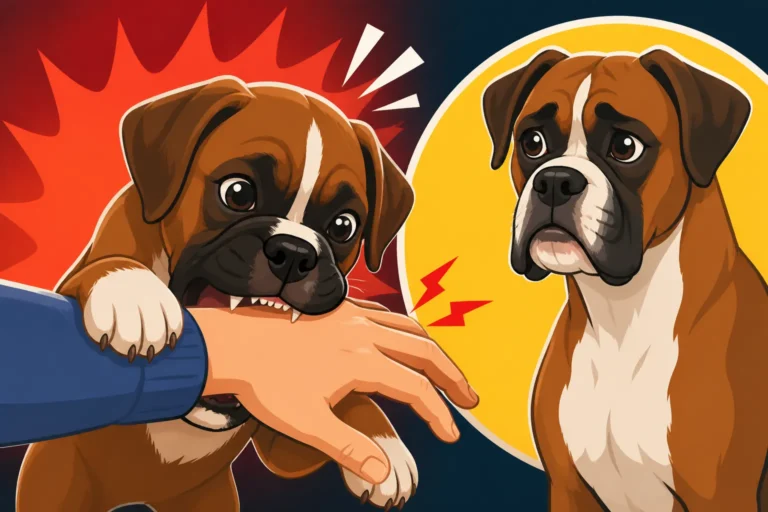
True aggression, which is exceedingly rare in well-bred and socialized Boxers, would manifest as growling, snapping, baring teeth, or actively trying to avoid or dominate a child in a negative way. If your Boxer is knocking a child over out of sheer excitement, that's an exuberance issue. If they are growling at a child who approaches their food bowl or toy, that's a resource guarding issue that needs immediate professional intervention. It’s crucial to know the difference. Most Boxer owners are dealing with a dog whose heart is in the right place, but whose manners need a lot of refinement when it comes to tiny humans.
Foundation Training for Gentle Interactions
Before you even think about specific scenarios with children, you need to build a solid foundation of obedience and impulse control. Without these basic tools, managing your Boxer's natural enthusiasm around kids will be an uphill battle. These aren't just tricks; they're vital communication skills that allow you to guide your Boxer's behavior in any situation.
Impulse Control and Basic Obedience
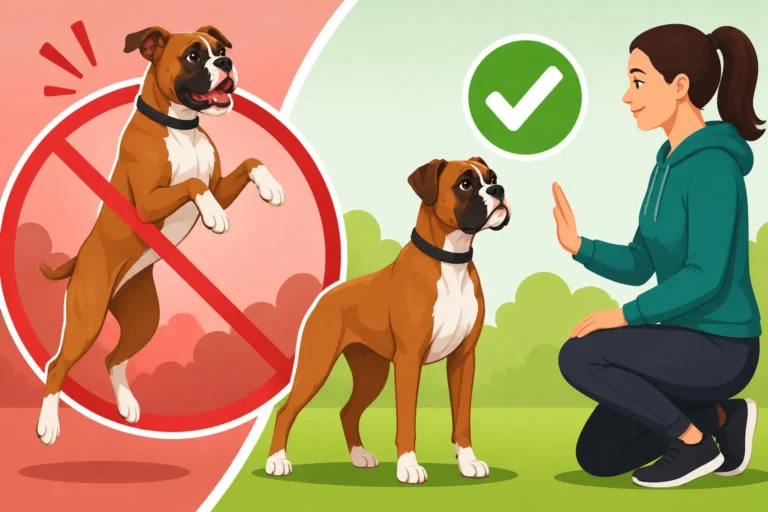
Think of impulse control as the "stop and think" button for your Boxer. They need to understand that not every exciting thing requires an immediate, full-throttle response. Commands like "sit," "stay," "down," and especially "off" are non-negotiable when children are in the picture. "Off" is particularly important for Boxers, who love to jump up to greet. You need this command to be so ingrained that they respond instantly, regardless of how excited they are.
Start practicing these commands in quiet, low-distraction environments, then gradually introduce more exciting elements, like a ringing doorbell or the sound of children playing outside (before they are actually present). Reward calm, controlled responses lavishly. If your Boxer jumps, turn your back, say "off," and only re-engage when all four paws are on the floor. Consistency is key here. A reliable online training program, like those offered by BAXTER & Bella, can provide structured lessons and support to build this foundation, especially if you're feeling overwhelmed. A well-trained Boxer is a safer Boxer, for everyone. More tips can be found in Stopping a Seventy-Pound Boxer From Jumping.
Redirection and Positive Reinforcement
Boxers are intelligent dogs, but they need clear direction. Simply telling them "no" or punishing them for being too rough isn't effective and can actually erode their trust. Instead, focus on redirection and positive reinforcement. This means showing them what to do instead of what not to do, and rewarding them heavily when they get it right.
For instance, if your Boxer starts to mouth your hand or a child's clothing during play, immediately offer them an appropriate chew toy. When they take the toy, praise them enthusiastically and give them a high-value treat. If they start to jump when a child enters the room, calmly guide them into a "sit" or "down" and reward that calm posture. The goal is to make the "gentle" or "calm" behavior far more rewarding than the boisterous behavior. This works wonders for their natural mouthing tendencies, which we discuss in Boxer Mouthing From Puppy to Adult. Always have appropriate toys and high-value treats readily available, so you're prepared to interrupt and redirect any unwanted behavior the moment it starts.
Leash Manners Indoors and Out
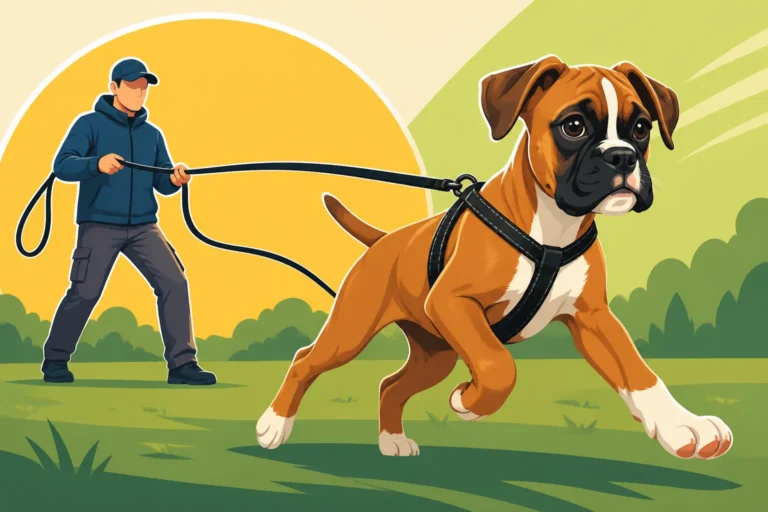
You might think leashes are just for walks outside, but for a Boxer learning to be gentle around children, a leash can be an invaluable management tool even indoors. It's not about punishment; it's about physical control and preventing rehearsals of unwanted behaviors. If you know your Boxer tends to jump on visitors or get overly excited when children are running through the house, keeping them on a short leash (attached to you or a sturdy anchor point) allows you to gently guide them into a "sit" or "down" when excitement levels rise.
This prevents them from getting "over threshold" – that point where they're too excited to listen – and gives you the leverage to teach them how to behave calmly. For example, if a child comes running in, you can use the leash to keep your Boxer in a controlled "place" command, rewarding them for staying calm as the child passes. It also reinforces good leash manners, which are essential for taking your Boxer out in public where children might be present. Learning to walk without pulling, even on a short leash inside, is a crucial skill. You can find more advice on this in Getting a Boxer to Walk Without Towing You.
Practical Strategies for Safe Boxer-Child Interactions
Once your Boxer has a foundation of basic obedience and impulse control, it's time to integrate those skills into real-life scenarios with children. This stage requires vigilance, consistent management, and clear communication with both your dog and your kids. The goal is to set everyone up for success and minimize opportunities for accidental bumps and tumbles.
Supervised Interactions and "Safe Zones"
This is non-negotiable: all interactions between your Boxer and children, especially young children, must be 100% supervised. "Supervised" means an adult is actively watching, ready to intervene instantly. Never leave a Boxer and a child alone together, even for a moment. Accidents can happen in a flash, and even the most well-meaning Boxer can inadvertently cause injury.
Creating "safe zones" for both your dog and your children is equally critical. For your Boxer, this means a designated space where they can retreat and be undisturbed. A crate is an excellent option, providing a secure den that is exclusively theirs. You can also use baby gates to separate spaces, allowing children to play safely in one area while your Boxer has a calm, quiet space in another. These physical barriers from retailers like Amazon are essential for managing interactions, especially during busy times or when your Boxer needs a break from stimulation. We explore the benefits of crating in Why a Boxer Needs a Crate More Than Most. Teaching your Boxer to go to their "place" (bed or crate) on command is an invaluable skill for managing energy around kids.
Teaching Children How to Interact
It's easy to focus solely on training the dog, but children need to be trained too! They need clear, simple rules about how to behave around the family Boxer. These rules should be consistently enforced by all adults in the household.
Here are some guidelines to teach children:
- Be Gentle: Teach them to pet gently, avoiding pulling ears or tails. Show them "petting areas" your Boxer enjoys, like the chest or shoulders.
- Respect Space: Explain that when the Boxer is in their crate or on their bed, they are not to be disturbed. Teach children to ask, "May I pet the dog?" before approaching.
- No Roughhousing: Children should understand that wrestling, tugging, or chasing games are not appropriate with the dog.
- No Teasing: Never allow children to tease the Boxer, take their toys or food, or ride on their back.
- Be a Tree: If the Boxer gets too bouncy or jumpy, teach children to "be a tree" – stand still, hands to chest, and look at the sky until the dog calms down.
By teaching children these rules, you're fostering mutual respect and helping to prevent situations where the Boxer might react poorly or become overly excited.
Managing High-Energy Moments
Boxers are bundles of energy. They have "zoomies," intense play sessions, and bursts of excitement that are perfectly natural for the breed. The trick is to manage these moments, especially when children are present. The ideal scenario is to preempt these high-energy bursts.
Ensure your Boxer is adequately exercised before children come over or before a busy time in the household. A long walk, a strenuous game of fetch, or a run in a secure yard can burn off excess energy, making them more likely to be calm. Remember to manage their exercise carefully, especially in warm weather, as discussed in Boxer Exercise Needs and the Heat That Limits Them. When a high-energy moment does strike, gently redirect your Boxer. If they start zooming around the living room while children are playing, separate them. Put them in their crate with a durable chew toy (Amazon has many great options), or behind a baby gate. The goal isn't punishment, but preventing them from practicing unwanted behaviors and keeping everyone safe. A tired Boxer is usually a well-behaved Boxer.
| Interaction Type | "Do" for Children | "Don't" for Children |
|---|---|---|
| Petting | Pet gently on the chest or shoulder. | Pull fur, ears, tail, or poke eyes. |
| Playing | Throw a toy for fetch, engage in supervised games. | Wrestle, chase, tug violently, or climb on the dog. |
| Feeding/Treats | Offer treats gently from an open palm, if allowed. | Take food/treats away, feed from the table. |
| Dog's Space | Respect the dog's crate or bed as a "no-go" zone. | Enter the dog's crate, disturb them while sleeping. |
| Excitement | Stand still like a "tree" if the dog jumps. | Run, scream, or engage in roughhousing with the dog. |
Long-Term Management and Continued Education
Teaching your Boxer to be gentle around children isn't a one-and-done process. It's an ongoing commitment that evolves as your children grow and your Boxer ages. Lifelong consistency and an understanding of your dog's changing needs are paramount for a safe and happy home.
Consistency is Key
This cannot be stressed enough: consistency is the bedrock of successful training, especially when managing a powerful, enthusiastic breed like a Boxer around children. Every family member, every caregiver, and every guest needs to be on the same page regarding rules and expectations. If one person allows jumping and another corrects it, your Boxer will become confused, and progress will stall.
Establish clear rules: "All four on the floor when greeting," "no playing tug-of-war with children," "always go to your place when the doorbell rings." Then, everyone must enforce these rules, every single time. Boxers thrive on routine and clear boundaries. When they know exactly what's expected of them, they are more likely to comply. Inconsistent training actually makes them guess and test boundaries more often, which is precisely what you don't want when children are involved.
Recognizing Stress Signals in Your Boxer
Even a loving Boxer can feel overwhelmed or uncomfortable in certain situations with children. It's critical for owners to become fluent in canine body language, especially the subtle stress signals your Boxer might exhibit. These aren't signs of aggression, but rather indicators that your dog is feeling uneasy and needs a break or intervention.
Look for signs like:
- Lip licking or yawning (when not tired): Often a sign of mild stress.
- Turning their head away or avoiding eye contact: Trying to disengage from a situation.
- Stiff body posture or tail tucked low: Indicates tension or anxiety.
- Whites of the eyes showing (whale eye): A clear sign of discomfort.
- Moving away or hiding: They are seeking refuge.
If you observe any of these signals, even if the child isn't doing anything overtly "wrong," it's time to step in. Gently separate your Boxer from the situation and give them a quiet space to decompress. Teaching yourself to read these cues can prevent escalation and ensures your Boxer feels safe and understood in their home environment.
When to Seek Professional Help
While this guide provides many actionable strategies, there might be times when you need to call in the big guns – a professional dog trainer or a certified veterinary behaviorist. If you're consistently struggling with your Boxer's behavior around children, or if you ever see signs of true fear or aggression (growling, snapping, prolonged avoidance with a tense body), do not hesitate to seek expert help.
A professional can assess your specific situation, observe your Boxer's behavior firsthand, and develop a tailored training plan. They can also help identify underlying issues, such as anxiety, that might be contributing to unwanted behaviors. Finding a trainer who has experience with Boxers and their unique personalities is a huge plus. Resources like BAXTER & Bella can offer initial guidance, but for serious behavioral concerns, an in-person, force-free professional is invaluable. Don't feel ashamed to ask for help; it's a responsible step towards ensuring the safety and happiness of both your Boxer and your children. You can also explore options for addressing specific behaviors in Trainer Rates for a Boxer That Jumps.
Disclaimer
This article is for general informational purposes only and does not constitute professional advice. Laws, prices and regulations vary by location and change over time. Consult a qualified professional for guidance on your specific situation.