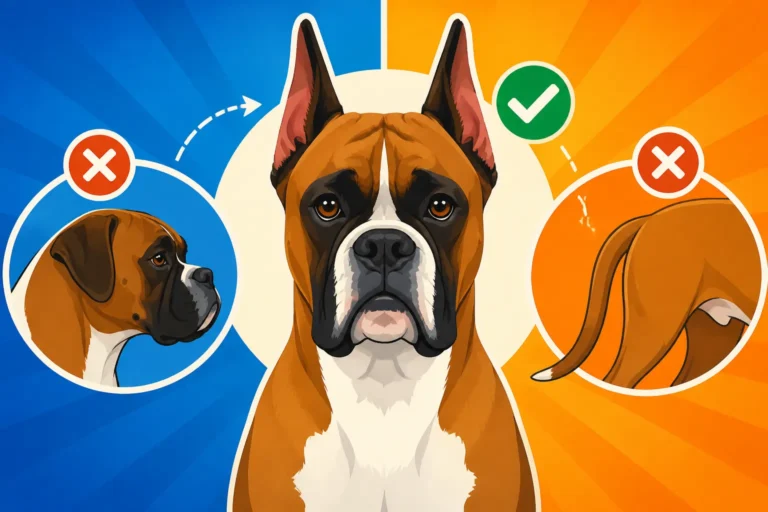
What a Serious Boxer Breeder Does Differently
A Boxer puppy can look healthy, lively, and perfectly charming while important questions about its background go unanswered. A serious breeder does more than produce attractive puppies: they screen for relevant health risks, raise dogs thoughtfully, share records openly, and stay accountable after a puppy goes home. Here’s how to recognize those practices—and what to ask before you commit.
Health testing that goes beyond a healthy-looking puppy
Ask which tests were done and see the records
A breeder’s claim that the parents are “vet checked” is not the same as breed-relevant health screening. A routine exam can be useful, but it cannot rule out every inherited problem that matters in Boxers. A responsible breeder should be able to explain which screening was performed on each parent, when it was done, and what the results mean.
Cardiac screening deserves particular attention. Boxer cardiomyopathy, often discussed as arrhythmogenic right ventricular cardiomyopathy, can involve abnormal heart rhythms that may not be obvious during an ordinary appointment. Depending on the breeding program and veterinary recommendations, evaluation may include tools such as a Holter monitor, which records heart rhythm over an extended period. A normal result is a snapshot, not a lifetime guarantee. For more background, see Boxer Cardiomyopathy and the Holter Monitor and The Health Screening a Boxer Breeder Owes You.
Ask to see the actual documentation rather than relying on a verbal summary. You should be able to match each report to the dog it belongs to and understand whether it says “normal,” “clear,” “equivocal,” or something else. If the breeder has used a DNA test, ask what that particular test can and cannot tell you. A genetic result is one piece of the picture, not a substitute for other appropriate screening.
For a Boxer puppy, heart questions may include subaortic stenosis, a condition involving narrowing below the aortic valve. A breeder should be willing to discuss how the parents were evaluated and what is known about heart issues in the family. A puppy’s normal checkup does not necessarily answer every question about a developing or inherited condition. The article Subaortic Stenosis in a Boxer Puppy can help you understand why this topic merits a careful conversation.
Look for thoughtful testing, not a promise of zero risk
No breeder can honestly promise that a puppy will never become ill. Responsible breeding reduces avoidable risk; it does not eliminate biology. A serious breeder explains both the strengths and the limits of the screening they choose, and they do not use a “clear” result to claim that every possible health concern has been ruled out.
Ask about the health history of the parents, siblings, and close relatives—not just the two dogs in front of you. Have relatives had heart concerns, cancer, chronic digestive problems, orthopedic issues, or unexplained early deaths? A breeder may not know every detail about every dog in a large family tree, but they should be willing to share what they know and explain any gaps.
It is also fair to ask how screening decisions are made. A good answer is specific: the breeder can name the evaluations, describe why they matter, and show you records. A weak answer leans on assurances such as “we’ve never had a problem” or “our dogs are all healthy” without documentation. You are not being difficult by asking; you are trying to understand the decisions behind a long-term commitment.
Check whether the breeder understands the breed’s wider health picture
Health-conscious breeding is not only about a single test or a fashionable label. Boxers can face several kinds of health concerns, and no one test addresses all of them. A careful breeder considers the dogs’ overall health, structure, temperament, family history, and suitability for breeding—not just whether a puppy has the right markings or a striking head.
Pay attention to how the breeder talks about uncertainty. If they explain that a test lowers or clarifies one kind of risk but does not guarantee a healthy life, that is generally more credible than a sweeping promise. Ask what they would do if a puppy developed a significant inherited condition. Their answer may tell you whether they see puppy placement as a transaction or a responsibility.
Breeding decisions and puppy raising you can evaluate
The breeder should know the dogs as individuals
A serious breeder can tell you why they chose this particular pairing. They should be able to describe the parents’ personalities, activity levels, strengths, and limitations, and explain what qualities they hope the pairing will produce. “They’re both beautiful” is not enough of an answer on its own.
If possible, meet the dam and observe how she behaves in a familiar setting. You are not looking for a perfectly trained show dog or expecting her to perform for visitors. Notice whether she seems comfortable, whether the breeder handles her respectfully, and whether her behavior fits the account you have been given. A dam who is temporarily tired or protective around newborn puppies may behave differently from a dog greeting people away from the litter, so context matters. Seeing a Boxer Litter's Dam Before You Buy offers more detail on what to look for.
The sire may live elsewhere, and that alone is not a red flag. In that case, ask for his health records, background, and information about his temperament. A thoughtful breeder can explain the choice without becoming evasive. If the breeder cannot describe either parent beyond appearance, or dismisses temperament questions as unimportant, take that seriously.
Puppies should be raised for real life, not just kept clean
A clean whelping area matters, but early care involves more than washing bedding. Puppies benefit from gentle, age-appropriate exposure to everyday handling, household sounds, different surfaces, and ordinary routines. The goal is not to overwhelm them with stimulation. It is to help them encounter manageable experiences while they are young and still supported by their dam and littermates.
Ask how the puppies spend their days and what they have encountered so far. A breeder should be able to give concrete examples: how puppies are handled, how their living area changes as they grow, and how the breeder observes their emerging personalities. They should also be honest that puppies develop at different speeds. One may be bold and busy; another may take longer to warm up.
A serious breeder does not promise that early socialization will make every dog fearless or effortless. Instead, they give the puppy a thoughtful start and help you continue the work after adoption. Ask what routines, food, and familiar cues the puppy knows. That information can make the first few nights less confusing for both the puppy and your household.
Puppy selection should be based on fit, not pressure
A responsible breeder asks about your home, schedule, experience, and expectations. They may ask whether you have children or other pets, how much time the dog will spend alone, and what exercise and training you can realistically provide. These questions are not an attempt to judge your worthiness; they help the breeder think about which puppy may suit your situation.
Be cautious if you are pushed to choose a puppy immediately, encouraged to pick only by color, or told that one puppy is guaranteed to have a specific adult personality. Puppy traits are still developing. A breeder can share observations and help you think through a match, but they should not present an early impression as certainty.
Boxer color can attract strong opinions, especially when white puppies are involved. Ask the breeder to explain how color relates—or does not relate—to their decisions, and whether health and temperament remain the priority. Boxer Colors and the White Question provides context for understanding the breed’s color patterns without treating appearance as a substitute for responsible breeding.
Questions, records, and warning signs before you pay
Use specific questions to make the conversation useful
Broad questions such as “Are the parents healthy?” often lead to broad answers. Instead, ask for the names of screenings performed, the dates and results, and whether you can review the records. Ask what health conditions have appeared in the family and how the breeder has responded when a puppy or adult dog needed significant veterinary care.
It can help to keep your questions in one place:
| What to ask | What a reassuring answer looks like | What deserves follow-up |
|---|---|---|
| Which health screenings were completed? | The breeder names the tests and provides records tied to each parent. | The answer relies only on a routine vet check or a general claim of good health. |
| What health issues have appeared in the family? | The breeder discusses known history openly and acknowledges what is unknown. | The breeder says there have never been problems but cannot explain the family history. |
| How are the puppies raised? | The breeder describes their daily care, handling, and age-appropriate experiences. | The breeder offers little detail or will not discuss where the puppies are kept. |
| How do you match puppies to homes? | The breeder asks about your household and talks about individual puppy behavior. | You are pressured to select quickly or choose solely by appearance. |
| What happens if I can no longer keep the dog? | The breeder explains their ongoing support and responsibility for dogs they produced. | The breeder treats all responsibility as finished once the puppy is sold. |
You should also ask what comes with the puppy: veterinary records, vaccination and deworming information, identification details, feeding guidance, and a written agreement. The exact documents and procedures may vary, but the breeder should be organized and willing to explain what you are receiving.
A written contract should protect the dog’s future
A contract is not just paperwork to skim on pickup day. Read it before sending a deposit if possible, and ask for clarification where the terms are unclear. It should explain the responsibilities of the breeder and buyer, any health-related terms, and what the breeder expects if the owner’s circumstances change.
One important question is whether the breeder will take the dog back or help place it if you can no longer care for it. Life can change unexpectedly: a move, illness, financial strain, or a mismatch with the household may leave an owner in a difficult position. A breeder who remains willing to help is showing that they care about the dog beyond the sale.
Do not treat a written health guarantee as proof that a puppy cannot develop disease. Read what the guarantee actually covers, what steps it requires, and what the breeder expects from you. A clear contract paired with honest conversation is more meaningful than impressive-sounding promises that are difficult to interpret.
Notice the red flags without assuming every difference is proof
Pressure to pay quickly, refusal to show health records, an unwillingness to discuss the dam, and vague answers about where puppies are raised are reasons to slow down. So is a breeder who offers many litters at once but cannot explain the needs or history of each one. A polished website or a large social-media following does not replace the work of verifying information.
At the same time, one detail by itself may need context. A breeder may not invite strangers into a home because of the puppies’ age, health precautions, or household circumstances. They may arrange a video call or another reasonable way to show the dogs and explain their setup. The important issue is whether they are transparent and make a genuine effort to answer sensible questions.
If something feels wrong, you do not have to decide on the spot. Ask for time to review records and the contract. A responsible breeder should not make you feel that asking questions risks losing your chance at a puppy. If you are still exploring options, Where Most People Find Their Boxer and What a First Boxer Demands of a New Owner can help you think through the search and the commitment ahead.
Matching the breeder’s work to your life with a Boxer
Be honest about the dog you can care for
Boxers are affectionate, energetic dogs, and their playful enthusiasm can be a delight as well as a lot to manage. Before you choose a puppy, think through your ordinary weekday—not only the weekends when you have extra time. Consider exercise, training, companionship, veterinary care, and how the dog will cope when your routine changes.
A breeder should be willing to discuss the realities of living with the breed, including the effort involved in training a strong, excitable dog. If you ask about adult temperament, daily activity, or common care needs and receive only rosy promises, seek a more balanced conversation. The right breeder will want you to understand the work as well as the appealing qualities.
It is also reasonable to consider an adult Boxer rather than a puppy. An adult dog’s established habits and temperament may fit some households better, though every individual still needs assessment. Whether a Five-Year-Old Boxer Is a Better Bet can help you weigh that option against raising a puppy from the beginning.
Consider the whole relationship, not just the pickup day
A good breeder should be prepared to answer questions after the puppy comes home. You might need help with a feeding transition, a training concern, or understanding whether a behavior is typical for that puppy’s age. Ongoing advice does not replace your veterinarian or a qualified trainer, but it can help you stay connected to someone who knows the puppy’s early history.
Before bringing your Boxer home, prepare the basics: a safe resting space, a suitable crate or pen, secure equipment, cleaning supplies, and a plan for veterinary care. If you prefer to order everyday supplies online, Chewy can be one place to compare options such as bowls, bedding, and training rewards. Make choices that fit the individual dog rather than assuming every product marketed for Boxers will suit your puppy.
Chewy may also be useful when you are restocking familiar food after the breeder provides the puppy’s current diet details. Avoid making a sudden food switch simply because a different product is on sale or has appealing packaging. Ask the breeder what the puppy has been eating, then discuss any planned change with your veterinarian. If you are assembling supplies in advance, Chewy offers another way to check sizes and product details before the puppy arrives.
Ultimately, the best breeder is not necessarily the one with the flashiest kennel or the most persuasive sales pitch. Look for someone whose decisions are explainable, whose records can be reviewed, and whose concern for the dog continues after the handoff. The questions may feel awkward at first, but a careful conversation now can help you make a more informed choice—and begin life with your Boxer on steadier footing.
Disclaimer
This article is for general informational purposes only and does not constitute professional advice. Laws, prices and regulations vary by location and change over time. Consult a qualified professional for guidance on your specific situation.