Diagnosing Boxer Colitis by Biopsy
There’s almost nothing more disheartening as a Boxer owner than dealing with recurring digestive upset. You clean up the messes, you watch your beloved dog strain, and you hold your breath hoping each bout of diarrhea is the last. But when those symptoms keep coming back, especially in a younger Boxer, it quickly moves past a simple "bad tummy" and into a frustrating cycle of uncertainty. This guide is here to walk you through why, for persistent cases, a colonoscopy and biopsy become a crucial step in finally getting a clear diagnosis for Boxer colitis.
The Frustration of Persistent Boxer Colitis Symptoms
It's a scene many of us know all too well: your energetic Boxer, usually full of beans, suddenly seems a little off. Then come the urgent requests to go outside, followed by soft, watery stools, often dotted with bright red blood or slimy mucus. It’s distressing to see, and even more so when it becomes a recurring nightmare, making you dread meal times and walks. This persistent digestive distress can really take a toll, not just on your Boxer, but on your peace of mind and your household routine.
When Loose Stools Become the New Normal
Imagine waking up to find a messy accident in the house, even from a perfectly house-trained Boxer. Or seeing your dog crouch and strain with visible discomfort, producing only small, runny puddles. This isn't just an occasional upset stomach; it's a chronic problem that impacts their daily comfort and your ability to plan anything without worrying about the next "incident." We often see Boxers with colitis struggling with frequent, small-volume diarrhea, sometimes with a lot of mucus, which points directly to irritation in the large intestine. If you've ever dealt with Bloody Mucus in a Young Boxer's Stool, you know just how concerning these episodes can be. It's a tell-tale sign that something deeper is going on.
The frustration builds when these episodes aren't isolated incidents but a recurring pattern. You clean the floor for the third time in a week, you're constantly monitoring their potty breaks, and you start to wonder if your dog will ever have solid stool again. This constant state of vigilance can be exhausting. When your Boxer is constantly dealing with Straining and Small Stools in a Boxer, it’s not only a sign of discomfort but also a significant disruption to their happy-go-lucky nature. It truly wears on everyone in the family, and you just want answers and a lasting solution.
The Cycle of Antibiotics and Relapse
Most vets, when faced with a Boxer presenting with colitis symptoms, will start with a course of broad-spectrum antibiotics, often metronidazole or enrofloxacin. And for a while, it feels like a miracle! Your Boxer's stools firm up, the straining stops, and you breathe a sigh of relief, thinking the problem is finally solved. But then, a few weeks or months later, sometimes even just days after the medication runs out, the familiar symptoms creep back. The loose stools return, the urgency is back, and you're left feeling defeated.
This cycle of temporary improvement followed by relapse is incredibly common with Boxer colitis. While some Boxers respond well to short courses of antibiotics, for many, the underlying issue isn't fully addressed, leading to repeated flare-ups. This is why you might hear vets talk about Why Boxer Colitis Responds to One Antibiotic specifically, but even with those targeted drugs, if the underlying cause isn't definitively identified, you're likely to find yourself back at square one. Repeated use of antibiotics can also have its own drawbacks, impacting the gut microbiome and potentially making future treatments less effective.
Why a Biopsy Becomes Necessary for Diagnosis
When you're caught in this frustrating loop of symptoms, temporary fixes, and relapses, it’s natural to feel like you’re just throwing spaghetti at the wall to see what sticks. This is precisely when your vet might start discussing a more definitive diagnostic tool: a colonoscopy with biopsy. It’s a step that moves beyond treating the symptoms and aims to uncover the actual cause of the persistent inflammation within your Boxer's colon.
Beyond the Superficial Symptom Management
Think about it: simply managing diarrhea with antibiotics or bland diets is like patching a leaky pipe without knowing what caused the hole in the first place. You can keep patching it, but it will likely spring new leaks. Standard stool samples are great for ruling out common culprits like parasites, and it's always the first step. For instance, knowing the difference between Giardia Against Colitis in a Boxer is crucial, as their treatments are very different. However, these tests don't tell us why the colon itself is inflamed. They don't give insight into the cellular changes or specific types of inflammation occurring within the intestinal wall.
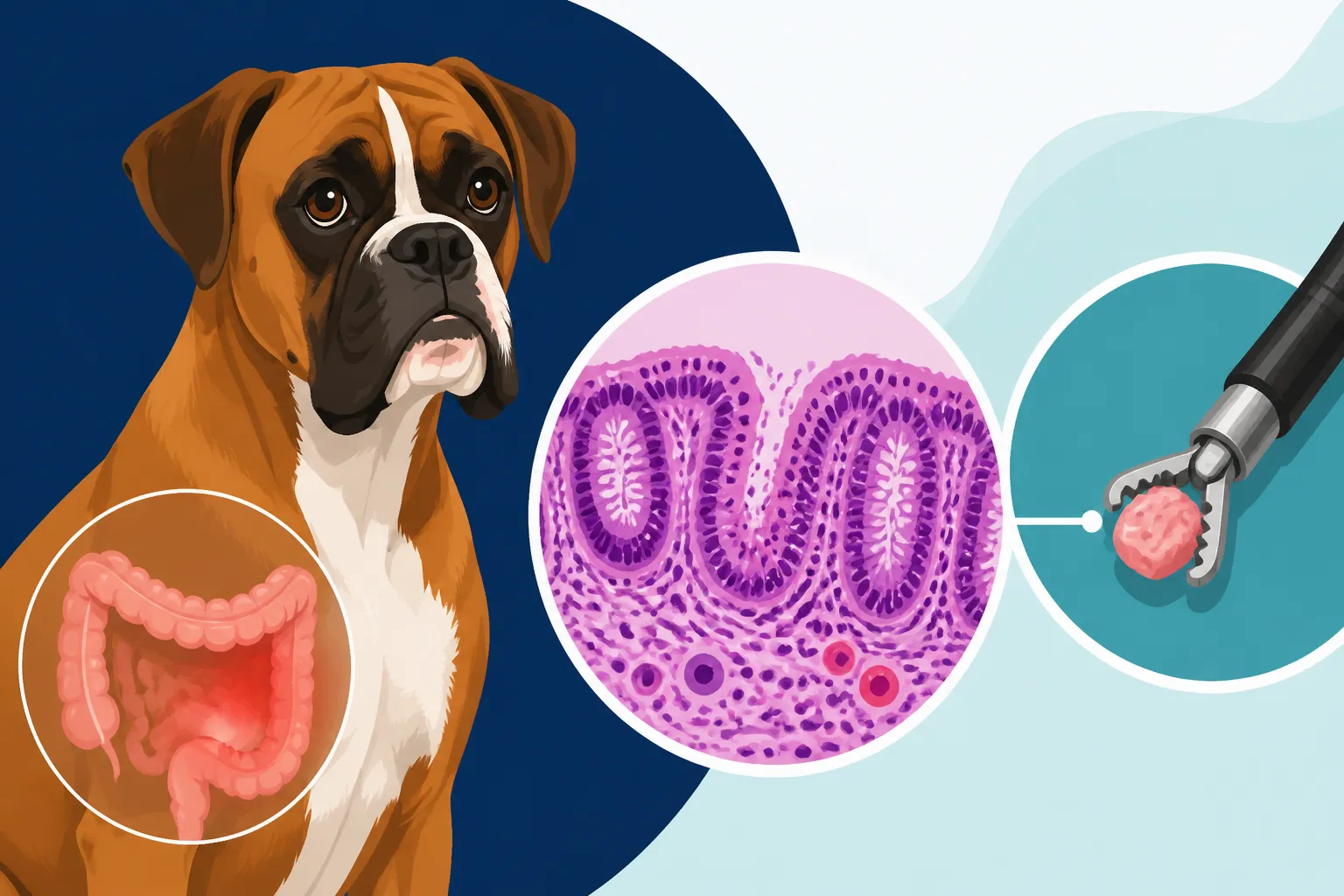
A biopsy allows the veterinary pathologist to literally look at the tissue samples under a microscope. This deep dive into the colon's architecture and cellular makeup can distinguish between various forms of inflammatory bowel disease, which can present very similarly on the surface. Without this detailed view, treatment is often empirical – based on educated guesses – rather than truly targeted. It's the difference between trying various remedies for a cough and getting a lung biopsy to definitively diagnose pneumonia.
Differentiating Colitis from Other GI Issues
The term "colitis" just means inflammation of the colon, and it can be caused by many different things. Sometimes it's a food sensitivity, sometimes a specific bacterial overgrowth, and sometimes it's an idiopathic inflammatory bowel disease (IBD) where the immune system is essentially attacking the gut lining. In Boxers, there's a particular form called histiocytic ulcerative colitis (or Boxer colitis) that is often linked to an invasive strain of E. coli. This specific diagnosis is virtually impossible to make without examining the actual colon tissue. If you've been wondering Telling Boxer Colitis From Ordinary Diarrhea, a biopsy can offer that clear distinction.
Imagine your Boxer has been having chronic loose stools. Is it truly a specific type of colitis, or is it a severe food allergy? Could it be something even more concerning, like an early-stage tumor (though thankfully less common in younger Boxers)? A biopsy provides the answers by showing the exact type of inflammation, the specific cells involved, and if there's any evidence of invading bacteria or abnormal tissue growth. This allows your vet to craft a very precise treatment plan. While the thought of a biopsy can be daunting due to costs, knowing that providers like Healthy Paws pet insurance often cover such diagnostic procedures can offer a lot of reassurance to worried owners facing these choices.
The Biopsy Process: What to Expect
Once your vet has determined that a colonoscopy and biopsy are the best next step, it's natural to have questions and even some anxiety about the procedure. It's a significant undertaking for both you and your Boxer, but understanding each step can help alleviate some of those worries. The goal is always to get that clear picture inside to guide effective treatment.
Preparing for the Colonoscopy and Biopsy
The preparation for a colonoscopy is probably the least fun part, but it's absolutely critical for success. For the vet to get a clear, unobstructed view of the colon lining, it needs to be completely empty and clean. This means your Boxer will need to fast for a significant period, typically 12-24 hours, followed by a thorough bowel cleansing. Your vet will prescribe a special solution that your Boxer will need to drink, often in multiple doses, to flush out their system.
Imagine your Boxer, usually a bottomless pit of enthusiasm for mealtime, having to fast for a day. It’s tough, both for them and for you, as they look at you with those mournful Boxer eyes! And administering the bowel prep solution can be a challenge – it tastes… well, not great. Many owners find creative ways to get it into their dog, sometimes mixing it with a tiny amount of something palatable if allowed by the vet, or using a large syringe. This prep is crucial because any residual fecal matter can obscure the view, making it difficult to collect accurate biopsy samples. Your vet will give you very specific instructions, and following them precisely will make the procedure as effective as possible.
The Procedure Itself: Endoscopy in Action
The colonoscopy and biopsy are performed under general anesthesia. This is important to ensure your Boxer is completely still and comfortable, allowing the veterinary specialist (often an internal medicine specialist) to carefully guide the endoscope. For a flat-faced breed like a Boxer, anesthesia always carries a slightly higher risk due to their brachycephalic anatomy, so your vet will take extra precautions and monitoring. Knowing about Anesthesia Risk in a Flat-Faced Boxer is important, but modern veterinary anesthesia is very safe, with extensive monitoring in place.
During the procedure, a long, flexible tube with a camera and a light source at its tip (the endoscope) is gently inserted into your Boxer's rectum and advanced through the colon. The specialist carefully visualizes the entire colon lining, looking for any abnormalities like inflammation, ulcerations, polyps, or unusual tissue changes. As they navigate, they use tiny forceps passed through the scope to take multiple small tissue samples (biopsies) from different areas of the colon. These samples are then preserved and sent to a veterinary pathologist for microscopic examination. The whole procedure typically takes about 30-60 minutes, depending on the individual case and how challenging it is to navigate the colon. Pet insurance plans, such as those offered by Healthy Paws, are often invaluable here, as they can help cover the significant costs associated with specialized procedures like endoscopy and anesthesia.
Interpreting the Biopsy Results
The waiting game after a biopsy can feel agonizing. You’ve gone through all the preparation and the procedure, and now you’re just hoping for clear answers. When the results finally come back from the lab, they provide the crucial puzzle pieces needed to understand what’s truly happening inside your Boxer’s colon and how best to treat it.
Understanding the Histopathology Report
The histopathology report is a detailed analysis from a veterinary pathologist who has examined the tissue samples under a microscope. They're looking for several key things: the type and severity of inflammatory cells present, any architectural changes to the colon lining (like villous blunting or glandular changes), and the presence of any abnormal bacteria or other pathogens. For Boxers, specifically, pathologists will be looking for signs of histiocytic ulcerative colitis (HUC), often characterized by a specific type of inflammatory cell called macrophages, which are often packed with bacteria.
This is where the term "granulomatous colitis" often comes into play. If the report indicates a significant infiltration of PAS-positive macrophages within the colon wall, it strongly suggests this specific form of colitis, which is particularly common and severe in Boxers. This finding points directly to the possibility of an invasive E. coli strain sitting within the colon wall, as detailed in discussions like Why E Coli Sits Inside a Boxer's Colon Wall. Without this microscopic view, we'd simply be guessing at the true nature of the inflammation. The report will categorize the inflammation, its extent, and often provide a diagnosis that guides treatment in a way no other test can.
Tailoring Treatment Based on Diagnosis
Receiving a definitive diagnosis from the biopsy report is a game-changer. No more guessing, no more trial-and-error with medications that only offer temporary relief. If your Boxer is diagnosed with histiocytic ulcerative colitis, for instance, the treatment protocol becomes much clearer and more targeted. This often involves a long course of specific antibiotics like enrofloxacin (Baytril) – sometimes for months, not just weeks – because these antibiotics are known to be effective against the intracellular E. coli that causes this condition.
In addition to antibiotics, dietary management usually plays a crucial role. A novel protein or hydrolyzed diet, or one specifically designed for sensitive digestive systems, might be recommended. This targeted approach dramatically increases the chances of achieving long-term remission and vastly improves your Boxer's quality of life. For chronic conditions like this, it's not just about medication; it's also about finding the right Diet Changes for a Boxer With Colitis. Understanding that the condition might be chronic but manageable, rather than a mystery, allows you to proactively manage your Boxer's health and reduce the likelihood of severe relapses. It’s comforting to know that once properly diagnosed, your Boxer won’t have to keep suffering repeated bouts, and the question of Whether Boxer Colitis Comes Back can be addressed with a more effective long-term strategy.
The Alternatives and Considerations
While a biopsy offers the most definitive diagnosis for persistent Boxer colitis, it’s not without its considerations, particularly concerning cost and the potential for an invasive procedure. It's important to weigh these factors against the drawbacks of not pursuing a definitive diagnosis, which can lead to a prolonged and often more expensive journey for your dog.
The Drawbacks of Not Biopsying
Choosing not to pursue a biopsy when chronic colitis symptoms persist often means you're stuck on a diagnostic merry-go-round. Without a clear understanding of the underlying cause, you and your vet might continue to try different medications, different diets, and various supplements, hoping something finally works. This trial-and-error approach can be incredibly frustrating and, ironically, often ends up being more expensive in the long run. Imagine repeated vet visits, countless prescriptions, and specialized food that may or may not help – it all adds up.
More importantly, your Boxer continues to suffer through periods of discomfort, straining, and diarrhea. Chronic inflammation can lead to weight loss, poor nutrient absorption, and a general decline in their overall health and vitality. It prevents them from living their best, most energetic Boxer life. There’s also the risk that a more serious underlying condition, which might have been treatable if caught early, goes undiagnosed. This is why for many cases, the temporary relief offered by initial treatments like Enrofloxacin for a Boxer With Colitis eventually proves insufficient, highlighting the need for a deeper investigation. The emotional toll of watching your beloved companion struggle indefinitely can be immense, making the initial investment in a biopsy a worthwhile step toward lasting relief.
Cost and Insurance Implications
Let's be real: a colonoscopy with biopsy is not a cheap procedure. Between the specialist consultation, anesthesia, the endoscopic procedure itself, and the histopathology fees, the costs can easily run into thousands of dollars. This financial burden is a very real concern for many owners and often prompts difficult decisions. This is where pet insurance can truly shine as a lifesaver.
Many owners secure pet insurance when their Boxer is a puppy, long before any major health issues arise. Having a comprehensive plan from a provider like Healthy Paws, for example, can dramatically reduce your out-of-pocket expenses for such a crucial diagnostic step. If you enrolled your Boxer before any symptoms of colitis appeared, your insurance could potentially cover a significant portion of the biopsy costs, as well as the ongoing medication and prescription diet required for management. This makes a life-changing procedure much more accessible. It's similar to how pet insurance helps with other major health concerns, demonstrating that while What Boxer Cardiomyopathy Costs a Family can be high, proactive insurance can ease the burden. Without insurance, owners might find themselves needing to explore financing options or making heart-wrenching decisions based purely on cost. This is a prime example of why getting ahead with something like Insuring a Boxer Before the First Lump or before any chronic conditions manifest, is such sound advice for Boxer owners. Healthy Paws and similar companies understand the financial realities of veterinary care and aim to alleviate that stress for owners.
Comparison of Diagnostic Approaches for Boxer Colitis
| Diagnostic Method | What it Checks | Pros | Cons |
|---|---|---|---|
| Fecal Exam (basic) | Parasites (worms, Giardia), basic bacterial balance | Inexpensive, quick, rules out common issues; first line of defense | Doesn't diagnose inflammation, misses many bacterial causes, limited scope |
| Fecal PCR | Specific pathogenic bacteria (e.g., Clostridium, Salmonella), parasites at genetic level | More comprehensive for specific pathogens, non-invasive, highly sensitive | Can show presence of bacteria that may not be causing clinical signs, doesn't assess tissue changes |
| Diet Trials (Novel Protein/Hydrolyzed) | Food sensitivities or allergies | Non-invasive, can be effective if diet is the primary cause; helps rule out food issues | Time-consuming (8-12 weeks), requires strict adherence, doesn't diagnose specific colitis type; might not work if not food-related |
| Blood Work (CBC, Chemistry, C-reactive protein, B12/Folate) | General health, organ function, systemic inflammation, malabsorption | Screens for systemic issues, assesses overall health, can indicate inflammation | Non-specific for colon issues, cannot identify the type or cause of colitis; elevated markers can be due to many issues |
| Colonoscopy with Biopsy | Direct visualization of colon lining, microscopic tissue analysis for inflammation type, presence of specific bacteria (e.g., E. coli), rule out cancer | Definitive diagnosis, guides targeted and effective long-term treatment, rules out serious diseases like neoplasia | More expensive, requires general anesthesia, invasive procedure, recovery time |
Disclaimer
This article is for general informational purposes only and does not constitute professional advice. Laws, prices and regulations vary by location and change over time. Consult a qualified professional for guidance on your specific situation.