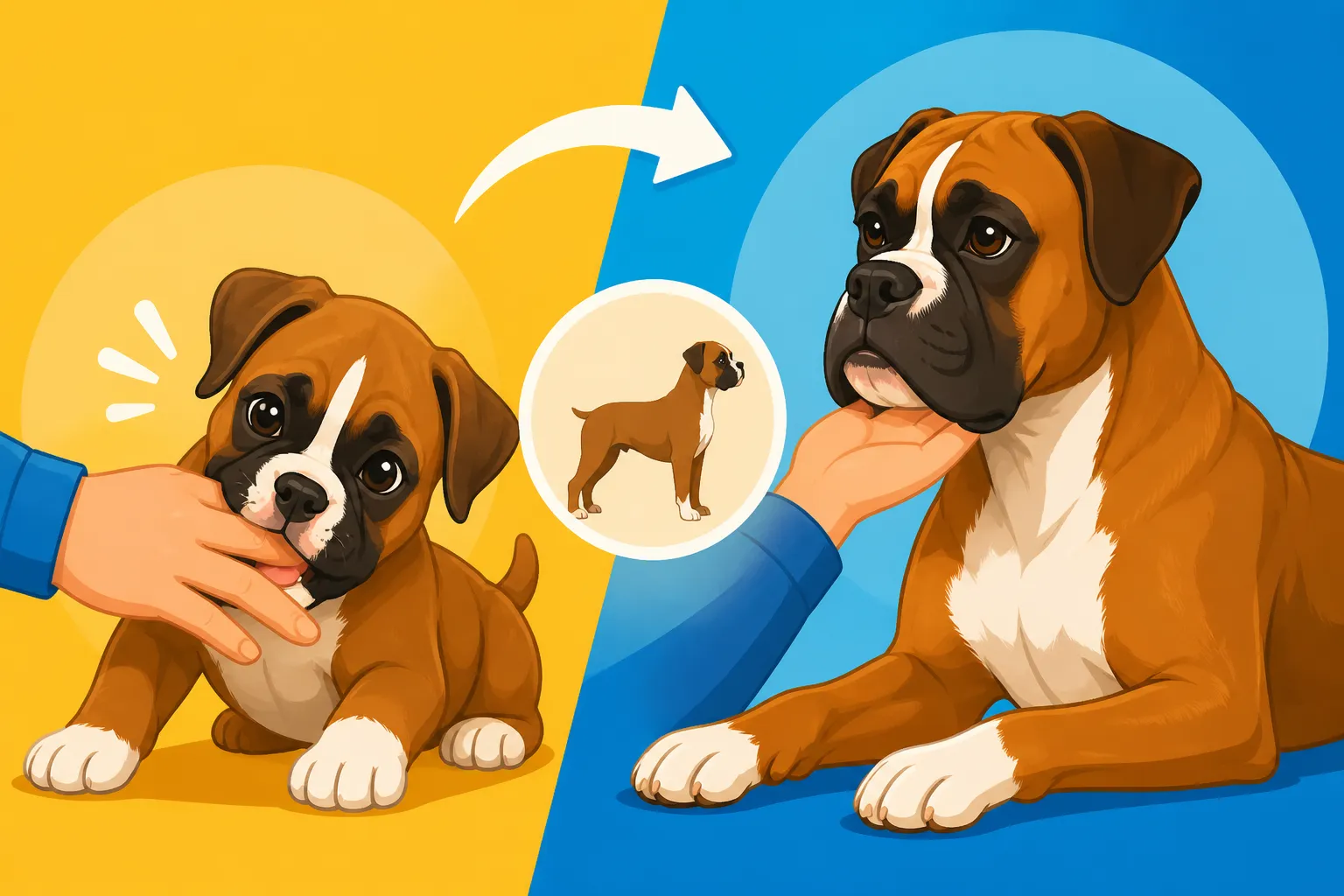
Boxer Mouthing From Puppy to Adult
The exuberant, playful nature of Boxers is one of their most endearing qualities, but it often comes with a rather "mouthy" habit. If you're currently navigating puppy nips that feel more like shark attacks, or an adult Boxer who greets you with enthusiastic chomps and grabs, you're not alone. This guide will walk you through understanding why your Boxer mouths, how to distinguish normal play from concerning behavior, and practical, empathetic strategies to teach them to use their mouths appropriately, from tiny puppy teeth to strong adult jaws.
Understanding Boxer Puppy Mouthing: The "Normal" Phase
Bringing home a Boxer puppy is a whirlwind of joy, energy, and, let's be honest, a whole lot of biting. It’s important to remember that mouthing and nipping are entirely normal behaviors for puppies, especially for a breed as physically expressive as the Boxer. They explore the world with their mouths, just as human babies use their hands. Their sharp little needle teeth might feel terrifying, but this stage is a crucial opportunity to teach bite inhibition.
The Instinct to Mouth and Explore
From the moment they're born, puppies use their mouths to interact with their littermates and their mother. They mouth during play, during nursing, and even to test boundaries. This behavior is deeply ingrained, and it’s how they learn about the world around them. When your Boxer puppy mouths your hand, they aren't trying to hurt you intentionally; they are simply engaging in a natural form of communication and exploration. It's their way of asking, "What is this? How does it feel? Can I play with it?" Without this early learning, a dog wouldn't understand the consequences of biting too hard later in life.
Think about how siblings play. They wrestle, they chase, and yes, they mouth each other. If one puppy bites too hard, the other will yelp, and play will stop. This immediate feedback is what teaches a puppy to control the pressure of their bite – a vital lesson known as bite inhibition. It’s our job as owners to mimic this natural learning process. When your puppy is playing with you and nips, you become the "littermate" who yelps. This instinctual interaction is not something to be stifled entirely, but rather channeled and refined into acceptable behavior.
Teething Timelines and Nipping Intensity
Boxer puppies typically start teething around 3-4 weeks of age, with those tiny, razor-sharp deciduous teeth making their appearance. The real fun, or challenge, begins when these baby teeth start falling out and adult teeth push through, usually between 4 and 6 months old. During this period, your puppy’s urge to chew and mouth intensifies dramatically. Their gums are sore, swollen, and itchy, and chewing provides immense relief. This is when your furniture, shoes, and yes, your hands, become prime targets.
The intensity of their nipping can seem overwhelming during teething. They're not being aggressive; they're simply uncomfortable and seeking relief. Providing appropriate chew toys becomes paramount during this time. Offering a variety of textures – rubber, rope, softer puppy-safe chews – can help satisfy this urge. Freeze some damp washcloths or specific puppy teething toys you can find on sites like Amazon; the cold can be very soothing on inflamed gums. Remember that this phase, while intense, is temporary. Your consistency in redirecting them to appropriate chew items is key to surviving it without losing your sanity, or your favorite pair of sneakers. Chews That Redirect a Mouthy Boxer is a fantastic resource for this.
Why Boxers Are Such Mouthy Dogs Beyond Puppyhood
Even after those needle teeth are gone and replaced with their strong adult set, many Boxer owners find themselves still grappling with a mouthy companion. It's not uncommon for a Boxer to continue to use its mouth in play, for attention, or when overly excited. This isn't a sign of aggression in most cases, but rather a manifestation of their breed characteristics and high energy levels.
Breed Characteristics: The Boxer's "Boxing" Style
The very name "Boxer" is said to come from their characteristic habit of standing on their hind legs and "boxing" with their front paws during play. What often goes hand-in-hand with this pawing action is their mouth. When a Boxer gets excited, they don't just use their paws; they often incorporate their mouths into the playful exchange. They might gently grab at arms or clothing, or even nibble at hands. This is part of their enthusiastic, physical play style, stemming from their working dog heritage where they were developed to hold game.
This "boxing" and mouthing behavior is deeply embedded in their DNA. It’s how they interact with their environment and express their joy and excitement. They are highly tactile dogs, and this includes using their mouths. Understanding this inherent trait can help you reframe your perception of the behavior. Instead of seeing it as naughtiness, view it as a natural expression of their Boxer-ness that simply needs polite redirection. Teaching them appropriate ways to engage their mouths and paws, such as fetch with a toy instead of grabbing your arm, is crucial. Why a Boxer Boxes With Its Front Paws delves deeper into this fascinating breed trait.
High Energy and Excitement-Induced Mouthing
Boxers are dogs with boundless energy and enthusiasm. They are often described as perpetual puppies, and for good reason—they maintain a youthful exuberance well into their adult years. This high energy, combined with their affectionate nature, means that greetings, play sessions, or even anticipation of a walk can lead to an overflow of excitement. When a Boxer gets overly excited, their natural response can be to revert to those puppy-like mouthy behaviors.
Imagine coming home after a long day. Your Boxer is thrilled to see you, wiggling their whole body, doing the famous Boxer wiggle. They might jump up, mouth your arm, or grab at your clothes. This isn't malice; it's pure, unadulterated joy that they haven't learned to channel appropriately. The key here is not to punish the excitement, but to teach them alternative, calmer ways to express their happiness. This often involves teaching them to keep all four feet on the floor, offering a toy for them to hold, or waiting for them to settle before giving attention. The lack of proper exercise can also contribute to this, as an under-stimulated Boxer will seek outlets for their pent-up energy, which can manifest as excessive mouthing or destructive chewing. Why a Boxer Wrecks Things When Under-Exercised highlights the importance of adequate physical and mental activity.
Attention-Seeking and Demand Mouthing
Boxers are smart dogs, and they quickly learn what behaviors get them what they want – especially attention. If your Boxer discovers that a gentle (or not-so-gentle) nip or mouth on your hand or arm results in you looking at them, talking to them, or moving, they've just hit the jackpot. Even negative attention can be perceived as a reward by a dog craving interaction. This often escalates into what's known as "demand mouthing."
Demand mouthing typically happens when your Boxer wants something: to play, to be petted, to go outside, or simply to get you to acknowledge their presence. They might nudge with their nose first, then progress to a paw, and if that doesn't work, a gentle grab with their mouth. It's a learned behavior, reinforced by inadvertent responses from us. To address this, it's vital to ignore the demand mouthing entirely and only give attention when your Boxer is calm and quiet. As frustrating as it can be to have a seventy-pound dog persistently mouthing at you, any reaction – even a firm "No!" – can inadvertently reinforce the behavior. Patience and consistency in redirecting their attention and rewarding calm behavior are paramount.
Differentiating Play Mouthing from Aggression
One of the biggest anxieties for Boxer owners, especially those new to the breed or dog ownership in general, is discerning whether their dog's mouthing is just boisterous play or something more concerning like aggression. While Boxers are generally playful and good-natured, understanding the nuances of their body language is essential for proper interpretation.
Reading Body Language: Relaxed vs. Tense
The most crucial factor in telling play mouthing from aggression is your Boxer's overall body language. A Boxer engaging in play mouthing will typically have a loose, fluid body. Their tail might be wagging in a wide, relaxed sweep, or a rapid, happy blur. Their ears will be soft and expressive, possibly flopping back or forward but not rigidly pinned. Their eyes will appear soft, and their mouth might be open in a "play face" with a relaxed tongue. The nips themselves tend to be inhibited, meaning they don't apply full pressure, and they often involve a rapid release rather than a sustained grip. They might even invite play with a play bow.
In contrast, an aggressive Boxer will exhibit very different body language. Their body will be stiff and rigid, possibly leaning forward or backward depending on whether they're threatening or fearful. The tail might be held high and stiff, or tucked tightly between their legs, but it won't have that loose, joyful wag. Their ears might be flattened against their head or pricked forward rigidly. The eyes will often be hard, staring, or darting. Their lips might be pulled back in a snarl, revealing teeth in an uninhibited way, and they might show hackles raised along their back. The bite itself will be harder, sustained, and often accompanied by a low growl or snarl rather than playful grunts or barks. If you see these signs, it's time to create distance and seek professional help.
Intensity and Context of the Mouthing
Beyond general body language, the intensity and context of the mouthing are critical indicators. Play mouthing, even when energetic, usually involves a clear "off switch." If you yelp or pull away, a playing Boxer will typically pause, perhaps shake it off, and then either re-engage more gently or seek a toy. There's a back-and-forth, reciprocal nature to play. If your Boxer accidentally nips too hard, they might even show a submissive gesture, like licking your hand or rolling over.
Aggressive biting, however, lacks this playfulness. It’s not about interaction; it's about asserting dominance, fear, or pain. The bite will be hard, not inhibited, and the Boxer might not release immediately. If you try to pull away, they might hold on tighter or re-engage with more intensity. The context is also vital: play mouthing usually occurs during happy, interactive moments. Aggressive biting is more likely to happen when a dog is guarding resources (food, toys, space), feeling threatened, in pain, or has a history of trauma. Any mouthing that breaks the skin or leaves bruises, especially outside of very rough play, should be taken seriously and warrants immediate investigation by a veterinarian and a certified professional dog trainer.
Here's a quick comparison to help differentiate:
| Characteristic | Play Mouthing | Aggressive Biting |
|---|---|---|
| Body Language | Loose, wiggly, play bows, relaxed tail/ears. | Stiff, rigid, hackles raised, tucked or stiff tail. |
| Facial Expression | Soft eyes, "play face," open mouth, relaxed tongue. | Hard eyes, staring, snarling lips, teeth bared. |
| Bite Pressure | Inhibited, gentle nips, quick release. | Hard, uninhibited, sustained grip, skin broken. |
| Vocalizations | Playful grunts, barks, puppy yelps (if too hard). | Low growls, snarls, warning barks. |
| Response to "Yelp" | Pauses, re-engages gently, or seeks toy. | Continues, increases intensity, no pause. |
| Context | During playful interactions, greetings. | Resource guarding, fear, pain, feeling threatened. |
Essential Training Techniques for Puppy Mouthing
Successfully navigating the puppy mouthing stage requires consistency, patience, and understanding. It's not about stopping your Boxer from using their mouth entirely – that's impossible and unnatural – but about teaching them how to use it gently and appropriately. This is often called bite inhibition, and it's one of the most important lessons you'll ever teach your Boxer.
Teaching Bite Inhibition: The "Yelp" Method
The single most effective way to teach a Boxer puppy bite inhibition is to mimic what their littermates would do. When your puppy mouths or nips you too hard during play, let out a high-pitched yelp or "ouch!" immediately. Make it sound genuine, not angry. The moment you yelp, simultaneously withdraw your hand or stop playing. This sends a clear signal: "That hurt! Play stops now." It's crucial that play actually stops. Don't just yelp and keep playing; physically disengage. Turn your back, leave the room, or put a barrier between you and the puppy for 30-60 seconds.
Once your puppy is calm, you can re-engage in play. If they mouth too hard again, repeat the process. The goal is for your puppy to learn that hard bites result in the immediate cessation of all fun. Over time, as their bite pressure reduces, you can raise your threshold. For example, initially, you might yelp at any pressure. Later, you only yelp when it's truly painful. This gradual process helps them understand the continuum of bite pressure. Remember, consistency across all family members is vital; everyone needs to react the same way every time. You can find excellent detailed courses on puppy training, including bite inhibition, from online providers like BAXTER & Bella. Boxer Puppy Biting That Does Not Stop provides more specific strategies for persistent biters.
Redirection to Appropriate Chews and Toys
While teaching bite inhibition, it's equally important to redirect your Boxer puppy's mouthy energy to acceptable outlets. Always have a variety of sturdy chew toys readily available. When your puppy starts to mouth or nip at you, immediately offer them a toy instead. If they take the toy and start chewing on it, praise them enthusiastically! Make it a celebration. This teaches them, "Instead of biting me, bite this."
Rotate toys regularly to keep them interesting. Some Boxers prefer softer, squishy toys, while others love hard rubber chews or braided ropes. Puzzle toys filled with kibble or safe treats can also be a fantastic way to engage their minds and mouths simultaneously. When your puppy is playing appropriately with a toy, make sure to reinforce that behavior with praise or a gentle pet. The more appealing you make appropriate chewing, the less they will be inclined to mouth you. This redirection is not a punishment; it’s a proactive way to guide their natural instincts toward acceptable behavior. Chews That Redirect a Mouthy Boxer is a good resource for finding suitable toys.
Consistent Training Cues and Reinforcement
Beyond bite inhibition and redirection, establishing clear, consistent training cues is paramount. Teach your Boxer puppy a solid "Leave It" cue. This command is invaluable for discouraging mouthing, whether it's your hand, a piece of clothing, or something they shouldn't have. Start practicing "Leave It" in low-distraction environments with tempting treats, gradually increasing the difficulty. When they successfully "Leave It," reward them generously.
Another important cue is "Off" or "Four on the Floor" to address jumping and associated mouthing. When your Boxer jumps up, calmly say "Off" and wait for all four paws to be on the ground before offering any attention or a treat. Reward the calm behavior you want to see. Never reward jumping or mouthing with attention, even negative attention. Boxers are smart and eager to please, but they thrive on consistency. Every interaction is a teaching moment. Make sure everyone in the household uses the same commands and follows the same rules, otherwise, you'll just confuse your clever Boxer. This consistent application of rules helps solidify the learning process for your puppy.
Addressing Persistent Adult Boxer Mouthing
Sometimes, despite your best efforts in puppyhood, or perhaps because of an adopted adult Boxer with an unknown history, mouthing can persist into adulthood. This can be frustrating, especially when you have a large, powerful dog. The good news is that adult Boxers are highly trainable, and with consistent effort, these behaviors can be managed and improved.
Reinforcing Calm Greetings and Play
For adult Boxers who still greet with enthusiastic mouthing or jump up and nip, the focus needs to be on reinforcing calm behaviors. When you arrive home, ignore your Boxer until they have all four paws on the floor and are relatively calm. This might mean turning your back, walking into another room, or waiting for a solid 30 seconds of calm before you acknowledge them. The instant they are quiet and still, even for a moment, offer a calm greeting and a gentle pet. If they start to mouth, immediately withdraw attention and try again.
For play, always initiate with a toy. Don't use your hands as toys. If your Boxer starts to mouth you during play, the play session should immediately stop. You can even try a brief "time-out" for yourself, stepping away for a minute or two. When you resume play, offer a designated toy. Reward calm, toy-focused play with praise and continued interaction. This teaches them that engaging with toys keeps the fun going, while mouthing humans stops it. This consistent positive reinforcement for desired behaviors is far more effective than punishment.
Identifying Triggers and Managing Excitement Levels
Understanding what triggers your Boxer's adult mouthing is the first step toward managing it. Does it happen mainly when visitors arrive? When you get out the leash for a walk? When they're bored and seeking attention? Once you identify the triggers, you can proactively manage the situation. For example, if greetings are a trigger, have a plan for how visitors will interact with your Boxer. This might involve keeping your Boxer on a leash when guests arrive, giving them a high-value chew toy to focus on, or putting them in a separate room until they've settled.
Managing overall excitement levels is also crucial for Boxers. They are high-energy dogs, and a lack of adequate physical and mental exercise can lead to an excess of energy that spills over into unwanted behaviors like mouthing. Ensure your Boxer gets appropriate outlets for their energy, whether it's vigorous fetch sessions, long walks, or mental stimulation through training games. A tired Boxer is often a well-behaved Boxer. You might also find helpful strategies in Keeping Boxer Training Sessions Interesting and Boxer Exercise Needs and the Heat That Limits Them.
Positive Interruption and Redirection
When your adult Boxer starts to mouth you, a positive interruption can be very effective. This isn't about scolding but about redirecting their focus. A sharp, happy noise (like a kissy sound or a clap) can break their concentration, followed immediately by offering an appropriate chew toy. If they take the toy, reward them! If they don't, calmly walk away. The goal is to interrupt the unwanted behavior and immediately provide an alternative, acceptable behavior to reinforce.
Another useful technique is to teach your Boxer to "hold" an item. Give them a soft toy or ball to carry in their mouth when they get excited, especially during greetings. If their mouth is full with a toy, they can't mouth you! Practice this by offering the toy and praising them for holding it, gradually extending the time they hold it. This gives them an acceptable outlet for their mouthy tendencies during high-arousal moments. Always make sure the toys are durable and safe for your Boxer to chew on, checking for wear and tear, as Boxers can be powerful chewers.
Tools and Resources to Help with Mouthing
Navigating Boxer mouthing, whether puppy or adult, can be a challenge, but you don't have to go it alone. There are many tools and resources available that can make the process smoother and more effective for both you and your dog. Utilizing these can provide both management and training benefits.
Durable Chew Toys and Puzzle Feeders
A consistent supply of appropriate chew toys is perhaps the most fundamental tool for managing a mouthy Boxer. For puppies, a variety of textures and sizes can help soothe teething gums and redirect nipping. For adults, durable, long-lasting chews are essential to stand up to their strong jaws. Look for toys specifically designed for strong chewers from reputable brands. These might include KONG toys, Nylabones, or other robust rubber or nylon chews. You can find a vast selection of these on platforms like Amazon. Ensure they are sized appropriately for your Boxer to prevent choking hazards.
Puzzle feeders and treat-dispensing toys are also invaluable. These toys engage your Boxer's mind and keep their mouths busy with an appropriate task, rather than seeking out your hands or furniture. Filling a KONG with peanut butter (xylitol-free!), plain yogurt, or wet food and freezing it can provide a long-lasting, satisfying chew. These items provide mental stimulation, reduce boredom, and satisfy the natural urge to chew, all of which can significantly decrease unwanted mouthing behaviors. Toys a Boxer Cannot Destroy in a Day can offer some excellent suggestions for hardy options.
Long Lines and Exercise Equipment
Sometimes, mouthing stems from pent-up energy or a lack of appropriate outlets. Utilizing long lines (a long, lightweight leash, 15-30 feet) in a safe, enclosed area can allow your Boxer to run and explore with more freedom, burning off energy without you having to constantly worry about recall or unwanted interactions. This increased physical exercise can naturally reduce their inclination to mouth due to boredom or excess energy.
Beyond long lines, consider other exercise equipment that suits your Boxer's needs. Flirt poles are excellent for mimicking prey drive and providing a vigorous workout in a small space. Interactive fetch toys or automatic ball launchers can also be great for high-energy Boxers. Remember that physical exercise alone isn't always enough; mental exercise is just as important. Integrating short, fun training sessions into your daily routine can tire a Boxer out mentally, leading to calmer behavior overall. Sixty to Ninety Minutes a Day With a Boxer details recommended exercise amounts.
Professional Trainers and Online Programs
If you're struggling to make progress on your own, don't hesitate to seek help from a certified professional dog trainer. Look for trainers who use positive reinforcement methods and have experience with working breeds like Boxers. A good trainer can observe your Boxer's specific behavior, identify underlying causes, and develop a customized training plan. They can provide hands-on guidance and help you understand your Boxer's unique learning style.
Many reputable organizations and individual trainers also offer online training programs and virtual consultations. These can be a convenient and effective way to access expert advice from the comfort of your home. For instance, BAXTER & Bella is a well-known online dog training program that offers comprehensive courses, including puppy raising and problem-solving modules, which can be immensely helpful for addressing mouthing. They often provide step-by-step guidance, video tutorials, and even personalized support, allowing you to work at your own pace and revisit lessons as needed.
Living with a Mouthy Boxer: Management Strategies
Even with dedicated training, some Boxers will always retain a degree of mouthiness due to their breed characteristics and high drive. The key to a harmonious household often lies in effective management strategies that prevent opportunities for unwanted mouthing and promote desired behaviors.
Environmental Management and Puppy-Proofing
Just as you would "baby-proof" a home for a toddler, "puppy-proofing" (or "Boxer-proofing"!) is essential. Remove tempting items that your Boxer might be inclined to chew or mouth. This includes shoes, remote controls, children's toys, and anything that could be damaged or ingested. Keep valuable items out of reach, behind closed doors, or in high places. When you cannot directly supervise your Boxer, especially a puppy, confine them to a safe, puppy-proofed area like a crate or a playpen with plenty of appropriate chew toys.
This isn't about restricting their freedom unnecessarily, but about setting them up for success. If they don't have access to your favorite leather armchair, they can't chew it. If your hands aren't constantly being offered for play, they won't become targets for mouthing. A crate, when introduced properly and used as a safe den, can be an invaluable management tool, especially when you need a break or during times when supervision is difficult. Choosing a Crate a Boxer Cannot Wreck offers advice on selecting the right one.
Establishing Clear Household Rules
Every member of your household needs to be on the same page regarding how to interact with your Boxer and manage mouthing. Consistency is critical. If one person allows mouthing or rough play with hands, while another discourages it, your Boxer will become confused and the behavior will be much harder to extinguish. Sit down with your family and establish clear, concise rules:
- No hands as toys, ever. Always redirect to a toy.
- No jumping up for greetings. Wait for four paws on the floor.
- Immediate cessation of attention if mouthing occurs.
- Everyone uses the same commands ("Off," "Leave It," etc.)
- Regular exercise and mental stimulation for the Boxer.
These rules should be communicated to guests as well. Don't be shy about asking visitors to respect your training efforts. It's perfectly acceptable to tell guests, "Please don't encourage him to jump or mouth, we're working on keeping four on the floor!" Empowering everyone to reinforce the same positive behaviors creates a consistent learning environment for your Boxer.
Utilizing "Place" and Mat Training
Teaching your Boxer a "Place" command can be incredibly useful for managing excitement and preventing mouthing in various scenarios. "Place" means going to a designated spot (like a dog bed or mat) and staying there until released. This can be used when guests arrive, when you're eating dinner, or when your Boxer is simply over-aroused. It provides a structured way for them to calm down and gives them a job to do.
Start by luring your Boxer onto their mat with a treat, saying "Place!" Once they are on it, reward them. Gradually increase the duration they stay on the mat, then the distance you are from them, and finally, add distractions. When visitors come over, you can direct your Boxer to their "Place" with a high-value chew to keep them occupied and prevent them from jumping up and mouthing people. This not only manages the mouthing but also teaches self-control and provides a sense of security for your dog. Teaching a Boxer a Place to Go When Guests Arrive provides a detailed guide.
When to Seek Professional Help for Boxer Mouthing
While most Boxer mouthing is a normal, albeit sometimes frustrating, part of their development and breed characteristics, there are instances when it crosses the line from playful exuberance into concerning behavior. Knowing when to call in a professional is crucial for both your safety and your Boxer's well-being.
Escalation of Bite Intensity or Frequency
If your Boxer's mouthing seems to be getting harder, more frequent, or is breaking the skin regularly, even accidentally, it's time to seek professional help. While puppy nips can be sharp, they should gradually decrease in pressure as bite inhibition is learned. If an adult Boxer is consistently applying enough pressure to leave marks, bruises, or puncture wounds, even without aggressive intent, this indicates a significant breakdown in bite inhibition. This is not normal play, especially for an adult dog, and could lead to serious injury.
An escalation might also involve your Boxer becoming harder to redirect, or ignoring your "yelps" or attempts to disengage. If their mouthing is becoming compulsive, or they seem unable to control the intensity even when you are clearly distressed, a professional assessment is warranted. This could signal deeper issues that require expert intervention.
Mouthing Accompanied by Aggressive Body Language
As discussed earlier, understanding body language is paramount. If your Boxer's mouthing starts to be accompanied by any signs of aggressive body language – such as a stiff body, hard stare, growling, snarling, or raised hackles – do not delay in contacting a certified professional dog trainer or a veterinary behaviorist. This is a critical distinction, as true aggression needs to be addressed immediately and expertly.
Aggression can stem from fear, resource guarding, pain, territoriality, or even a history of trauma. These are complex issues that a layperson is unlikely to resolve safely or effectively on their own. Trying to punish aggression can often make it worse, increasing fear and reactivity. A professional can help identify the root cause of the aggressive display and implement a safe, humane, and effective behavior modification plan.
Fear, Anxiety, or Resource Guarding Behaviors
Sometimes, what appears to be mouthing can be an early symptom of underlying fear, anxiety, or resource guarding. If your Boxer mouths when approached while eating, guarding a toy, or when startled, this is not playful mouthing. It's a warning signal. Similarly, if your Boxer mouths defensively when a stranger approaches them, or when they are in an unfamiliar environment, it could indicate anxiety or fear-based reactivity.
These behaviors require a nuanced approach. A professional can help you understand the triggers for your Boxer's fear or guarding, and teach you how to desensitize them to these triggers and counter-condition their emotional response. This often involves positive reinforcement, management strategies, and sometimes even medication if the anxiety is severe. Ignoring these underlying issues will only allow them to fester and potentially escalate into more serious behavioral problems. Investing in professional guidance early can prevent small issues from becoming major ones.
Disclaimer
This article is for general informational purposes only and does not constitute professional advice. Laws, prices and regulations vary by location and change over time. Consult a qualified professional for guidance on your specific situation.