Whether a Boxer’s Pawing Is Play or Demand
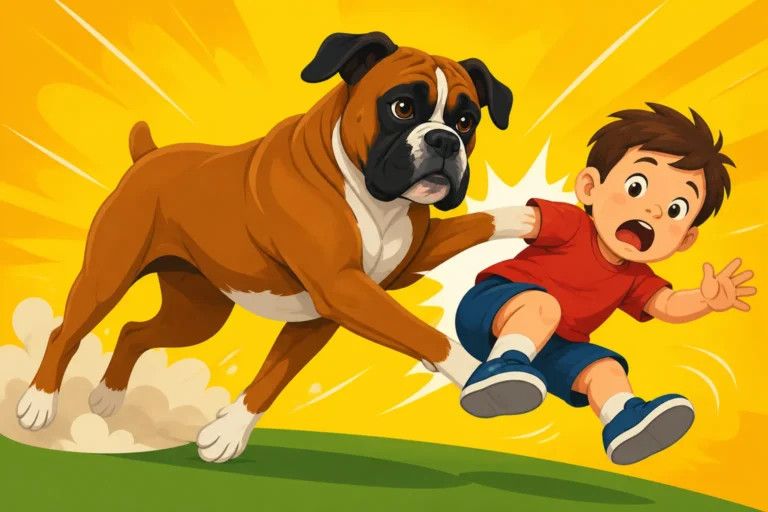
One of the most charming, yet sometimes frustrating, quirks of our beloved Boxers is their tendency to use their paws. You're trying to work, relax, or simply exist, and suddenly, a big, soft (or not-so-soft!) paw lands on your lap, arm, or even face. It leaves many Boxer owners wondering: is this an adorable invitation to play, or is my dog just being a demanding little tyrant? This guide will help you understand the subtle differences and how to respond effectively.
Understanding the Boxer's Natural Pawing Instinct
It's easy to assume your Boxer is just being cheeky, but their pawing actually stems from deep-rooted breed traits and natural canine communication. It's not just a random gesture; it's a part of who they are and how they interact with their world.
Historical Context: Why Boxers Use Their Paws
If you've ever seen a Boxer "box," you know exactly what I'm talking about. They stand on their hind legs and use their front paws in a playful, punching motion – hence the name "Boxer." This isn't just a cute trick; it's a behavior ingrained in their heritage. The Boxer breed descended from a German dog called the Bullenbeisser, a powerful canine used for hunting large game like wild boar and deer. These dogs needed to hold onto their prey, using their strong jaws and front limbs to keep an animal in place until hunters arrived. While our modern Boxers aren't wrestling wild boars, that physical prowess and inclination to use their front paws for interaction and engagement has certainly been passed down.
The "boxing" behavior is a more refined, playful version of this ancestral instinct. In a domestic setting, it translates into a dog that naturally uses its paws to initiate contact, explore, or get what it wants. It’s part of their unique charm, but it also means that, without guidance, pawing can become a default communication method. When you see your Boxer batting at you, remember it's a testament to their history and unique physicality. Why a Boxer Boxes With Its Front Paws delves deeper into this fascinating characteristic.
Developmental Stages of Pawing in Boxers
Just like human children, Boxer puppies learn and refine their behaviors as they grow, and pawing is no exception. Understanding these stages can help you anticipate and manage the behavior more effectively.
When they are tiny puppies, pawing is often an exploratory behavior. They use their paws to investigate objects, push away littermates during nursing, or swat playfully in a clumsy attempt to initiate interaction. At this stage, it’s mostly innocent and part of learning about their environment and social dynamics.
As Boxers enter adolescence, typically from around six months to two or three years, pawing can take on a new dimension. This is often described as the "teenage" phase where they test boundaries and figure out their place in the household. A young Boxer might start pawing more persistently for attention, food, or to get you to play. This isn't necessarily malicious; it's often a learned behavior. If pawing gets them what they want – even a brief glance or a verbal "no" – they learn it's an effective tool. It's a critical time to be consistent with training, as habits formed now can be harder to break later. The Boxer Puppyhood That Lasts Three Years explores the extended puppy stage of these wonderful dogs.
By the time a Boxer reaches adulthood, usually around three years old, their pawing habits are typically well-established. If it's been rewarded, it will continue. If it's been consistently redirected or ignored, it will be less prevalent. An adult Boxer's pawing can be a nuanced form of communication, signaling anything from a desire for cuddles to an insistent demand for dinner. Learning to interpret their body language in conjunction with the pawing becomes essential for harmonious living.
Distinguishing Between Playful Pawing and Demand Pawing
The million-dollar question for every Boxer owner: Is this paw meant in good fun, or is my dog trying to run the show? The truth is, it's often a mix, but by observing a few key signals, you can usually tell the difference. This insight is crucial because how you respond will vary greatly depending on your interpretation.
Characteristics of Playful Pawing
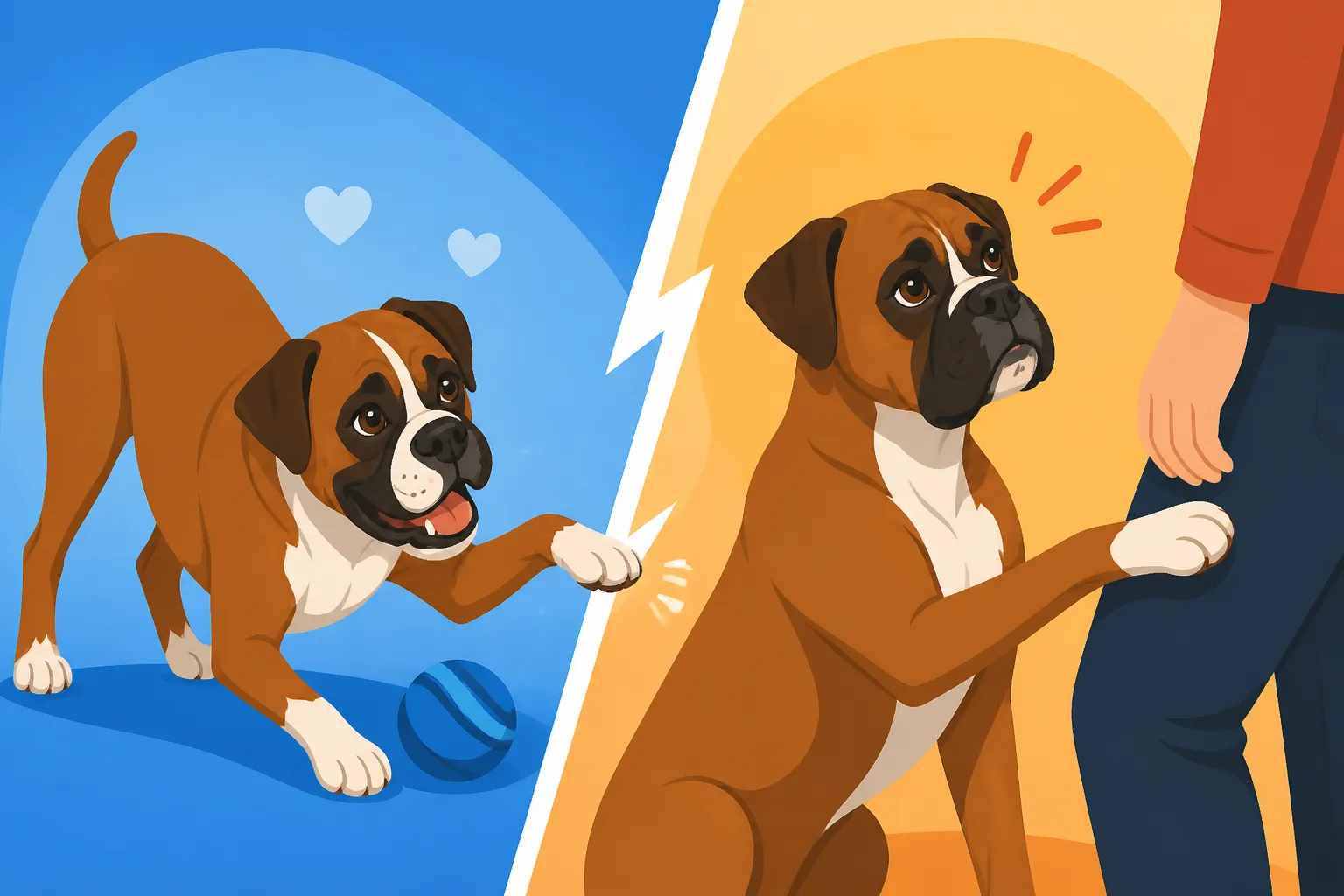
When a Boxer is truly being playful, their entire body language will reflect that lighthearted intention. It's not just about the paw; it's about the whole package. Look for a loose, wiggly body – often described as the famous "Boxer wiggle." Their tail might be wagging happily (even a docked tail can have a happy stub wiggle!), and their eyes will likely be soft, bright, and inviting, not hard or intense. They might even drop into a "play bow," where their front end is down, and their rear end is up, clearly signaling "let's play!" The Boxer Wiggle and What It Signals is a great resource for understanding this unique behavior.
The context of the pawing is also a huge clue. Is it happening when you're already engaged in a game of fetch, or when you've just picked up their favorite squeaky toy? Playful pawing often occurs during active play sessions or immediately before, acting as an invitation to continue or start the fun. They might paw at your hand, then bounce backward, inviting you to chase them. It's usually reciprocal; they want you to interact back, not just give in to a request. If another dog is present, you might see them engage in typical Boxer Play Style With Other Dogs, which often involves some pawing and body slamming.
An example might be when you’re throwing a ball, and your Boxer brings it back and bats your arm with a paw, then backs up with a little bark. That’s pure play, an enthusiastic "Again, please!" If you’re sitting on the floor, and your Boxer gently paws your leg before flopping down next to you for a cuddle, that’s also likely an affectionate, playful gesture of connection.
Characteristics of Demand Pawing
Demand pawing, on the other hand, comes with a very different vibe. The body language tends to be stiffer, more direct, and less "wiggly." Your Boxer might stare directly at you with an intense gaze, almost willing you to respond. There’s often less overall movement in their body, except for the insistent paw. They might not offer a play bow or a bouncy invitation; instead, it's a more direct and often persistent application of the paw.
The context here is key. Demand pawing frequently happens when you are not giving them attention or when they want something specific. This could be when you're eating dinner, trying to read a book, or on the phone. They might paw at your leg under the table, or bat at your hand while you're holding a treat. The intent isn't to initiate play but to elicit a specific outcome: "Feed me," "Pet me," "Pay attention to me right now."
A classic scenario is you're sitting on the couch, watching TV. Your Boxer walks over, perhaps nudges you, and then, finding that insufficient, places a paw firmly on your leg or arm and just leaves it there, staring. If you don't respond, the paw might increase in pressure or even start tapping. This is a clear demand: "My needs are not being met!" If you give in and pet them, you've just reinforced that pawing is an effective way to get what they want.
Here's a quick comparison to help you differentiate:
| Characteristic | Playful Pawing | Demand Pawing |
|---|---|---|
| Body Language | Loose, wiggly, often with a play bow, happy tail, soft eyes | Stiffer, more direct, intense stare, sometimes no tail wagging, persistent |
| Context | During active play, before a known game, seeking reciprocal interaction | When you're busy, eating, trying to relax; seeking a specific resource (food, attention) |
| Intent | Invitation to play, initiate engagement, affectionate gesture | To get something from you, solicit a specific action, gain attention |
| Response | Often followed by bouncing, running, or another play invitation | Persistent pressure, waiting for your compliance, might escalate if ignored |
Strategies for Managing Pawing Behavior
Whether it's a nudge for attention or a full-on paw to the face, managing pawing requires consistency and a clear understanding of what you want your Boxer to do instead. The goal isn't to suppress their natural inclinations entirely, but to channel them into more acceptable forms of communication.
Reinforcing Appropriate Play
For playful pawing, the key is to ensure it remains a positive interaction and doesn't become overly rambunctious or a habit of jumping. Boxers are powerful dogs, and a paw that feels light from a puppy can be quite a thump from a seventy-pound adult.
One of the most important things you can teach your Boxer is how to greet politely. This means Teaching a Boxer to Keep Four Feet Down. When they approach you for play or attention, if all four paws are on the floor, immediately reward them with praise, a gentle pet, or a calm toss of a toy. If a paw comes up, you can gently redirect it by moving their paw down, stepping away, or turning your back. The moment the paws are on the ground, attention returns. Consistency is paramount here – every family member needs to be on board.
Another effective strategy is redirecting their pawing to appropriate items. If your Boxer paws you during playtime, immediately offer a sturdy toy. Encourage them to bat, pounce, or mouth the toy instead of your body. This teaches them that toys are for physical interaction, while people are for more gentle contact. Keep a variety of toys readily available, especially interactive ones that can hold a Boxer’s attention, like a tug rope or a durable fetch toy. Interactive toys can be a great way to engage them.
Finally, always remember to reward calm behavior. If your Boxer is lying quietly by your feet, or gently nudges you with their head instead of a paw, acknowledge and praise that! This positive reinforcement helps them understand what behaviors do get your attention and approval. Rewards a Boxer will work hard for can be anything from a favorite treat to a quick game of fetch, but make sure it’s offered for the desired behavior.
Addressing Demand Pawing Effectively
Demand pawing often stems from your Boxer learning that this behavior gets them what they want. The good news is, you can un-teach it, but it requires patience and unwavering consistency.
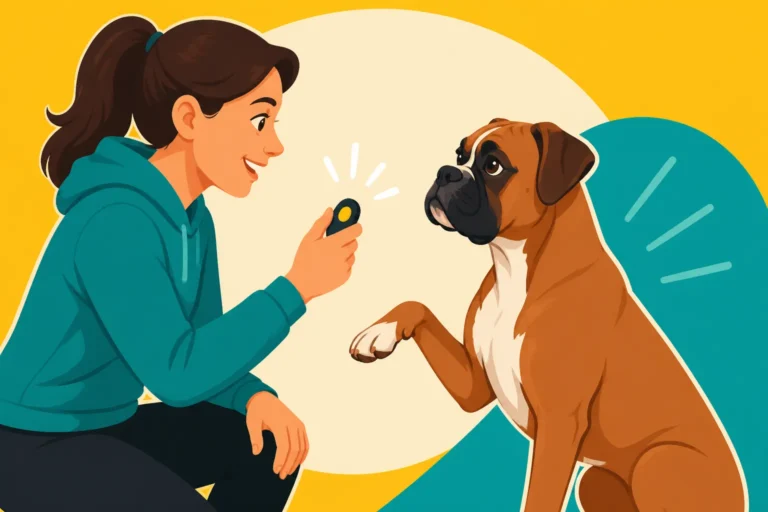
The most powerful tool against demand pawing is ignoring it. This means no eye contact, no verbal reprimands, no pushing the paw away. As difficult as it can be, you need to act as if the pawing isn't happening. Turn your head, fold your arms, or even stand up and walk away into another room for a moment. The second your Boxer stops pawing and has all four feet on the floor, then you can calmly return and offer attention. This teaches them that pawing leads to the loss of attention, while calm behavior brings it back. This can be challenging because Boxers are smart, and they will often escalate their attempts before giving up. They'll try harder because it used to work. You need to outlast them.
Teaching an incompatible behavior is also incredibly effective. A "place" command is perfect for this. Teach your Boxer to go to their bed or mat and stay there when you're busy. When they start to paw, calmly direct them to their "place." Once they are settled there, reward them. Over time, they learn that going to their place is the way to earn a treat or praise, not by pawing at you. BAXTER & Bella offers excellent online training programs that can guide you through teaching foundational commands like "place" with clear, step-by-step instructions. These programs are designed to help with consistency, which is absolutely vital for a Boxer.
Ensure consistent household rules. If one person ignores the pawing while another gives in, your Boxer will be confused and continue to try. Everyone in the family needs to agree on how to respond to pawing. This might require a family meeting to get everyone on the same page. If your Boxer is left alone for long periods and gets bored, this can also lead to demand behaviors. Consider how many Hours a Boxer Can Manage Alone and ensure they are getting adequate mental and physical stimulation. Training a Boxer That Gets Bored Fast offers more strategies for keeping their intelligent minds occupied.
When Pawing Might Signal Something Else
While most pawing is a form of communication, whether playful or demanding, there are rare occasions when it might hint at something more. It's always worth considering the full picture of your Boxer's well-being.
If the pawing behavior suddenly escalates, becomes frantic, or is accompanied by other unusual behaviors like excessive licking of their paws, whining, limping, or showing signs of pain or discomfort, it’s always best to rule out any underlying medical issues. They might have a splinter, an injury to their paw pad, or even be experiencing joint pain. While Boxers are known for their stoicism, a sudden change in behavior warrants a check-up with your vet to ensure they aren't trying to tell you they're in pain.
Sometimes, excessive pawing can also be a sign of anxiety or stress. If your Boxer seems restless, paces, or displays other nervous behaviors like excessive panting or drooling alongside the pawing, they might be feeling anxious. This could be due to changes in their environment, separation anxiety if they are left alone too long, or even a reaction to loud noises. In these cases, addressing the root cause of the anxiety is more important than simply managing the pawing. Your vet or a certified professional dog trainer can help you identify and address anxiety triggers.
Lastly, boredom and insufficient mental stimulation can also manifest as persistent demand pawing. Boxers are intelligent and high-energy dogs. If they aren't getting enough exercise and mental challenges, they will find ways to entertain themselves, and demanding attention from you is a common strategy. Puzzle feeders that hold a Boxer's attention, regular training sessions (remember, Why Short Sessions Suit a Boxer's Attention Span), and plenty of opportunities for walks and active play are crucial. A bored Boxer is often a mischievous Boxer, and a paw to your arm might just be their way of saying, "I need a job!" Check out options on Amazon for durable puzzle toys and interactive feeders that can keep their minds engaged.
Conclusion
Distinguishing between playful and demand pawing in your Boxer is a nuanced skill that develops with observation and understanding. By paying close attention to their body language, the context of the interaction, and maintaining consistent responses, you can guide your Boxer towards more appropriate ways of communicating. Whether it's reinforcing positive play or gently but firmly discouraging demanding behaviors, remember that patience and consistency are your greatest allies in nurturing a well-behaved and happy Boxer companion. These intelligent, affectionate dogs thrive on clear boundaries and positive reinforcement, making life with them all the more rewarding. After all, What a First Boxer Demands of a New Owner is often just understanding and a firm, loving hand.
Disclaimer
This article is for general informational purposes only and does not constitute professional advice. Laws, prices and regulations vary by location and change over time. Consult a qualified professional for guidance on your specific situation.