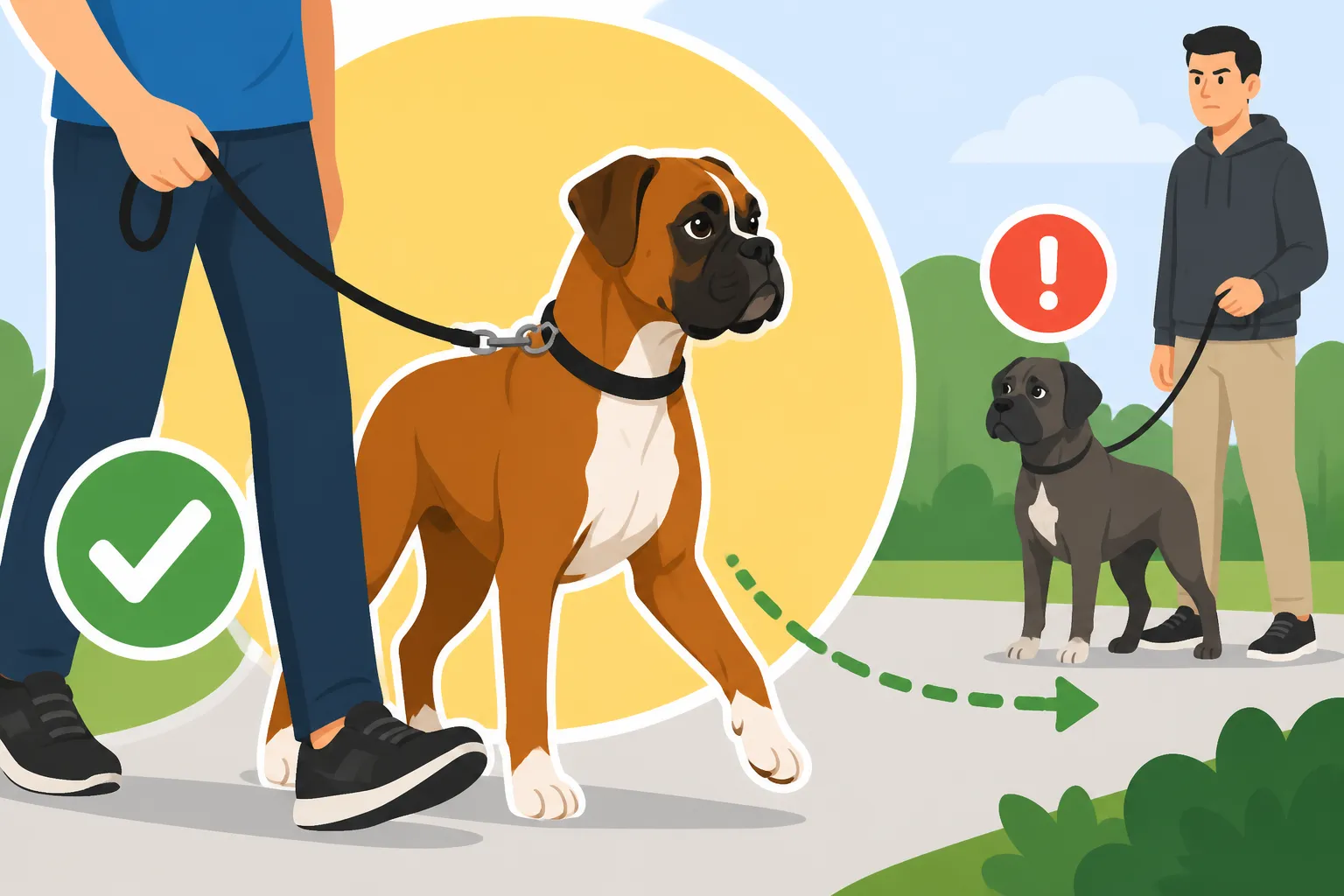
Teaching a Boxer to Walk Past Other Dogs
There's nothing quite like the feeling of being dragged down the street by your beloved Boxer, who's just spotted another dog and decided the leash is merely a suggestion. That lunge, the barking, the sheer force can be embarrassing, frustrating, and even dangerous, making what should be an enjoyable walk feel like a battle. This guide will walk you through practical strategies and training techniques to help your Boxer learn polite leash manners around other dogs, turning those tense encounters into calm, controlled passing.
Understanding Your Boxer's On-Leash Reactions
Before we dive into solutions, it's crucial to understand why your Boxer might be reacting the way they are when they see another dog. It’s rarely about them being "bad" or "dominant." More often, it stems from a combination of genetics, insufficient early socialization, fear, frustration, or even over-excitement that boils over. Boxers are incredibly athletic, intelligent, and often sensitive dogs, and their strong emotions can manifest as big, dramatic displays.
The Roots of Leash Reactivity: Fear, Frustration, and Excitement
Think about it from your Boxer's perspective. If they're on a leash, they can't make their own choices about approaching, greeting, or retreating from another dog. This restriction can be incredibly frustrating for a naturally social and high-energy breed like the Boxer. They might desperately want to greet the other dog, but the leash prevents it, leading to a build-up of unexpressed energy and desire. This manifests as lunging, barking, and whining. It's like being stuck in traffic when you're late – you might start honking and getting agitated because you can't move forward.
On the flip side, some Boxers react out of fear or anxiety. Perhaps they had a negative experience with another dog as a puppy, or maybe they weren't exposed to enough different dogs in a positive way during their critical socialization period. They might see an approaching dog as a threat and try to "make it go away" by barking and lunging, believing that their display is what successfully sends the other dog away (even if it was just passing by). This self-reinforcing cycle makes them believe their reactivity is effective. It's a tricky balance, but recognizing the underlying emotion is the first step towards changing the behavior.
Why Traditional Methods Often Fail Boxers
Many owners, understandably, try to correct the lunging and barking with a sharp tug on the leash, a stern "no," or even a choke chain. While these methods might temporarily stop the physical manifestation of the behavior, they rarely address the underlying emotion. In fact, they can often make things worse for a Boxer. If your dog is already feeling anxious or frustrated when seeing another dog, a sudden yank on the collar or a loud scolding from you can add to that negative association. Now, not only is the other dog a source of discomfort, but you also become part of the unpleasant experience.
This can create a spiraling effect where your Boxer becomes even more tense and reactive. Instead of teaching them a different way to behave, these harsh corrections teach them that other dogs, and even you, predict unpleasantness. Boxers are sensitive and intelligent; they respond much better to positive reinforcement and clear, consistent guidance than to punishment. We want to change their emotional response to seeing other dogs, not just suppress the outward behavior.
Building Foundational Skills for Calm Encounters
Before you even step out the door, it’s vital to ensure your Boxer has a solid grasp of basic obedience cues in a low-distraction environment. These foundational skills are your toolkit for managing situations on walks and will give your Boxer a clear understanding of what you do want them to do. Think of it as building a strong core before you try to run a marathon.
Establishing Reliable Focus and Attention
A Boxer that can focus on you, even when there are distractions around, is a Boxer that can be guided past another dog. Start by practicing "watch me" or "look at me" cues in your home, rewarding heavily with high-value treats when your Boxer makes eye contact. Gradually introduce mild distractions, like another person walking by or soft background noise, slowly building up their ability to maintain focus. The goal is for your Boxer to instinctively check in with you when things get interesting.
Another critical skill is a solid "sit" or "stay." If you can ask your Boxer to sit and hold it while another dog passes at a distance, you’re already halfway there. Practice these cues frequently and make them fun, using playful rewards as well as food. Remember, Boxers have a "puppyhood that lasts three years," so consistency and patience are key, even with basic commands. You might find resources from training programs like BAXTER & Bella helpful for structured, positive reinforcement-based foundation work.
Mastering Loose Leash Walking Without Distractions
If your Boxer pulls on the leash during a normal walk, trying to manage them around another dog will be nearly impossible. Loose leash walking is a non-negotiable skill for addressing reactivity. The key here is to reward your Boxer for walking with a loose leash, even if it's just for a few steps. When the leash tightens, stop moving. Only proceed when the leash goes slack again. This teaches your Boxer that pulling gets them nowhere, but a loose leash keeps the walk enjoyable.
Use a comfortable, well-fitting harness that discourages pulling, such as a front-clip harness, rather than a collar alone, which can put pressure on their sensitive throat and neck. You can find many effective options on Amazon. Practice in quiet areas first, like your backyard or during off-peak hours at a local park. As your Boxer improves, gradually introduce more distractions, but always revert to a less distracting environment if they start pulling again. Remember, the goal is not just to control them, but to teach them that walking nicely is rewarding. Getting a Boxer to Walk Without Towing You and Harnesses That Hold a Pulling Boxer offer even more in-depth advice on this crucial area.
Practical Strategies for On-Walk Encounters
Once your Boxer has a decent grasp of foundational skills, you can start applying specific strategies for those challenging on-leash encounters with other dogs. The core principle here is to manage the environment and your Boxer's exposure to other dogs in a way that sets them up for success, rather than failure.
The "Look at That" Game and Counter-Conditioning
This game is a powerful tool for changing your Boxer's emotional response to other dogs. The idea is to associate seeing another dog with something positive (high-value treats!), instead of fear or frustration. Here’s how it works:
- Spot and Treat: The moment your Boxer notices another dog (before they start reacting), say "yes!" or click, and immediately feed them a super high-value treat. The key is to reward them for noticing the dog, not for reacting to it.
- Distance is Key: Start at a distance where your Boxer can see the other dog but is still calm and not yet reacting. This might be across the street, in a different field, or even just a distant speck. If they're already lunging and barking, you're too close.
- Repeat and Move: Repeat this "spot-and-treat" process every single time your Boxer sees another dog. As they consistently remain calm at that distance, you can very, very slowly decrease the distance.
- Positive Association: Over time, your Boxer will start to associate the sight of another dog with good things happening (treats!). Their emotional response begins to shift from tension to anticipation of a reward.
This is called counter-conditioning and desensitization. You're changing their negative emotional response (fear/frustration) to a positive one (yay, treats!). It requires immense patience and consistency, but it's incredibly effective. You can also explore Loose Leash Work With an Excited Boxer for more tips on maintaining calm during walks.
Managing Distance and Increasing Thresholds
The concept of a "threshold" is crucial. Your Boxer's threshold is the point at which they can no longer cope with a trigger (another dog) and will react. Our goal is to always stay below that threshold, meaning we keep enough distance so your Boxer remains calm and responsive to you.
If you encounter another dog and realize you're too close, don't be afraid to create more distance. This might mean:
- Changing Direction: Turn and walk the other way, or duck behind a parked car or bush.
- Crossing the Street: If safe, cross to the other side of the road.
- Creating a Barrier: Use a parked car or a fence as a visual block between your Boxer and the other dog.
- "Emergency U-Turn": Practice a sharp U-turn command. If you see another dog approaching, immediately say your cue, turn around, and walk briskly in the opposite direction, rewarding your Boxer for following.
Every successful calm pass, even if it means altering your route, builds positive experiences for your Boxer. Each time they react, it reinforces the unwanted behavior. So, managing the environment to ensure success is paramount. It’s better to have a slightly inconvenient but successful walk than a short, reactive one. Remember, The Age a Boxer Is Mentally Grown Up is often later than other breeds, so continued patience is key.
Specialized Training Tools and Professional Help
While a standard flat collar might be fine for a completely non-reactive dog, it's often insufficient for a Boxer who is learning to manage their reactions.
Effective Training Gear
- Front-Clip Harnesses: These harnesses clip at the chest, redirecting your Boxer’s forward momentum back towards you when they pull. Brands like Easy Walk or Freedom Harness are popular and widely available on Amazon. They give you more control without causing discomfort to your Boxer's throat.
- Head Halters: For stronger Boxers or those with more intense reactions, a head halter (like a Halti or Gentle Leader) can be very effective. It gives you control over your Boxer's head, and where the head goes, the body follows. Introduce these slowly and with positive associations, as some dogs initially resist them.
- Long Lines: A long line (15-30 feet) can be useful in a secure, open area to practice recall and attention around very distant dogs, offering your Boxer more freedom while still maintaining safety. Ensure it's used only with a harness, never a collar.
| Training Tool | Primary Benefit | When to Use | Considerations |
|---|---|---|---|
| Front-Clip Harness | Reduces pulling, redirects momentum | Daily walks, moderate pullers, general control | Ensure proper fit to prevent chafing. |
| Head Halter | Superior head control, prevents lunging/biting | Strong pullers, highly reactive dogs, during initial training | Requires positive introduction; some dogs dislike the feel. |
| Long Line | Safe practice for recall/distance work | Secure, open areas (parks, fields) for off-leash simulation (with harness!) | Only use with a harness; can tangle easily; requires handler attention. |
| High-Value Treats | Motivation, positive association | All training sessions, especially during counter-conditioning | Find what your Boxer loves most (e.g., boiled chicken, cheese); small pieces. |
When to Seek Professional Guidance
Sometimes, despite your best efforts, a Boxer's reactivity can be overwhelming. This is where a certified professional dog trainer or a veterinary behaviorist comes in. They can assess your Boxer's specific triggers, body language, and individual needs, then develop a tailored training plan.
- Certified Professional Dog Trainers (CPDT-KA): Look for trainers who use positive reinforcement, force-free methods. They can provide hands-on guidance, help you refine your techniques, and practice with you in real-world scenarios. Many offer group classes specifically for reactive dogs, which can be invaluable for Group Class Against Private Work for a Boxer.
- Veterinary Behaviorists (DACVB): If your Boxer's reactivity is severe, involves aggression, or seems rooted in deep anxiety, a veterinary behaviorist is the most appropriate professional. These are veterinarians with specialized training in animal behavior, who can diagnose and treat behavioral issues, including prescribing medication if necessary to help your Boxer manage anxiety while training is underway. Trainer Rates for a Boxer That Jumps might give you an idea of what to budget for professional help.
Remember, seeking help is a sign of a responsible owner, not a failure. It means you're committed to giving your Boxer the best chance at a calm, happy life. Boxers thrive on structure and clear communication, and a good trainer can help you provide both.
Disclaimer
This article is for general informational purposes only and does not constitute professional advice. Laws, prices and regulations vary by location and change over time. Consult a qualified professional for guidance on your specific situation.