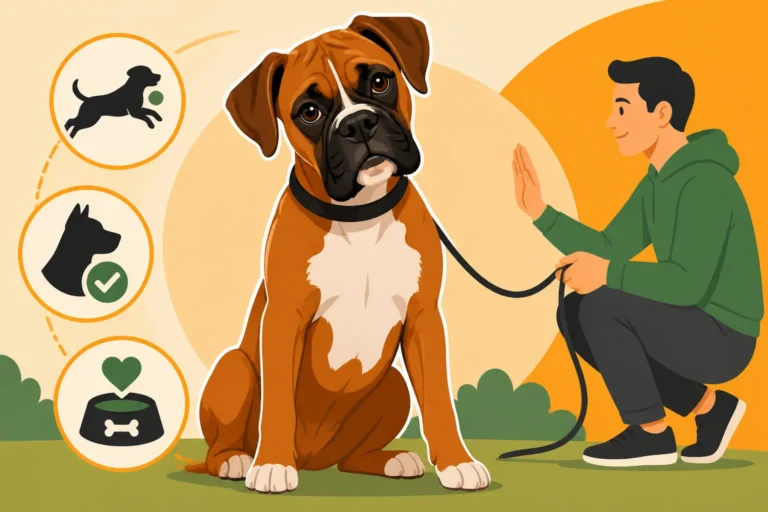
A Boxer That Only Listens Indoors
It's a familiar scenario for many Boxer owners: you've got a brilliant, well-behaved dog inside your home, responding to every command, a true joy. But the moment you step outside, it's like a different dog has taken over—suddenly, all that indoor training seems to vanish into thin air. This guide is here to unravel why your Boxer's listening skills take a vacation outdoors and, more importantly, how to bridge that frustrating gap so you can enjoy a responsive, well-mannered companion wherever you go.
Why Your Boxer's Brain Goes on Vacation Outdoors
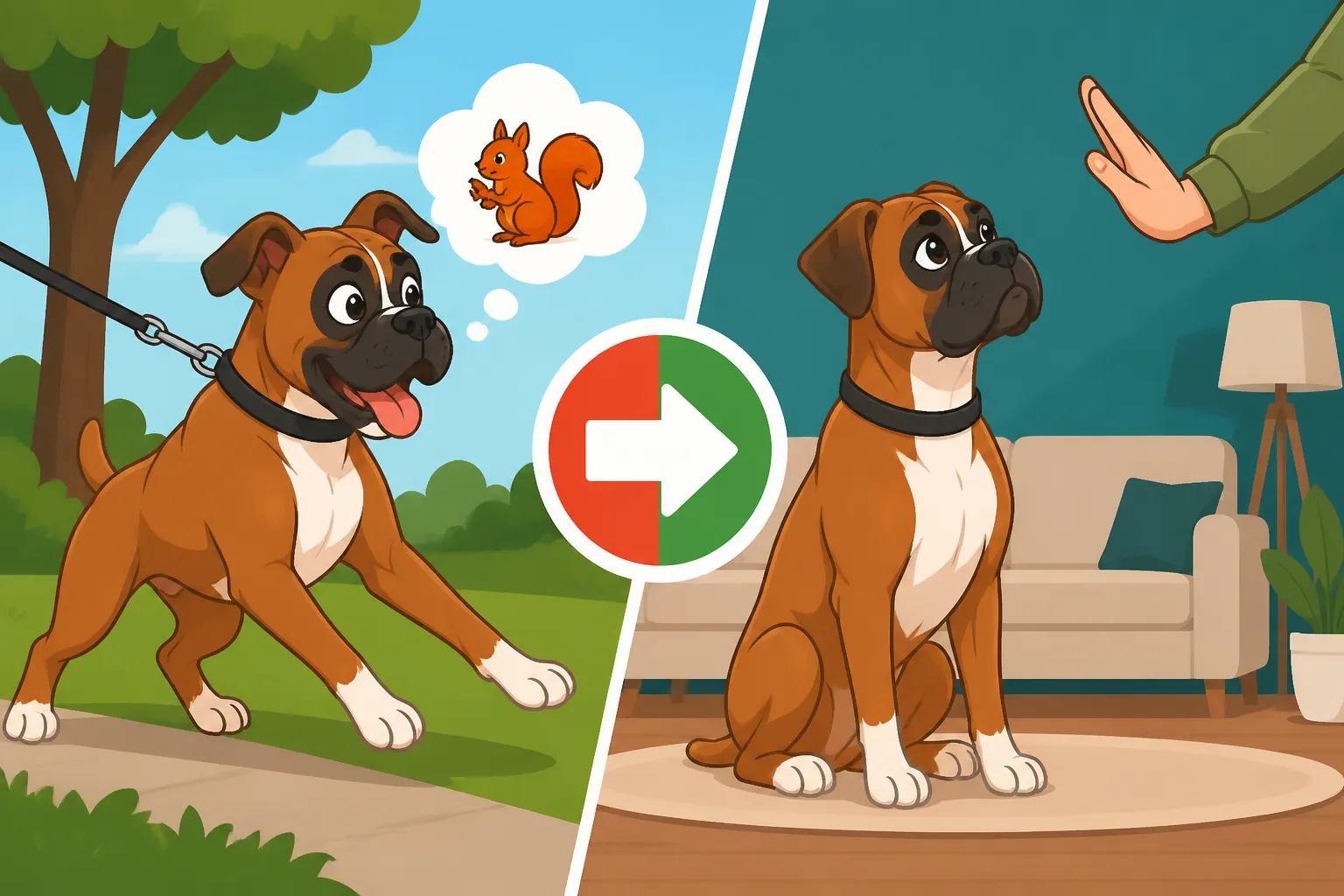
Let's be real, it's incredibly frustrating when your seemingly perfectly trained Boxer acts like they've never heard the word "stay" the second a leaf blows past or another dog appears. You feel like you've put in all this effort, only for it to disappear at the most inconvenient times. This isn't usually a sign of stubbornness (though Boxers can certainly have their moments!); it's more about how dogs learn and the sheer difference between your living room and the great outdoors.
Think about it from your Boxer's perspective. Inside, your home is a largely predictable environment. You have established routines, familiar scents, and very few overwhelming distractions. Your voice is probably the most interesting thing happening, especially when you're holding a tasty treat. Your Boxer has learned that paying attention to you indoors consistently leads to good things. It's a low-stakes, high-reward learning zone.
Step outside, however, and the world explodes with novelty. There are new smells, sounds, sights, and moving objects everywhere. Every rustling bush could hide a squirrel, every distant bark is a potential playmate, and every patch of grass offers an exciting new sniffing adventure. Your Boxer's natural instincts, high energy, and boundless curiosity kick into overdrive. They're bred to be alert and engaging, and the outdoors provides a constant stream of stimulation that can easily overshadow your voice, no matter how much you might be offering. This often ties into The Boxer Puppyhood That Lasts Three Years, where their extended adolescence means they maintain a high level of curiosity and a shorter attention span in exciting environments for longer than many other breeds.
Furthermore, dogs don't automatically generalize commands. If you teach "sit" in the quiet kitchen, your Boxer might associate "sit" specifically with the kitchen, or the context of a treat in your hand in the kitchen. They don't automatically understand that "sit" means the same thing at a busy park with a dozen other dogs and children playing. This lack of generalization is a huge hurdle for many owners, making it feel like their Boxer is intentionally ignoring them.
Building a Foundation of Focus: From Living Room to Leash
The key to unlocking outdoor listening is to systematically teach your Boxer that your cues mean the same thing, regardless of the environment, and that paying attention to you is always more rewarding than anything else happening around them. This isn't about crushing their spirit or stopping them from enjoying the world; it's about giving them the tools to navigate it safely and respond to you when it truly matters.
Start by reinforcing all your known commands in slightly more distracting versions of your indoor environment. For example, if "sit" is solid in the living room, try it in the hallway with someone walking past, then near an open window where outside sounds can be heard, then on the front porch. The goal is to gradually introduce real-world distractions while maintaining a high rate of success.
When you do venture outside, even if it's just to the front yard, bring your A-game. This means having high-value rewards – not just their regular kibble, but something truly irresistible like boiled chicken, cheese, or hot dogs. These "jackpot" treats help your Boxer understand that listening to you in a distracting environment earns them something extraordinary. It helps them associate your voice with incredible rewards, making it a stronger contender against the allure of the environment. Many Boxer owners find that Rewards a Boxer Will Work Hard For are often food-based, especially when starting out in new environments.
A crucial exercise is teaching a "focus" or "look at me" command. Start indoors: hold a treat near your nose, say "look" or "focus," and reward the instant your Boxer makes eye contact. Practice this until it's lightning fast. Then, take it outside. Begin in a quiet area, just outside your door, and practice. As they succeed, slowly increase the level of distraction. This command becomes your superpower for redirecting their attention when the world gets too interesting.
For practicing recall, especially in open spaces, a long line is invaluable. You can find excellent options on Amazon, from simple cotton leads to more durable biothane lines that resist tangles and are easy to clean. This allows your Boxer some freedom to explore while still giving you control to practice "come" and prevent them from bolting. Imagine practicing "come" while they're sniffing something fascinating; if they respond, they get a super reward! This helps generalize the command in a controlled, safe way. Long Line Work With a Young Boxer delves deeper into this essential tool.
Remember, for Boxers, consistency and positive reinforcement are paramount. They can be sensitive, and harsh corrections often lead to them shutting down or becoming less willing to engage. Why Shouting Sets a Boxer Back is a good read on this. Focus on making listening to you the most fun and rewarding part of their outdoor experience.
Strategies for Real-World Outdoor Success
Once you’ve started to bridge the gap between indoor and outdoor listening, it’s time to integrate these skills into everyday life. This means adopting a multi-faceted approach that combines smart management, the right tools, and unwavering consistency.
Managing the Environment and Expectations:
One of the biggest lessons for Boxer owners is managing their dog’s environment to set them up for success. This isn't about coddling; it's about being strategic. If your Boxer is a strong puller, a simple flat collar isn't going to cut it in a high-distraction area. Consider a well-fitting harness that discourages pulling, or even a head halter for stronger, more determined pullers. While it might look a little different, tools like these give you much more control and can make walks significantly more enjoyable for both of you. Harnesses That Hold a Pulling Boxer and Whether a Boxer Should Wear a Head Halter offer practical advice on these options.
Controlled exposure is another powerful tool. Instead of throwing your Boxer into a chaotic dog park immediately, seek out quieter paths, walk at off-peak hours, or arrange playdates with calm, known dogs. Give them opportunities to sniff and explore the world, as this is a crucial outlet for their mental energy, but always ensure they are within your sphere of influence. A tired Boxer, both mentally and physically, is often a more responsive Boxer. Ensure their exercise needs are met – Boxers are high-energy dogs, and Sixty to Ninety Minutes a Day With a Boxer is often a minimum. This doesn't mean just physical exercise; mental enrichment like puzzle toys or structured training sessions can also help.
| Training Environment | Common Challenges | Focus Strategy | Essential Tools |
|---|---|---|---|
| Indoors (Low Distraction) | Complacency, taking cues for granted | Reinforce all commands, build speed and precision | High-value treats, clicker/marker |
| Near Door/Yard (Moderate) | Novel sights/sounds, eagerness to go further | "Look at me" command, short duration stays | High-value treats, clicker, short leash |
| Quiet Park/Path (Medium) | Distant people/dogs, interesting smells | Proofing commands with increasing distance/duration | Long line, super high-value treats, marker |
| Busy Park/Street (High) | Overwhelming sensory input, strong prey drive | Short, successful sessions, focus on engagement with owner | Head halter/no-pull harness, special treats, BAXTER & Bella methods |
Leveraging Training Tools and Resources:
Beyond long lines and specific harnesses, remember that a Boxer's attention span can be fleeting, especially when they're young or highly stimulated. Keep training sessions short, fun, and positive. Why Short Sessions Suit a Boxer's Attention Span explains this perfectly. Use a marker word or clicker to precisely pinpoint the exact moment your Boxer does something right, followed immediately by that high-value reward. This clarity helps them understand exactly what behavior you're looking for.
If you're finding it consistently challenging to get your Boxer's attention outdoors, especially if they have a tendency to pull A Boxer That Pulls Hard on Walks or lunge at distractions A Boxer That Lunges at Passing Dogs, don't hesitate to seek out professional guidance. Online programs like those offered by BAXTER & Bella can provide structured lessons and support, helping you systematically work through these challenges at your own pace with expert advice. They offer comprehensive guides and methods that focus on positive reinforcement and building a strong relationship, which is ideal for a sensitive, intelligent breed like the Boxer. Sometimes, seeing a professional trainer in person, even for a few sessions, can make a world of difference in pinpointing specific issues and teaching you the mechanics of Getting a Boxer's Attention Outdoors.
Consistency is truly the bedrock of success. Everyone in your household needs to use the same commands, hand signals, and reward systems. If one person lets the Boxer pull on the leash and another tries to correct it, your dog will quickly learn that rules are negotiable. Make it a family effort to practice commands in varied environments, always ending on a high note. Over time, your Boxer will learn that even in the most exciting outdoor adventures, paying attention to you brings the best rewards, transforming them from an indoor angel to an outdoor star.
Disclaimer
This article is for general informational purposes only and does not constitute professional advice. Laws, prices and regulations vary by location and change over time. Consult a qualified professional for guidance on your specific situation.